Is ‘Rose’ the Same Word Every Time You Write It?
The Riddle of Gertrude Stein’s Line
Imagine a scrap of paper in front of you with this sentence:
Rose is a rose is a rose is a rose.
How many words are on that paper? You could count and say ten. You could also look closer and say three. Both answers are right — but they are right in different ways. The poet Gertrude Stein wrote that line in 1913, and it has been puzzling people ever since.
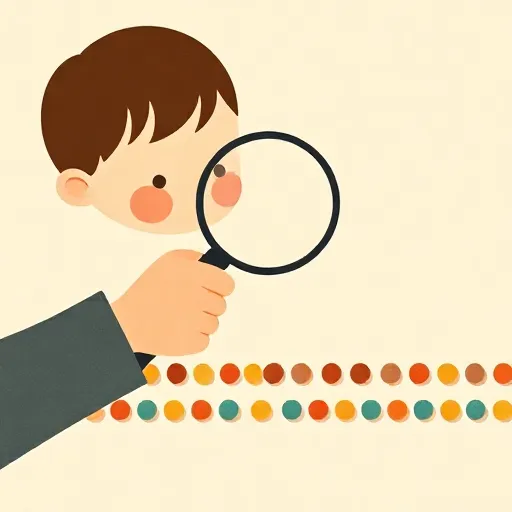
The American philosopher Charles Sanders Peirce (1839–1914) gave each answer a name. When you count three, you are counting types. A type is the general thing, the pattern. The word “rose” is one type; so are “is” and “a.” When you count ten, you are counting tokens. A token is a concrete, particular copy — a specific series of ink marks on paper, a sound wave in the air, or a pattern of pixels on a screen. The paper you are looking at has four tokens of “rose,” three of “is,” and three of “a.” The types of those three words appear again and again, but each token is a separate physical object or event somewhere in space and time.
That scrap of paper cracks open a door into a much bigger idea. Every day you talk about types without even noticing. And once you see the difference, you start to wonder: what is a type, really? And do types even exist, or do we only talk as if they do?
Types Are Everywhere, from Words to Symphonies
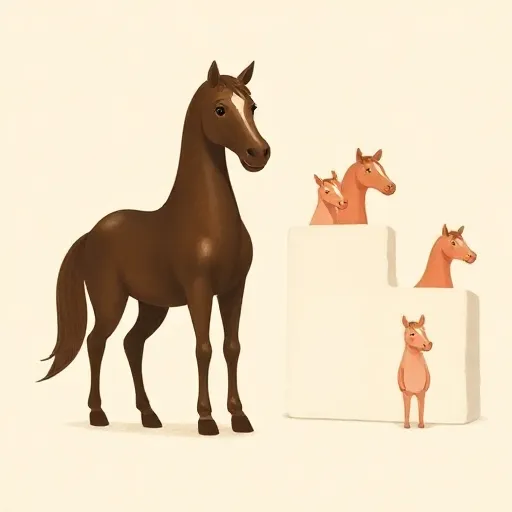
Linguists cannot avoid types. When you hear that an educated person’s vocabulary contains about 15,000 words, those are word types — not the billions of spoken and written tokens. Shakespeare’s vocabulary held roughly 30,000 word types. The English alphabet has 26 letter types; its vowels come in about 18 cardinal vowel types. These numbers would be vastly larger if you started counting tokens instead.
Other sciences rely on the same pattern. Biologists say the Spirit Bear is a rare white bear that lives in British Columbia. No single individual bear is rare — the type of bear, Ursus americanus kermodei, is rare. When we hear that the ivory‑billed woodpecker may not be extinct, we are talking about a species‑type, not about any one bird. Physicists list particle types; chess manuals discuss opening types like the Queen’s Gambit.
The arts are drenched in type–token talk too. The Mona Lisa is a type, but because there is only one token painting, we rarely notice the split. It is much clearer with music and film. Beethoven wrote nine symphonies — nine types. He conducted the first performance of his Ninth Symphony, but he never heard it after he went deaf. The rest of us have heard it many times: we have all heard tokens of the Ninth, each performance a different spatio‑temporal event. A film type can have thousands of tokens on screens and disks. The type is the work; the tokens are its physical incarnations.
What Is a Word, Really? The Messy Case of ‘Color’
Because words are the classic example of a type, you might think it’s easy to say what a word‑type is. Maybe you guess that all tokens of the word “cat” share the spelling C‑A‑T, or the same sound, or the same meaning. It turns out none of those guesses survive a close look.
Consider the noun color. The Oxford English Dictionary records two standard modern spellings: “color” and “colour,” plus eighteen earlier spellings such as “collor,” “colowr,” and “culler.” All those differently shaped ink marks count as tokens of the same word type. The very same noun has eighteen distinct senses, from “hue” to “complexion.” And it has multiple accepted pronunciations. Yet we still treat it as one word.
The trouble runs even deeper. The spoken tokens of “extraordinary” can range from six syllables down to two — and the same speaker might use all versions on the same day. A phonologist can show that a Cockney “know” sounds like the Queen’s “now,” while her “know” sounds like a Scottish “now.” If you tried to group tokens by pure sound, you would hopelessly mix up different words and split apart what everyone thinks is one word. Philosopher David Kaplan once imagined a test subject who repeats a word after hearing it, then has her voice drastically filtered; we would still say she is saying the same word, even though the sound is unrecognizable. That suggests intention plays a role, but even intention cannot define what the word‑type itself is.
The lesson from linguistics is sobering: tokens of the same word‑type do not all share a single physical property, not a fixed spelling, sound, or sense. Words are theoretical objects that linguists use to organize a wildly varied family of concrete marks and noises. The type is what binds those tokens together, even though the tokens look and sound nothing like one another.
Minds, Morals, and the Type‑Token Split
The distinction matters far beyond words. In the philosophy of mind, it gave us two rival ways to think about thinking.
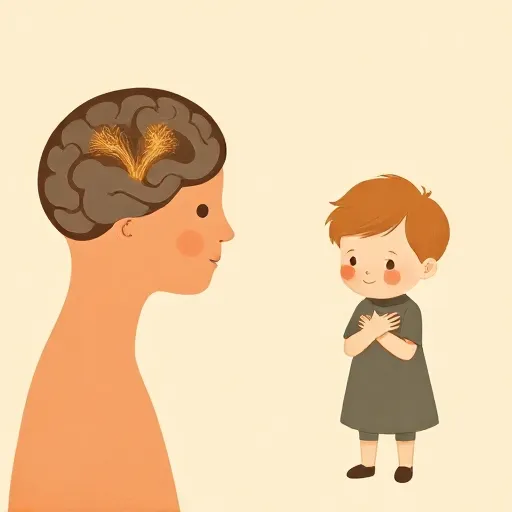
The type identity theory, defended by J. J. C. Smart (1920–2012) and U. T. Place (1924–2000), says that types of mental events are identical to types of physical brain events. On this view, pain just is a particular kind of nerve‑fiber firing, and consciousness just is a particular pattern of brain waves. If that is right, then any creature without that exact brain hardware cannot be conscious or feel pain.
The token identity theory, defended by Jaegwon Kim (1934–2019) and Donald Davidson (1917–2003), agrees that every single pain‑token is some physical token or other, but it denies that the same physical type must be present across all creatures. A human’s pain‑token might be C‑fiber firing; an octopus’s pain‑token might be a different physical event entirely. Token identity allows that radically different physical stuff could still produce the same kind of mental life.
Ethics, too, hangs on whether types or tokens are the main moral actors. Most moral philosophers from John Stuart Mill (1806–1873) onward have held that an action is right or wrong only if it is the right or wrong type of action — that is, if anyone in similar circumstances ought to act the same way. That idea, called universalizability, gives us general rules. But some thinkers, such as Iris Murdoch (1919–1999) and Jonathan Dancy (b. 1946), argue that only particular token actions can finally be judged right or wrong, because every situation is too tangled for rules to capture. On their view, you cannot always say “lying is wrong”; you can only say “that token lie, in that exact moment, was wrong.”
The Great Debate: Do Types Even Exist?
If types are so useful, you might think they obviously exist. Many philosophers, called realists, agree. But realists face a puzzle: types are abstract objects. You cannot see, hear, or touch a word‑type — you only ever meet its tokens. How then do you know anything about the type?
Opponents, called nominalists, reply that types are an unnecessary fiction. They try to show that all talk of types can be translated into talk of tokens alone. For instance, the sentence “ ‘Paris’ consists of five letters” might be rephrased as “Every Paris‑inscription consists of five letter‑inscriptions.” The idea is to replace a singular term for a type with a claim about all its tokens.
This project runs into thick walls. First, not all tokens of “Paris” actually consist of five letters, because the word has older spellings like “Pareiss.” Second, many types have no tokens at all — enormously long sentences that no one has ever written or spoken — so a translation that talks about tokens would be trivially true for the wrong reason. Third, some claims about types cannot be broken into claims about individual tokens. When we say “The grizzly bear once ranged across most of the West,” that is not a fact about any single bear. And quantifications like “two‑thirds of 20,481 species are secure” resist any token‑by‑token rewrite. The nominalist’s challenge is to show that every appearance of a type in our theories can be systematically eliminated. The difficulty of doing so is one reason most philosophers still accept that types must be taken seriously.
Why You Already Believe in Types
You do not have to open a philosophy book to encounter types. The next time a teacher asks you to write an essay of 500 words, the number counts word tokens. But if the teacher says “Avoid repeating the same word,” she is talking about word types. When you hum a tune from a favorite movie, you are humming the type even though no orchestra is playing. When you read that the Amur leopard is critically endangered, you are being told something about a type — the species as a whole — not about any one leopard’s health.
The type‑token distinction is the invisible scaffolding behind all these ordinary sentences. It explains why you can listen to a terrible cover band and still say they played your favorite song. It explains why a word spelled in different ways over five centuries is still the same entry in the dictionary. And it explains why Gertrude Stein’s line can hold both three words and ten words at the very same time. Next time you see a repeated word on a page, you are seeing tokens — but you are also, in your mind, holding the type.
Think about it
- If a song is a type, does it still exist if all recordings and scores are destroyed and no one remembers it?
- Can a lie ever be the right thing to do, or is the act‑type of lying always wrong regardless of the specific token situation?
- Imagine a word that no one has ever spoken or written. Does it exist? If you think it does, where is it?