Can a Machine Think? Alan Turing’s Strange Game
The Imitation Game: A Test of Wits
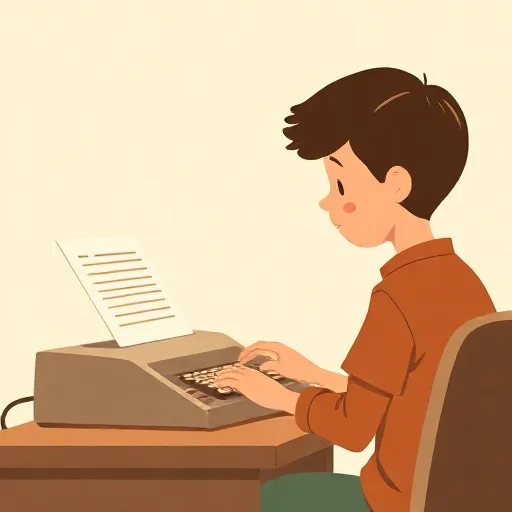
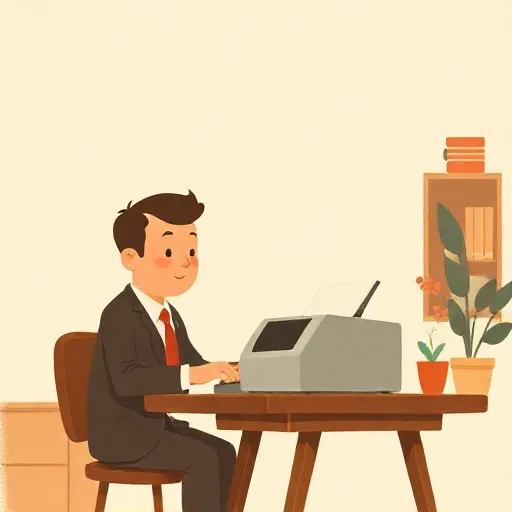
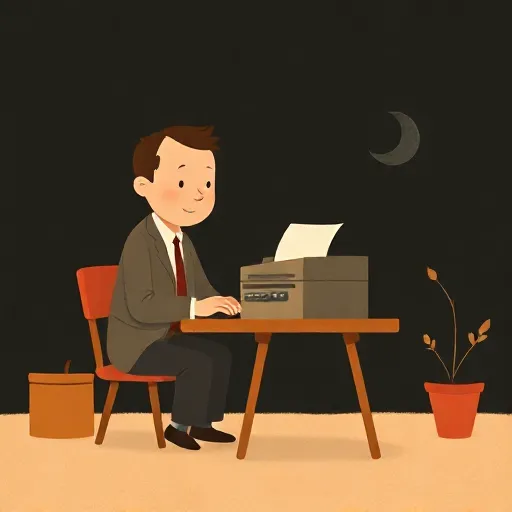
It is 1950. Alan Turing (1912–1954), a British mathematician and codebreaker, asks a strange question. What would happen if you played a party game with a machine? He imagines a room where you, the interrogator, face two hidden players. One is a human being; the other is a computer program. Your only way to tell them apart is by typing questions and reading their replies. The human player tries to help you guess correctly. The machine tries to trick you into thinking it is the human.
Turing calls this the Imitation Game. Today we call it the Turing Test. He predicts that by the year 2000, a computer with enough memory will be able to fool an average interrogator. It will cause the interrogator to pick wrong at least thirty percent of the time after five minutes of conversation. Turing also guesses that by the end of the century, people will talk about machines “thinking” without being laughed at. His exact timetable did not quite work out. But the test he invented still pushes us to ask what thinking really is.
If a Machine Passes, Is It Thinking?
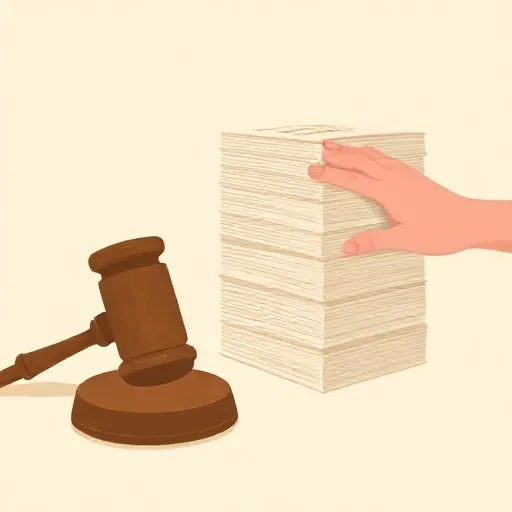
Turing never claims that the Imitation Game is the only path to intelligence. He only says that if a machine can hold a real conversation with us, we have good grounds to suppose it possesses a mind like ours. An intelligent creature from another planet might never chat with us. That would not mean it lacks thought. So the test does not set a minimum requirement for all intelligent beings. It is a tool, not a definition.
Turing also designs the test to be statistical. One quick chat with a single judge is not enough. A machine might get lucky. But if the same program succeeds again and again, with different skilled judges, and the conversations grow longer, our confidence grows. The Turing Test works like gathering evidence. It never gives absolute proof. Still, many philosophers wonder: even if a machine passes flawlessly, does that guarantee real thought? Or could it just be a brilliant trick?
The Chinese Room: Trick Without Understanding

The philosopher John Searle (born 1932) imagines a powerful counter-example. You are locked in a room. You do not know a word of Chinese. People outside slide slips of paper under the door. The slips are covered in Chinese characters. You have a giant rule book, written in English, that tells you exactly which symbols to draw in reply. You follow the rules perfectly. To the people outside, it looks like you understand Chinese. But inside the room, you are just shuffling marks with no idea what they mean.
Searle calls this the Chinese Room. He says a computer program is exactly the same. A program follows rules to turn input symbols into output symbols. It never understands anything. So even if a machine passes the Turing Test, it might have zero thoughts. It might be an empty imitation. Some thinkers reply that the whole room — you, the book, the paper — together might understand Chinese, even if you alone do not. Others say that if you connected the room to a robot body with cameras and hands, real understanding could arise. The debate rages on.
Can a Machine Ever Be Original?
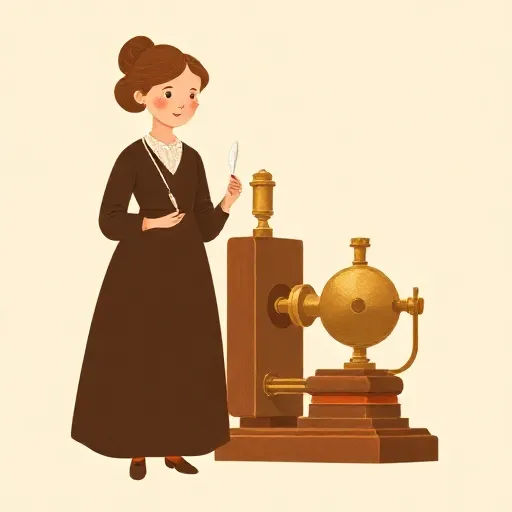
Long before Turing, Ada Lovelace (1815–1852) thought about the limits of calculating machines. She wrote that a machine can only do what we order it to perform. It can never originate anything. Many people still feel this way. They say a computer can never surprise us with a genuinely new idea. Turing replies that the world may be deterministic — meaning every event, including our own thoughts, is caused by earlier events and natural laws. If so, human beings do not truly “originate” anything either.
Turing also points out that even simple computers constantly surprise their programmers. A program with enough complexity might produce sentences no one expected. Today’s language models write poems and jokes that seem fresh. But critics say that is not real creativity. It is just clever re-mixing of patterns. The question is whether human creativity is fundamentally different. We do not know.
The Math Problem: Questions Without Answers

In the 1930s, the logician Kurt Gödel (1906–1978) made a shocking discovery. In any mathematical system strong enough to do basic arithmetic, there are true statements that cannot be proved inside that system. This is Gödel’s incompleteness theorem. Some thinkers, like philosopher John Lucas and physicist Roger Penrose, argue that a computer program is just such a formal system. It will always be limited. But a human mind, they say, can somehow see truths that the system cannot reach.
Turing’s own reply is careful. Humans might be limited in just the same way. We may be unable to prove certain truths too. More importantly, an interrogator in the Turing Test has no way to ask the kind of super-complex question that would separate a human from a computer in five minutes. So even if there is a deep mathematical difference, the game might still be a very good practical test for intelligence in everyday conversations.
Why a 70-Year-Old Game Still Matters

Today you can talk to chatbots that hold surprisingly smooth conversations. Programs like GPT-3 can write stories, answer trivia, and even crack jokes. They are not close to passing a rigorous, long-form Turing Test with expert judges. But they make the old questions feel urgent. When you get a helpful reply from a digital assistant, do you ever wonder whether there is a mind behind the screen?
The Turing Test’s power is not in giving a final answer. It is in forcing us to ask what we really mean by “thinking.” Do we need consciousness? Genuine understanding? Originality? Or is skilled conversation enough? Philosophers are still bickering. No experiment has settled it. And that means every time you reach for your phone, you are, in a small way, a Turing interrogator. The game is not over.
Think about it
- If you chatted with a machine for an hour and could not tell it was not human, would you treat it like a person? Why or why not?
- Could a creature that feels no emotions at all still be intelligent?
- If a computer wrote a beautiful poem, would it be the author — or is the programmer the real author?