Can a Machine Think? The Boyish Genius Who Dared to Ask
The Puzzle of the “Definite Method”
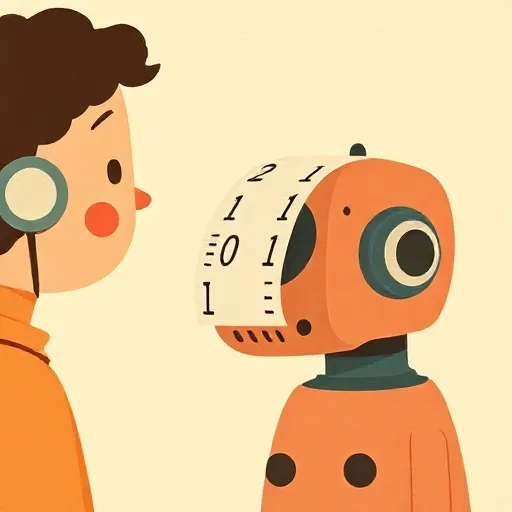
In 1935, a 22-year-old Cambridge student named Alan Turing (1912–1954) heard about a problem that had stumped the world’s greatest mathematicians. The question sounded simple: for any mathematical statement, could there be a definite, step‑by‑step method to decide whether it was provable? This was the Entscheidungsproblem, the “decision problem.” Solving it meant first answering an even trickier question—what counts as a “method” at all?
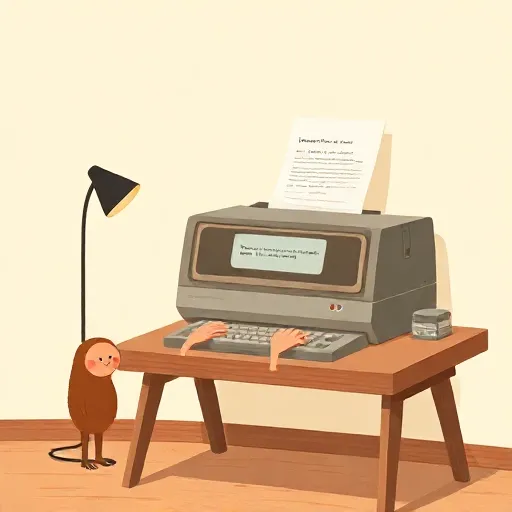
Turing’s answer came from a child’s exercise book marked into squares. He pictured a machine so basic that its only parts were an endless paper tape divided into cells, a head that could read and write a few symbols (like 0 and 1), and a finite table of rules that told it what to do at every step. He called it a Turing machine. Any routine that could be broken into such tiny, mindless steps was computable.
But Turing showed that some things are not computable. Using a clever twist—a diagonal argument—he proved that no Turing machine can look at another machine’s rule table and decide, for every case, whether that machine will ever print out a certain digit. There are well‑defined questions that no step‑by‑step process can answer. In one stroke, Turing gave a negative answer to the decision problem: there cannot be a general method that settles all mathematical provability. Overnight, he had placed a hard limit on what even the most perfect machine could do.
One Machine to Rule Them All
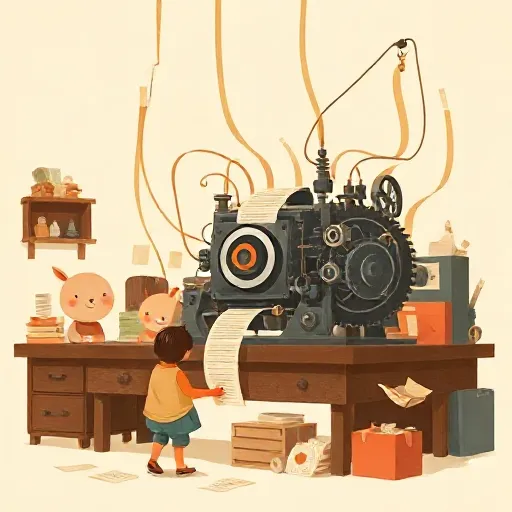
Turing then took a leap that went even beyond Babbage’s dream of a computing engine. He imagined a special universal Turing machine. This machine’s own rule table was complex enough to read the rule table—the “software”—of any other Turing machine and then mimic its behavior exactly. In other words, one machine could become any other machine by changing the instructions it fed itself.
If that sounds familiar, it should: it is the blueprint of the modern digital computer. Any program you run on your laptop is just data being devoured by a universal machine. Turing wrote this down in 1936, years before any real electronic computer existed. During World War II, his ideas took flesh: Turing helped build machines that cracked the German Enigma cipher, and afterwards he pushed to turn his theoretical universal machine into working electronics. The age of computers had begun, powered by a shy mathematician’s insight that programs and data are made of the same stuff.
The Imitation Game: Testing a Machine’s Mind
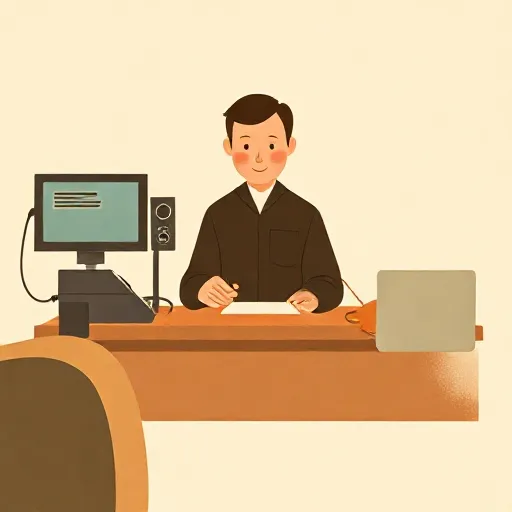
But Turing’s mind was already racing ahead. If a universal machine could follow any set of instructions, could it ever follow instructions so clever that it would seem to think? In 1950, in a paper written for a philosophy journal, he replaced that airy question with a concrete game.
A human judge sits in front of a teleprinter, exchanging typed messages with two unseen players. One is a real person; the other is a computer pretending to be human. If the judge cannot reliably say which is the machine, Turing argued, we ought to credit the machine with intelligence. After all, our only evidence that other people think is how they behave—we cannot peek inside their heads. The same standard, he insisted, must apply to machines.
He called his test the imitation game, and he predicted that by the year 2000 a computer might fool an average questioner 30% of the time after five minutes of chat. Many people objected. Some said that machines could never enjoy strawberries and cream or fall in love. Turing replied that such things might simply be abilities we haven’t yet learned to program. Others, like the brain surgeon Geoffrey Jefferson, insisted that true thinking requires conscious awareness. Turing’s counter‑move was consistent: since we can never be sure that another human is conscious, refusing a machine on those grounds would be unfair. The only thing that counts, he said, is what the machine can do.
Mistakes, Learning, and the Ghost of Gödel
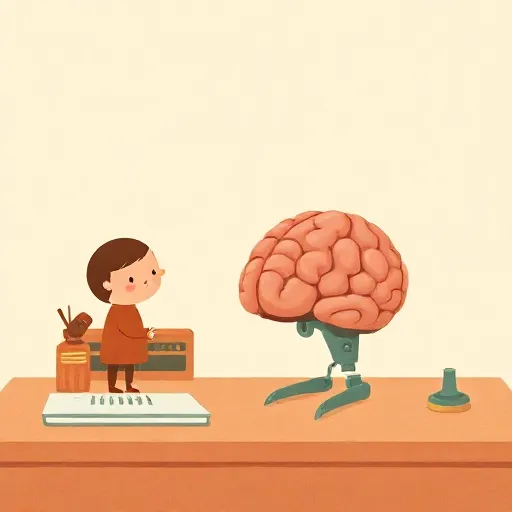
A deeper objection came from mathematics. In 1931, Kurt Gödel had shown that any logical system powerful enough to contain arithmetic will have true statements it cannot prove. Some philosophers argued that humans, by some mysterious flash of intuition, can see the truth of those Gödel sentences—something a rule‑following machine could never do. If that were right, human thought would be forever beyond the reach of a Turing machine.
Turing’s answer was startlingly practical. Mathematicians make mistakes. They believe false statements and overlook true ones all the time. If a machine is allowed to be fallible—to occasionally guess and sometimes get things wrong—then the Gödel argument loses its sting. Both human and machine are operating inside the same game of trial and error.
Turing went further. He imagined learning machines that start like a blank child and improve themselves through experience, much as a brain re‑organizes its connections. He sketched ideas resembling what we now call neural networks and genetic algorithms—systems that modify their own instructions rather than relying on a fixed, perfect program. All of these were, he insisted, still computable. Intelligence need not be magic; it could grow from layers of ordinary computation that stumble, correct, and learn.
The Enigma That Still Haunts Us
Every time you ask a voice assistant a question, argue with a chatbot, or watch a self‑driving car decide when to turn, you are walking through Turing’s thought experiment. Today’s artificial intelligence still wrestles with exactly the puzzle he laid out: if something behaves like a thinking creature, must there be a mind behind the screen? The question is not just about engineering; it touches the mystery of what your own mind really is. Are you, too, a kind of immensely complicated Turing machine running on biological hardware? Turing never settled the matter. He died in 1954, aged 41, before his ideas could fully bloom. But the shy, boyish man who loved asking unaskable questions left the world with a challenge that will not go away. The conversation he started—between a human judge and a hidden machine—has yet to finish.
Think about it
- If you had a conversation with a chatbot that was impossible to tell apart from a real person, would you say it was thinking? Why or why not?
- Could a machine ever feel pain or joy, or is that something only a living brain can do? What would convince you one way or the other?
- Is there anything a human mind can do that no computer, in principle, could ever replicate?