Could a Computer Ever Have a Mind of Its Own?
The Imitation Game: A Room, a Human, and a Machine

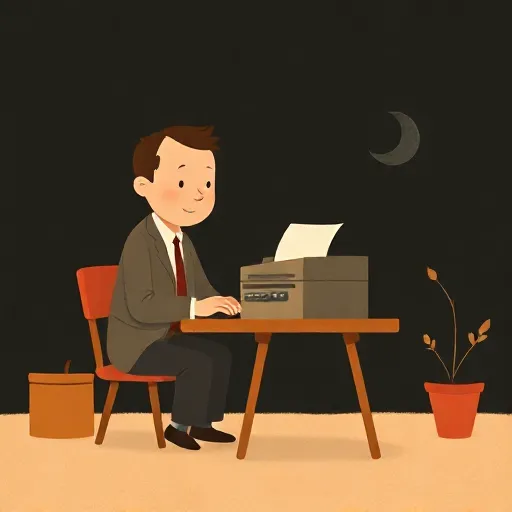
Imagine you are in a room, typing messages back and forth with two hidden partners. One is a real person. The other is a computer program. If you cannot tell which is which, can you say that the computer is not thinking? This is the Turing Test, a thought experiment proposed by the mathematician Alan Turing (1912–1954) in 1950.
Turing thought the old question “Can a machine think?” was too fuzzy. He replaced it with a sharper one: could a computer fool a human into thinking it is human? If it could, maybe that is as close to thinking as we can get.
The idea sparked a wildfire. If a machine could pass the test, would it really be intelligent, or just a clever parrot? That argument is still burning today, especially now that we chat with AI assistants every day.
Turing’s Simple Machine and the Birth of AI
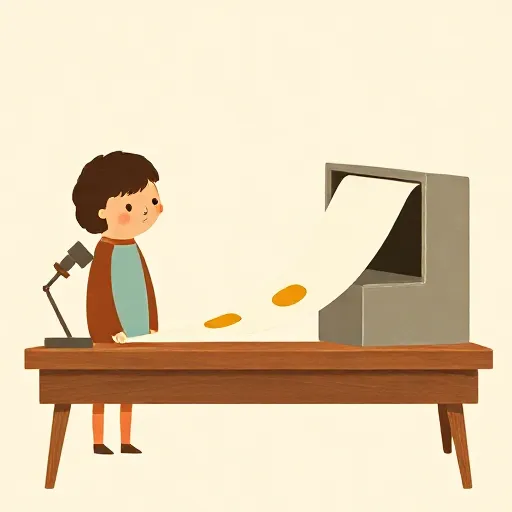
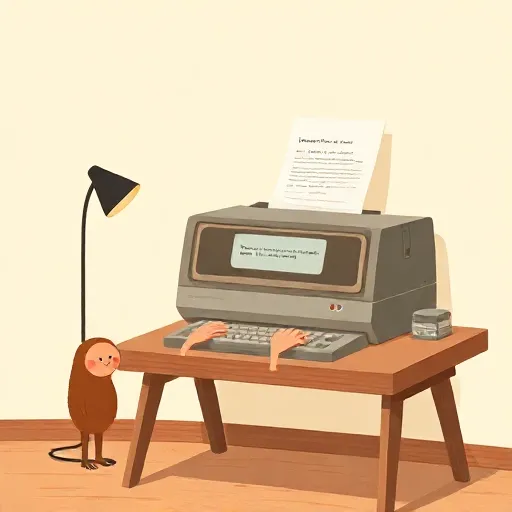
To see why anyone thought minds might be machines, you have to meet the Turing machine. It is not a real machine. It is an imaginary device that Turing invented in 1936, long before modern computers. The machine has an endless paper tape divided into cells, a scanner that reads and writes symbols, and a fixed set of instructions called a machine table. The table tells it exactly what to do next, based on the symbol it sees and its current state. No creativity, no guessing — just step-by-step rules.
From this tiny idea, Turing proved something astonishing: there could be a universal Turing machine that can imitate any other Turing machine. Feed it the right instructions, and it can do anything any rule-following device can do. That is the seed of the general-purpose computer.
Decades later, AI researchers built machines that could do human-like tasks. In 1997, IBM’s Deep Blue defeated a chess champion. In 2016, AlphaGo beat the world’s top Go player. In 2020, the language model GPT-3 generated uncannily human text. Each milestone made the question louder: if a machine can do these things, is it thinking — or just very good at faking it?
The Mind as a Computer: The Language of Thought
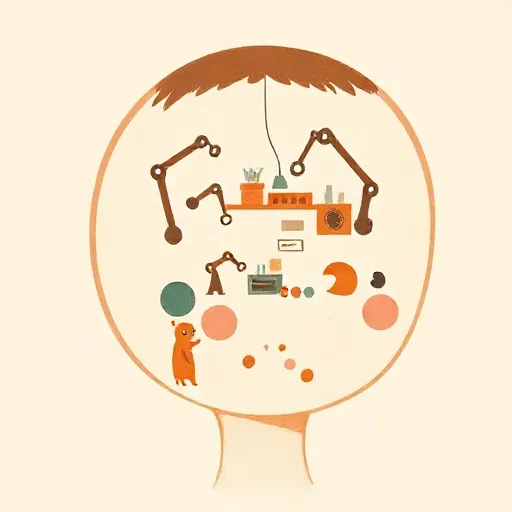
In the 1960s and 1970s, philosophers began to turn the idea around. If a computer could think, maybe your brain is a computer. This view is the classical computational theory of mind (CCTM). It says that your mind is a computing system, not made of silicon but of brain cells, and that mental processes are computations over symbols.
The philosopher Jerry Fodor (1935–2017) gave this idea a sharp form. He argued that we think in a secret mental language, sometimes called Mentalese. When you believe that your cat is hungry, your brain has a Mentalese sentence — a bit like “CAT IS HUNGRY” — stored in memory. Complex thoughts are built from simple parts, just as sentences are built from words. This is the representational theory of mind (RTM). Thinking is not just a jumble of feelings; it is real symbol manipulation, carried out by your brain’s wiring.
Fodor pointed to two features of thought that fit this picture. One is productivity: you can think an endless number of new ideas, even if you have never thought them before. The other is systematicity: if you can think “John loves Mary,” you can almost certainly think “Mary loves John.” A mind that runs a mental code explains both, because the code has parts that can be recombined.
The Connectionist Uprising: Brain-Like Networks
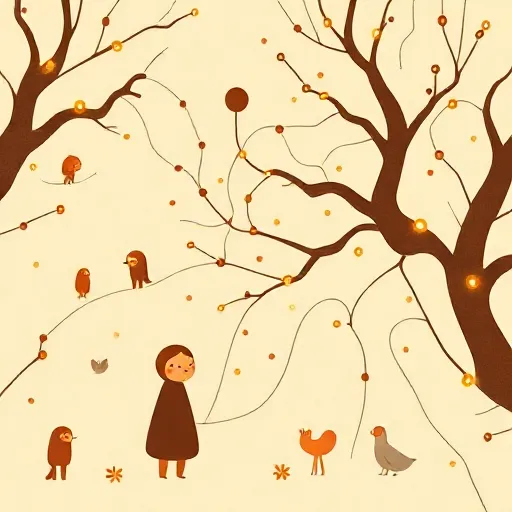
Not everyone was sold on the classical picture. In the 1980s, a rival camp called connectionism gained ground. Instead of a central processor that moves symbols around, connectionists build neural networks: webs of interconnected nodes, loosely inspired by brain cells. Each node has a number showing how active it is. When you feed in an input — say, the pixels of a picture — activation ripples through hidden layers until output nodes fire.
Connectionists argued that this is a better model of the brain. Neurons are slow and messy, not like a crisp digital scanner. Neural networks learn by adjusting the strength of connections, without needing an explicit program. Modern deep neural networks, with hundreds of hidden layers, now power facial recognition and chatbots like ChatGPT.
Classical thinkers fought back. Fodor and Zenon Pylyshyn argued that connectionist networks struggle to explain systematicity and productivity unless, secretly, they are implementing a classical symbol system. The fight is not over. Even today, some researchers think networks give a more biological story, while others say you still need mental symbols to explain real thought.
What About Meaning? The Twin Earth Problem

There is a deeper problem. If your mind is a computer flipping symbols by shape, where does meaning come from? The philosopher Hilary Putnam (1926–2016) asked us to imagine Twin Earth, a planet exactly like ours except that the liquid they call “water” is not H₂O but a different chemical, XYZ. It looks, tastes, and behaves exactly the same. A person on Twin Earth, Oscar₂, has a brain identical to Earth’s Oscar. When Oscar₂ says “water,” he thinks about XYZ, not H₂O. Their mental states have different representational content even though their brains are the same.
This idea is externalism about mental content. It suggests that what you are thinking depends on the world outside your skin. But classical computationalism often treats the mind as a syntax-driven engine, where only the formal shape of symbols matters, not what they mean. If so, then a purely computational story might miss the heart of thinking: its aboutness.
Some philosophers, like Tyler Burge (b. 1946), reply that scientific psychology already uses externalist content. When we explain how the visual system judges distance, we talk about real distance, not just internal symbols. So computation and meaning might be tangled together after all.
Why This Still Matters to You

Every time you ask a smart speaker a question or watch AI-generated art, you are living inside Turing’s question. If a program can write a poem that makes you cry, does it understand sadness? If it has no feelings, no body, and no real connection to the world, is it just a wind-up doll that talks?
And it isn’t just about machines. The debate reflects back on you. If your brain runs like a program, are your choices pre-scripted? If meaning depends on your environment, how much of “you” lives inside your skull? Philosophers are still wrestling with these puzzles, and computer scientists are building systems that push the boundaries of what machines can do. The big question — could a computer ever have a mind of its own? — has no settled answer. But the way you answer it says a lot about what you think a person really is.
Think about it
- If you had a deep conversation with an AI that felt completely human, but you later learned it was just running code with no feelings, would you still say it was thinking? Why?
- Imagine copying your entire brain onto a computer, so a digital you could live forever. Would that digital copy still be you, or a different person?
- If your future choices could be perfectly predicted by a computer that scanned your brain, would it make sense to say you “freely” chose your friends?