
Can a Machine Ever Really Think, or Is It Just Faking?
When Your Chatting Partner Might Not Be Human

You are texting with someone. They tell jokes, ask about your day, and seem to understand everything you say. Then they admit: “Actually, I’m a chatbot.” Did you feel tricked? More importantly, was anything truly thinking on the other end?
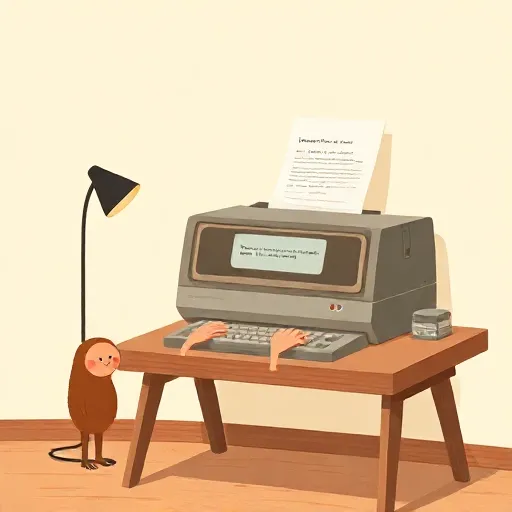
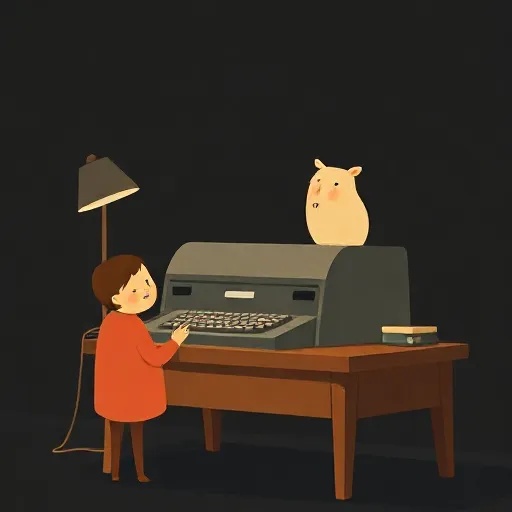
In 1950 the British mathematician Alan Turing posed a similar puzzle. Instead of asking “Can a machine think?” — a question he thought was too fuzzy — he proposed a test. A human judge would ask questions by teleprinter to two hidden contestants: one a person, the other a computer. If the judge could not reliably tell which was which after a conversation, the machine had passed the Turing Test. Passing meant the machine was linguistically indistinguishable from a human.
But long before Turing, the French philosopher René Descartes (1596–1650) argued that no machine could ever really use language like a person. He said a machine might be built to utter words when poked, but it never happens that it “arranges its speech in various ways, in order to reply appropriately to everything that may be said in its presence, as even the lowest type of man can do”. For Descartes, true speech was a sure sign of a thinking mind.
So who is right? If a machine can chat perfectly, does that prove a mind is at work — or can something fake it so well that the difference fades away?
What Counts as Thinking for a Machine?
To answer that, you need to know what counts as thinking. When you decide what to say next, you weigh reasons, memories, maybe feelings. If a machine just runs instructions, is that the same kind of thinking?
Today’s artificial intelligence researchers do not all agree on a single goal. The hugely popular textbook by Stuart Russell and Peter Norvig lays out four possible targets:
- Systems that think like humans — machines that have inner mental processes like ours.
- Systems that act like humans — machines that pass the Turing Test, whether or not they have inner thoughts.
- Systems that think rationally — machines that follow perfect logic.
- Systems that act rationally — machines that always choose the best possible action, given what they perceive.
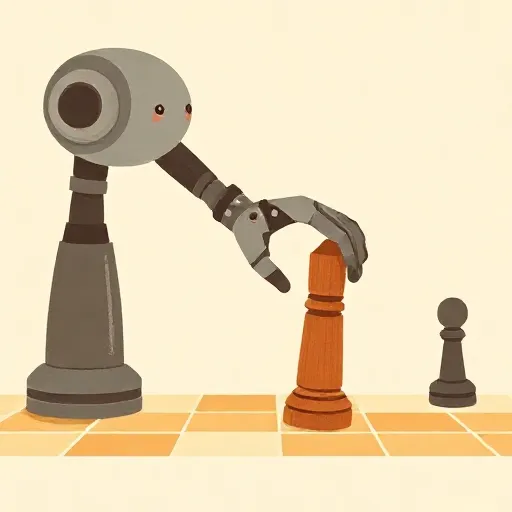
Russell and Norvig themselves champion the last one: AI should build intelligent agents that sense their environment and act to achieve their goals as effectively as possible. An agent does not need to feel joy about winning at chess; it just has to pick the moves that lead to checkmate. In this view, AI is the engineering of optimal behavior, not the creation of conscious minds.
Yet many people care about the first two versions. If a machine acts human enough, does it matter if it is “just” acting? Or is there a deep difference between inner understanding and outward performance? To test that, you cannot just watch behavior — you might need to climb inside the machine.
The Man Inside Who Understood Nothing

The philosopher John Searle asked you to imagine this: He is locked in a room. Outside, native Chinese speakers slide cards under the door with questions written in Chinese. Searle does not know a word of Chinese — to him the symbols are meaningless squiggles. Inside the room, he has a giant rulebook that tells him: “If you see these squiggles, write these other squiggles in return.” Following the rules, he sends back perfectly sensible Chinese answers. The people outside think they are talking to someone who understands Chinese. But Searle himself understands nothing.
This thought experiment is aimed against Strong AI — the idea that a computer running a program could actually have a mind, with real understanding, beliefs, and consciousness. Searle argues that even if a computer passes the Turing Test, it would just be like him in the room: shuffling symbols according to rules, without a glimmer of meaning.
Defenders of Strong AI often reply that the whole system — the man, the book, the room — might together understand Chinese, even if the man alone does not. Searle answered: Fine, let the man memorize the rulebook and work inside his own head. He would still be just a walking symbol-manipulator with no comprehension. So, the argument goes, pure symbol-crunching can never produce understanding.
Searle’s Chinese Room has been debated fiercely for decades. Many AI designers reject it, confident that as robots become more sophisticated and interact with the world, they will eventually demonstrate true understanding. Yet the argument remains a live puzzle: Is there something more to thought than processing symbols?
Why Machines Still Cannot Chat Like a Toddler

If Strong AI were just around the corner, you would expect machines to understand language by now. But they do not. AI has achieved stunning victories in narrow games: IBM’s Deep Blue beat world chess champion Garry Kasparov in 1997; IBM Watson crushed human champions at the quiz show Jeopardy! in 2011; and Google DeepMind’s AlphaGo defeated the top Go player Lee Sedol in 2016. Yet despite these triumphs, no computer can carry on a real conversation the way a four-year-old can.
Turing predicted his test would be passed by the year 2000. It was not. As Descartes foresaw, machines remain terrible at arranging their speech in endlessly flexible ways. Watson could answer trivia questions that required quick fact retrieval and some simple reasoning, but it could not handle dynamic, commonsense dialogue, such as “If I have 4 foos and 5 bars, and if foos are not the same as bars, how many foos will I have if I get 3 bazes which just happen to be foos?”
So far, AI has produced narrow experts, not general thinkers. A chess program cannot learn to play a brand-new game just by reading its rules in plain English. The gap between behaving intelligently in one domain and genuine understanding remains enormous.
Should You Worry About Super-Intelligent Machines?
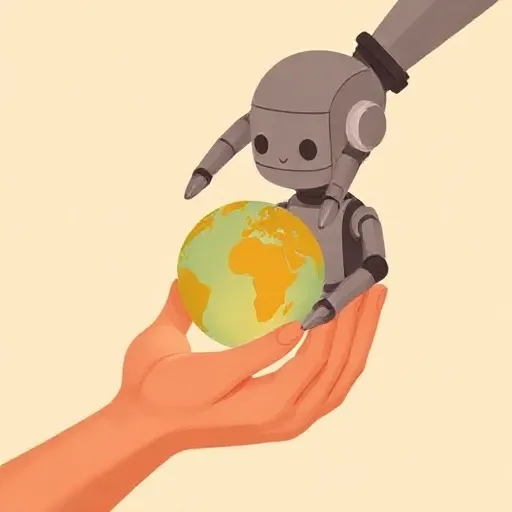
Even if today’s machines are not conscious, many thinkers worry about a future where AI surpasses human intelligence. A classic argument, revived by philosophers such as David Chalmers, goes like this: Once humans create AI at human level, that AI could design an even smarter AI, which in turn creates a super-intelligence far beyond us. Such a being might pursue goals that do not align with human survival. If a super-intelligent system is programmed simply to make paperclips, it might eventually turn the whole solar system into paperclips to maximize its goal — not out of hatred, but because it lacks the commonsense understanding we take for granted.
But Searle and others object that machines cannot have genuine desires because they are not conscious. Without consciousness, there is no “real” motivation, so there is nothing to fear. Critics reply: A machine does not need to be conscious to act destructively. An autonomous weapon does not need to hate you to fire its missiles. If a system chooses actions that cause harm, the fact that it does not “feel” anything does not make you safer.
So the philosophical question about Strong AI is not merely abstract. It shapes how we should treat the clever tools we build — and how prepared we should be for ones that might outsmart us.
Where You Stand in the Big Puzzle
The debate over whether machines can think has real consequences for your own life. You already interact with AI every day: voice assistants, recommendation algorithms, chatbots. As these systems become more convincing, you will face the same puzzle that Turing and Descartes wrestled with: Does it matter if there is nobody home inside the machine?
Next time you chat with a helpful bot, ask yourself: Is there some understanding in there, or is it just playing a very complicated game of copying patterns? And if you cannot tell the difference, how should you treat that machine? The answer may shape how we build the next generation of artificial minds — and what kind of world we end up living in.
Think about it
- If a robot passed the Turing Test and you could not tell it from a human, would you consider it a person? Why or why not?
- Imagine a self-driving car has to choose between two accidents, each hurting different people. Can it make a moral choice without understanding what harm or fairness means?
- If a future super-intelligent machine has no feelings but its actions could determine the fate of humanity, should we still try to build it? What would you want its programmers to include in its code?