Is Truth a Thing? Frege's Strange Idea That Changed Logic
A Sentence That Names Something

You walk out of a movie and say, “That was amazing.” Your friend asks, “Is that true?” You probably think about whether the movie really was amazing. But a philosopher would ask a different question: What does the word “true” even mean? What is it that makes a sentence true? And when we say a sentence is true, what does that sentence name?
These questions might sound like word games, but a German thinker named Gottlob Frege (who worked in the late 19th and early 20th centuries) gave a radical answer. He said that sentences don’t just describe the world — they refer to special objects called truth values. There are exactly two of them: the True and the False. In Frege’s picture, “The movie was amazing” isn’t just a string of words you happen to believe. It’s a name, and what it names is one of those two objects. This idea changed logic forever and started a debate that is still alive today.
Frege’s Big Idea: Truth and Falsity as Objects

To see why Frege thought truth must be an object, you have to understand how he looked at language. Frege sorted expressions into two kinds. Some expressions are proper names — words that point to a single thing. The name “Kyiv” refers to the city itself. Other expressions are functional expressions, which are incomplete and need something to fill them in. The phrase “the capital of” is incomplete until you attach a name: “the capital of Ukraine” then refers to Kyiv. In math, you know functions that take a number and give a number back. Frege extended this idea: a predicate like “is a city” is a function that takes an object (a name’s referent) and gives you a sentence. But now what does that sentence name?
Frege’s answer: a sentence names a truth value, either the True or the False. Feed “Kyiv” into “is a city” and you get the sentence “Kyiv is a city.” That sentence, he said, names the True. Feed “Mount Everest” into the same predicate and you get “Mount Everest is a city,” which names the False. So predicates don’t just describe things — they are functions that output truth values. Even logical words like “and” and “not” become functions on these two objects. Negation, for example, is a function that flips the True into the False and the False into the True. Frege had turned truth and falsity into real entities — members of a logical world, much like numbers.
The Slingshot: A Puzzle That Points to Truth

You might wonder: why should anyone believe that sentences name truth values? Frege had a clever argument, which later came to be called the slingshot argument. It works by showing that you can step from any true sentence to any other true sentence by replacing parts that refer to the same thing, always keeping the “reference” of the whole sentence unchanged. If two sentences end up having the same reference, what could that common reference be? Frege’s answer: the True.
Here is a simplified version of the reasoning. Start with a true sentence: “Sir Walter Scott is the author of Waverley.” Now notice that “the author of Waverley” and “the man who wrote 29 Waverley Novels altogether” both refer to the same person — Walter Scott. If you swap one phrase for the other, you get a new true sentence: “Sir Walter Scott is the man who wrote 29 Waverley Novels altogether.” The reference of the sentence shouldn’t change, because you only replaced one name for the same person.
Next, you can rephrase that second sentence as: “The number such that Sir Walter Scott is the man who wrote that many Waverley Novels altogether is 29.” This still says the same thing in a slightly different way. Finally, observe that the number of Waverley novels Scott wrote is exactly the number of counties in Utah — 29. So the phrase “the number such that Sir Walter Scott is the man who wrote that many Waverley Novels altogether” refers to the same number as “the number of counties in Utah.” Replace one with the other, and you get: “The number of counties in Utah is 29.”
You began with one true sentence and ended with a completely different true sentence. By swapping phrases that point to identical things, you never lost the sentence’s reference. So both sentences must point to the very same object. The only thing they obviously share is that they are both true. Frege concluded that what true sentences designate is just the True itself.
Is Truth a Property or an Object?

Most of us grow up thinking of truth as a property. We say “That statement is true” just like we say “That cat is fluffy.” The word “true” seems to work as a predicate, describing the sentence or belief. The American philosopher Scott Soames (born 1955) observed that this grammar encourages us to imagine an invisible bearer — a sentence or thought — and to think of truth as a feature of that bearer.
Frege turned this everyday view on its head. He pointed out that calling a sentence true often adds nothing to the content. “It is true that 5 is a prime number” says exactly the same thing as “5 is a prime number.” The adjective “true” is, in an important sense, redundant. It doesn’t pick out a real quality the way “prime” or “warm” does. This insight gave rise to deflationary theories of truth, which say truth isn’t a deep property at all.
But Frege did not stop at saying truth is not a property. He went further and said truth is an object — the very thing that sentences name. For him, every judgment aims at truth, and the point of using a sentence is to claim that its content names the True. Logic, the study of correct reasoning, becomes the science of how this object behaves. If you know that all the premises of a valid argument name the True, you can be sure the conclusion names it too. So truth as an object gives logic a solid foundation, not just a heap of rules.
When Truth Isn’t Black and White
Frege insisted there are exactly two truth values: the True and the False. But other thinkers asked: is that really enough? The Polish logician Jan Łukasiewicz (who worked in the early 20th century) wondered about sentences concerning the future, like “I will have pizza tomorrow.” At the moment you speak, it isn’t yet true and it isn’t yet false — maybe it deserves a third value, representing “possible.” From ideas like this, many-valued logic was born, where truth values can be more than two.
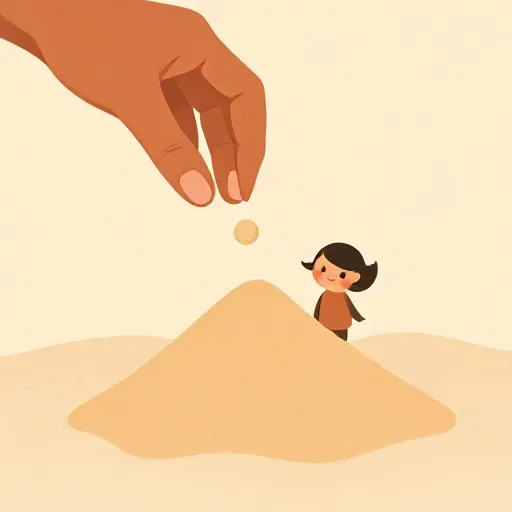
The most striking use of many values comes from fuzzy logic, which deals with vague concepts. Think of a heap of sand. If you remove one grain at a time, at what exact point does it stop being a heap? This is the Sorites paradox. Fuzzy logic answers by letting truth come in degrees — numbers between 0 (completely false) and 1 (completely true). A statement like “This pile is a heap” might be 1.0 for 100,000 grains, 0.99 for 99,999 grains, and slowly drop until it is 0 for a single grain. The tiny steps never force you into a sharp, all-or-nothing falsehood.
Another innovation came from the American logician Nuel Belnap. He thought about a computer that receives reports from different sources. One source might say “The system is down,” another might say “The system is up.” The computer can’t just pick one. Belnap’s four-valued logic adds two new values: one for no information (neither true nor false) and one for conflicting information (both true and false). These generalized truth values help machines reason when data is messy, incomplete, or contradictory — a problem that shows up all the time in real life.
Why It Still Matters: Thinking in Shades
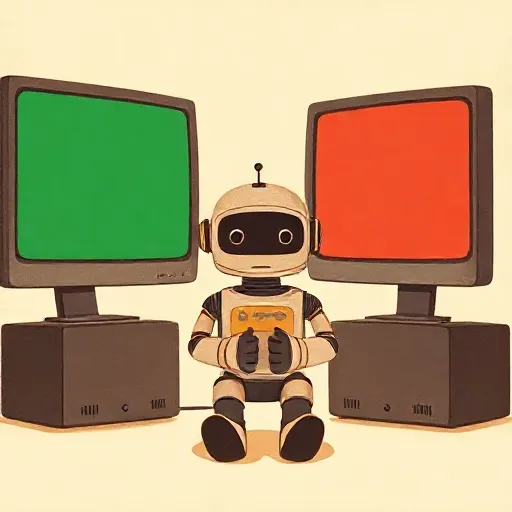
You probably face truth-in-shades every day without noticing it. A friend tells you a new song is “good,” another says it’s “just okay.” You feel the movie was partly thrilling but also too long. When you argue about whether something is “really” a sport, or whether a certain food counts as “spicy,” you’re dancing around the boundaries that fuzzy logic tries to capture. The idea that truth isn’t always a simple yes-or-no isn’t just a philosopher’s fantasy — it’s a tool for thinking more carefully about the blurry edges of the world.
Frege’s bold move — treating truth and falsity as objects — made all of this possible. By giving logic something to study (the True and the False, and later their many cousins), he turned reasoning into a science of what can be preserved through inferences. His slingshot argument still provokes debate, and his view that “true” is redundant still makes people scratch their heads. But the outcome is richer than a single answer. Today’s logics — classical, fuzzy, four-valued, and beyond — are like different lenses for seeing how truth works, each useful in its own way. So the next time you wonder whether something is true, remember: you’re not just putting a label on it. You might be pointing at a strange, invisible object — and that object has a whole hidden structure.
Think about it
- If a sentence like “This chili is spicy” can feel truer for some people than for others, does it still make sense to call it plainly true or false?
- Imagine a computer gets one message that says “The server is down” and another that says “The server is up.” Should the computer treat both as true? How might that help it make better decisions?
- Is there any real difference between saying “It is true that grass is green” and just saying “Grass is green”? Why do you think people sometimes add the words “it is true”?