Can You Define Truth? These Philosophers Said Don’t Even Try.
The Chocolate in the Wrong Cupboard
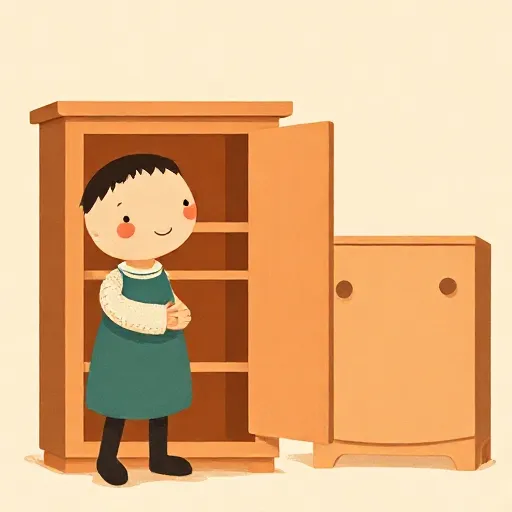
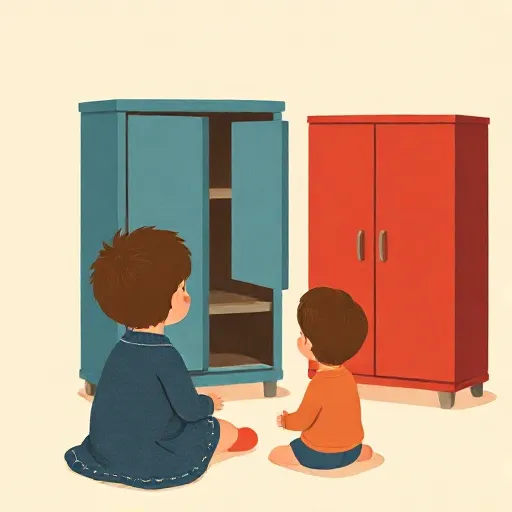
Imagine you are four years old, watching a puppet show. The star is a puppet named Maxi. Maxi puts his chocolate into a blue cupboard and then leaves the room. While he’s gone, his mother sneaks in and moves the chocolate to a red cupboard. When Maxi returns, where will he look?
If you said “the blue cupboard,” you already understand something that has puzzled philosophers for over two thousand years. You know Maxi has a false belief — a thought that doesn’t match the way things really are. But what makes a belief false, and what makes one true? Can you explain what truth actually is without just saying “the opposite of false”? Many great thinkers have answered, “No, you can’t.” They hold that truth is a primitive concept — something so basic it cannot be defined with simpler ideas.
Frege’s Treadmill: Why Definitions Get Stuck
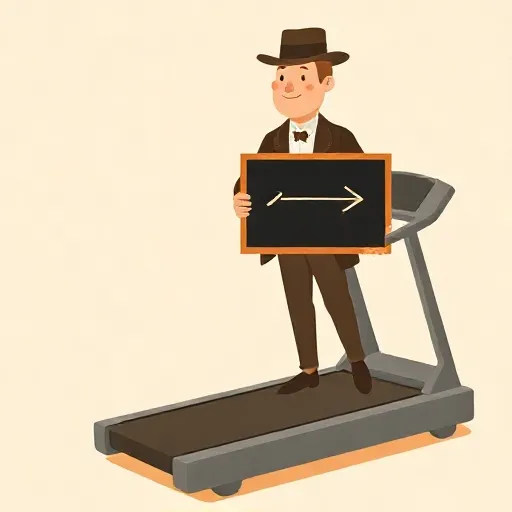
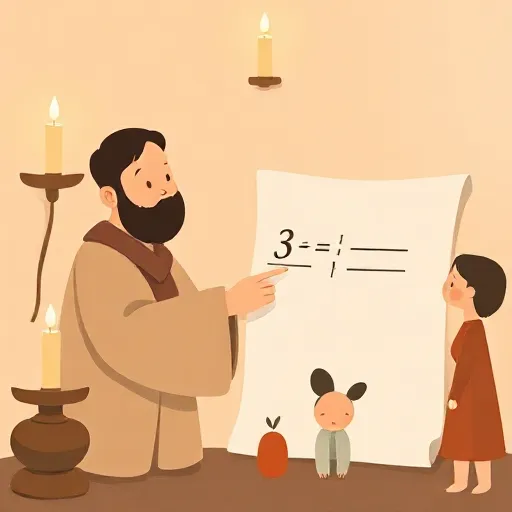
The most famous argument for this view comes from a German mathematician and philosopher, Gottlob Frege (1848–1925). He compared trying to define truth to running on a treadmill: you move your legs, but you never get anywhere.
Here is what he meant. Suppose someone says, “Truth means that a belief corresponds to reality.” Frege would ask: How do you know that the belief corresponds to reality? You would have to check whether the belief that the belief corresponds to reality is true. But that means you already need to know what truth is just to check the definition. You are looping forever. The same thing happens with any other definition — whether you say truth is what all reasonable people would agree on, or what works in practice, or what hangs together in a coherent system. Each time, Frege insisted, you end up using the very idea of truth you were trying to explain.
Frege concluded that the concept truth (the mental tool we use when we think “that’s true”) is unique and undefinable. We all grasp it, but we cannot take it apart into smaller pieces. This view is called conceptual primitivism.
Moore and Russell: The Philosophers Who Changed Their Minds
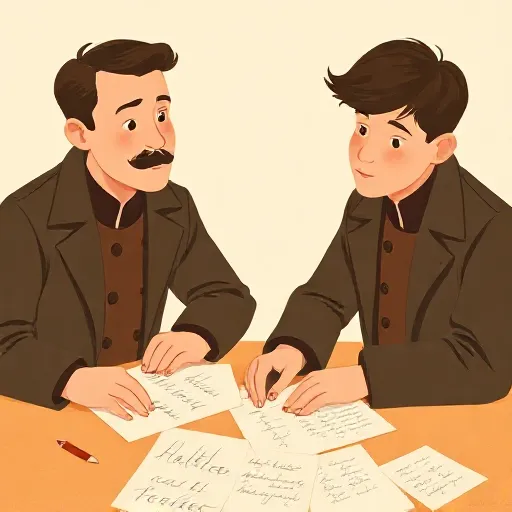
At the turn of the twentieth century, two English philosophers, G.E. Moore (1873–1958) and Bertrand Russell (1872–1970), also briefly believed that truth was primitive. In 1899, Moore argued that a proposition — like “2+2=4” — is true just because of the way its own parts fit together, not because it points to some external reality. What makes the relation true rather than false “cannot be further defined,” he wrote. Russell, a few years later, agreed: “What is truth, and what falsehood, we must merely apprehend, for both seem incapable of analysis.”
But both men soon abandoned that position. Russell gave three reasons, and two of them still worry philosophers today. First, he thought that if truth were primitive, we couldn’t explain the difference between a true thought and a false thought — they would both just sit there, each wearing a mysterious label. Second, Russell was uncomfortable with objective falsehoods, the idea that a false belief is a real, mind‑independent thing out in the world. If nobody existed, he felt, there would be no mistakes. A third concern was that we seem to need a theory of reference — how our words hook onto things — to make sense of truth, and a primitive account just leaves that mystery unsolved. Moore developed similar worries, and both men spent the rest of their lives defending correspondence theories, where truth is a relation between a belief and a fact.
Davidson’s Big Idea: Truth Holds Up Language
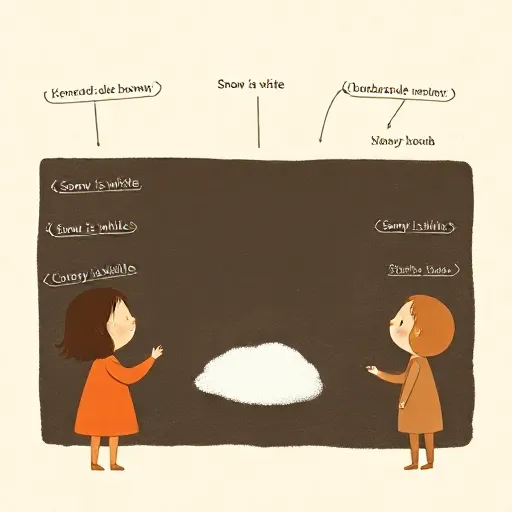
Not everyone followed Moore and Russell down the correspondence path. In the late twentieth century, the American philosopher Donald Davidson (1917–2003) argued that truth is primitive in a way that actually solves problems rather than creating them. Davidson’s inspiration came from the logician Alfred Tarski, who had shown how to define truth for particular formal languages. But Davidson drew a different lesson: the fact that we cannot define a general, all‑purpose truth predicate suggests that the everyday concept truth is simply bedrock.
And that, Davidson said, is good news. Instead of trying to crack truth open into smaller concepts, we should study how it connects to other things. His most famous move was to link truth to meaning. A sentence like “Snow is white” means what it does, Davidson proposed, because it is true exactly when snow is white. If you have a theory of truth for a speaker’s language, you can use it to understand what that speaker means. Truth, in this picture, is not something lazy or mysterious — it is the invisible scaffolding that holds up all our talk about the world.
Other philosophers, like Ernest Sosa (born 1940) and Jamin Asay (a philosopher working today), have also defended versions of conceptual primitivism. Asay’s theory, called primitivist deflationism, makes a sharp split: the mental concept truth is fundamental and cannot be defined, but the property truth (the real‑world feature that true thoughts share) is a thin, insubstantial thing with almost no explanatory power of its own. The heavy lifting is done by our primitive concept, not by some grand metaphysical structure.
Truth in the Lab: What Babies and Apes Tell Us
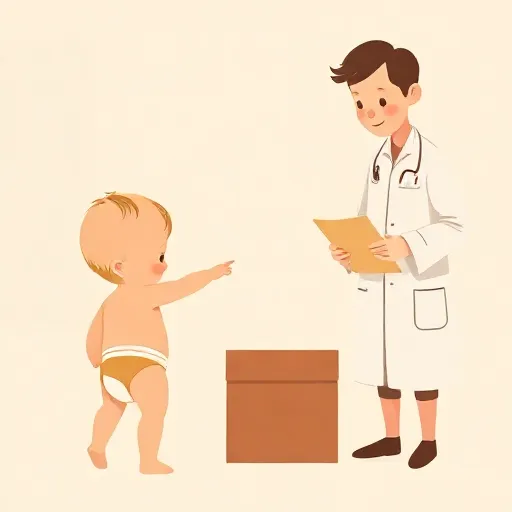
You might wonder whether any of this can be tested out in the world. In fact, psychologists have gathered a mountain of evidence from false‑belief tasks — experiments much like the Maxi puppet show. In the original 1983 study, children under about four years old usually failed; they pointed to where the chocolate actually was, not where Maxi would mistakenly look. But later studies, using subtler methods like measuring where babies look first, suggest that infants as young as six months already expect people to act on their beliefs, even when those beliefs are false.
If that’s right, it tells us something important. To understand that someone else has a false belief, you need at least the concept falsity, and very likely the concept truth as well. If these concepts show up so early — before children have learned to tie their shoes or count to ten — that fits beautifully with the idea that truth is primitive. It might be part of the basic toolkit our minds come with, not something we build out of other ideas later.
Why It Matters: The Brick at the Bottom of Thought
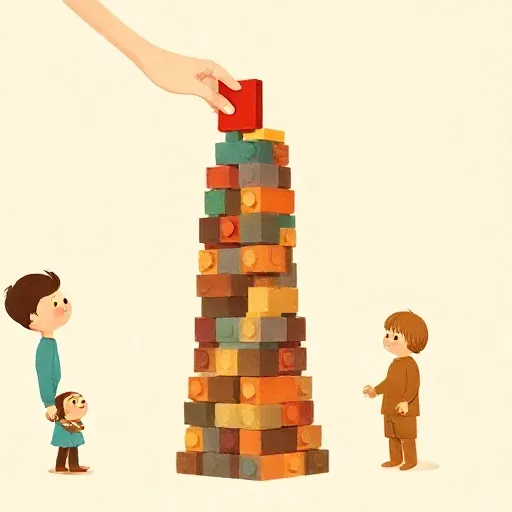
So who cares whether truth can be defined? The debate affects how we explain everything from lying to learning a language. If truth is primitive, then every time you call a statement true, you are using a mental tool that cannot be replaced by something clearer. That’s not a failure — it’s a feature of how our minds work. Just as you can’t explain what “red” looks like to a person who has never seen color, you can’t explain what truth is in simpler terms to someone who didn’t already get it.
And yet, because truth connects to meaning, knowledge, and belief, it keeps philosophy honest. When scientists study animal minds, when teachers talk about evidence, when you argue with a friend about whether something really happened, you all rely on a shared feel for truth that resists being broken down. The primitivist says: stop looking for smaller pieces. Instead, notice how much heavy lifting this one simple idea does for you every day.
Think about it
- If you couldn’t use the word “true” or “false,” could you still think that something was wrong? How would that thought feel?
- Imagine a friend says, “I know my team will win tomorrow.” Can you treat that the same way as “I know 2+2=4”? What does that tell you about truth?
- If a scientist built a perfect lie‑detector that only reads brain patterns, would you still need the word “truth” to understand what it was detecting?