Does Truth Mean Matching the Real World?
A Map You Can’t Trust?
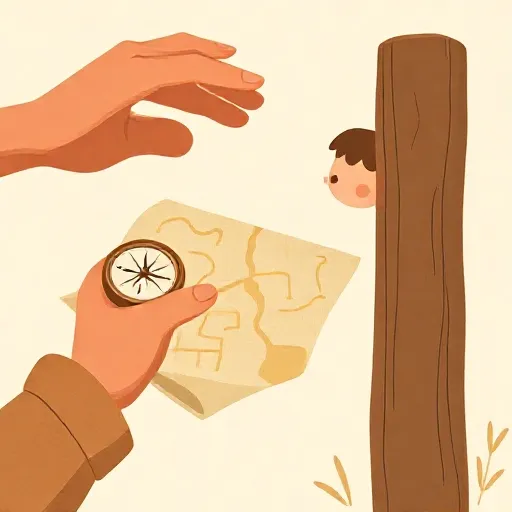
You’re hiking. You unfold a map and squint at the trail sign. The squiggly line on paper says you should be at a fork with a large oak. You look up. There it is—a huge oak, right where the map promised. The map is true. If the map showed a waterfall and there was no waterfall, it would be false.
That, at its simplest, is the correspondence theory of truth: a belief or statement is true when it matches the way things actually are. The map corresponds to the territory. The sentence “snow is white” is true because snow really is white. This idea feels almost too obvious to argue about. And yet, for more than two thousand years, philosophers have argued about it fiercely. The central worry is this: how do we ever check the match between our minds and the world? Can we step outside our own heads to compare?
Aristotle’s Simple Rule, and How It Grew
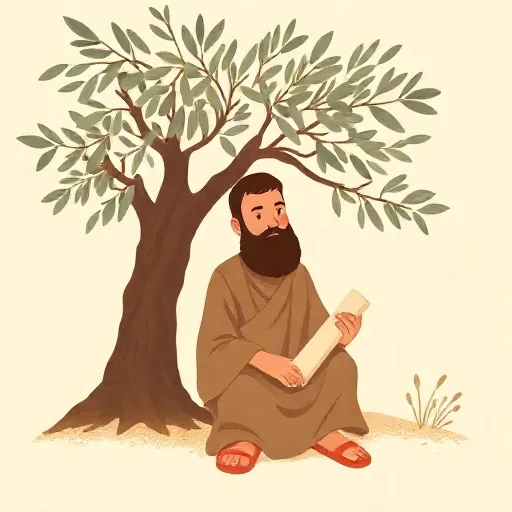
The ancient Greek philosopher Aristotle (384–322 BCE) captured the correspondence idea in a famously compact way. He said that if you say something is and it actually is not, you speak falsely; if you say it is and it is, you speak truly. That’s a very thin version of the theory—almost just a reminder of what the word “true” means.
Centuries later, the medieval thinker Thomas Aquinas (1225–1274) gave the idea more flesh. He said truth is the “equation of thing and intellect,” meaning a judgment is true when it conforms to external reality. For Aquinas, a thought or a sentence is like a measuring stick: it’s true when it lines up with the thing it’s measuring.
In the early 20th century, philosophers Bertrand Russell (1872–1970) and G. E. Moore (1873–1958) sharpened the picture. They said a belief is true if there is a fact that corresponds to it. The truthbearer—the sentence or belief that can be true or false—gets its truth from a truthmaker: some chunk of reality, a fact. If you believe “the cat is on the mat,” that belief is true just in case there actually exists a fact—the cat’s being on the mat. So the correspondence theory became firmly fact-based.
The Big Worry: Can We Ever Check?
If truth means matching reality, you might think you have to step outside your mind and compare your belief with the world directly. But that seems impossible. As the philosopher Immanuel Kant (1724–1804) stressed, we can never get at things as they are in themselves—only as they appear to us through our senses and understanding.
This is the big epistemological objection. If you can’t get outside your own head, how could you ever be sure your belief corresponds to a fact? It sounds like a recipe for never knowing anything.
Correspondence theorists reply that you don’t need to do a side-by-side comparison the way you’d compare two photographs. When you see a cat on a mat, your perceptual system gives you a belief that the cat is on the mat—and that belief is caused, in part, by the very fact that makes it true. You don’t need to “step outside” because perception already connects you to the world. Think about a glass of water: you can know it’s water just by tasting it; you don’t need to run a chemistry lab to confirm it’s H₂O. Similarly, knowing that your belief is true doesn’t require inspecting the correspondence directly. Still, the worry pushes philosophers to think harder about how minds and reality connect.
Does Every Truth Need a Fact?
Here’s another problem. “Murder is wrong” seems true. But is there a fact—a chunk of reality, like a rock or a magnetic field—that makes it true? Moral truths, logical truths, and truths about beauty don’t sit easily in a fact-based picture. This narrowness objection says the correspondence theory might work for science and everyday objects, but fails for ethics, aesthetics, or logic.
Some philosophers bite the bullet and say there really are moral facts, even if they’re not like physical facts. Others say moral statements aren’t really true or false at all—they’re expressions of feelings or commands disguised as factual claims. A newer option, called pluralism, says truth isn’t one-size-fits-all: in some domains (like ordinary physical claims) truth is correspondence to facts, but in other domains truth may be something else, such as fitting well with a network of beliefs. This rival view is the coherence theory of truth: a belief is true if it coheres with a whole system of beliefs, like pieces that snap together to form a puzzle. But coherence theories face their own trouble—two different people can have perfectly coherent belief systems that contradict each other. That would mean a statement could be “true for you” and “false for me” in a way that makes many philosophers uncomfortable.
Why This Fight Matters to You
Every time you ask “Is that true?” you’re stepping into this argument. When you check a fact online, you are acting as if truth means matching reality. When you argue about whether a rule is fair, you might be assuming there is something in the world that makes moral claims true or false. If truth were just fitting together with your other beliefs, then two people who disagree might both be “right”—and that shakes the way we think about learning, science, and justice.
The correspondence theory gives us a picture of an objective world our beliefs can be about. It doesn’t promise we can achieve perfect certainty, but it does anchor the idea that we can get things wrong or right. The debates about it keep pushing us to examine how our minds reach the world, and whether we can know anything at all. So the next time you unfold a map—whether a paper one or a map you carry in your head—remember that the puzzle of how the map matches the territory is one of the deepest puzzles around.
Think about it
- If you have a very vivid dream that feels real, is the dream true? What could make it true or false?
- Suppose two people have completely different beliefs about what is right or wrong. If truth is matching reality, how could we find out who is right? If truth is just fitting your other beliefs, does that mean they’re both right?
- If a scientist tells you that a new discovery changes what we thought was true, does that mean truth itself changed, or just our beliefs? How would you decide?