
Is a True Thought the Same Thing as a Fact?
A Thought That Is the World
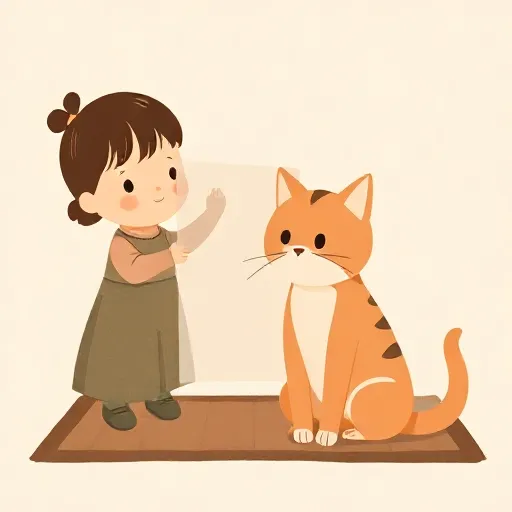
In 1902, a young philosopher named G. E. Moore (1873–1958) wrote something that sounded almost crazy. He said that when you make a true judgment — like thinking “the cat is on the mat” — that thought is not a picture of the world. It is actually the very same thing as the fact itself. His friend Bertrand Russell (1872–1970) agreed. Together, they launched what is now called the identity theory of truth.
To get what they meant, think about a simple thought: The sky is blue. We can call this a proposition, or a thinkable — something that can be thought. Now, there is also a fact: the sky is blue. The identity theory says that the true thought and the fact are identical. They are the same entity, not two separate things that match up.
Why would anyone believe that? Because when you look closely, there seems to be no gap between a true thought and the fact that makes it true. If you say, “The cat is on the mat,” and it’s true, what else is there besides the cat being on the mat? The fact is just the cat’s being on the mat, and the thought’s content is exactly that. The identity theory captures something deep: our minds, when they get things right, may be directly touching reality.
The Older Idea: Pictures and Copies

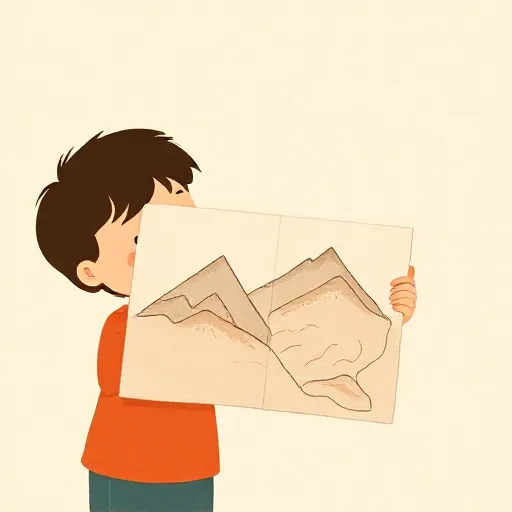
Most people, if they think about truth at all, picture something like a map. A map is true if it corresponds to the real streets and mountains. This is the correspondence theory of truth: a belief or sentence is true just when it corresponds to a fact. For centuries, this seemed like common sense.
But identity theorists point out a problem. Look at a true thought and the fact it supposedly corresponds to. Take the proposition the cat is on the mat and the fact the cat is on the mat. Can you find any difference between them? The words we use to describe them are almost the same. If you ask why the proposition is true, and answer “because it’s a fact that the cat is on the mat,” you haven’t really explained anything — you’ve just said the same thing twice. The correspondence relation seems to collapse into identity.
As the logician Gottlob Frege (1848–1925) noted, a relation of correspondence requires two distinct things. But if the fact and the true thought look identical, then they aren’t distinct. So the relation isn’t correspondence; it’s identity. You might think of it like two puzzle pieces that fit perfectly, only to realize they are the same piece, just seen from different angles.
Moore, Russell, and Frege: Three Roads to Identity
Even though they agreed on the core idea, Moore, Russell, and later Frege didn’t picture “facts” in exactly the same way. Their disagreement helps us see different flavors of the identity theory.
Moore and Russell thought of facts as things made of real objects and properties in the world. For them, the true proposition Socrates is wise is literally the same entity as the worldly fact: the actual wise Socrates. This is a Russellian proposition — a proposition located at the level of reference, the world of things.
Frege, however, introduced a subtle distinction. He said that thoughts belong to a different layer of reality, which he called sense. Sense is like the way we think about objects, not the objects themselves. So a Fregean thought that Socrates is wise is a sense-level entity. And Frege held that this sense-level thought, when true, is identical with a fact that also lives at the level of sense. So for Frege, facts were not physical things; they were, in a way, true meanings.
Some later philosophers have combined these views, saying that both sense-level facts and reference-level facts exist. But no matter the details, the central claim remains: a true thought is not a mirror; it is the fact.
The Problem of Disappearing Facts
The identity theory faces a puzzle that seems to threaten its core. Imagine the thought Socrates is wise. Suppose it’s true. Now imagine another possible world, exactly like ours except Socrates is not wise — maybe he is foolish. Does the thought Socrates is wise exist in that world? Yes, because we can think about it. But does the fact that Socrates is wise exist there? It seems not, because in that world Socrates isn’t wise. So the thought exists without the fact, meaning they can’t be identical. This is the modal problem — it concerns what is possible in different worlds.
Identity theorists have a clever reply, first worked out by Richard Cartwright in 1987. They say: the true thought and the fact are indeed identical. That entity — call it the wise Socrates — exists in all possible worlds where Socrates exists, including worlds where he is foolish. In those foolish worlds, the entity still exists, but it is no longer a fact. Being a fact is like a property some entities have. So the entity is the same, but it loses the property of “being a fact” when the proposition is false.
Think of a grumpy Socrates. Grumpy Socrates is identical to Socrates. Now, in a world where Socrates is cheerful, grumpy Socrates still exists — he’s just not grumpy there. The person is the same, but the grumpiness isn’t. Similarly, the fact that Socrates is wise can exist in a world where it isn’t a fact. So the identity holds; there is no separate “fact” that disappears.
Trouble with Words: Calling a Circle a Square?
Another objection comes from everyday talk. We say “propositions are true,” but we never say “facts are true” — we say “facts obtain” or “facts are the case.” If true propositions and facts are identical, shouldn’t the same words work for both? For example, you can say “Daniel remembers the fact that it’s a leap year,” but does it mean the same as “Daniel remembers the true proposition that it’s a leap year”? Some philosophers think these sentences have different truth-values. If you memorized a list of facts without knowing they were facts, you might remember the fact but not as a fact. That seems to show a difference.
Identity theorists reply that this is a trick of language, not reality. After all, the planet Venus can be called both the “morning star” and the “evening star” — those phrases don’t sound alike, but they pick out the same bright dot in the sky. Similarly, “fact” and “true proposition” are two labels for the same underlying thing. The reason we avoid saying “the fact is true” is just a habit of grammar, not a sign of two different entities. When we get the right context, we can see that that Socrates is wise is both a true proposition and a fact; the difference is in how we describe it, not in what it is.
The debate over these linguistic puzzles continues, but identity theorists think they can handle them without giving up the central insight.
Why It Still Matters: Touching Reality with Your Mind

So why should you care about a hundred-year-old debate over truth? Because the identity theory makes a striking claim about your own mind. If it’s right, then whenever you have a true belief — that your friend is happy, that Paris is the capital of France, that 2+2=4 — your thought literally is a fact. You are not just carrying a map inside your head; you are holding a piece of the world itself. Learning becomes a kind of discovery where reality enters your thinking directly, without any gap.
That idea also forces us to ask hard questions. What exactly is a fact? Could there be facts that no one has ever thought about? If facts just are true thoughts, does that mean facts depend on thinkers? Some philosophers, like John McDowell (born 1942) and Jennifer Hornsby (born 1951), defend versions of the identity theory today, and they argue that the world is not a collection of bare things, but of thinkable facts. That means our minds and reality are not separate realms.
Next time you know something for sure, try to locate the fact. Is it out there in the world, or in your mind? Or could it be that the line between “out there” and “in here” is blurrier than you thought? The identity theory of truth, strange as it sounds, invites you to see yourself as a thinker who is already in contact with reality — not just forming pictures, but touching the way things really are.
Think about it
- If your true thought that “the cat is on the mat” is the same thing as the fact, does the fact depend on your thinking it? Could that fact exist before anyone ever thought it?
- Imagine a world without any minds at all. Would facts like “water is H₂O” still exist? Or would they only come into being when someone thinks them?
- When you learn something new — say, that the Amazon River once flowed backward — does the fact become true only when you learn it, or was it always true? Which answer fits better with the identity theory?