Is Truth Something We Discover, or Something We Make?
The Fight Over Facts: Moore, Russell, and the Vanishing Propositions
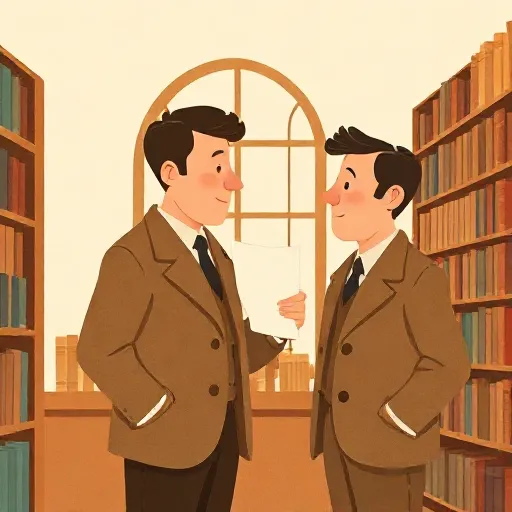
In 1898, two young philosophers at Cambridge University—G. E. Moore (1873–1958) and Bertrand Russell (1872–1970)—rejected an old idea. They had been taught that the physical world might just be a dream of the mind, a view called idealism. They wanted to put reality back on solid ground. Yet, strangely, their first big idea about truth made facts and truths collapse into one thing.
Moore and Russell started with a clear picture. They said that what you believe—the content of your thought—is a proposition. For example, the proposition that the cat is on the mat. They then asked: what makes that proposition true? Their answer, briefly, was the identity theory of truth: a true proposition is simply identical to a fact. The fact that the cat is on the mat just is the true proposition. There is no gap between the two.
This sounds neat, but it crashed into a problem. If true propositions are facts, what are false propositions? If I believe that the cat is on the rug when it isn’t, the proposition seems to describe something that doesn’t exist. Moore and Russell began to think that false propositions would have to be weird, shadowy copies of facts—and that would somehow make them true. So they declared that propositions themselves don’t really exist. No false propositions, no propositions at all.
With propositions gone, truth had to be about something else. So Moore and Russell turned to a new picture: the correspondence theory of truth. A belief is true if it corresponds to a fact. If I believe the cat is on the mat, and there really is a fact—a particular cat bearing the property of being on a mat—then my belief matches reality, and it’s true. If no such fact exists, the belief is false. This idea, that truth is a match between mind and world, became one of the most important in all philosophy.
Truth as a Coherent Web: The Idealists’ Answer
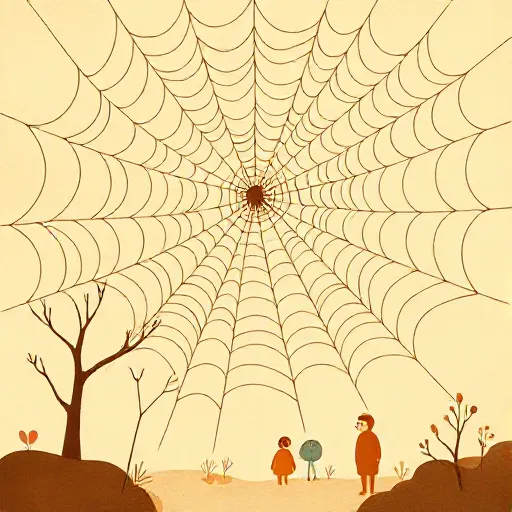
Not everyone was convinced. While Moore and Russell chased facts, another group of philosophers—the British idealists—built a different theory. They argued that truth is not a match with some separate world. Truth, they said, is coherence.
The most famous defender was Harold Joachim (1868–1938). In his coherence theory of truth, a belief is true if it fits into a single, consistent, and mutually supporting system of beliefs. Think of a giant spiderweb: each thread represents a belief, and the web holds together only because every strand connects to the others. A loose, dangling thread (a belief that doesn’t fit) isn’t part of the true web at all.
Joachim went even further. He thought that no single belief could be fully true by itself—only the entire system could be “the truth.” Every judgment we make is partially true, depending on how much of the whole it captures. This view, tied to the idea that reality itself is a kind of mind-shaped whole, gives a very different feel from the correspondence picture. For a coherence theorist, when you say “the cat is on the mat,” you’re really saying that belief fits harmoniously with all your other beliefs about cats, mats, space, and perception. It no longer depends on a hidden, mind-independent fact.
Most philosophers today think you can’t have a coherence theory of truth without some form of idealism—the view that the world is ultimately mental. If there’s no world separate from our system of beliefs, then truth can only be a property of that system. The coherence theory pushes us to ask: do our beliefs describe an independent reality, or do they somehow create it?
Truth as What Works: The Pragmatist Challenge
Across the Atlantic, American philosophers had yet another proposal. For the pragmatists, truth isn’t a static match or a static system—it’s something that works over time. Charles Sanders Peirce (1839–1914) gave this a memorable slogan: Truth is the end of inquiry. Imagine scientists investigating a question for centuries. At the very limit, when all the evidence is in and no one can doubt the answer, whatever they finally agree on—that is the truth.
William James (1842–1910) added a more personal twist: Truth is what is satisfactory to believe. By that he didn’t mean you can believe whatever makes you happy. A true belief, James said, is one that never clashes with future experience. If you believe there’s a door ahead, and you reach out and find a handle, that belief works; it’s true. If you walk into a wall, the belief fails. Truth, in this view, is about practical consequences, not about invisible facts.
Notice the difference from the coherence theory. The pragmatist expects inquiry to be answerable to an independent world—science tests ideas against observation. But the pragmatist also insists that philosophy should not talk about truth as something unreachable, “transcendental,” and cut off from human experience. The meaning of truth has to be something we can use. This pragmatic spirit would reappear a century later in debates about whether truth is relative to our ability to check it.
Tarski’s Logical Trick: Truth Without the Heavy Lifting
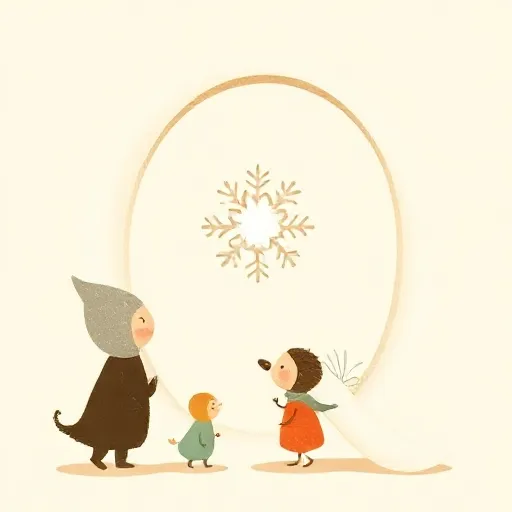
By the 1930s, the conversation took a surprising turn—away from deep metaphysics and toward logic. Alfred Tarski (1901–1983), a Polish logician, offered a way to talk about truth that seems so obvious it’s puzzling that it’s a discovery. He started with a simple requirement, now called Convention T: any decent theory of truth must imply every sentence of the form:
“Snow is white” is true if and only if snow is white.
This is called a Tarski biconditional. For any sentence we put inside quotes, the theory must deliver the equivalence between the quoted sentence’s truth and the sentence itself. That’s it? That sounds almost trivial. But Tarski showed that for an entire language, you can define truth in a step-by-step, recursive way.
He demonstrated with terms and predicates. First, you define reference: the word “snow” refers to the stuff snow. Then you define satisfaction: an object a satisfies the predicate “is white” if and only if a is white. Finally, an atomic sentence like “Snow is white” is true if the referent of “Snow” satisfies “is white.” For complex sentences, you repeat the pattern: “Not φ” is true if and only if φ is not true; “φ or ψ” is true if and only if φ is true or ψ is true. This recursive machinery builds truth for infinitely many sentences from a few base clauses.
Tarski’s approach doesn’t take sides in the old fights. It doesn’t say that facts exist, or that truth is coherence, or that truth is what works. It just shows how to give a logically precise, extensionally correct truth predicate for a language. This opened up a new possibility: maybe the whole “nature” of truth is nothing more than this logical trick.
Does Truth Depend on Us? Realism vs. Anti-Realism
Tarski’s neutral toolbox didn’t end the deep questions—it sharpened them. Many philosophers still felt that truth must be connected to whether there’s a mind-independent world. This is the clash between realism and anti-realism.
A realist about truth holds two things. First, the world exists objectively, independently of how we think about it. Second, our claims are about that world. This naturally fits with the correspondence picture: a statement is true because reality is a certain way. A strong mark of realism is bivalence—the principle that every statement is either true or false, whether we can know which or not. There is a fact of the matter about everything, from the number of hairs on Napoleon’s horse to whether there are purple trees on a planet we’ll never see.
Anti-realists, led by Michael Dummett (1925–2011), reject bivalence. They argue that truth cannot transcend our ability to recognize it. One anti-realist view is verificationism: a claim is true only if it is in principle verifiable—only if there exists some procedure we could carry out to check it. If a statement about a faraway galaxy is utterly impossible for any human to verify, then, for an anti-realist, it has no definite truth value. It’s not true, and it’s not false. Truth becomes tied to our epistemic situation, to what we can know.
Notice the difference: a realist says truth is “out there,” waiting; an anti-realist says truth is shaped by the limits of human inquiry. This isn’t just logic-chopping. It affects how we think about history, ethics, and science. If the past leaves no trace, are statements about it true or false? If there’s no way to check a moral claim, can it be true? The realist-anti-realist split turns truth into a bridge between us and the world—or a mirror of our own capacities.
Why This Still Matters: Saying Something That’s True

You might wonder: does any of this make a difference when you simply tell a friend “that’s true”? It does. Every time you assert something, you’re stepping into this debate.
There’s a famous platitude: truth is the aim of assertion. When you say “It’s raining,” you present your claim as true. Even if you’re lying, the point of the practice of assertion is to say something that matches reality. That’s why a lie feels wrong—it violates the rule that built the game.
Understanding truth also helps you see what you’re doing when you generalize. Without the word “true,” how would you say “Everything the scientist said is true”? You’d need to list every single claim she ever made—impossible! The truth predicate is a powerful shortcut, a device of disquotation: it lets you move from a quoted sentence back to the sentence itself. Some philosophers, called deflationists, think that’s all truth does. There’s no deep nature of truth, they say; it’s just a logical tool that helps us sum up.
But even deflationists have to explain why that tool matters so much to us. We care about truth not just as a convenient device, but because it connects our words to the world—or to each other. Whether you think truth is correspondence, coherence, something we construct through inquiry, or a neat disquotational trick, the question will follow you. It’s inside every “Is that so?” and every “Really?” The argument Moore and Russell started in a Cambridge room is still yours.
Think about it
- If a friend says “I’m telling the truth,” but you catch them in a lie, what makes their statement false—something about the world, or something about the inconsistency in their story?
- Imagine a planet so far away that no human will ever see it. A scientist says “There are purple trees on that planet.” Is that claim true or false right now? If we can never check, does the question even have an answer?
- Would anything change in your life if you stopped using the word “true” and just said what you saw, without adding “that’s true”? Could we get by without claiming truth, or would something be missing?