Are Facts Real Things, or Just True Sentences?
Your Window, Two Flavors of “Fact”
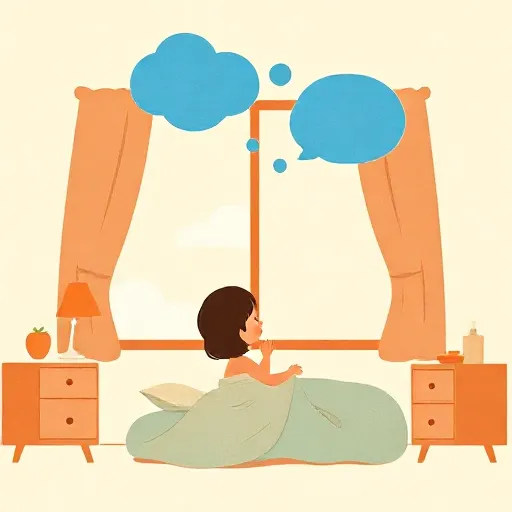
Imagine you look out the window and say, “It’s a fact that it’s raining.” You’ve just pointed at something—but what? Is the fact the same as the sentence you spoke? Or is it the wet pavement and the falling drops outside?
Philosophers have noticed that we use the word “fact” in at least two different ways. The Scottish thinker David Hume (1711–1776) famously wrote:
All the objects of human reason or inquiry may naturally be divided into two kinds, to wit, Relations of Ideas and Matters of Fact.
For Hume, a matter of fact is something you learn by looking at the world—a rainy street, a sad friend, a barking dog. This is the everyday sense. But philosophers have also focused on a second use, when we say “It is a fact that…” This functorial fact (from “It is a fact that…”) turns a sentence into a new kind of thing—a thing that seems to be about the world in a special way. The rest of this article is about that second, stranger sense.
Facts as True Thoughts: Too Simple?
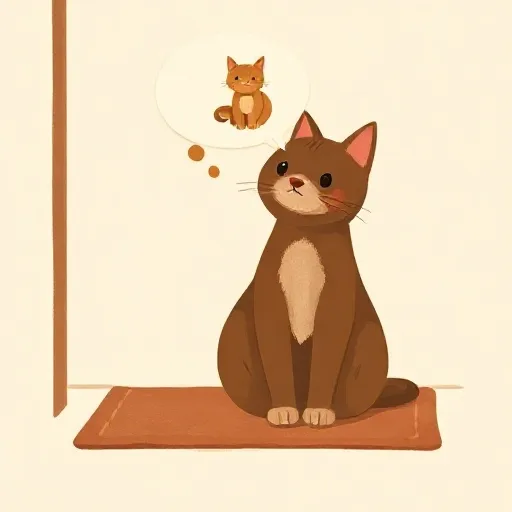
One straightforward view says a fact is just a true truth-bearer. A truth-bearer is something that can be true or false—like a sentence, a belief, or an abstract proposition. According to this view, the fact that the cat is on the mat is simply the true proposition that the cat is on the mat. Nothing extra, no hidden stuff in the world.
This view is clean and simple. It doesn’t require us to add any spooky “fact-objects” to reality. But many philosophers find it unsatisfying. When you look at the cat on the mat, you feel you are seeing a real situation, not just a true sentence inside your head. You might think, “The fact is out there, not in my mind.” That intuition pushes philosophers to look for a richer account of what a fact could be.
Facts as the World’s Lego Pieces: Obtaining States of Affairs
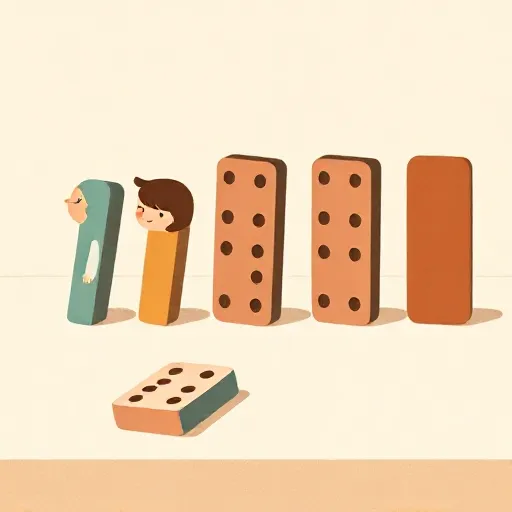
Ludwig Wittgenstein (1889–1951), in his early book Tractatus, made a bold claim: “The world is the totality of facts.” He didn’t mean facts as true sentences. He meant that reality is built out of states of affairs—ways things could be—and a fact is a state of affairs that actually obtains (happens, exists). Imagine a giant catalogue of every possible arrangement of objects and properties. The raining-outside arrangement either obtains or it doesn’t. If it does, that’s a fact. If not, it’s just a state of affairs that never came true.
On this view, facts are the Lego bricks of the universe. Crucially, Wittgenstein held that all facts are contingent—they could have been otherwise. The fact that it’s raining exists because it happens to be raining; in another world, it isn’t. This idea puts facts firmly inside the physical, changing world, not in some abstract realm of truths.
When Objects and Properties Get Tied Together
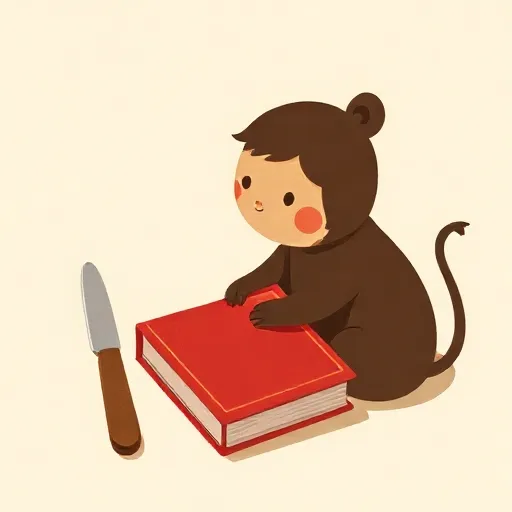
A third popular view takes facts to be sui generis entities—a special, basic kind of thing—where objects and properties are literally bound together. The philosopher Bertrand Russell (1872–1970) once argued that when you perceive a scene, your perception has a single object: something like a knife to the left of a book. He first called this a “complex” and later simply “a fact.” On this account, the fact isn’t a sentence or a mere obtaining situation—it’s a composite whole made of the knife, the book, and the relation left-of all glommed together.
This view makes facts very world-like. But it raises a puzzle about parts. Normally, the parts of a whole belong to the same general kind as the whole: parts of a chair are material things, parts of a song are sounds. Yet a fact that mixes an object (the knife) and a property (being left of the book) crams two very different kinds into one whole. Some philosophers argue this violates a basic rule of how wholes and parts work, which makes the “glued-together” picture harder to swallow.
The Mystery of Negative Facts and the One Great Fact
Many philosophers believe facts are what make truths true—a view called truthmaker theory. If the proposition “the cat is on the mat” is true, there must be a fact (the cat’s being on the mat) that makes it so. But this runs into trouble with negative truths. What makes it true that “there is no hippopotamus in this room”? If facts are positive things in the world, what fact could correspond to an absence?
One solution, defended by the Australian philosopher David Armstrong (1926–2014), introduces totality facts. The fact that these are all the facts there are—a kind of “that’s all, folks” super-fact—ensures that nothing extra (like a hippo) sneaks in. Many philosophers find this awkward.
A deeper challenge comes from the Slingshot Argument. If you accept certain logical principles—that logically equivalent sentences correspond to the same fact, and that replacing a name with another name for the same thing doesn’t change the fact—you end up proving that all true sentences correspond to one single Great Fact. That would mean “snow is white” and “grass is green” are both made true by the very same fact, trivializing the whole idea of distinct facts. Whether the argument is sound is hotly debated, but it shows how slippery the notion of a fact can be.
Why Are There Any Facts at All? Brute Facts
Some facts seem to push explanation to its limits. A brute fact is simply a fact that has no explanation—it just is. Why does the world exist? Why are the laws of physics the way they are? These might be brute facts, bedrock reality with nothing deeper underneath.
The Principle of Sufficient Reason (PSR) says every fact must have an explanation. But philosopher Peter van Inwagen (born 1942) famously argued that the PSR leads to a startling conclusion: if literally every fact has an explanation, then everything turns out to be necessary—nothing could have happened otherwise. Since it sure seems some things are contingent (you almost wore the blue shirt today), many thinkers accept that some facts are brute, unexplainable stops in the chain of reasons. Figuring out which facts are brute is a major project in metaphysics.
Why It Matters: From Your Window to the Cosmos
When you look out that rainy window again—this time with a friend—and disagree about whether it’s a fact that the rainbow will bring a pot of gold, you’re doing philosophy without realizing it. You’re assuming facts are the kind of thing that settle arguments, that they’re solid, that they exist whether we believe them or not.
But what kind of thing are they? If facts are just true thoughts, then your friend’s claim might feel as weighty as yours. If facts are states of affairs in the world, then investigating facts means investigating reality itself. And if some facts are brute, then some questions—like why there’s anything at all—might have no answer, which can be thrilling or deeply frustrating. The debate over facts isn’t just dusty wordplay; it shapes what you think truth, knowledge, and science are all about.
Think about it
- If someone says “It’s a fact that chocolate ice cream is the best flavor,” is that a fact in the same way as “It’s a fact that water freezes at 0°C”? What might be different?
- Imagine a scientist programs a perfect simulation of the universe where all truths are made true by computer code, not physical facts. Would that universe still contain facts?
- If every fact had an explanation, would your future decisions be already determined, or could you still freely choose? Why might that matter for how you see yourself?