

The Strange Idea That ‘True’ Adds Nothing to What You Say
The Classroom Puzzle: What Does “True” Really Add?

You’re in class. Your teacher says, “It is true that Paris is the capital of France.” You think, Paris is the capital of France — why add the word “true”? The little word just points back at the sentence itself. It’s as if someone handed you a stamp that says “EXACTLY WHAT YOU JUST SAID” and you stamp the sentence with it. What’s the point?
Philosophers have a name for this puzzle: the equivalence schema. It says that a statement we’ll name p is true if, and only if, p. In plain words: “Snow is white” is true exactly when snow is white. No surprise there. But for some thinkers, that’s all there is to truth. They belong to a camp called deflationism, because they deflate truth into something tiny and thin. Their opponents, the inflationists, say truth is much more than that — it’s a deep, substantive property like being metal or being alive.
The debate isn’t just wordplay. It shapes how we understand knowledge, science, and even why we trust what people tell us.
Truth’s Real Job: The Ultimate Time-Saver

Frank Ramsey (1903–1930) was one of the first philosophers to spell out a deflationary view. He noticed something strange: when someone says “It is true that Caesar was murdered,” they mean no more than “Caesar was murdered.” The word “true” just cancels itself out. But if it’s so useless, why do we even have it?
Deflationists say the answer is that “true” is a tool for generalizations. Imagine trying to agree with everything your science book says. Without the word “true,” you’d have to list each fact: “The Earth orbits the Sun and water boils at 100°C and plants need sunlight and…”—you’d never finish. But by saying “Everything my science book says is true,” you wrap an infinite list into a single sentence.
This logical trick works because the equivalence schema lets you swap “true” for the sentence itself. Philosophers like W.V.O. Quine (1908–2000) called this disquotationalism: “‘Snow is white’ is true” just disquotes the sentence and drops the quotation marks. Later, Paul Horwich proposed minimalism, saying the same move works for thoughts (propositions) instead of just sentences. In all these flavors, deflationists agree: “true” is not a name for a hidden property. It’s a linguistic device that lets us talk about endless possibilities without going hoarse.
The Inflationist Strike Back: Truth Explains Success
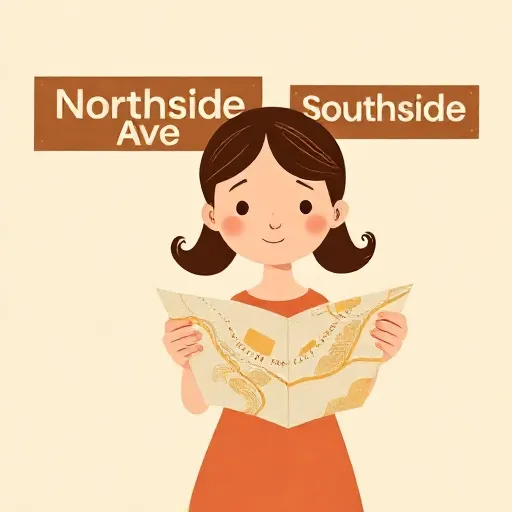
If truth is just a verbal shortcut, it seems crazy to say it makes things happen. Yet many philosophers point out that truth appears in explanations of success. Here’s a story.
Mary wants to go to a party. She believes it’s at 1001 Northside Avenue. If her belief is true, she’ll likely arrive and have a great time. If it’s false, she’ll end up at the wrong door. It sure looks like the truth of her belief causes her success.
Inflationists argue this shows truth is a real property with causal power — something deflationism can’t handle. The philosopher Hilary Putnam (1926–2016) even claimed that truth plays a role in why science succeeds, and that can’t be reduced to a verbal trick.
Deflationists have a clever reply. Mary’s success can be explained without ever mentioning truth. Instead of saying, “Mary’s belief that the party is at 1001 Northside Avenue is true, so she gets there,” you can say, “Mary believes the party is at 1001 Northside Avenue, and the party is at 1001 Northside Avenue, so she gets there.” The “true” just condenses a list of such pairings into a shortcut. The same goes for big scientific explanations: when we say “true beliefs tend to succeed,” we’re really summing up infinitely many specific connections. So, deflationists claim, truth isn’t an extra cause — it’s just a handy wrapping paper for the actual causes. This back-and-forth remains one of the hottest arguments in the debate.
Does Truth Glue Words to the World?

You’ve probably heard someone say, “That’s true — it matches the facts.” The idea that truth is a kind of correspondence between words and reality feels obvious. But deflationists think this metaphor can be misleading.
Take the claim “Snow is white.” If you say “The proposition that snow is white is true because snow is white,” you seem to be offering an explanation. But if the equivalence schema is all there is to truth, then “Snow is white is true iff snow is white” is a necessary, trivial connection. That would turn “Snow is white is true because snow is white” into “Snow is white because snow is white” — a sentence that doesn’t explain anything at all.
Inflationists say this shows deflationism can’t respect our basic intuition that truth depends on the world. Deflationists have several replies. Some suggest that the word “because” creates a special kind of context where you can’t swap perfectly equivalent phrases, so the collapse doesn’t happen. Others argue that “corresponds to the facts” is just a flowery way of saying “is true,” not a deep theory. The dispute has no clear winner yet.
Why It Still Matters: Truth in Your Life

You don’t need to be a philosopher to care about truth. When a friend tells you the bus comes at 4:15, you want that claim to be true; otherwise you might be standing in the rain. We all seem to have a norm: don’t say false things, and try to have true beliefs. But deflationists can agree with that norm while still insisting that “true” is just a generalizing device. The rule “Only say what’s true” just means “Say ‘p’ only if p,” and you can list as many p’s as you like.
Science, too, thrives on truth. Researchers want their theories to be true — but maybe they just want their equations to match observations. Inflationists say the truth property explains why that match leads to reliable predictions; deflationists answer that each match stands on its own, and “truth” simply lets you talk about all of them at once.
The fight over deflationism didn’t start yesterday. Gottlob Frege (1848–1925) observed that “I smell violets” and “It is true that I smell violets” have the same content. Alfred Tarski (1901–1983) gave us the precise logical machinery that deflationists later seized on. The conversation is still alive because it touches everything from how language works to what makes a belief good. And the next time you ask, “Is that really true?” you’re stepping straight into it.
Think about it
- If your friend says “Everything my favorite YouTuber claims is true,” is that meaningfully different from saying “I agree with every single statement they make”? Why or why not?
- Imagine a robot that could never use the word “true” but could still list every correct fact about the world. Would it be missing anything important?
- When a scientist says “My theory is true,” does that add anything beyond saying “My theory’s predictions are accurate” and maybe “I’d bet my career on it”? What’s at stake?