
Do You Need a Church to Know God? The Transcendentalists Said No.
A Transparent Eyeball in the Woods

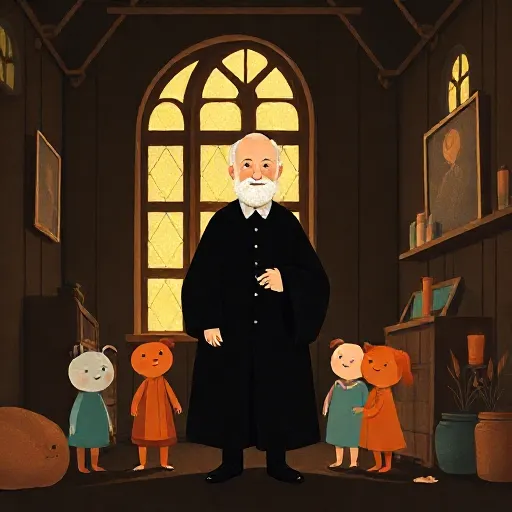
It is a warm summer afternoon in 1836. A young man named Ralph Waldo Emerson (1803–1882) wanders into the woods near his home in Concord, Massachusetts. He stands still among the trees, his eyes wide open, and something strange happens. He feels his whole body disappear. He becomes, he later writes, a “transparent eyeball.” He is nothing, yet he sees everything. “The currents of the universal being circulate through me,” he says.
This moment was not just a poetic daydream. It was the birth of a movement. Emerson’s experience convinced him that every person can connect directly with the divine — not through a church, a priest, or a book, but by looking at nature and listening to the voice inside their own mind. That idea is the heart of Transcendentalism, the philosophy that Emerson and his friends would spend their lives exploring.
Why was this such a big deal? To understand, you have to know what they were rebelling against.
From Fear to Freedom: The Unitarian Rebellion
Emerson grew up in a world shaped by Calvinism, a religious tradition that taught that human beings are born completely sinful. In that picture, you cannot save yourself — you can only hope that God chooses to save you. But by the early 1800s, many New England ministers had begun to reject this grim view. They argued that human effort matters, and that God is a single divine being, not a mysterious Trinity. They were called Unitarians, originally a term of mockery, which they proudly adopted.
The great Unitarian preacher William Ellery Channing (1780–1842) insisted that Jesus saved people from sin itself, not merely from punishment. In his famous sermon “Unitarian Christianity” (1819), he cried out against what he called “the conspiracy of ages against the liberty of Christians.” A few years later, in “Likeness to God” (1828), he went further: human beings, he said, can actually “partake” of the divine and grow into “a growing likeness to the Supreme Being.”
For Emerson and his friends, Channing’s vision was thrilling. But they soon found a problem. The Unitarians tried to prove their religion by pointing to miracles in the Bible, using a philosophy called empiricism — the idea that all knowledge comes from the senses. Emerson, reading the skeptical philosopher David Hume (1711–1776) while still a student at Harvard, had already concluded that no such proof could ever be satisfying. In his journal he wrote, “We have no experience of a Creator,” so we “know of none.”
If neither the old Calvinism nor the new Unitarianism could offer certainty, where could a person turn? Emerson’s answer was shocking: inward. Each person, he believed, could receive their own direct revelation — a moment of insight that did not depend on ancient texts or sensory evidence. He asked, “Why should we not have a poetry and philosophy of insight and not of tradition, and a religion by revelation to us, and not the history of theirs?”
Kant’s Copernican Revolution and the Birth of Transcendentalism

That idea needed intellectual muscle, and it got it from Germany. Frederic Henry Hedge (1805–1890), a Unitarian minister who had studied in Germany as a boy, introduced his friends to the work of Immanuel Kant (1724–1804). Kant had performed what he called a “Copernican Revolution” in philosophy: instead of asking how our minds match the world, he suggested that the world we experience depends on the structure of our own minds. There are basic a priori categories — mental forms that do not come from the senses but make sense experience possible in the first place. Kant called these transcendental forms, meaning they are the conditions for experience, not something that floats beyond it.
Hedge explained all this in a long review of the English writer Samuel Taylor Coleridge (1772–1834), who had soaked up German philosophy and blended it with his own poetic vision. Coleridge distinguished between the Understanding, which sorts and compares everyday facts, and Reason, which sees deeper truths directly. This was exactly the kind of vision Emerson wanted. In his book Nature (1836), Emerson defined imagination as “the use which the Reason makes of the material world.”
German thought arrived through many doors. The French writer Germaine de Staël (1766–1817) praised the German tradition for trusting the power of the mind, unlike the English philosophers she blamed for drifting toward skepticism. James Marsh (1794–1842), an American scholar, published an edition of Coleridge’s Aids to Reflection that gave Emerson a whole new vocabulary. And the Scottish writer Thomas Carlyle (1795–1881), whom Emerson visited in Europe in 1831, taught a “natural supernaturalism” — the idea that nature itself has the divine authority that old religions placed in a distant God.
By 1836, Hedge and Emerson gathered a group of restless young ministers to form what they called the Transcendental Club. It included George Ripley, Bronson Alcott, and later Margaret Fuller and Henry David Thoreau. They met, argued, and dreamed of a new kind of spiritual life.
Emerson’s most explosive statement came in 1838. Invited to address the graduating class of the Harvard Divinity School, he tore into the church these young men were about to lead. He called it an “eastern monarchy of a Christianity” that had become an “injuror of man.” Jesus, he insisted, was not a one-of-a-kind miracle worker but a “friend of man,” simply one of a “true race of prophets.” What mattered was not proof through ancient miracles — which he called a “profanation of the soul” — but the “religious sentiment” that any person could feel right now.
The speech caused an uproar. Andrews Norton, a powerful Harvard professor known as the “Unitarian Pope,” attacked Emerson’s address as “an insult to religion” and “an incoherent rhapsody.” But the transcendentalists were no longer a quiet discussion group. They were a public scandal.
A Cabin, a Journal, and One Night in Jail: Thoreau’s Experiment

If Emerson supplied the ideas, Henry David Thoreau (1817–1862) supplied the life. In 1845, on the Fourth of July, Thoreau moved into a tiny cabin he had built on the shore of Walden Pond, just outside Concord. He stayed for a little over two years, though he walked into town often and even went to jail once during that time.
Thoreau called his time at Walden an “experiment” in self-reliance. He wanted to discover life’s real necessities, not the ones society insisted on. Like the ancient Roman philosophers Cato and Varro, he sought “a life of simplicity, independence, magnanimity, and trust.” Looking at his fellow citizens, he concluded that “the mass of men lead lives of quiet desperation.” His answer was not to run away forever but to learn how to live deliberately, to “improve the nick of time” — to spend each day in a way that would never come again.
Nature, for Thoreau, was not a vague idea. It was this particular thrush, this pine tree, this sheet of ice melting on the pond in spring. He found himself “suddenly neighbor to” the birds rather than a hunter of them. He learned that you could “possess” a farm more completely by walking across it thoughtfully than by working it all day just to pay taxes. He also believed in a different kind of wealth: heroic books. He listed the “Vedas and Zendavestas and Bibles, with Homers and Dantes and Shakespeares” as books that demand “reading, in a high sense.”
Thoreau’s quiet life was not without conflict. One day he walked into Concord to pick up a mended shoe and was arrested for refusing to pay his poll tax. He spent a night in jail. That experience became his essay “Resistance to Civil Government” (1849), often called the first statement of civil disobedience. The government, Thoreau argued, is just an “expedient” by which we agree to leave each other alone. It has no right to demand your conscience. When the state supports slavery and wages an unjust war with Mexico, a person of conscience must not cooperate. Thoreau imagined a “peaceable revolution” in which citizens simply refused to pay taxes and went to jail until the system choked.
Margaret Fuller and the Great Lawsuit of Women
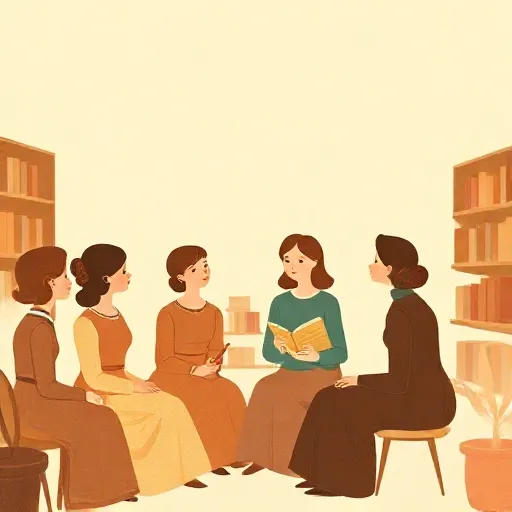
The transcendentalist circle was far from a men’s club. Margaret Fuller (1810–1850), the daughter of a Massachusetts congressman, was given a fierce education in Latin, Greek, chemistry, and philosophy. She used what one scholar called “her peculiar powers of intrusion and caress” to become friends with Emerson and the others. From 1839 to 1844, Fuller organized a series of famous “conversations” for women, held in a Boston bookshop. These were not sewing circles — they were demanding discussions of ideas, designed to wake women up to their own intellectual powers.
Her major philosophical work, Woman in the Nineteenth Century (1845), argued that there is “no wholly masculine man, no purely feminine woman.” In Greek mythology, she pointed out, “Man partakes of the feminine in the Apollo; woman of the Masculine as Minerva.” Still, she observed real differences. The “feminine genius” is “electrical” and “intuitive,” while the male mind leans toward classification. The tragedy, Fuller believed, was that women were treated as dependents, and their deep impulse toward self-reliance was held against them.
What did women most need? The freedom to unfold their own powers. Without that, Fuller said, society itself could not heal. She called for periods of withdrawal from a frantic world, so that the “renovating fountains” of individuality could rise up again. This was not a rejection of togetherness, but a demand for true union. “Union,” she wrote, “is only possible to those who are units.” Most marriages, by contrast, were forms of degradation in which “the woman does belong to the man, instead of forming a whole with him.”
Fuller was also fearless in print. She moved to New York to write for the New-York Tribune and later sent dispatches from revolutionary Europe. When she learned that the slaveholder James K. Polk had been elected president in 1844, with a plan to annex Texas as a slave state, she turned to the women of America and demanded: “Have you nothing to do with this? … You would not speak in vain; whether each in her own home, or banded in union.”
Why the Transcendentalists Still Speak to You
These ideas did not stay in the woods. In 1838, the same year as his Divinity School Address, Emerson wrote an angry letter to President Martin Van Buren. The United States government had forced 16,000 Cherokee people from their land and marched them west across the Mississippi. Thousands died on the trail. Emerson called it “a crime that really deprives us as well as the Cherokees of a country.”
The crusade against slavery drew in all the transcendentalists. Emerson declared that “the Black Man carries in his bosom an indispensable element of a new and coming civilization.” Frederick Douglass, the great black abolitionist, quoted Emerson’s words on self-reliance in his newspaper The North Star. William C. Nell, a black activist in Boston, organized antislavery societies, admired Emerson, and joined with Thoreau to help fugitives escape on the Underground Railroad — sometimes hiding them in Thoreau’s own cabin.
When the Fugitive Slave Law of 1850 forced northern citizens to return escaped slaves to their owners, Thoreau was furious. After a man named Anthony Burns was captured in Boston, tried by a court, and marched back to slavery in Virginia, Thoreau wrote that it was absurd for a courtroom to try “a MAN, to find out if he is not really a SLAVE.” An immoral law, Emerson agreed, is simply void, no matter what a written constitution says.
The most extreme test came with John Brown, a violent abolitionist who attacked a federal arsenal in 1859 to arm a slave uprising. Thoreau, who had once called for peaceful tax refusal, now called Brown “a transcendentalist above all” and defended his use of force to rescue enslaved people. War was coming, and the transcendentalists could not stay out of it.
So why does any of this matter to you, reading this in a very different century? The transcendentalists leave you with an uncomfortable, exciting question: What do you do when something feels deeply true to you, but everyone around you says it cannot be true? They did not agree on everything — some stayed peaceful, some did not; some kept their distance from politics, some charged in. But they all believed that your own mind, when it thinks clearly and watches the world closely, is a source of real authority. You do not have to check your conscience at the door of the classroom, the church, or the government.
Think about it
- If you felt absolutely sure that a rule at school was unjust, would you follow your conscience even if it meant getting into trouble? What might you lose — and what might you gain?
- Thoreau went to live alone in a tiny cabin to find out what he really needed. If you stripped away every possession you did not absolutely need, what would be left? Would it change how you spend your days?
- Fuller believed no one is “purely” feminine or purely masculine — everyone has a mix of qualities. Do you think our culture still pressures people to fit into one side or the other? What might we learn from seeing people as Fuller saw them?