Can Logic and Faith Be Friends? A 2,000-Year Christian Argument
The Monk Who Thought He Could Prove God Without the Bible

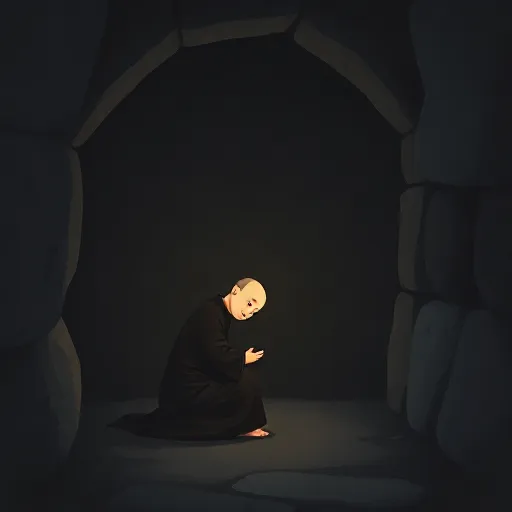
In 1076, a monk named Anselm of Canterbury (1033–1109) sat in a cold stone room and tried to do something bold. He wanted to prove that God exists using nothing but logic. He didn’t turn to the Bible for help. He simply thought, wrote, and prayed, as if reasoning about God and praying to God were the same thing.
Anselm wasn’t doing something new. For the first few centuries after Jesus, most Christian thinkers didn’t separate philosophy (using reason to understand the deepest features of reality) from theology (the study of God and all things in relation to God). In fact, the word theologian originally meant a poet who told myths about the gods — Homer and Hesiod were the great theologians. So early Christians distanced themselves from that label. They called their intellectual work “the true philosophy.” Augustine of Hippo (354–430) wrote that Christianity was the philosophy that leads to real happiness. On this view, there is just one big task: trying to understand God using every available tool — scripture, tradition, reason, and prayer.
This approach is called Integration. It says philosophy and theology form a single, continuous project. There is no sharp line between them. Anselm could switch from a logical proof to a prayer without warning, because he saw no real boundary between thinking and worshipping. If you’re trying to understand God, why would you leave any helpful resource unused?
Aquinas and the Handmaid: Philosophy Serves Theology
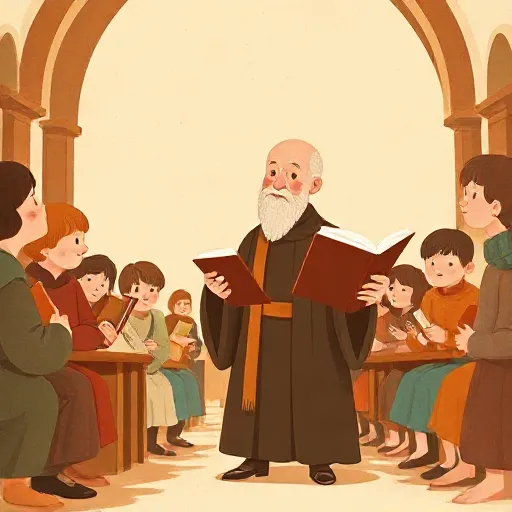
By the 1200s, universities had grown, and thinkers began to draw sharper lines. The most influential was Thomas Aquinas (1225–1274). He introduced a view called Cooperation. Aquinas still believed philosophy and theology could not truly conflict — truth cannot contradict truth — but he insisted they start from different foundations and use different kinds of evidence.
Aquinas distinguished between truths of reason and truths of revelation. Truths of reason can be discovered by any thoughtful person, using logic and ordinary experience. For example, Aquinas argued that reason alone can prove God exists. Revelation, on the other hand, is knowledge God shares that we could never figure out on our own. Doctrines like the Trinity or the Incarnation are truths of revelation. Without scripture and Church tradition, we simply wouldn’t know them.
In the Cooperation model, philosophy becomes a servant of theology — literally, a “handmaid.” Theologians are allowed to use revealed truths as premises and to appeal to the Bible as evidence. Philosophers, however, may only use premises that any rational enquirer can check. When a non-Christian rejects revelation, a Christian theologian can’t just say “the Bible says so” and expect to be convincing. Instead, the theologian can use philosophy defensively: for instance, showing that the Trinity is not logically impossible, even if it can’t be proved. This allows philosophy and theology to help each other without blending into one thing.
Luther’s Split: Two Different Worlds
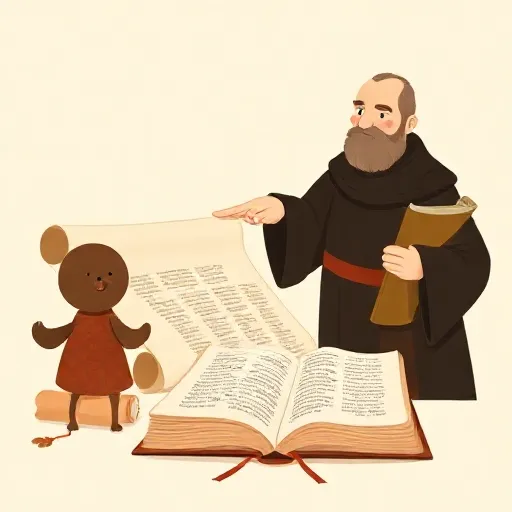
Some Christian thinkers went further and argued that philosophy and theology don’t overlap at all. This is called Disjunction. It says the two are separate ways of seeing, each with its own starting points, methods, and goals — like two non-overlapping circles.
Martin Luther (1483–1546) and John Calvin (1509–1564), the great Reformation leaders, both held this view. Luther once gave a disputation in which he stated that philosophy defines man as an animal having reason, sensation, and body. Then he added the theologian’s definition: a human being is made in God’s image, fallen into sin and death, and given eternal life through Jesus Christ. For Luther, both statements are true, but they come from completely different universes of thought. A theological claim like “we are saved through Christ” simply makes no sense within philosophy’s framework, and no philosophical reasoning can help you get there.
Calvin agreed but added another layer. He thought that after the Fall, human reason is too broken to reach “heavenly things” on its own. True theology, for Calvin, must be practical and heartfelt, not a maze of abstract speculation. He worried that philosophy’s “endless labyrinths” would draw a veil over Christ rather than reveal him. So while reason works fine for studying nature, it has no business deciding what God is really like. Notice this isn’t a claim that faith is irrational; it’s a claim that philosophy and theology are investigating reality in such different ways that their results cannot even be compared.
The Myth of a War Between Faith and Reason

In popular imagination, there’s a loud war between faith and reason. But throughout Christian history, very few major thinkers ever said that philosophy and theology are enemies — that Christian beliefs are positively irrational.
You might have heard that the early writer Tertullian said, “I believe because it is absurd.” He didn’t. He actually used reason constantly. Søren Kierkegaard called the Incarnation a paradox, but for him that meant it is beyond what fallen human reason can grasp, not that it is a formal contradiction. Karl Barth famously said “No!” to natural theology, but he was rejecting philosophical overreach, not philosophy itself; he allowed that philosophy could help clarify revelation.
The reason conflict is so rare is simple: the mainstream Christian tradition has always held that God is the source of all rationality, and that human reason is one of God’s greatest gifts. To say that true theology fights against genuine reason would be to say God fights against himself. That’s a position almost no orthodox Christian thinker wanted to take. So when an apparent clash appears, the traditional move is to say that philosophy has wandered outside its proper lane — not that faith is unreasonable.
Why It Still Matters: Your Questions About God and Logic

These old arguments are very much alive today. Some contemporary philosophers, like Alvin Plantinga, have argued that Christian thinkers should feel free to use revealed truths even when doing philosophy. Their critics reply that this turns philosophy into theology, which breaks the rules of public reasoning. Other theologians shoot back that analytic philosophy is too abstract to touch the real God of Christian faith. In other words, we’re still fighting over Integration, Cooperation, and Disjunction.
Which brings us to you. When you puzzle over a question like “If God knows everything I’ll do, am I still free?” or “Can God make a rock so heavy he can’t lift it?,” you’re standing right on the blurry line between philosophy and theology. Some people will say you should answer by starting from scripture. Others will insist you must begin with pure logic. And a third group will tell you the two can never really meet. Which approach is right? That debate itself is one of the oldest and deepest in Western thought — and it’s waiting for your own careful thinking.
Think about it
- If a friend says they believe in God only because the Bible says so, can you use pure logic to discuss that belief with them? Would you need a shared starting point?
- Some thinkers say God is so infinite that human reason can never fully understand him. If that’s true, is it ever smart to believe something you can’t completely make sense of?
- A scientist and a theologian both claim to know something important about God. Should we judge their claims by the same rules, or are they doing such different things that the rules don’t apply across the border?