Can You Think Your Way to God? The Cambridge Philosophers Who Said Yes
A Shocking Claim in Wartime Cambridge
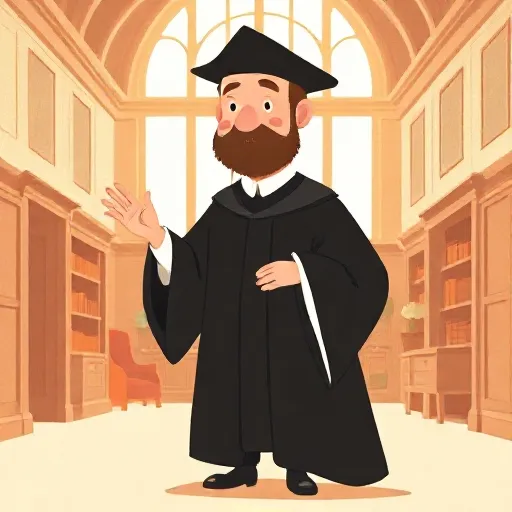
It is 1650, and England is torn apart after years of civil war. At Cambridge University, a senior professor named Benjamin Whichcote stands before the scholars. He looks at them and says something breathtaking: “God is the most knowable of any thing in the world.”
Many people in that room believed the opposite. They had been taught that human reason was broken by sin, too dark and twisted to see anything true about God. Whichcote disagreed completely. He argued that God is supremely perfect — perfectly good, wise, and loving. Because of that perfection, God made human beings rational. Our minds, Whichcote insisted, are not enemies of faith. They are tools God gave us to discover what is real.
Whichcote never wrote a big philosophy book; his ideas survive in sermons and short, wise sayings called aphorisms. But his optimism about reason sparked a whole movement at Cambridge. A loose band of thinkers, later called the Cambridge Platonists, began teaching that reason and faith are not rivals. They are partners. The two most famous figures in this group were Henry More and Ralph Cudworth. Like Whichcote, they believed that thinking deeply about God, the world, and morality was a way of honouring the God they worshipped.
The God Who Plays by Rules
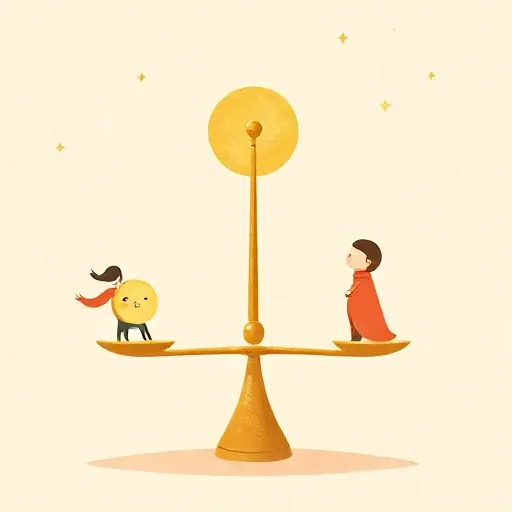
To understand why Whichcote’s ideas felt so bold, you need to know what he was fighting against. Many Christians in 17th-century England followed a strict form of Calvinism, which stressed God’s unlimited power and human helplessness. In that view, God’s will is absolute — whatever God commands is good, simply because God commands it. Even if God ordered something that seemed cruel, it would be right, because God’s will is the only measure of right and wrong.
The Cambridge Platonists rejected this picture. They said it turned God into a tyrant. Instead, they held that goodness is not created by God’s decisions; it is part of God’s own eternal nature. God always wills what is good, not because it is “good” by some outside standard, but because goodness flows from who God is. Whichcote wrote that moral principles are “immutable absolutes” — rules that never change and do not depend on any human or divine opinion.
Ralph Cudworth (who lived and taught at Cambridge throughout the mid-1600s) sharpened this argument. He said that if good and evil depended only on God’s arbitrary will, then nothing would be securely true. God could, at any moment, declare nonsense to be true and cruelty to be right. That would destroy all confidence in knowledge and morality. Cudworth insisted that truth and goodness are as fixed and unchangeable as mathematics. God cannot make two plus two equal five, and God cannot make kindness into wickedness.
This meant that your own reason could detect what is right. The moral law is not a secret whispered only to prophets; it is built into the structure of reality and can be grasped by any thinking mind. The Cambridge Platonists often pointed to the way the natural world appears designed to support life and order. They argued that nature itself shows evidence of a rational, good Creator — an idea later called the argument from design.
Your Mind, a Mirror of the Divine

If morality and truth are eternal, how do we come to know them? The Cambridge Platonists gave a striking answer: we are born knowing. They believed in innate ideas — principles that are already present in the mind from the start, not learned through the senses. One of their first published works, by Nathaniel Culverwell in 1652, described reason as an “intellectual lamp” placed in the soul by God. It helps us read the moral law written into nature.
Cudworth developed this further. He argued that the entire created world is a copy, or “ectype,” of a perfect divine original — the “archetype.” Because human minds are made in the image of God, they already contain the patterns of that divine original. When we learn something, we are not just absorbing information from outside; we are actively remembering and recognising truths that are already inside us. Cudworth used the ancient Stoic word prolepsis for these anticipations of knowledge that the mind carries within itself.
This does not mean senses are useless. You need your eyes and ears to gather information about the external world. But raw sense data is not yet knowledge. You must process it with your built-in mental furniture. As Cudworth put it, you cannot understand “the book of nature” unless you first know how to read.
The same confidence in reason applied to freedom. The Cambridge Platonists argued that a good God gave humans free will. You are not a puppet jerked around by outside forces; you have the power to direct your own soul toward what is good. Peter Sterry, another member of the group, wrote that to act freely means acting according to your own nature — as a thinking, moral being, not as an animal driven by instinct. Cudworth called the soul’s commanding centre the hegemonikon, a term he took from ancient philosophy. It is the you that decides, that is “properly we ourselves.” Without that inner power, moral responsibility would vanish — you couldn’t blame anyone for doing wrong if they couldn’t have done otherwise.
The Invisible World of Spirits

Henry More, the most prolific writer of the group, faced a practical challenge. In the middle of the 1600s, a new materialism was gaining strength. Thinkers like Thomas Hobbes argued that everything in the universe is just matter in motion — there are no souls, no spirits, and no God outside the physical world.
More set out to prove that spirit is just as real, just as intelligible, as body. He defined body as solid, inert, and divisible. Spirit, by contrast, is active, penetrable, and indivisible. Both kinds of substance are extended — they take up space — but in opposite ways. A spirit can pass through walls, but you cannot cut one into pieces. More even speculated that space itself is infinite and shares qualities with God, like immateriality and unchangeability.
To make spirit plausible in a scientific age, More proposed a universal Spirit of Nature (he also called it the Hylarchic Principle). This is not God directly, but a kind of cosmic manager that carries out God’s plan, keeping nature running smoothly. It joins souls to bodies, guides the tides, and explains things that mechanical physics of the time struggled with. More collected observations — from Royal Society experiments to reports of witches and demons — to show that something beyond matter must be at work.
Today, his belief in magic and evil spirits might seem a strange fit for a champion of reason. But in the 17th century, it was widely shared, and for More it was logically connected to his whole system. He argued that if you deny the existence of any spirits, you will soon deny the existence of the supreme spirit, God. He coined a memorable slogan: “No Spirit, no God.” For him, proving that your own soul is a real, immaterial being was the first step toward proving that God exists.
Thinking Through Faith — Why It Still Divides Us

The Cambridge Platonists did not win every argument. Some scientists, like Robert Boyle, complained that More twisted experimental results to fit his theory of the Spirit of Nature. Their belief in witchcraft was already starting to look dated not long after they died. And more traditional religious thinkers continued to insist that human reason was too frail to reach God without special revelation.
Yet their influence stretched far beyond their own time. Ralph Cudworth’s daughter Damaris Masham became a philosopher herself and a close friend of John Locke, one of the most important thinkers of the next century. The third Earl of Shaftesbury edited Whichcote’s sermons and developed his own theory of a moral sense that echoes Cudworth and More. Far away in Germany, Gottfried Wilhelm Leibniz studied their works carefully. The Cambridge Platonists even left their mark on the English language: they were the first to coin the words “materialism,” “consciousness,” and “Cartesianism.”
The core question they raised still cuts through homes, classrooms, and places of worship. Should you use your own mind to decide what is true about God and right and wrong, or should you trust a sacred source even when it goes against your reasoning? The Cambridge Platonists thought these two paths could not really be in conflict, because both came from the same perfect source. Today, some people insist that faith is a matter of feeling and trust, while others argue that any belief worth holding must pass the test of reason. Whichcote’s daring claim — that God is knowable — continues to invite every new generation to look inward, think carefully, and take their own mind seriously.
Think about it
- If you think something is morally wrong but a holy book says it is right, would you trust your own sense of reason or the book? Why?
- Can you use reason to be sure that God exists, or is it a matter of pure trust?
- Do you think people are born with a built-in sense of fairness, or do they learn it only from experience?