Can You Prove God Exists Just by Thinking?
Can Thinking Alone Get You to God?
Late one night, you lie in the grass and stare at the stars. The sheer size of the universe makes you wonder: did something make all this? Could you ever prove that, just by thinking it through, without a holy book or a mystical sign?
Philosophers call this attempt natural theology: the project of using ordinary human abilities — reason, our senses, introspection — to work out truths about God. It’s not the same as studying scripture or relying on a religious experience. It’s an act of pure detective work, using nothing but the mind you’ve got.
But before you even start, you face a big question: can your thinking really reach something so far beyond everyday life? Some thinkers, whom we might call rationalists, say yes — our minds can get us to knowledge of God. Others are hybridists: they think reason can take you part of the way, maybe to prove that a first cause or greatest being exists, but then you’ll need faith or revelation to know the details. A classic hybridist view in Western Christianity — found in Augustine, Anselm, and Thomas Aquinas — says reason can show that God is, but not everything about who God is. Then there are fideists, like the mathematician Blaise Pascal (1623–1662) and the 20th‑century theologian Karl Barth, who believe reason is more likely to lead you to a false “God of philosophers” than to the real thing. For them, faith alone matters.
Still others think natural theology is impossible from the get‑go. Agnostics say our natural faculties haven’t produced enough evidence either way, so the only honest move is to suspend judgment. Atheists go further: they argue that reason actually gives us grounds to believe that no such being exists at all — often pointing to the problem of evil or to the incoherence of the idea itself.
With that map in hand, we can look at the two most famous kinds of arguments that natural theologians have put forward: a priori arguments (which don’t need any particular experience) and a posteriori arguments (which start from something we observe about the world).
Anselm’s Bold Idea: The Greatest Conceivable Being

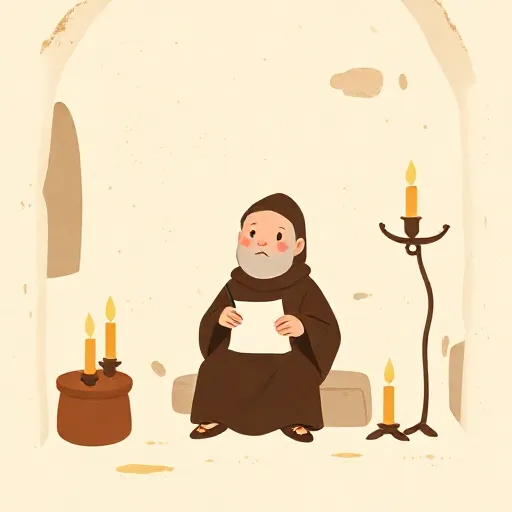
The most famous a priori argument is the ontological argument. Its classic form comes from St. Anselm of Canterbury (1033–1109), a monk who prayed for a single proof that would make God’s existence undeniable. He began with a description: God is “that than which nothing greater can be thought.” In other words, if you can imagine a being so perfect that no greater being is even conceivable, you’re thinking of God.
Anselm claimed that even a person who says “God does not exist” has that idea in their understanding. But, he argued, a being that exists only in your understanding is clearly less great than one that exists in reality as well. So if you claim that the greatest conceivable being doesn’t actually exist, you’re contradicting yourself — you’re saying the greatest being lacks a feature (real existence) that would make it greater. Therefore, God must exist in reality, not just in thought.
The move is elegant and maddening. It tries to squeeze a real existence out of a pure concept, like pulling a rabbit out of the dictionary definition of “rabbit.” If it works, you’ve proven God without ever looking out the window.
The Island That Sunkt the Argument

Anselm’s fellow monk Gaunilo (11th century) fired back immediately. By exactly the same reasoning, Gaunilo said, you could prove the existence of a “greatest island” — the most perfect island imaginable. If it didn’t really exist, it wouldn’t be the greatest island. So such an island must exist. But that’s nonsense; no amount of thinking can guarantee a real tropical paradise. Gaunilo’s parity objection aimed to show that the ontological argument proves too much, so it can’t be sound.
René Descartes (1596–1650) later revived a version of the argument, insisting that existence is a perfection that belongs to God’s essence, just as having three angles belongs to a triangle. But critics pressed a deeper worry, first raised by Marin Mersenne (1588–1648): how do we know that the idea of a maximally perfect being is even possible? Maybe the qualities in the idea clash in some hidden way, like “married bachelor.” Descartes replied that we can see clearly and distinctly that the idea contains no contradiction. Yet many remain unconvinced — seeing no contradiction in a definition doesn’t guarantee that the thing is genuinely possible.
Immanuel Kant (1724–1804) struck what many consider the decisive blow. He insisted that “existence” is not a real predicate — it doesn’t add a new quality to the concept of a thing. Imagine you make a list of everything that makes a perfect pet: fluffy, loyal, playful. Penciling in “exists” doesn’t change what the pet would be like. So existing can’t be a perfection that the greatest being either has or lacks. Kant also hammered the possibility problem: even if the concept of God contains no logical contradiction, our reason can’t safely assume that all those supreme qualities could really belong to one being.
Today, some philosophers restate the argument using possible worlds: if a maximally great being exists in even one possible world, and that being has “necessary existence” (existing in all possible worlds), then it exists in the actual world too. But the same old question returns: how do we know such a being is possible in the first place? That ancient challenge still has no agreed‑upon answer.
Why Is There Something Rather Than Nothing?
The cosmological argument is a different animal — an a posteriori argument that starts with a simple, stubborn fact: the universe exists. Why? Cosmological arguments appear in traditions around the world. One of the earliest precise versions comes from the Islamic philosopher Avicenna (Ibn Sina, 980–1037). He noted that ordinary things are contingent: they might not have existed at all. If a contingent thing exists, it must have a cause outside itself. Now consider the whole collection of contingent things. Could its cause be something within the collection? No, argues Avicenna, because every member is itself contingent and needs a cause. So the whole collection must depend on a cause that is not contingent at all — a necessary being whose existence is part of its very nature.
Gottfried Leibniz (1646–1716) pushed the question further. Even if the universe had no beginning in time — even if every event had a cause earlier in the chain — you still haven’t answered the deeper question: why is there a world at all rather than nothing? A complete explanation, Leibniz thought, must terminate in something that contains the reason for its own existence within itself. That, he concluded, is God.
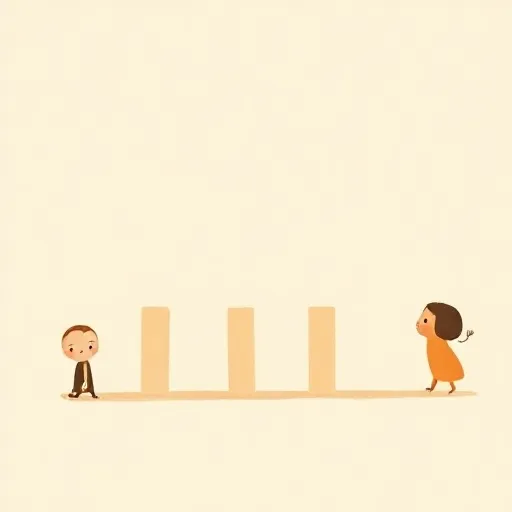
David Hume (1711–1776) launched several sharp objections. First, the idea of a “necessary being” is suspect: for anything we can clearly conceive as existing, we can equally conceive it as not existing. If we truly understood matter’s inner nature, might it turn out to be necessary too? Second, Hume argued that if you’ve explained every single member in an infinite chain by its predecessor, you’ve explained the whole chain — because a whole is nothing over and above its parts. A modern reply goes like this: imagine an endless row of dominoes, each knocked over by the one before it. You might still find it reasonable to ask, “But what set up the whole domino‑falling system in the first place?” That question survives Hume’s attack, and the debate rolls on.
The Watch, the Watchmaker, and the Multiverse

Teleological arguments look for purpose and design in nature. William Paley (1743–1805) made the analogy famous: if you stumbled across a watch while walking on a heath, you would never think its parts had come together by chance. The intricate purposefulness of its gears would convince you that a watchmaker existed. Nature, Paley said, is packed with even more staggering design — complex eyes, the fit of animals to their environments — so we should infer a supreme designer.
Hume had already fired a volley of objections in his Dialogues Concerning Natural Religion (published after his death, 1779). The analogy between a watch and the whole universe is loose; the universe might be more like a giant vegetable or an animal, which grow from seeds rather than being put together by hands. Even if we grant a designer, the messy, often cruel character of the natural world gives us no reason to believe that designer is all‑good — we’d be left with a rather “mediocre deity.” And what explains the designer’s own orderly intelligence? If design requires a designer, then the designer requires a super‑designer, and we fall into an infinite regress.
In recent decades, a powerful new version of the argument has emerged: fine‑tuning. Physicists have discovered that if certain fundamental numbers — the strength of gravity, the nuclear forces, the ratio of proton to electron mass — had been even a tiny fraction different, stars wouldn’t burn, atoms wouldn’t form, and life would be impossible. The universe looks almost as if it was dialled up on purpose. William Lane Craig and others argue that without an intelligent designer, this fine‑tuning is wildly improbable.
Critics push back with the multiverse hypothesis: perhaps our universe is just one of a vast — maybe infinite — collection of universes, each with different settings. In an enormous cosmic shooting gallery, it’s not surprising that at least one universe happens to be life‑friendly. The philosopher John Leslie (born 1940) illustrated the point: if you were shot at by a firing squad of a hundred trained marksmen and somehow survived, you’d be rightly surprised. But if you later learned you were just one person in a huge crowd, and the guns were fired randomly, your survival would seem less shocking — someone was bound to be hit, and it happened to be you. Similarly, says Leslie, a multiverse makes fine‑tuning less surprising.
Roger White (born 1964) shot back that the multiverse explains why some universe or other is life‑permitting, but not why this universe is. Just as being part of a crowd doesn’t explain why you were the one who got shot, countless other universes don’t make it any more likely that our own universe should be the lucky one. That, he argues, tips the balance back toward a designer who had this universe specifically in mind. The exchange is fierce, technical, and utterly unsettled.
Why These Arguments Still Matter

You might wonder: after a thousand years of back‑and‑forth, has natural theology gotten anywhere? The answer is complicated. None of the arguments has earned universal agreement. Yet each one has taught philosophers something profound about explanation, evidence, and the limits of human thought. The ontological argument forces us to wrestle with what concepts can and cannot do. The cosmological argument makes us ask when a series of facts needs an explanation beyond itself. The design argument, from Paley’s watch to cosmic fine‑tuning, pushes us to clarify how we distinguish chance from purpose.
Even today, some philosophers pursue what is called ramified natural theology — using reason not just to argue for a bare “first cause” but to support specific doctrines like the resurrection of Jesus or the truth of particular scriptures, treating those claims as historical hypotheses open to public evidence. This shows that natural theology isn’t a museum piece; it’s a living, breathing enterprise.
So next time you lie under the stars and feel that familiar pull — did something make all this? — you’re stepping into a conversation that includes monks, mathematicians, and modern cosmologists. You don’t have to settle it. But you can sharpen your own thinking by trying on their arguments, spotting the leaps, and asking what kind of universe would count as evidence for a designer. That habit of careful, fearless questioning is what philosophy is for.
Think about it
- Suppose you find a watch on a beach. Your friend says it could have been formed by waves and sand over millions of years. How would you argue back, and what would make you change your mind?
- If the universe were not fine‑tuned for life, we wouldn’t be here to wonder about it. Does that make the fine‑tuning any less surprising? Why or why not?
- Some people say that even if someone proved God exists with an airtight logical argument, it wouldn’t change how they live. Do you agree? Can an idea be true but still not matter?