
Did a Tiny Person Already Live Inside You Before You Were Born?
A Tiny Person Inside a Sperm?
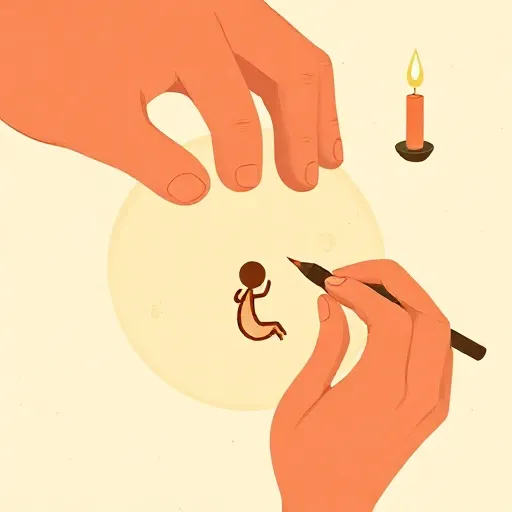
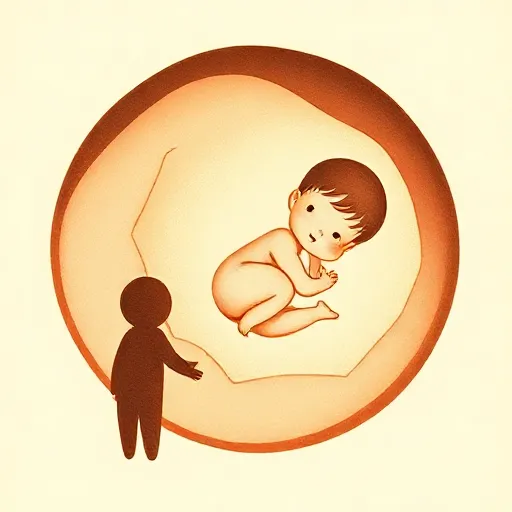
In 1694, a Dutch scientist named Nicolaas Hartsoeker drew a tiny, curled-up person tucked inside a sperm cell. The sketch spread across Europe—and it captured a deep, puzzling question: do you start out as a miniature, fully built human that just gets bigger, or does your shape slowly assemble itself from something shapeless?
Two big answers have fought it out for two millennia. Preformation says an organism’s form is already there from the very beginning—maybe packed inside the sperm or egg. Epigenesis says the form emerges only gradually, with parts appearing one by one where there was only raw material before. This isn’t just a dusty old argument. The same tension shows up today when scientists argue whether your DNA contains a complete blueprint for your body, or whether your cells build you through constant back-and-forth with their surroundings.
Aristotle’s Chick and the Beating Heart
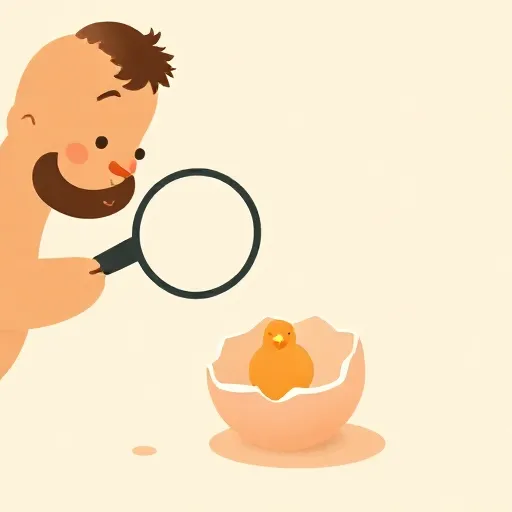
Long before microscopes, the ancient Greek philosopher Aristotle (384–322 BCE) simply watched. He opened chicken eggs at different days and saw something striking: no tiny chicken was hiding inside. Instead, a heart started beating only after some time, and then other organs formed one after another.
Aristotle called this gradual emergence epigenesis. For him, every living thing begins when fluids from the mother and father mix. The mother provides the raw material (he thought it was menstrual blood), and the father’s semen provides the form-giving kick. Over time, an internal soul—not a ghostly spirit, but a life force that makes an organism alive—guides the material to shape itself into a chick, a fish, or a human. No premade structure exists at the start; the form unfolds step by step.
This view fit well with much of early Christian thinking. For centuries, the Catholic Church accepted that a human being only gradually came into existence, with the soul arriving around 40 days after conception. Epigenesis was the everyday explanation of how living things developed.
Wolff and Bonnet: Same Egg, Opposite Worlds
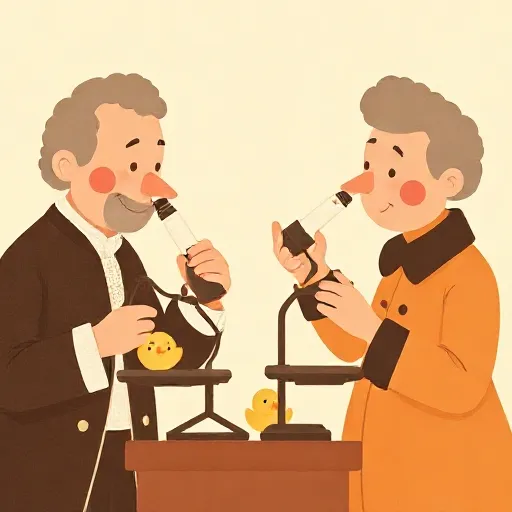
By the 1700s, better microscopes let scientists see embryos in more detail. You might think clearer vision would settle the argument. Instead, two careful observers—Caspar Friedrich Wolff and Charles Bonnet—looked at the same chick embryos and came away with completely opposite stories.
Wolff saw parts appearing where none had existed before. He insisted that an embryo builds itself gradually, requiring a mysterious vital force that mere matter couldn’t supply. Bonnet looked at the same eggs and argued that the entire plan was already laid out, invisibly, from the start. For Bonnet and other preformationists, the tiny person was already there—perhaps too small to see, but entirely formed. Development was just growth, not creation.
Why would anyone insist on a miniature person? The answer lies in a deep philosophical puzzle. If you believe the world is made of nothing but material particles pushing each other—no vital forces, no invisible souls—then it’s hard to explain how a shapeless blob could ever organize itself into a brain, a heart, or a hand. Physicist-style matter alone doesn’t seem to have that power. Preformation offered a way out: God created all organisms, fully formed, at the beginning of time, and tucked them one inside another. The tiny person was the only way a purely materialist thinker could also be a good Christian.
So the 18th-century fight wasn’t just about eggs. It was a clash between materialism (the idea that only matter exists) and vitalism (the idea that life needs a special non-material force). The microscopic evidence alone couldn’t force anyone to switch sides. Metaphysical commitments—what you believed about the universe’s basic ingredients—determined which picture seemed obvious.
The Frog and the Sea Urchin: Two Famous Experiments
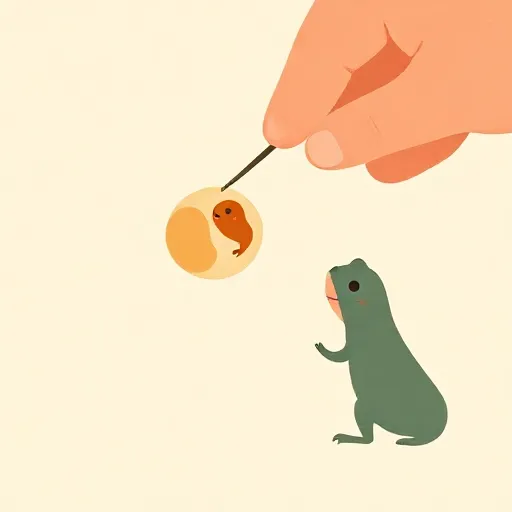
By the late 1800s, the debate had moved from whole organisms down to cells. Could a single cell carry a prewritten fate?
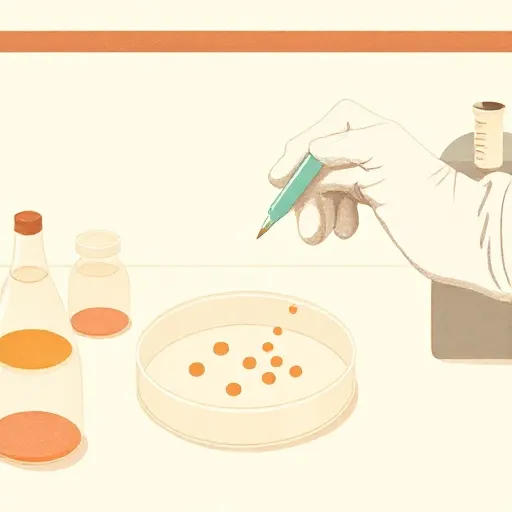
In 1888, German biologist Wilhelm Roux (1850–1924) performed a simple, brutal experiment. He took a frog egg after its first cell division—now two cells—and plunged a hot needle into one of them, killing it. The remaining cell developed into a half-embryo, just as if that cell had been destined to build only half the frog. Roux concluded that each cell’s destiny was already marked out, like a mosaic tile with a fixed place. Preformation, it seemed, had won.
A few years later, another German scientist, Hans Driesch (1867–1941), tried a similar experiment using sea urchin eggs. But here’s the twist: sea urchin cells could be completely separated just by shaking them in sea water. Driesch expected to see two half-embryos, confirming Roux. Instead, he came in the next morning and found two perfectly normal, smaller-than-usual sea urchin larvae. Even when he separated cells at the four-cell stage, each cell could still build a whole organism.
Driesch called this ability totipotency: each early cell had the potential to become a complete body. Development was not like reading a fixed script; it was a conversation among cells, with the whole directing the parts. That kind of flexible, environment-sensitive development became known as regulative development—and it looked very much like epigenesis.
Roux didn’t back down. He argued that frog cells might keep a hidden backup plan for emergencies, but normally they were still predetermined. The two men represented different metaphysical temperaments more than they represented a clear verdict from nature. As one biologist noted at the time, some people just see change and process, while others see stability and pre-written order.
The Genetic Blueprint: Preformation Returns
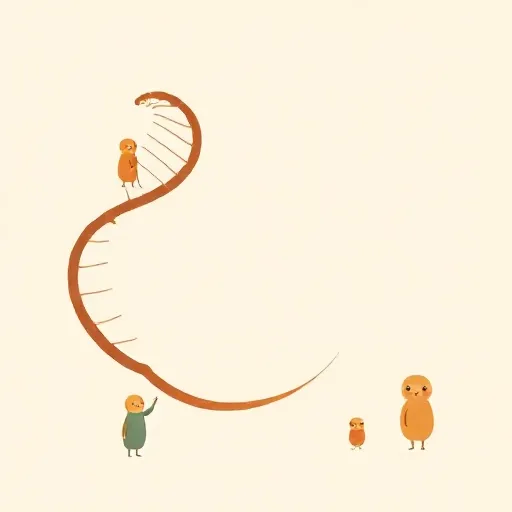
For most of the 20th century, preformation came roaring back—not as a tiny person, but as code. After scientists discovered the structure of DNA in 1953, a powerful idea took hold: your chromosomes contain a genetic program, a set of instructions that, if we could read them completely, would tell us exactly how you are built.
The American biologist Thomas Hunt Morgan (1866–1945) had initially doubted that genes could explain how an egg becomes a fly or a frog. After all, every cell in your body has the same genes, yet a liver cell is nothing like a brain cell. How could identical instructions produce such different outcomes? Morgan eventually proposed that genes turn on and off differently over time, and this differential gene activity drove development. Later scientists like François Jacob and Jacques Monod took the idea further, arguing that embryonic development was the step-by-step execution of a plan written in DNA.
The British geneticist C.H. Waddington (1905–1975) offered a compromise image that became famous: the epigenetic landscape. Picture a rolling ball on a tilted surface full of branching valleys. The ball’s path represents a cell’s developmental fate; the valleys are shaped by genes beneath the surface. But the ball can still be nudged by its environment. It’s not a rigid track; it’s a landscape of possibilities. Waddington’s model kept genes as the ultimate sculptors, but it allowed room for epigenesis-like flexibility.
Still, the dominant story of the late 20th century was that your DNA is a kind of prewritten message—not a homunculus, but a code that predetermines your form. The older idea of organs unfolding from shapeless material felt outdated.
Stem Cells and the New Epigenesis
Then came two results that shook confidence in the blueprint model. In 1997, scientists announced Dolly the sheep, cloned from a single adult cell. A cell that had already settled into being, say, a skin cell somehow reversed its fate and started building a whole new organism. Cloning suggested that development was much more flexible than a fixed program would allow. A year later, researchers grew human embryonic stem cells in the lab. These cells had the remarkable power to become nearly any type of body cell—their destiny depended heavily on the chemical signals around them, not just on the genes inside.
You may have heard of cell reprogramming: scientists can now turn an ordinary skin cell back into a stem cell by adding just a few proteins. Development, it turns out, isn’t a one-way trip. It’s more like a conversation that can be redirected.
These discoveries have pushed biology back toward an epigenesis-friendly view. Your form isn’t simply read out of a DNA instruction manual. Material from the egg, contacts with neighboring cells, even physical forces like tissue tension all shape what you become. The old vital force is gone, replaced by concrete, interactive causes. But the philosophical take-home is the same: you are not a prewritten script; you are built, day by day, through rich, two-way relationships with your environment.
This matters for more than just scientific curiosity. Stem cell therapies, tissue engineering, and understanding how diseases develop all depend on knowing how much is predetermined and how much is still negotiable. The 300-year-old argument between preformation and epigenesis is alive in every lab that asks whether a cell’s fate can be changed.
Think about it
- If a scientist could predict everything about your body by reading your DNA, would that mean you were completely predetermined—or would the way you live still matter?
- Could there really be a miniature fully-formed person inside a single sperm cell? What would make such a thing physically impossible?
- If you could clone yourself, would the clone be exactly the same person as you? Why or why not?