Were You Always a Tiny You? The Fight Over How Life Unfolds
A Tiny Person in a Sperm Cell?
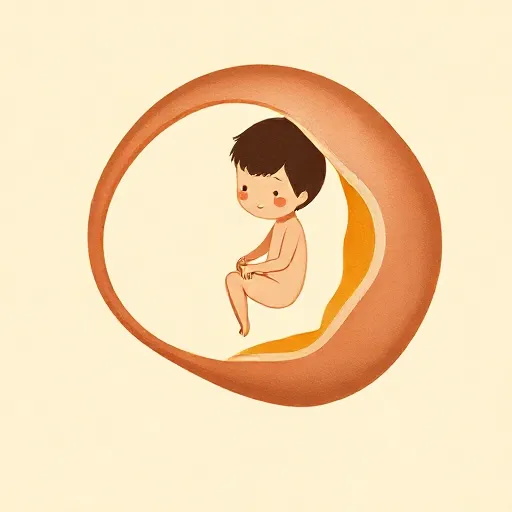
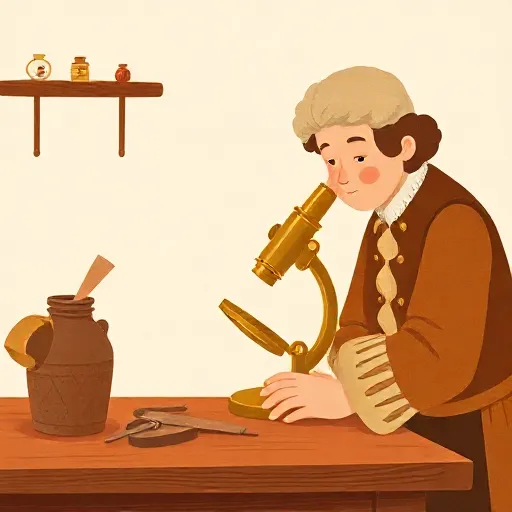
In the late 1600s, a Dutch lens grinder peered through his microscope at a drop of fluid and saw tiny wriggling sperm. The discovery sparked an intense debate. If sperm and eggs are where life begins, how does a single cell turn into a whole organism with arms, a beating heart, and a brain? One group of scientists gave a surprising answer: the body must already be formed, in miniature, inside the sperm or the egg. All that happens during growth is that this tiny person — called a homunculus — unfolds and gets bigger. This view is known as preformation (from “pre-formed,” already shaped).
The preformation idea was tempting because it made a big puzzle seem simple. If the parts are all there from the start, you only need to explain how they enlarge. But the philosopher Gottfried Wilhelm Leibniz (1646–1716) took it even further. He argued that generation, the production of a new organism, isn’t really a beginning at all. He wrote: “Animals and all other organized substances have no beginning … their apparent generation is only a development, a kind of augmentation … a transformation like any other, for instance like that of a caterpillar into a butterfly.” For Leibniz, nothing truly new appears; it just unfolds from a pre-existing form.
Not everyone agreed. Much earlier, Aristotle (384–322 BCE) had studied chick embryos opening an egg day after day. He noticed that organs appeared one after another — not all at once. This suggested that complex features emerge from simpler, less organized material through interactions. Aristotle called this epigenesis (literally “upon formation”). According to epigenesis, the embryo is not a tiny adult waiting to grow; it builds itself step by step, with new structures arising where none existed before.
The fight between preformation and epigenesis lasted for centuries. Preformationists had one big advantage: they didn’t need to explain how something complex emerges from something simple. Epigenesis seemed to demand a mysterious force that guided the process toward a goal. Yet by the 19th century, epigenesis won out, thanks to better microscopes and careful observations. The real puzzle, however, remained: if you start with a single cell, how do you end up with a body made of hundreds of different cell types arranged in exactly the right pattern?
Building Complexity from Scratch
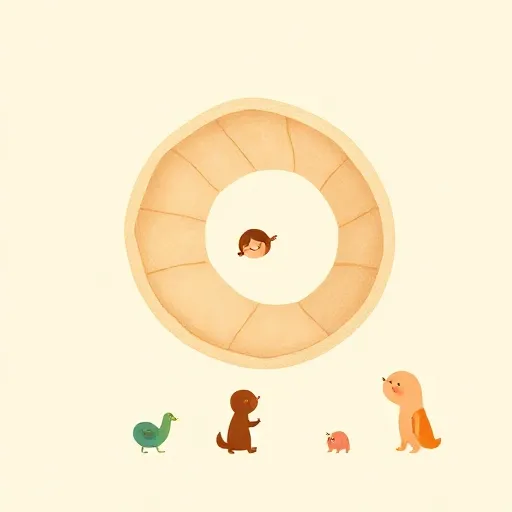
Today we know that development is not the unfolding of a homunculus. An embryo really does start as a blob of similar-looking cells. From that blob, the entire body must emerge. The process is called ontogeny — the journey from a single fertilized egg to a fully formed adult. And it involves several key activities that reshape and reorganize cells.
First, cells differentiate. That means they become specific types, like muscle cells, nerve cells, or skin cells. A muscle cell looks and behaves very differently from a nerve cell, even though every cell in your body carries the same set of genes. Second, the embryo establishes patterns. It creates a head-to-tail axis, a front and a back, and knows where the left and right sides should be. This pattern formation is like graph paper appearing on the embryo, so each region knows which structures to build.
Third, cells migrate and fold into layers and tubes — this is morphogenesis, literally “the creation of form.” Sheets of cells buckle, pinch, and spread much like a piece of clay being sculpted. For example, during gastrulation, a simple ball of cells indents at one spot and eventually forms a tube that will become the gut. Fourth, the organism grows, but not all parts grow at the same rate. A baby’s head is huge compared to its body, but by adulthood the proportions have shifted.
None of these processes work alone. The heart, for instance, needs cells to become muscle, to migrate to the right spot, to fold into chambers, and to grow in sync with the rest of the body. The philosophical question isn’t what happens — it’s how it happens and what counts as a good explanation. That’s where modern biology steps in with two powerful sets of tools: genes and physical forces.
Genes vs. Physics: Who Calls the Shots?
For decades, the dominant story was genetic. Scientists discovered that certain genes act like switches or instructions, turning other genes on and off in precise sequences. Many textbooks say things like “differential gene activity controls development.” Some researchers even spoke of a genetic program — as if the DNA holds a computer code that builds the organism. On this view, explaining development means finding which genes make a difference at which moments.
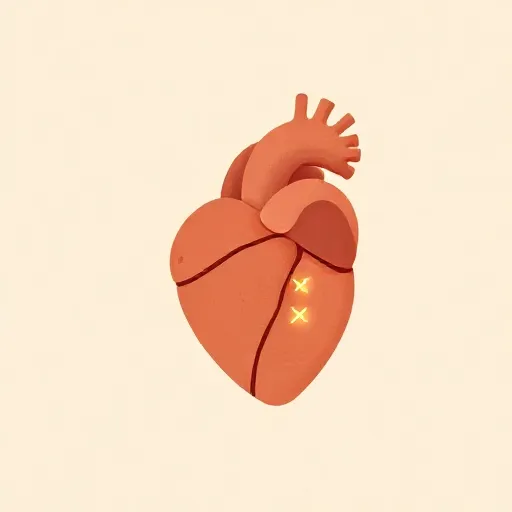
But a growing number of biologists push back. They point out that genes alone cannot explain how tissues fold, stretch, and flow. Physical forces — fluid pressure, cell adhesion, tension, and stiffness — also shape the embryo. This is like noticing that a tent isn’t just a set of instructions; it’s also the poles, the fabric, and the wind that pull it into shape. In the developing heart, for example, fluid dragging across cells helps determine whether the heart loops to the left or the right. If you change the voltage across cell membranes, the normal left-right pattern can get scrambled.
So which kind of explanation is better? Philosophers note that both genetic and physical causes are difference makers — if you change one, you change the outcome. But combining them into a single explanation is tricky. It’s not like adding vectors in physics, where you can sum up forces in a neat equation. The two kinds of causes have different time scales and different patterns of generality. The same genetic network can be found in widely different animals (like flies and humans), while the same physical mechanism (like mechanical buckling) can appear in unrelated creatures simply because tissues share similar material properties.
Today, researchers agree that the goal is to figure out how genes and physics intertwine. Physical forces can turn genes on or off — a process called mechanotransduction — and gene activity can change the stickiness or stiffness of cells, altering the physical forces at play. The two lines of causation loop into each other. Understanding development means mapping that loop, not picking a winner.
Watching Life Unfold — and Ignoring Some Twists
To study ontogeny, biologists use a handful of model organisms — species like fruit flies, zebrafish, and mice. These creatures develop quickly and are easy to raise in the lab. By watching them, scientists hope to learn principles that apply to all animals, including us. But there’s a catch. To make experiments repeatable, researchers construct normal stages — a timeline of what the embryo should look like at each step.
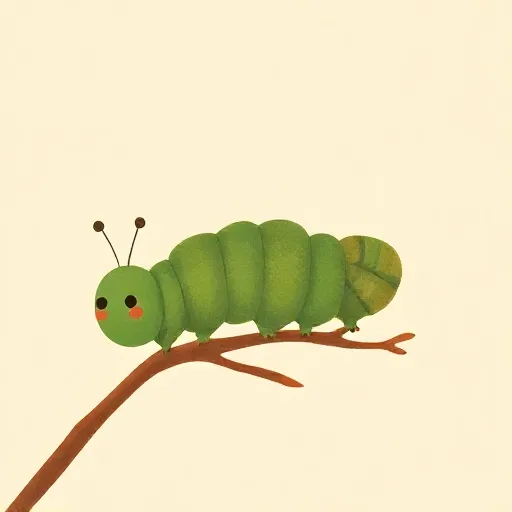
These stages are a kind of idealization. They deliberately ignore variation. For instance, if you raise caterpillars on different diets, they can develop different body shapes and colors — a phenomenon called phenotypic plasticity. The same genes produce a green or a brown caterpillar depending on what the insect eats. But in the lab, scientists control the environment carefully to minimize such variation, so they can focus on what feels “normal.” That means a whole dimension of development — how the environment tweaks the building plan — often gets hidden.
This creates a tension, especially for scientists who want to understand evolution. Evolution works on variation; if you systematically screen it out, you might miss how new traits could arise. Philosophers of biology point out that the very tools that make research powerful (standardized stages, model species) also create blind spots. One solution is to use a wider variety of organisms and to construct alternative staging schemes that highlight different processes. For example, you might have one timeline that tracks gene activity and another that tracks mechanical forces. Each reveals aspects the other obscures.
Why This Matters: You Are a Developmental Puzzle
Think about your own body. You began as a single cell, half from one parent and half from another. Inside that cell was DNA, but no miniature blueprint of your face. Over nine months, cells divided, folded, and communicated. A tube became a heart; a patch of cells turned into the lens of your eye. The fact that a complex, thinking human emerges from such humble beginnings is still one of nature’s deepest mysteries.
Philosophy of developmental biology doesn’t just ask “what happens”; it asks what a good explanation looks like. Is it enough to list all the genes involved? Or do we need to capture the physical forces too? And how should we handle the fact that our best lab setups systematically leave out environmental influences? These questions feed directly into medicine (think of repairing a damaged heart or understanding birth defects) and into our sense of identity. If you are not the unfolding of a pre-set homunculus but the product of countless interactions — genetic, physical, even environmental — then who you are is far more dynamic than a simple blueprint suggests.
The old fight between preformation and epigenesis is over in the sense that no one today believes there’s a tiny person inside a sperm cell. But the deeper philosophical tension remains: how can a few simple starting materials, without a plan already drawn, build something as astonishing as a living body? Every time a doctor repairs a tissue or a scientist watches cells self-organize, they’re confronting that same ancient puzzle.
Think about it
- If you could watch a time-lapse of your own development from a single cell to now, what moment would surprise you most? Why?
- Scientists use a few animals — like fruit flies — to understand how all living things develop. What might they be missing by relying on just a handful of species?
- People often call genes a “blueprint.” But if your body also needs stretching, squeezing, and fluid flow to get its final shape, does the blueprint idea still hold up? How would you describe it instead?