Is a Tiny Clump of Cells a Person with Rights?
A Tiny Promise in a Laboratory Dish
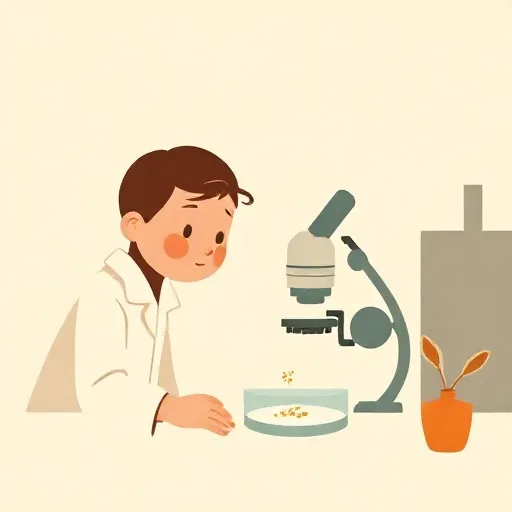
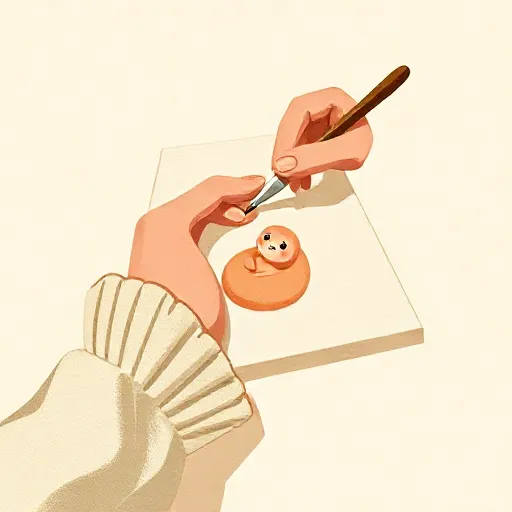
A researcher in a white coat stares through a microscope at a cluster of cells barely visible to the naked eye. This five-day-old human embryo holds human embryonic stem cells (HESCs) —cells that can turn into any tissue in the body. Scientists hope those cells will unlock cures for diseases like diabetes or Parkinson’s. But to get the cells out, the embryo must be taken apart and destroyed.
Is that wrong? That question is at the center of one of the most heated debates in modern ethics.
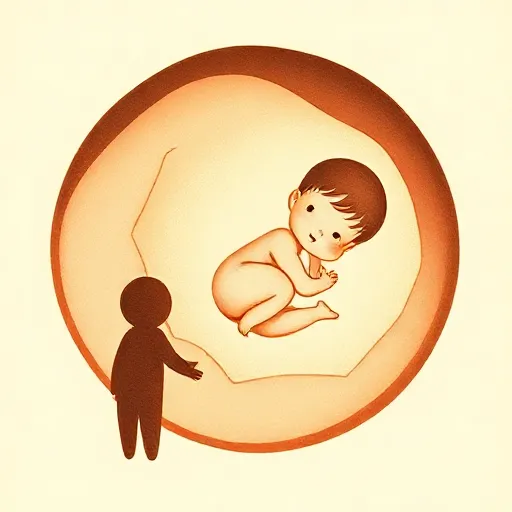
Many people who oppose destroying embryos for research use a straightforward argument: It is morally impermissible to intentionally kill an innocent human being. A human embryo, they say, is an innocent human being. Therefore, intentionally killing it is wrong. Philosophers like Robert P. George (born 1955) and Alfonso Gómez-Lobo (1949–2011) have defended versions of this argument. It sounds simple, but both of its pieces are fiercely contested. Is an embryo really a human being? And even if it is, does it have the same right to life as a born person? The rest of this article digs into those two challenges.
Is a Five-Day-Old Embryo Really a “Human Being”?
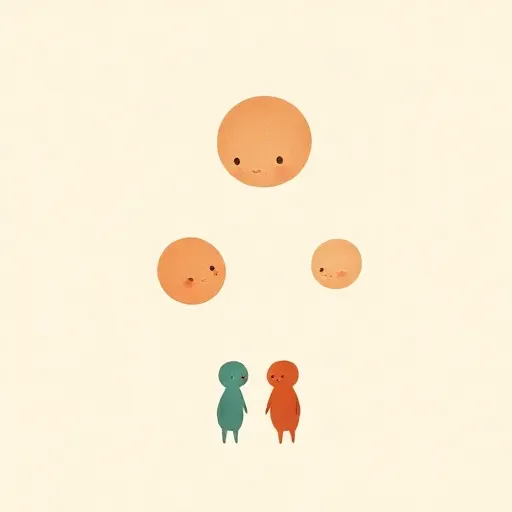
The claim that a human being begins when sperm meets egg runs into a puzzle: identical twins. Sometimes a single zygote (a one-cell fertilized egg) splits into two embryos during the first two weeks. That process is called monozygotic twinning. If you are an identical twin, you can’t be the very same individual as the original zygote, because both twins can’t be identical to it. Philosophers Barry Smith (born 1952) and Berit Brogaard (born 1970) have argued that this shows the zygote isn’t yet a distinct human individual. Before twinning is no longer possible, there may be no “someone” to be.
A different challenge comes from biology. Some argue that the cells in a five-day embryo are like a handful of marbles in a bag—they share the same wrapper but don’t work together as a single organism. Coordination between cells to build a unified body only really gets going around day 16. So taking apart the cells of a blastocyst, they say, doesn’t destroy a human organism, because one doesn’t exist yet.
But not everyone agrees. Some scientists point out that even very early embryos show signs of coordination: certain cells are already on track to become the placenta, while others are destined to form the body. How much teamwork is enough to count as a single organism? That may not be a question a microscope can answer. It’s an open metaphysical puzzle—a debate about what the word “being” even means for a living thing.
Does Being Human Automatically Give You a Right to Life?
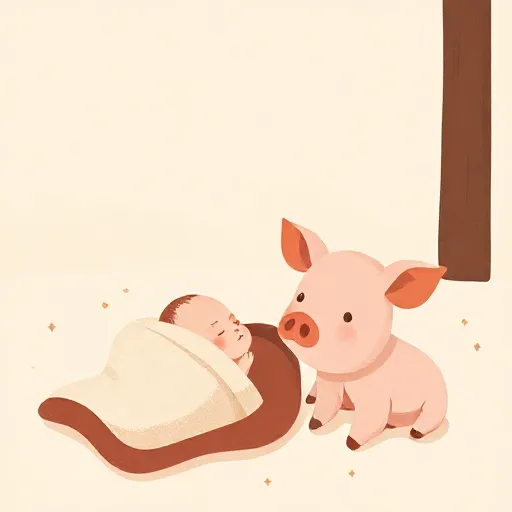
Suppose we agree the embryo is a human organism. Does that mean it has a right not to be killed? Many think so simply because it belongs to our species. But plenty of philosophers find that suspicious. Imagine a world where pigs or aliens could think, feel, and plan like we do—most of us would treat them as persons with rights, regardless of DNA. That thought experiment suggests that moral status (the kind of respect and protection something deserves) depends on mental capacities—things like self-awareness, reasoning, and the ability to make choices—not on species membership.
Philosophers Peter Singer (born 1946) and Helga Kuhse (born 1940) hold that only beings with such higher-order mental capacities have a right to life. Embryos lack even basic consciousness, so on this view they don’t have that right.
Then a troubling question pops up. Newborn babies also don’t reason or make choices—in fact, their mental abilities are less advanced than many animals we think it’s acceptable to kill. If we tie the right to life to mental capacities, it looks like we’d have to say it might sometimes be okay to sacrifice infants for the greater good. Most people instinctively reject that. Some try to avoid the problem by saying we should still treat infants as if they have a right to life, because it encourages the love and care that will benefit the persons they become. Others, like George and Gómez-Lobo, take a different route. They argue that embryos already possess a “rational nature”—the same basic capacity to reason that adults have, just at a very early stage of development. It’s like a seed that contains the blueprint for a tree. There is only a difference in degree between an embryo and an adult, they claim, and that small step along a continuum can’t justify treating one as disposable and the other as valuable.
The “Could Become” Argument: Does Potential Matter?
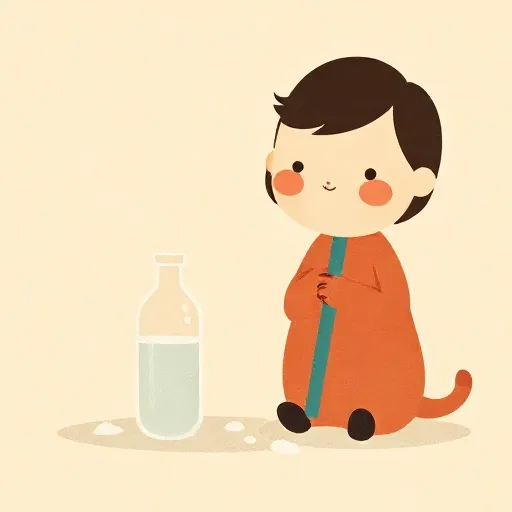
Even if an embryo isn’t yet a reasoning being, it has the potential to become one. Many people feel that potential matters a lot. But here’s a twist: with modern cloning techniques, any cell in your body has the potential to become a whole human being. Take the nucleus out of a skin cell, put it into an empty egg, zap it with electricity, and implant it—and that cell could develop into a baby. If potential is what gives moral status, then your skin cells would have the same high status as embryos. Almost nobody accepts that.
Supporters of embryo protection push back. They say an embryo has an active disposition to develop into a mature human; it has what some call an intrinsic power to mature if no one interferes. A skin cell, by contrast, is passive—it won’t become anything without massive outside intervention. But is that distinction clear-cut? An embryo also needs plenty of outside help: a uterus, nutrients, protection from toxins. An embryo frozen in a lab fridge won’t develop any more than a skin cell will, unless people deliberately provide the right conditions. Because of this, some philosophers doubt that the active-versus-passive line can carry the moral weight opponents of HESC research want it to carry.
Can You Use the Cells Without Getting Your Hands Dirty?
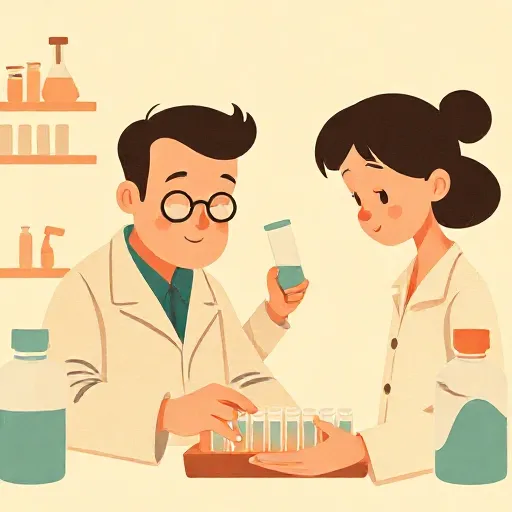
Suppose you think destroying embryos is wrong. Could you still use stem cell lines that were already taken from destroyed embryos? Some say yes: you didn’t cause the destruction, and it would have happened anyway—just as a transplant surgeon can use organs from a car-crash victim without being responsible for the crash. But others argue that when researchers create a steady demand for HESCs, they encourage further destruction. It’s like buying a stolen phone: you’re not the thief, but you’re helping the theft pay off.
There’s also what the source calls complicity—a kind of symbolic guilt that comes from benefiting from a practice you believe is deeply wrong. Imagine a society where killing members of a certain group is legally permitted and widely accepted, and scientists then use materials taken from the victims for research. Could a researcher use those materials while still showing proper outrage against the killing? It’s hard to see how. Opponents of embryo research make a similar point: if destroying embryos is a grave moral wrong, people who benefit from it may look like they’re silently endorsing it, even if they didn’t do the destroying themselves. Others reply that a noble goal—saving lives—may sometimes outweigh that symbolic taint.
Why This Debate Could Shape Your Future
In your lifetime, therapies grown from stem cells might reach real patients—maybe even someone you know. The moral lines we draw today will decide which of those therapies are ever allowed to exist. But this argument isn’t just about biology. It’s about something much bigger: what makes a being count as “one of us” who deserves to be protected? The same question comes up in debates about animal rights, artificial intelligence, and the boundaries of life and death.
There’s also a striking inconsistency that keeps the debate alive. Every year, fertility clinics discard thousands of spare embryos created for in-vitro fertilization. If an embryo truly has the same moral status as a child, such routine disposal should horrify us—but it rarely sparks the same outrage as research that destroys embryos. For many, that suggests that even people who say embryos are full persons don’t consistently act that way. Whether you find that observation troubling or just realistic, it shows that our actions and our principles often clash.
As scientists learn to build embryo-like structures and organ-like blobs from stem cells, the question of what counts as a “being” with rights will only get trickier. By wrestling with the embryo research debate now, you’re practicing a skill you’ll need your whole life: figuring out who matters, and why.
Think about it
- If a frozen embryo was going to be thrown away anyway, is it better to use it for research that could save lives—or does using it still feel like taking part in something wrong?
- Scientists can now coax a skin cell to behave like an embryo. If that reprogrammed cell could be made into a baby, should we treat your skin cell with the same respect we might give an embryo?
- Many embryos created for fertility treatments are discarded every year. If you believe embryos are full persons, how should that change the way fertility clinics work?