What If a Mouse Had Human Thoughts?
A Beast of Many Parts
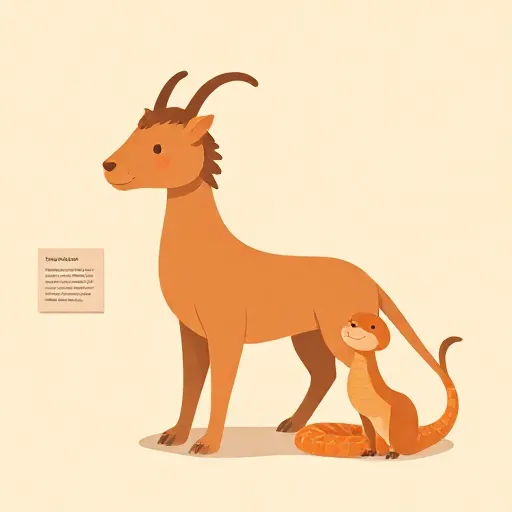
Imagine a monster with a lion’s head, a goat’s body, and a serpent for a tail. In ancient Greek and Egyptian stories, that was a chimera — a creature sewn together from different species. But today, chimeras are not just myths. A modern scientist means something simpler: a single organism whose cells come from two different embryos. And each of us might already be a tiny chimera. Over a lifetime, we pick up cells from other organisms, even from our mothers before birth. Blood-sucking mosquitoes swap cells between victims. Human embryos can even fuse in the womb, creating a person with two sets of DNA.
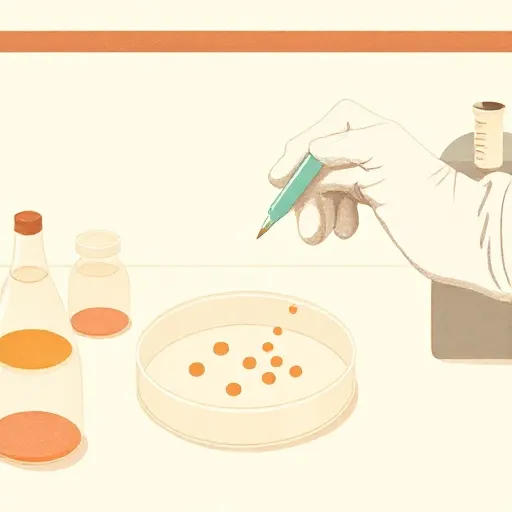
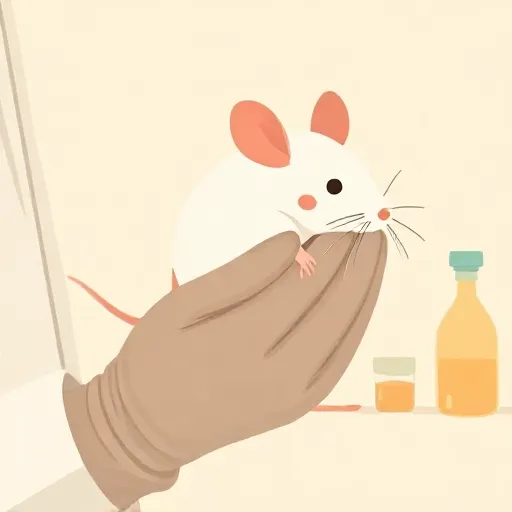
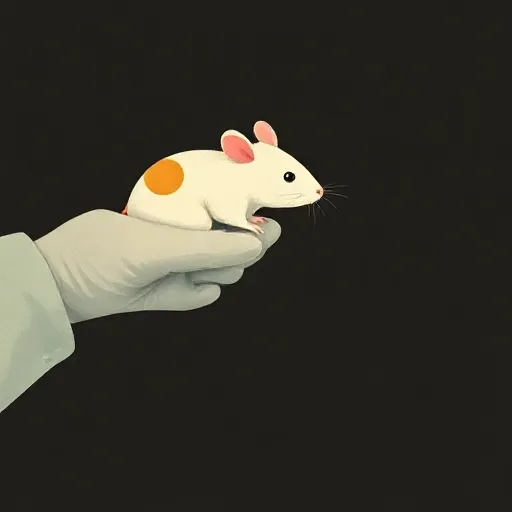
The laboratory takes this further. Researchers have fused sheep and goat embryos to make a “geep” — an animal with wool on one part of its body and coarse hair on another. They have transplanted neural tissue from quail embryos into chicken embryos, producing chicks that chirp like quails. The most common lab chimera is a mouse carrying cells from another mouse, used to study genes and diseases.
These examples all involve non‑human animals. The ethical fireworks begin when human cells are mixed in. In 1998, biologist James Thomson (born 1959) first grew human embryonic stem cells (hESCs) in a dish. These cells are pluripotent: they can turn into any kind of tissue — heart muscle, neurons, liver, skin — and they can renew themselves endlessly. That makes them incredibly useful for studying how diseases work and for someday repairing damaged organs. But it also means they can be injected into an animal embryo and grow into parts of its body, even its brain. So the central question arrives: Should we deliberately create a creature that is partly human?
The “That’s Unnatural!” Argument
The loudest objection is simple: making chimeras crosses a natural boundary between humans and other animals, and unnatural acts are wrong. This is the Unnaturalness Argument. It may sound like common sense, but philosophers find it very weak.
First, there is no single, settled definition of “species.” Biologists rely on different ideas — reproductive isolation, genetic similarity, shared ancestry — depending on what question they are asking. If the boundary itself is fuzzy, it is hard to argue that breaching it is always wrong. Second, nature already regularly breaches it. Bacteria swap genes between species. Over millions of years, species fuse and split. The fact that we do it with lab equipment does not make the crossing automatically worse.
The deeper problem is the link between “unnatural” and “wrong.” If unnaturalness alone made an act unethical, then almost everything humans do — from writing symphonies to flying aeroplanes — would be wrong. The person who uses the Unnaturalness Argument often falls back on an inner disgust, a “yuck factor.” But we know that feelings of disgust can mislead: people once used them to condemn inter‑racial marriage. Without a clear reason why the unnaturalness of chimeras is specifically bad, the argument fails to convince anyone who doesn’t already share that gut reaction. Most philosophers, therefore, set the Unnaturalness Argument aside and look for stronger ethical concerns.
Are Some Animals Already Persons?
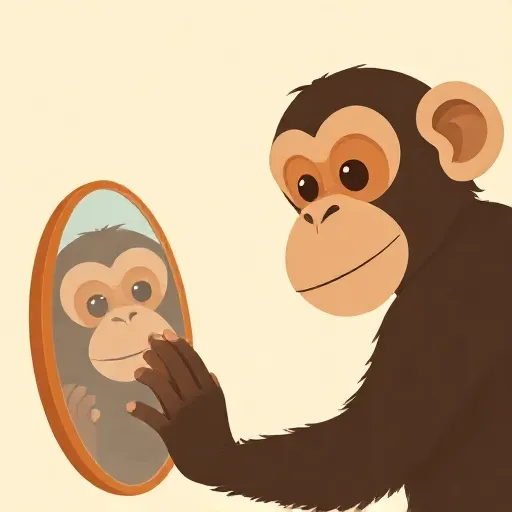
A more serious worry comes from thinking about the animals we might use. The philosopher David DeGrazia, writing in the early 2000s, argued that great apes (chimpanzees, bonobos, gorillas, orangutans) are borderline persons. Being a person is not the same as being a human being. A person has a cluster of mental capacities: autonomy, reasoning, self-awareness, sociability, and the ability to act on intentions. Great apes deliberate, plan, recognize themselves in mirrors, understand their place in a social hierarchy, and sometimes help others even when it costs them. Yet, because they lack full language, they do not tick every box as clearly as a normal human adult does. DeGrazia says they sit in a grey area between paradigm persons (like you and me) and clearly non‑person animals (like a goldfish).
What moral status does a borderline person have? Moral status is the weight an individual’s interests carry when we decide what we may do to them. DeGrazia examines two models. On the Unequal Consideration Model, the interests of a paradigmatic person matter more in themselves than the equal interests of a merely sentient animal. On the Unequal Interests Model, paradigmatic persons simply have weightier interests — being confined frustrates their plans and relationships in ways it doesn’t for less complex beings. Either way, a borderline person ends up with virtually full moral status, much like a young child.
If that is right, then using a great ape in research that grows human neurons in its brain — so‑called neural chimeric research — is out of the question. The experiments would be risky, would not benefit the animal, and could cause suffering far beyond what we accept for beings with near‑full rights. Even if we never go that far, the argument pulls a thread: if borderline personhood gives apes such strong protection, why not also other primates, or many mammals? Defenders of animal research object that the argument proves too much, because it would severely limit experiments on any sentient creature. The debate remains live, and most countries have already stopped funding invasive research on chimpanzees.
The Danger of Creating a Moral Upgrade
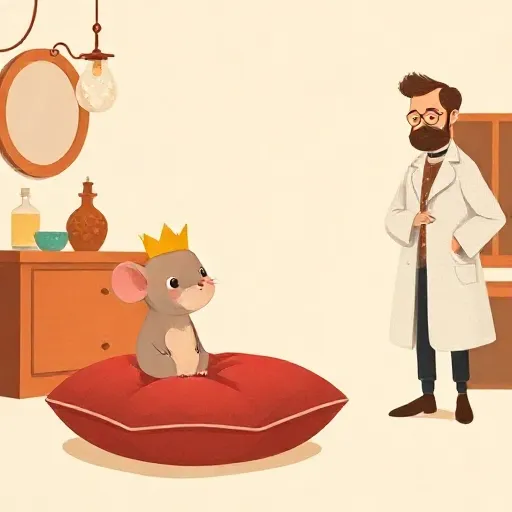
Even if a mouse normally has a much lower moral status than a human, transplanting human stem cells could change that. This is the core of the Moral Status Framework, developed by philosopher Robert Streiffer in the mid‑2000s. The framework asks: what happens if our laboratory procedure enhances a non‑human animal’s moral status up to the level of a normal human adult?
If a mouse suddenly gained a human‑like mind, treating it the way we routinely treat lab animals — confining it, subjecting it to pain, and eventually killing it — would be morally equivalent to doing those things to a fully functional adult human. That is clearly unacceptable. So, status‑enhancing research is permissible only if, from the moment the enhancement kicks in, the creature receives all the protections we would give to a human being. In practice, that seems almost impossible: no research lab could raise a mouse to live a fulfilling human‑style life. And if they could, the science would be pointless — you would learn more by studying actual humans.
But how likely is such an enhancement? Most chimeras made today involve tiny numbers of human cells that do little. The animal’s small skull, short pregnancy, and non‑human chemical environment stop those cells from building a human‑like brain. Yet scientists are actively trying to get human cells to contribute more, and some experiments already show human glial cells spreading through a mouse brain and boosting its learning. If researchers one day manage to create an animal with genuine human‑type cognition, the Moral Status Framework says that doing so without a plan to fully respect its rights would be deeply wrong.
From the Lab to Your Dinner Table

Why should a twelve‑year‑old care about chimeras? Because this is not only a story about mice and microscopes. The same questions sit inside everyday choices. When you decide whether it’s okay to eat a hamburger, you are making a claim about the moral status of a cow. When you argue about whether a pet dog deserves a birthday treat, you are weighing its interests against the cost. The chimera debate forces us to make those judgments explicit. What carries moral weight — being human, being intelligent, being able to feel pain, or being part of a social world? And what do we owe to a creature that is part human, part animal, and caught in between?
Policymakers are already drawing lines. The United States National Institutes of Health will not fund research that puts human embryonic stem cells into early primate embryos. The International Society for Stem Cell Research bans implanting such embryos into any uterus. These rules assume we must be careful, but they don’t settle the deeper ethical tangles. If your own feelings of disgust or wonder pull you in opposite directions, you are joining a conversation that philosophers, lawmakers, and young people are having right now — a conversation that will decide what kind of world we build with our growing power over life itself.
Think about it
- If a mouse could think and feel as richly as a human, should it be given a full life in a sanctuary rather than being used in an experiment?
- Is it ever acceptable to create a being that doesn’t fit into our usual categories, if doing so could save millions of human lives?
- Do you think a newborn human has a different moral status than an adult chimpanzee, and what makes the difference?