Did Rocks Feel Things? The Philosopher Who Said Everything Could Sense
The Scholar Who Replaced Magic with Heat and Cold

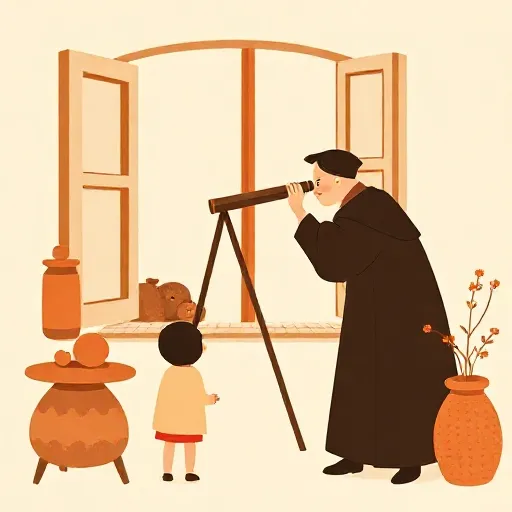
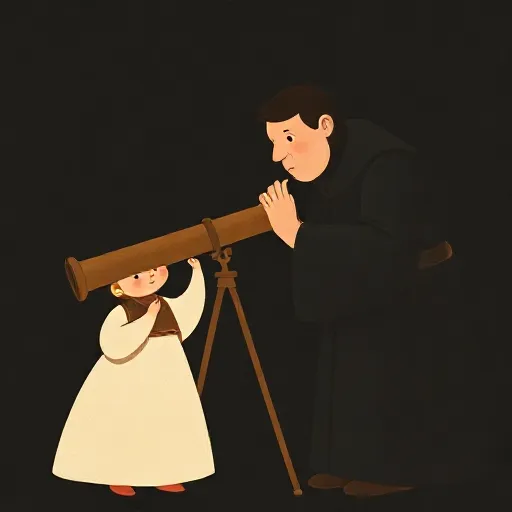
In the hills of Cosenza, a town in southern Italy, Bernardino Telesio (1509–1588) spent his days watching nature with a piercing curiosity. He didn’t wear a professor’s gown or hold a government job. He had left the famous university of Padua without a degree and later lived in a monastery without becoming a monk. Eventually he settled in Cosenza and led a lively circle of thinkers called the Accademia Cosentina. There, he taught his friends to ignore grand theories and look directly at the world.
Telesio was fed up with Aristotle and the physician Galen. He thought they wasted too much energy on elaborate reasoning and not enough on practical observation. What we need, he argued, is a philosophy built on what our senses actually tell us. Today we would call that approach empiricism — the belief that real knowledge comes from sensory experience, not from pure thought alone. Telesio also defended naturalism: the view that nature works on its own, without hidden supernatural forces pushing things around.
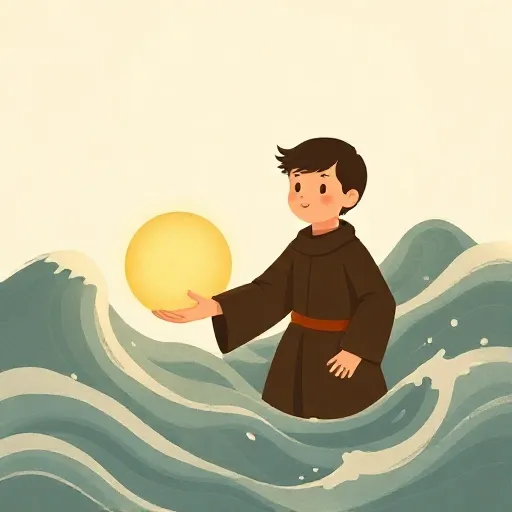
His book On the Nature of Things according to Their Own Principles laid out a startlingly simple picture of the universe. All that exists is passive matter and two active forces — heat and cold. At the very beginning, God created a blazing sun as the seat of heat and a frozen earth as the seat of cold, setting them far apart in absolute space. Everything else — rocks, metals, plants, animals, human bodies — results from the endless battle between these two forces for control of matter. Heat makes things expand, move fast, and rarefy. Cold slows motion and condenses matter into dense solid forms. Things differ only in how much heat or cold they contain.
This wasn’t just a return to very old ideas. Telesio abolished Aristotle’s whole invisible framework: no cosmic spheres, no unmoved movers, no purpose-driven final causes. The sky moves because moving is part of its own nature, not because it longs for some divine perfection. Space stretches out absolute and empty, though every thing in it avoids vacuum if it can. The world, in Telesio’s hands, became a great self-running theater of heat and cold — and you could understand it just by paying attention.
Your Soul Is Not a Magic Form — It’s a Fiery Spirit in Your Nerves
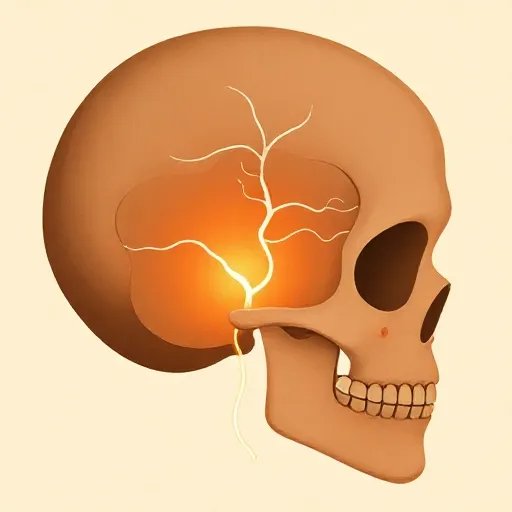
Aristotle had defined the soul as the “form” of a living body — an invisible organising principle. Telesio flatly rejected that. He claimed the soul is something you can point to, at least in principle: a very fine material substance called spiritus (Latin for “spirit”). This spirit is produced from the white seed of animals and humans, flows through the nervous system, and has its main command center in the brain.
His evidence came from direct observation. Look at any animal or human, he said, and you’ll find that the same kind of seed, the same nerve networks, the same brain structures, and even the same post-ejaculation tiredness appear across species. The spirit alone does all the sensing and moving. When the body dies, what’s missing is that active, heat-filled spirit. So the soul is not a mysterious form but a physical part of the body — a materialism that treats mind and life as qualities of highly organised matter.
No soul divided into parts, either. Where Aristotle and Galen had pictured three separate souls or three spirits ruling the liver, heart, and brain, Telesio insisted on a single unified ruler. He followed the physician Giovanni Argenterio and the ancient Stoic idea of a hegemonikon — a master spirit in the brain that governs everything. A stone and a squirrel are not different kinds of beings; the squirrel simply has more internal heat and a much more complex arrangement of heterogeneous parts. Humans and animals share essentially the same kind of spirit, ours just nobler in degree. For Telesio, there is no sharp metaphysical line between living and non-living — only a sliding scale of warmth and complexity.
Everything Feels — Even a Stone Knows When It’s Crushed
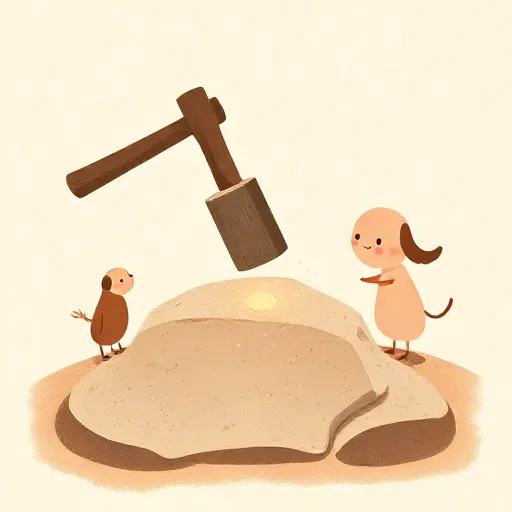
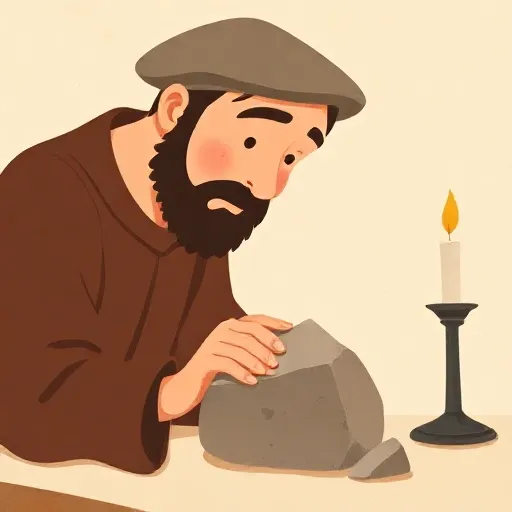
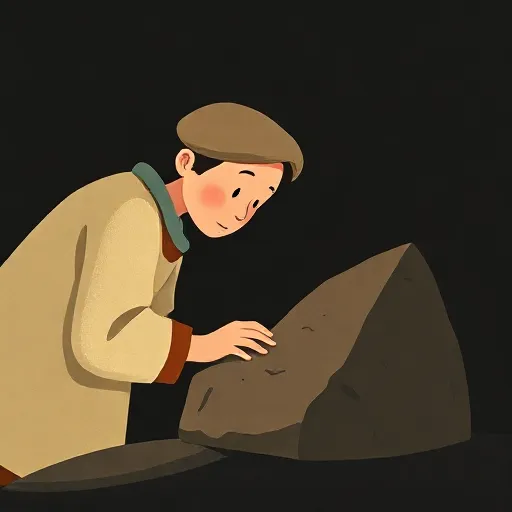
This is where Telesio got truly radical. He proposed that all things — not just animals — possess the power of sensation. His reason was simple: to survive in a world of battling heat and cold, any being must be able to sense what helps it and what harms it. Even the primary forces themselves, heat and cold, must feel each other in order to act. Scholars today call this view pansensism.
What you see when a stone is struck or heated isn’t just a physical reaction, Telesio argued; it’s the stone’s spirit-like matter feeling a disturbance. The same logic applies to a flame bending away from a gust of cold air. Sensation is everywhere, in sun and earth and all the mixed bodies between them.
When it comes to animals and humans, Telesio replaced the whole idea of special sense organs. Eyes, ears, and noses aren’t magical receivers that grasp invisible “forms” of things. They are simply soft or perforated passages that let the physical impulses of light and air rush straight into the nerves. What you ultimately perceive is not the outer object but the motion it triggers in your brain-spirit. Touch becomes the primary sense — it gives the most direct contact — and all other senses work by a similar transfer of tactile impulses. Pleasure is simply the sensation of self-preservation; pain is the sensation of being destroyed. The spirit in your brain feels its own tiny expansions and contractions, and that is what it means to see, hear, or burn your finger.
You Know Fire Because Your Spirit Remembers Being Burned Before
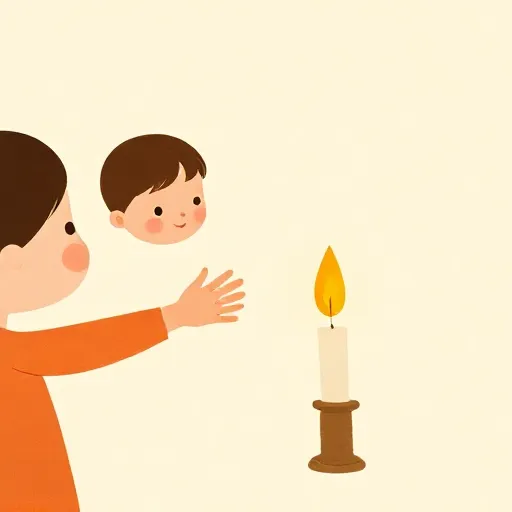
If all sensation is really a kind of touch, how can we ever understand anything? Telesio’s answer was that knowledge is built entirely from memory and comparison — no separate rational intellect is needed.
Memory, for him, is not a gallery of pictures. It’s a storage of movements your spirit once made. When you get burned by a flame, your spirit recoils. Later, when you feel a similar hot, rarefying impulse, your spirit spontaneously matches the new movement to the old one and thinks: fire. Even what we call reasoning is just comparing fresh sensory motions against stored patterns. He suggested we should replace the fancy word intelligere (understanding) with existimari (judging) and commemorari (recollecting).
This led him to a bold conclusion: even mathematics, which many philosophers treated as a realm of pure thought, comes from sensory experience. You learn to count by handling objects, and geometry begins with measuring fields and shapes. Natural philosophy — the direct study of living, growing things — is therefore the highest science, and book-based mathematics is less noble. For Telesio, there is no privileged world of eternal truths accessible only to the mind. All you know, you know because your body once moved in a certain way.
Why Telesio Still Matters: The Machine of Nature Runs by Itself
Telesio’s ideas spread fast. His friend Sertorio Quattromani published a short summary; the wild thinker Tommaso Campanella wove Telesian themes into his own work; Francis Bacon later hailed Telesio as “the first of the moderns.” Thomas Hobbes adopted Telesio’s rejection of abstract species, and René Descartes built elements of Telesian physiology into his early description of the human body. In many quiet ways, Telesio helped set the stage for the scientific revolution.
Perhaps his most lasting move was separating science from religion. He never denied God or the existence of an immortal soul. He even argued that a divinely given soul must be added to our natural spirit — otherwise how could martyrs sacrifice the very self-preservation that drives all nature? But in his actual explanations of earthquakes, colours, dreams, and bodily life, this second soul plays no role whatsoever. God, in Telesio’s picture, is like a master mechanic who builds a perfect self-running clock. Once the sun and earth heat-and-cold machine is set in motion, it generates and preserves itself without any need for constant miracles.
That idea — that the world can be understood on its own terms, through patient observation instead of appeals to invisible forms — is something you live with every day. When you trust that a fever has a physical cause, or that a rock will always roll downhill, you’re walking a path Telesio helped clear. He showed that you don’t need to read Aristotle to know how nature works. You just need to watch, touch, and remember.
Think about it
- Telesio thought a stone has a kind of sensation because it reacts to what harms or helps it. Do you think feeling something requires more than just reacting? Could a smartphone that senses temperature be said to “feel” in the same way?
- He claimed that every piece of knowledge comes from the senses. Can you think of something you know that doesn’t rely on seeing, hearing, touching, smelling, or tasting? If so, how would you prove it to a friend without using any sensory example?
- Telesio argued that every living thing acts only to preserve itself, yet people sometimes risk their lives to save strangers. Do you think a purely physical spirit can explain that? Or must there be something else going on — something not made of heat and cold?