Should You Learn from Books or the World?
The Young Friar Who Questioned Everything
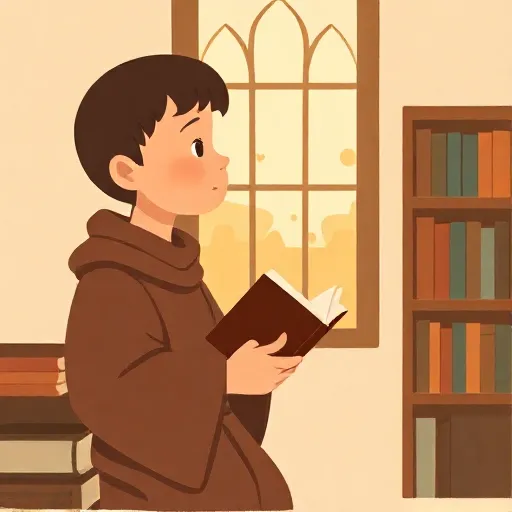
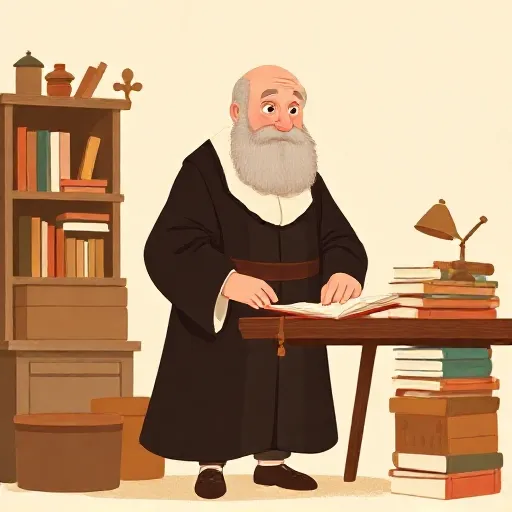
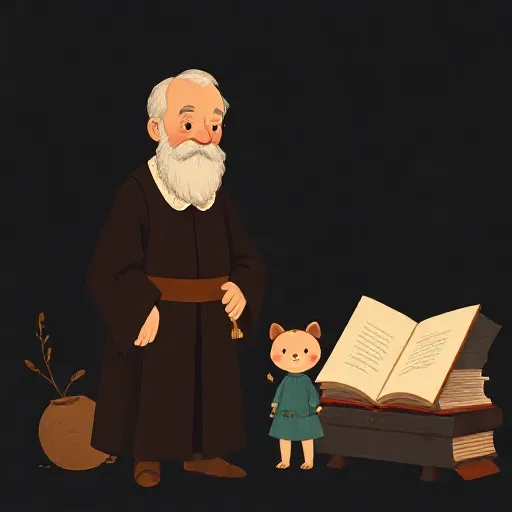
In 1588 a twenty-year-old Dominican friar named Tommaso Campanella was living in a monastery in southern Italy. For years he had sat in lecture halls listening to teachers explain the writings of the ancient philosopher Aristotle. They repeated the same interpretations that earlier scholars had written about even earlier scholars, line after line. The young man grew restless. He felt that human knowledge had gotten lost — it had wandered further and further away from the real world and instead turned into endless arguments over dusty words.
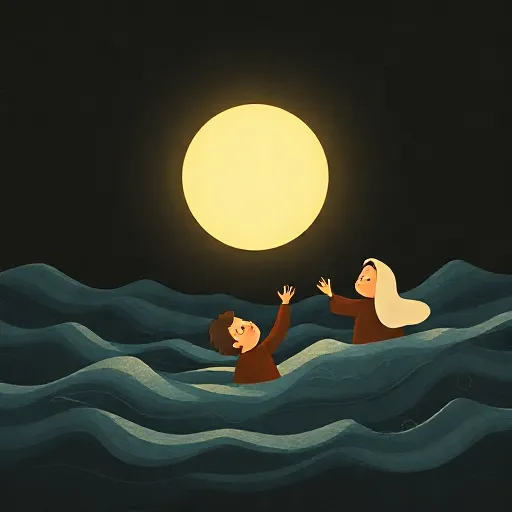
One day in the town of Cosenza he opened a book that hit him like a shock. It was On the Nature of Things According to Their Own Principles by Bernardino Telesio (1509–1588), an Italian thinker who argued something startling: don’t trust what old books say about nature — go look at nature itself. Campanella was electrified. He immediately wrote his own book defending Telesio’s approach, called Philosophy as Demonstrated by the Senses. On its title page he drew an image of Truth as a glowing sphere floating on rough waters, with winds threatening to sink it, while a young friar swims out to reach it. That swimmer was himself.
Campanella never let go of that picture. Throughout his life, even when imprisoned and threatened with death, he would insist that sense experience — what you see, hear, touch, and test — is the only solid starting point for real knowledge.
Reading the “Book of Nature”
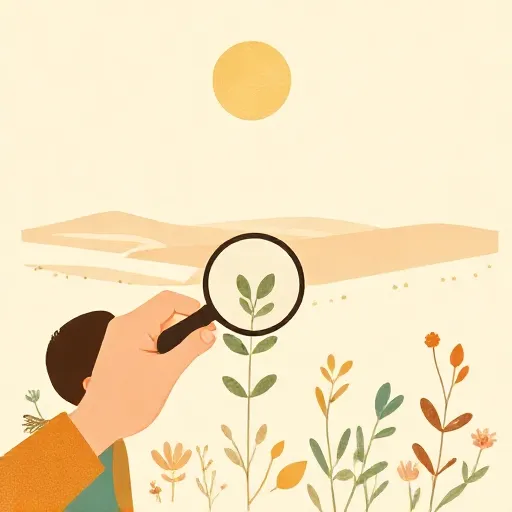
Campanella was furious with the followers of Aristotle. He said they spent all their energy on their master’s words without ever checking whether those words matched the actual world. To his eyes, philosophy had shrunk into clever word games. The cure, he believed, was to study the book of nature — a phrase he would use again and again.
Think of it this way: if you wanted to learn about frogs, would you rather read a hundred ancient descriptions of frogs, or sit by a pond and watch a real frog? Campanella thought philosophers had been doing the first for too long. He wrote poems about it, too, calling the world “the book on which the Eternal Wisdom wrote its own thoughts.” The job of every thinker, he said, is to compare the small, mistake-filled books written by human beings with the infinite book of the natural world, so that human knowledge can slowly be corrected.
So what did he see when he read that great book? He saw heat and cold as the two big forces that shape everything. Putting a lot of heat into matter makes the heavens — hot, subtle, and always moving. Cold makes the earth — dense, dark, and immobile. Their constant struggle, with matter as the stage, produces every rock, plant, animal, and person. At the center of it all he placed the sun, whose warmth he described as something like a World Soul, a living breath that nourishes every being on earth.
The Sense in All Things
Campanella took a further step that made many people uncomfortable: he argued that everything in nature has a kind of sense. Not necessarily thinking or talking, but an inner ability to tell what is good for it and what threatens it. A stone, he thought, clings to its solidity and resists being broken. A plant turns toward sunlight. A metal attracts or repels. All of this is a form of self-preservation.
In animals and humans, this sense runs on a very refined substance he called spiritus — a warm, breath-like stuff made of the finest matter heated by the sun. The spiritus flows through nerves from the brain, and every feeling, memory, and thought is just a modification of this moving, sensing substance. Reason and intellect, he claimed, are not separate magical powers; they are simply weakened and distilled sense.
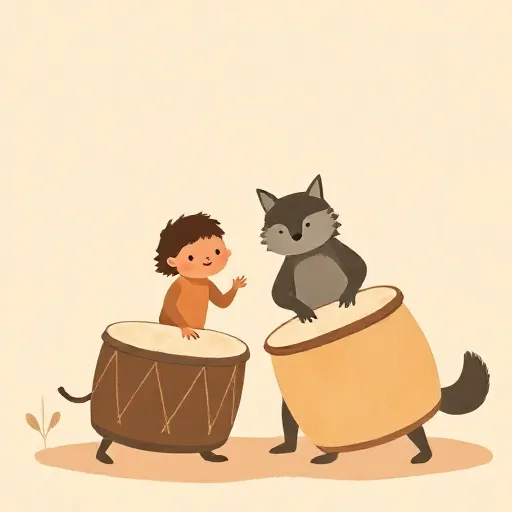
This idea let him offer natural explanations for things that often got labeled as magic. If a murder victim’s corpse begins to bleed when the killer walks into the room, it isn’t a miracle: the victim’s lingering spiritus, still present in the body and in the air, feels the approach of the attacker and is thrown again into anger and fear. If an ointment applied to a sword can heal the wound that sword made, it’s because the spiritus in the wound senses the cure through the air and responds with something like relief. A drum made of sheep’s skin may fall to pieces when a drum made of wolf’s skin is beaten nearby, because the sheep’s hide still carries the fear of the wolf, and the sound wakes it. Campanella called the study of such hidden connections natural magic, and he insisted it was a real science, not superstition.
The Plot and the Perfect City
In 1598 Campanella returned to his hometown in Calabria, convinced by prophecies, unusual celestial signs, and the miserable condition of the people that a great upheaval was coming. He became the spiritual leader of a conspiracy to overthrow the Spanish rulers of the kingdom of Naples and establish a republic. The plot was betrayed before it began. Soldiers swept through the region; dozens of prisoners were brought to Naples. Some were executed and their bodies hung from banners as a warning.
Campanella did something astonishing to save his own life. He pretended to be completely insane. The law of the time said that a madman could not be put to death, because he could not properly repent. To test him, his captors subjected him to a torture called the vigil — extreme physical pain combined with prolonged sleep deprivation. He held on. The judges finally declared him insane and condemned him to life in prison instead. He would remain locked up in Neapolitan castles for twenty-seven years.
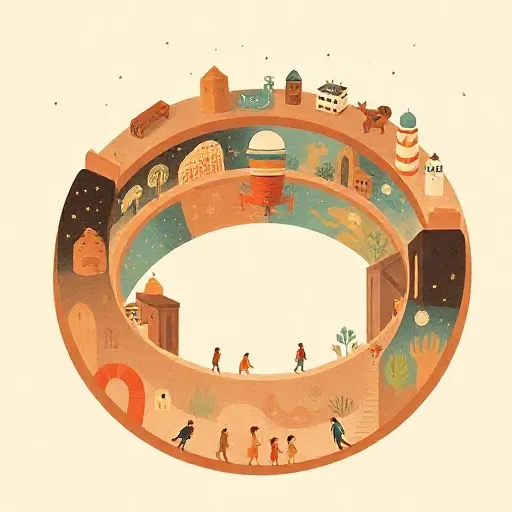
It was in that dark cell that he wrote his most famous work, The City of the Sun. The book is a utopia — an imaginary perfect society, described in a dialogue between a Genoese sailor who sailed with Columbus and a Knight Hospitaller. The city sits on a hillside, protected by seven rings of walls. On those walls are painted images of all the sciences: the heavens, mathematics, every country, every plant and animal, the mechanical arts, and the great lawgivers of history. Children learn joyously by walking through this painted encyclopedia, like a giant memory game.
No one in this city owns anything. All work is shared, and every job is considered honorable — being a builder or artisan earns more praise than sitting idle. Because everyone works only four hours a day, all needs are met. Even marriage is handled collectively: romantic love and sex are separated, and children are brought into the world under carefully chosen conditions, with the goal of producing the healthiest possible citizens. The citizens practice a natural religion, directed by priests who study the stars from an open temple and point out the best times for planting and for generation. The whole city is, in Campanella’s vision, a single living body.
The Universal Shepherd and the Power of Religion
Campanella did not only dream up perfect cities. He wrote real political advice for kings. His starting point was that all political communities are alive, like biological organisms, and their health depends on how tightly their parts are bound together. The strongest glue, he argued, is religion. Here he directly challenged Niccolò Machiavelli (1469–1527), who had famously described religion as a useful invention that rulers can use to control people. Campanella was horrified by this. He insisted religion is a natural virtue, born into every human being, and that no state can survive long without a true religious bond. He called Machiavelli’s approach reason of state — a selfish technique that only tears communities apart.
For Campanella, the wise ruler uses three kinds of bonds: bonds of the soul (religion, learning, and the sciences), bonds of bodies (encouraging healthy marriages and mixing different peoples together), and bonds of goods (promoting trade and navigation to connect distant lands). He initially believed the king of Spain could become a universal monarch who would reunite all humanity under one Christian shepherd. Later, exiled in France, he switched his hopes to the French crown. In either case, the image that haunted him was a golden age: a world with no wars, no famine, no plagues, and a fantastic flourishing of all knowledge, because people would finally share what they discovered.
Defending Galileo and the Freedom to Think
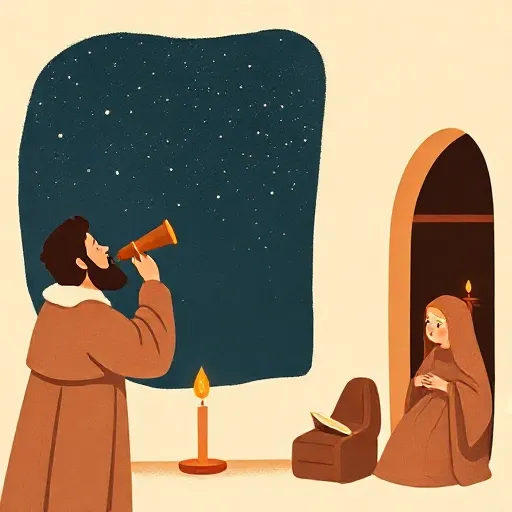
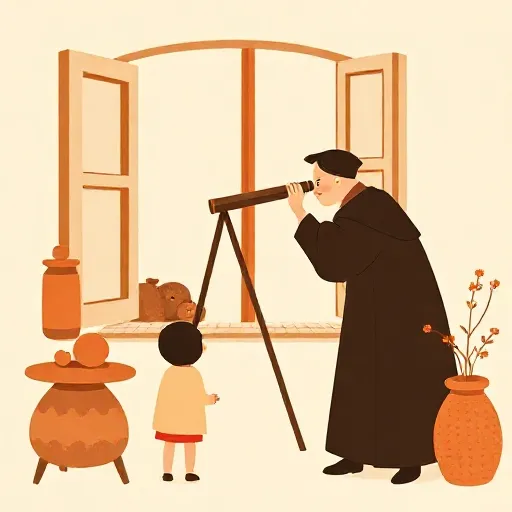
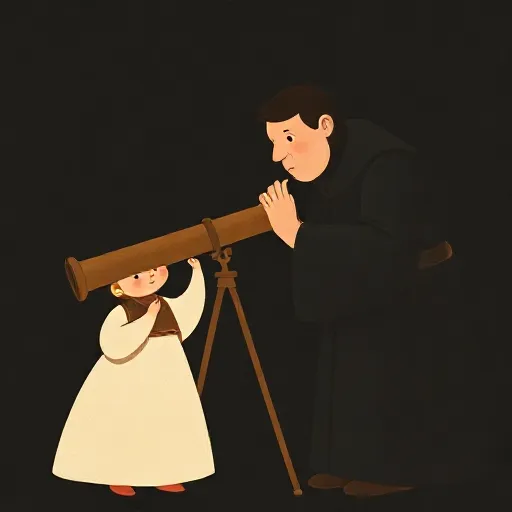
In 1616, while still imprisoned in Naples, Campanella wrote one of his bravest works: Defense of Galileo. Galileo Galilei (1564–1642) had been arguing that the Earth moves around the Sun, a view that clashed with the official physics of the church — a physics built on Aristotle. Campanella himself was not convinced that the Earth really moved. But that wasn’t the point. The point was something deeper that he called libertas philosophandi — the freedom to philosophize.
Campanella argued that theology and philosophy should not be chained together. For centuries, theologians had treated Aristotle’s physics as if it were part of the Bible. But all human philosophies are imperfect. When our reading of the book of nature tells us we need to correct those philosophies, we must do it, he said, or else the church will look foolish when stubbornly defending a system that fresh evidence has left behind. Reading the book of nature, with all its infinite detail, is the first duty of a Christian natural philosopher. Burying yourself only in human books is a kind of blindness.
His own life embodied that fight. In his final years, exiled in France, he advised the pope on how to avoid the harmful effects of an eclipse by sealing a room and filling it with fragrant woodsmoke, white silk, and music connected to the planets — a mix of science, ritual, and natural magic that was entirely serious. He never stopped reading the heavens and the world.
Why Campanella Still Matters

Campanella died in Paris in 1639, still imagining a world united in peace and ceaseless learning. His ideas can seem strange today — the community of wives, the astrological timing, the spirits hiding in drums. But his deepest questions are yours now. How do you know what you know? Do you trust what you’re told, or do you go check? When the books say one thing and your own eyes tell you another, where does your real loyalty lie?
His utopia may not be a place you’d actually want to live, but it forces you to ask what a truly fair society would look like. If everyone worked the same amount and no one could get rich by being idle, would that be more just or less free? If religion really is the strongest social bond, what happens in a world where people believe a thousand different things?
Above all, Campanella leaves you with the same fiery image he drew on that first title page: truth as something precious that keeps breaking the surface, no matter how hard the winds blow. He thought a philosopher’s job is to swim toward it — even when the waters are rough, even when powerful people want it to stay hidden.
Think about it
- If you could learn a new subject only by direct experimentation and observation, without touching any books or being taught by anyone, how would your understanding be different from reading a textbook? Which would you trust more?
- Campanella believed that genuine freedom to think would lead to a golden age of knowledge and peace. Can you imagine a situation where unlimited freedom to investigate could cause harm? Where would you draw the line, and who should draw it?
- His perfect city had no private property — everything belonged to everyone. Would you give up all your personal possessions if it meant no one would ever be poor or hungry again? What would be the hardest thing to let go of?