Why Does a Heart Pump Blood? The Function Riddle
The Watch on the Beach: A Puzzle About Purpose
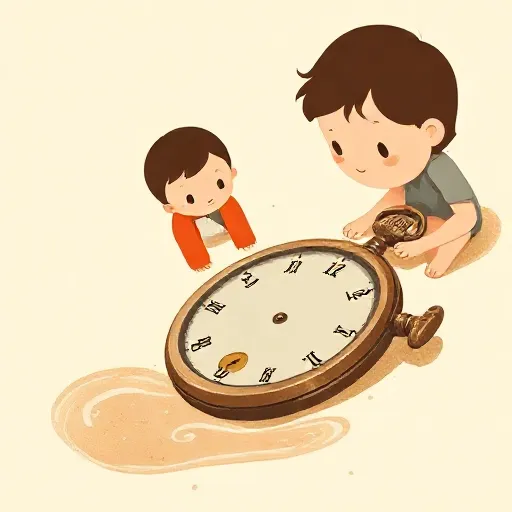
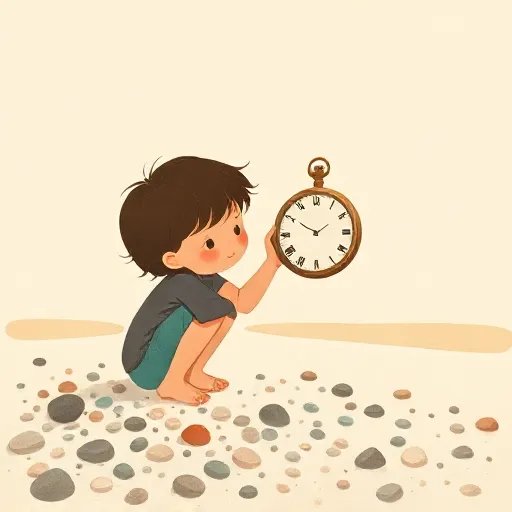
In 1802, minister William Paley (1743–1805) asked you to imagine finding a pocket watch on a beach. Its gears, springs, and hands all fit together perfectly to tell time. You’d immediately think a watchmaker made it on purpose. But Paley pointed out that living things — like a bird’s eye — show equally amazing “fit” between parts and jobs. Why, then, didn’t people assume a living thing has a designer? His question gets at a big, old puzzle: do parts of nature have purposes? This idea is called teleology (from the Greek telos, meaning goal or end). For thousands of years, thinkers have wrestled with whether teleology is real and what it means.
Two Ancient Answers: Outside Plan or Inner Drive?
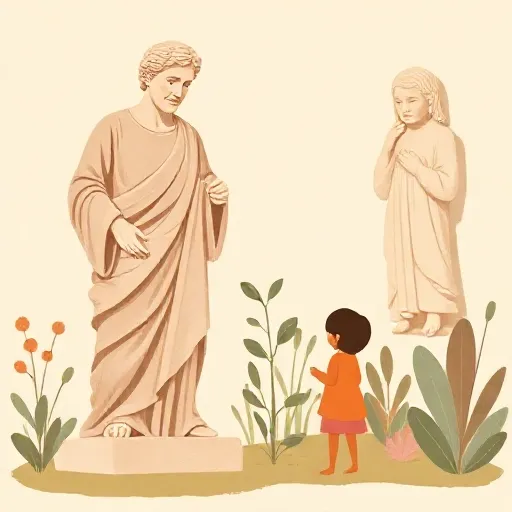
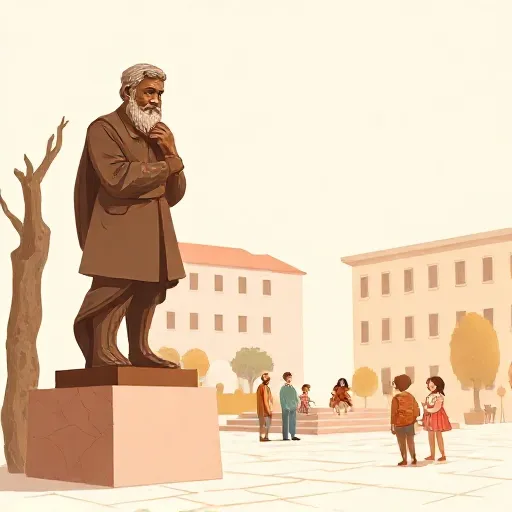
The oldest Western philosophers, Plato (c. 427–347 BC) and Aristotle (384–322 BC), both saw purpose in nature — but their stories were worlds apart. Plato imagined a divine craftsman, the Demiurge, who shaped the universe after perfect blueprints he called the Forms. On this view, purpose comes from outside: an acorn’s goal is to become an oak because the Demiurge copied the Form of Oak. Aristotle rejected that picture. He watched an acorn and saw an inner drive: a final cause that pushes it to become a full-grown tree. He called this immanent teleology — purpose built into the thing itself, not imposed from above. For Aristotle, a heart’s job was part of what it is to be a living creature, not a command from a distant designer. These two visions — external plan versus inner urge — seeded centuries of arguments.
Kant’s Twist: Purpose Is in Our Heads
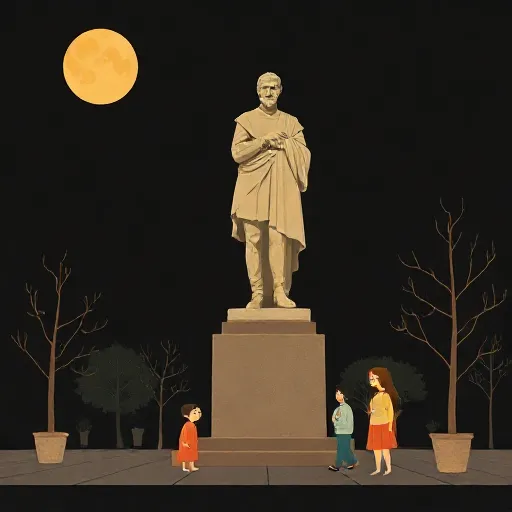
Fast-forward to the 1700s. The German philosopher Immanuel Kant (1724–1804) was impressed by how living bodies work. A machine, he noted, has no power to repair itself, grow, or produce offspring. But an organism does all that, almost as if it contains its own blueprint. Kant concluded that we can’t help but see organisms as purposive systems — we think of a bird’s wing as for flight. Yet he argued that this purpose is only in our way of looking, not in the organisms themselves. Nature, he thought, might really be pure mechanism. Still, the human mind insists on reading goals into living things. So for Kant, teleology is an unavoidable tool for studying life, even if it’s not literally true. This “as if” attitude influenced early biologists who tried to combine mechanical explanations with goal-directed thinking — a strategy called teleo-mechanism.
Darwin’s Bombshell: Purpose Without a Designer
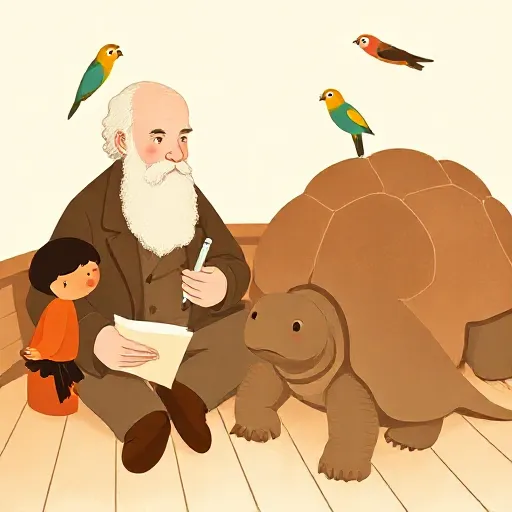
Then came Charles Darwin (1809–1882) with a theory that turned the puzzle upside down. In 1859, Darwin showed that natural selection could explain how living things get their spectacular fit to their surroundings without any designer at all. Imagine a population of birds where some happen to have slightly sharper beaks that crack seeds more easily. Those birds eat more, survive better, and leave more offspring. Over thousands of generations, sharper beaks become the norm. The beak wasn’t designed for cracking seeds — it’s just that cracking seeds helped, and so the trait spread. The result is what we call an adaptation: a feature shaped by selection to serve a function. Biologist Michael Ghiselin said that Darwin’s theory got rid of teleology. In the 1950s, biologist Colin Pittendrigh even coined a new word — teleonomy — for goal-directed behaviors that arise from natural feedback systems rather than from ancient final causes. Yet the language of function stubbornly persisted. Darwin himself wrote about “final causes” his whole life and never stopped wondering how natural selection relates to purposes. That ambivalence set the stage for today’s arguments.
The Modern Fight: What Exactly Is a Function?
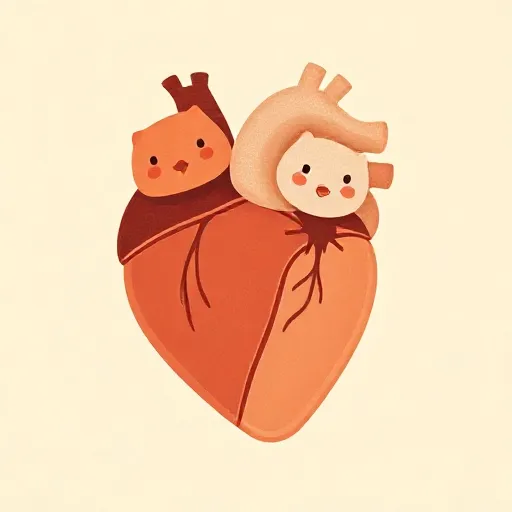
If hearts pump blood and noses smell, what does it mean to say those are their functions? Philosophers in the late 20th century split into two main camps.
The first camp, the etiological account (from aetia, meaning cause), says a trait’s function is whatever it was selected for in the past. Philosopher Larry Wright (1937–2023) put it simply: X’s function is Z if X is there because it does Z. Hearts exist because ancestors with hearts that pumped blood survived better. So pumping blood is the heart’s function. Holding up glasses is not a function of your nose, because noses didn’t spread through history for that reason. This account, later sharpened by Ruth Millikan (born 1933) and Karen Neander (1954–2020), neatly explains malfunction: a heart that can’t pump blood is “broken” because it can’t do what it was historically selected to do.
But the etiological view faces tough questions. What about the first wing-like feathers on dinosaurs? They probably helped with warmth or display, not flight. Are they for warming or for flight? Pinning down exactly when in deep history a function shifts can get murky. And it seems odd to say a brand-new immune cell in your body — one that learned to attack a virus it never met before — has no function because it has no evolutionary history yet.
The second camp, the causal-role account, looks at the here and now. Philosopher Robert Cummins (born 1943) argued that a trait’s function is whatever contribution it makes to a larger capacity of the organism, regardless of history. The heart’s function is to pump blood because that’s the role it plays in the circulatory system’s capacity to deliver oxygen. If you’d never heard of evolution, you could still analyze a body this way. This view easily handles novel traits, since it requires no selection story. But critics say it’s too generous: by this logic, a nose that holds up glasses would have that as a function if it helps the capacity to see. The line between real function and lucky side-effect becomes fuzzy.
A third, more recent camp, the organizational account, focuses on how a trait helps keep the whole living system going and helps maintain itself. The heart pumps blood that nourishes the entire body, including the heart’s own cells. This mutual dependence makes a function part of a self-sustaining loop. The organizational view avoids history and can grant functions to parts that arise within a single lifetime. Still, some critics reply that it ends up looking a lot like the etiological account once you think about how traits get passed on.
Today, many philosophers suspect biology might need more than one notion of function. Some try to unify them; others embrace pluralism — the idea that different contexts call for different function-talk. The debate thrives because real biology keeps handing us tricky cases: genes that do many things at once, organs that change jobs over evolutionary time, or the first glimmer of wings in a dino-relative.
Why We Still Argue About Hearts and Wings
This isn’t just a dictionary dispute. When a doctor says your heart has a defect, or your immune system is failing, that judgment hangs on a concept of what those parts are supposed to do. Malfunction is a normative idea — it says a thing ought to work a certain way. If we can’t settle what a function is, we can’t settle what counts as healthy or broken. The debate also matters for understanding our own minds, because we describe brain regions as having functions, too. And if we ever create true artificial life, will its parts have functions in the same sense as your own? The puzzle that started with a watch on the beach keeps reappearing in new shapes. Every deep breath you take is a quiet reminder that your body is full of purposes — and philosophers still disagree about what that really means.
Think about it
- If you built a robot cat that purrs when you pet it, does its purring have a function in the same way a real cat’s purr does? Why or why not?
- Imagine a scientist discovers a new organ in a deep-sea fish that glows. How would you decide whether the glowing is its function, an accident, or just a leftover from some earlier use?
- If all living things suddenly appeared fully formed five minutes ago (with no evolutionary history), would it still make sense to say a heart’s function is to pump blood?