Did Nature Teach Us to Build Houses?
Do Humans Just Copy Nature When They Invent Things?

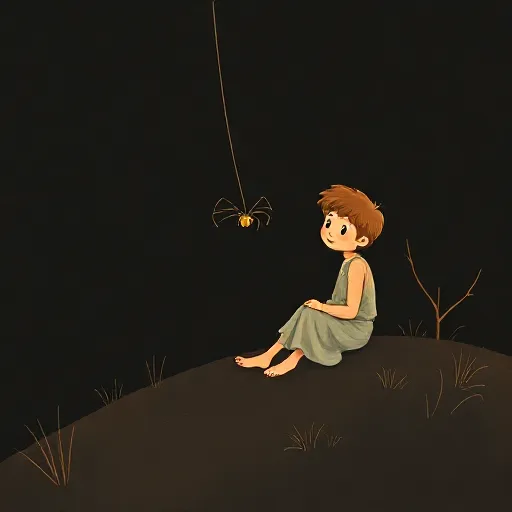
Imagine you are Democritus, an ancient Greek thinker living around 400 BCE. You sit outside watching a swallow carefully shape a mud nest under a roof eave. Nearby a spider spins silk into a perfect net. You look at your own clay bowl, still rough on your lap. A question pops into your head: did we learn to build houses and weave cloth by copying birds and spiders?
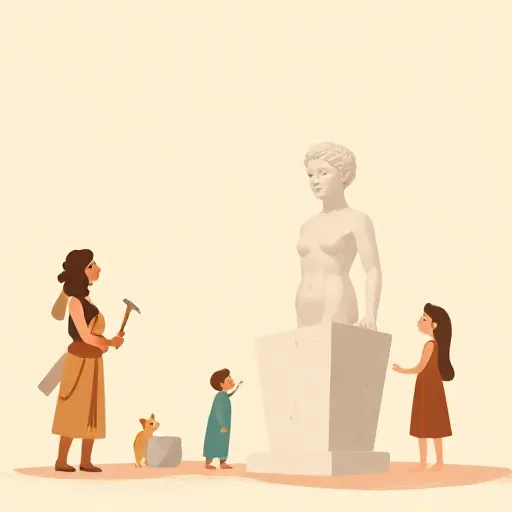
Democritus (c. 460–370 BCE) answered with a confident yes. He said that house-building came from imitating swallows, and weaving from imitating spiders. Even before him, Heraclitus (c. 535–475 BCE) hinted that nature sets the example. The idea became a lively theme: technology learns from or imitates nature. Plato (c. 428–348 BCE) and Aristotle (384–322 BCE) both took up this thought. Aristotle added a twist: human skill — or technē, the Greek word for art and craft — sometimes just copies nature, but it also completes what nature cannot finish. A house, after all, is more than a swallow’s nest.
Aristotle drew a deeper line. He saw a basic difference between natural things and human-made objects, which we now call artifacts. A living bird, he said, has its own inner source of motion, growth, and change — an inner purpose. An artifact like a wooden bed has no such inner drive. If you bury a bed, it won’t sprout new furniture. Instead, the wood will rot and maybe put out a shoot, turning back into a tree. The bed’s “bed-ness” comes from a human plan, not from nature. That distinction still stirs debates today.
What If Technology Took Over the World?
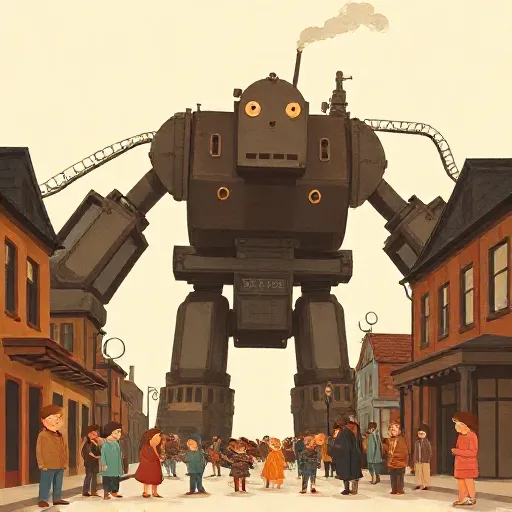
For centuries, many thinkers celebrated human making. Francis Bacon (1561–1626) dreamed of a society where inventions made life endlessly better. The Industrial Revolution seemed to prove him right. But in 1872, a clergyman named Samuel Butler (1835–1902) published Erewhon, a story about a fictional country that banned all machines. The people there believed that if machines kept improving, they would eventually evolve into a “race” that would replace humans. Sound familiar? It is one of the first warnings that technology might run away from us.
This fear gave rise to what we now call humanities philosophy of technology — a tradition led by thinkers trained in literature, law, and history rather than in engineering. They treated technology almost like a black box: a single, giant, unstoppable force. Martin Heidegger (1889–1976) argued that modern technology was not just a set of tools but a whole way of seeing the world that turns everything, even people, into resources to be used. Jacques Ellul (1912–1994) said technology had become the one dominant way of solving all human problems. These philosophers were deeply critical. They believed technology was reshaping our lives and values, often for the worse, and that we hardly notice it happening.
What Engineers Really Do: The Art of Making Things That Work
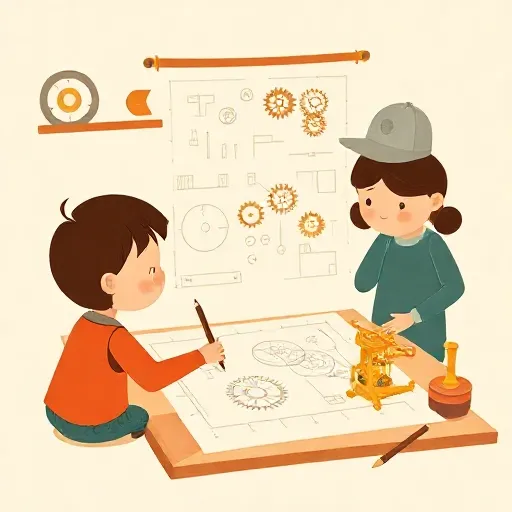
So is technology an overwhelming monster, or is it something more ordinary? In the 1960s, a different kind of philosophy started paying close attention to the practice of engineering itself. These analytic philosophers of technology wanted to open the black box and look inside.
Herbert Simon (1916–2001) put it simply: the scientist is concerned with how things are but the engineer with how things ought to be Technology aims to change the world, not just describe it. But who decides what changes are worth making? The picture many people have is that engineers are just tool-makers, handed orders from “somewhere else” and neutral about values. That picture, however, is misleading.
At the heart of every invention is the design process. It often starts with a wish: “I want to see inside the body without cutting it open.” That wish gets translated into a list of functional requirements: “The device must create images of soft tissue without surgery.” Then engineers choose an operational principle — the basic idea of how it works: “Direct magnetic fields at the body and read the signals bouncing back.” That’s how an MRI scanner is born. Then come detailed design specifications, prototypes, testing, and manufacturing.
Notice that every step involves choices. An operational principle isn’t discovered lying around in nature; it is invented. And every artifact has a function — what it is for. A knife’s function is to cut. A piston’s function is to turn heat into motion. Function ties a physical object to human intentions. That is why many philosophers say artifacts have a dual nature: they are both physical stuff and mind-shaped purpose. A famous puzzle, the Ship of Theseus, asks: if you replace every single plank and nail of a wooden ship over many years, is it still the same ship? That riddle, first brought into modern philosophy by Thomas Hobbes, reveals a tension inside every artifact — a tug-of-war between its material and its functional identity.
Can a Robot Be Good or Evil?
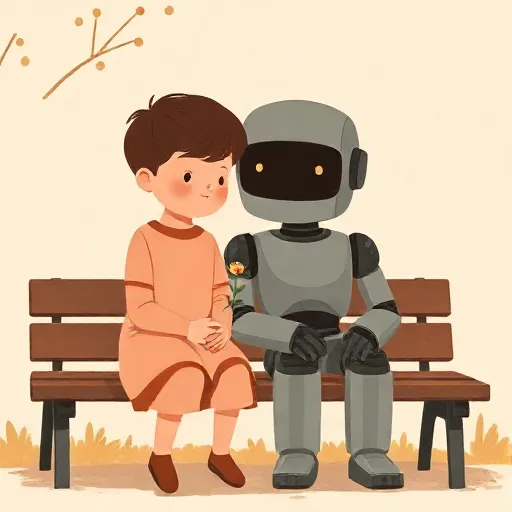
If artifacts are shaped by human intentions, can a machine itself have morals? For a long time, many people held the neutrality thesis: technology is just a tool; only the people using it can be good or bad. Heidegger, Ellul, and others challenged that. They said that a tool is never completely neutral because it already steers you toward some actions and away from others. A door only invites pushing or pulling. A social media platform’s design encourages some conversations and buries others.
More recently, philosophers have debated whether advanced machines could have moral agency — the ability to act in ways we judge as right or wrong. James Moor (b. 1948) sorted possible machine agents into levels. An ethical impact agent is anything that has moral consequences, which includes nearly all AI systems that shape what people see and do. An implicit ethical agent is programmed to follow rules that respect certain values, like a self-driving car instructed to prioritize human safety. An explicit ethical agent can represent ethical categories in its code and “reason” about them. A full ethical agent would also have consciousness and free will — something no machine currently possesses.
This matters because when a self-learning system causes harm, it can be hard to say who is responsible. Responsibility gaps open up if no human fully understood or controlled what the system would do. That is why many ethicists now say we must design values directly into technology. Ideas like Value Sensitive Design aim to make sure that safety, fairness, and privacy are built in from the very beginning, not pasted on later.
Even the idea of risk is not just a math problem. When engineers ask “Is this bridge safe enough?” they are weighing probabilities. But they also make value choices: whose safety counts most? Is an expensive safety feature worth it if it makes the bridge unusably costly? Some philosophers argue that risk decisions should not be left to engineers and companies alone. And what about “soft” impacts, like the way constant notifications shape your attention? Those are hard to measure but deeply ethical.
So Who Decides What Gets Built?
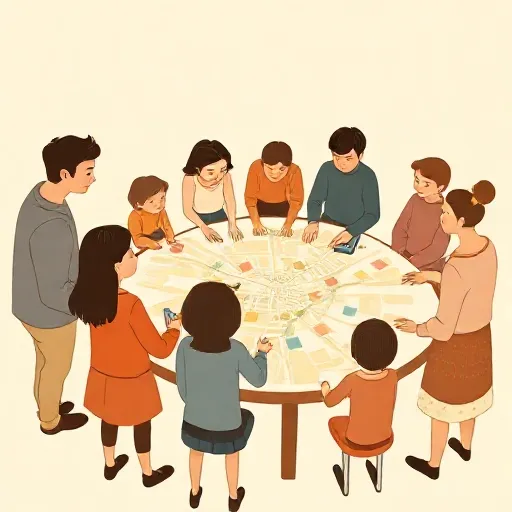
Technology is not a weather system that just happens to us. Political philosophers like Langdon Winner (b. 1944) have shown that designs can contain built-in power relations. A tall overpass that blocks buses from reaching a park is not neutral; it makes a choice about who gets to enjoy that space. Even something as simple as a railroad, Winner argued, seems to demand a chain-of-command structure to run safely — embedding a certain kind of authority.
So many thinkers now call for democratizing technology: bringing more voices into the design process. You do not have to be an engineer to have a stake in how a new app, a neighborhood, or a source of energy gets made. In fact, some of the hardest problems — like climate change — get “solved” with a quick technological fix, like shooting reflective particles into the sky, rather than by asking people to change their habits. A fix that cleverly avoids a bigger conversation may only push trouble further down the road.
That returns you to the ancient hillside with Democritus. Technology has always been about looking at the world and asking, “How could it be different?” The difference between simply copying a bird and imagining a city is that you get to have a say. Every time you use a smartphone or a new app, you are living inside decisions that engineers and designers made. But you can also ask: whose vision of the world does this serve? What do I want technology to do for me and for other people? Those questions start right now, with you.
Think about it
- If a robot could learn to make its own decisions and then hurt someone, should we hold the robot responsible, the programmer, the company — or all of them?
- Imagine an app that chooses all your meals so you never have to think about what to eat. Would that make you more free or less free?
- Should a new social media platform be designed by the teenagers who will use it, or by adults who understand safety and privacy? Why?