
What Makes Something an Artifact? (And Does It Even Matter?)
Here’s a puzzle for you. Imagine a path cutting across a grassy field—the kind people walk on so often that the grass wears away and a dirt path forms. Nobody planned it. Nobody built it. It just happened because enough people walked the same way. Now imagine that same path, same shape, same location—but this time someone intentionally laid it out, cleared the grass, and packed down the dirt. Is one of these paths an artifact and the other not? If so, which one? And does the difference actually matter for anything?
This is the kind of question that has philosophers tied up in knots. And it leads to bigger ones: What even counts as an artifact? Are there clear boundaries between things people make and things nature makes? Do artifacts really exist in the same way that trees and rocks do? And—strangest of all—could it be that some artifacts aren’t physical objects at all, but something abstract like a symphony?
Let’s start at the beginning.
The Standard Definition (And Why It’s Tricky)
Most philosophers would tell you that an artifact is an object that meets three conditions:
- It was made intentionally (not accidentally).
- It involved modifying some material (you changed something).
- It was made for a purpose (it’s supposed to do something).
So a clay pot is definitely an artifact. A splinter that flew off while you were carving the pot is not—you didn’t intend to make it, and it has no purpose. A pretty rock you found on the beach and use as a paperweight? That’s tricky. You’re using it for a purpose, but you didn’t modify it. Most philosophers would say it’s not an artifact. But what if you wash the rock first? What if you polish it? At what point does a used object become a made one?
These aren’t just nitpicky questions. They point to what philosophers call the continuum problem: the boundaries between artifacts and non-artifacts are blurry, not sharp. There seem to be shades of gray rather than a clear dividing line.
Consider a stone you pick up to hammer a nail. The first time you strike, tiny fragments break off. Now it’s been modified—by using it. Is it now an artifact? What about sawdust? You didn’t intend to make it, but you modified the wood intentionally. Is sawdust an artifact? What about a spider web? Spiders definitely make them, but do spiders have intentions? What about a beaver dam? Beavers seem to build dams on purpose. Do those count?
Philosophers disagree about how to handle these gray areas. Some try to invent new categories—“naturefacts” for natural objects used but not modified, “residue” for unintended byproducts of making. Others think this whole project is misguided. Maybe, they suggest, the category “artifact” just isn’t that useful.
An anthropologist named Dan Sperber argues that trying to define “artifact” precisely is a waste of time. He points out that domesticated plants and animals—seedless grapes, for example—seem to blur the line between nature and artifice completely. A seedless grape depends on humans to propagate it, but its “purpose” is to be eaten so that people will plant more grapevines. Is that a natural function or an artificial one? It’s both, Sperber says, and the attempt to force everything into one category or the other just distorts reality.
Other philosophers resist this conclusion. They think we can make the distinction work—we just need better tools. But the debate is still very much alive.
Do Artifacts Even Exist?
Here’s a wilder question: Are there really such things as artifacts at all? This might sound like a joke, but some serious philosophers have argued that artifacts don’t truly exist—not in the way that atoms or trees or people do.
The idea goes back to Aristotle. He distinguished between things that exist “by nature” (like trees and squirrels, which have their own internal principle of change and growth) and things that exist “by craft” (like houses and hammers, which depend entirely on human makers). Aristotle wondered whether artifacts were really substances—fundamental things that exist in their own right. He suggested that maybe only natural things qualify.
This suspicion has resurfaced in modern philosophy. Some contemporary philosophers argue that artifacts don’t really exist because they’re just rearrangements of more basic things. A cookie, for instance, is just dough that’s been shaped and baked. The dough existed before the cookie. So did you really bring something new into existence? Or did you just rearrange pre-existing matter? If the latter, then “cookie” doesn’t name a real thing—it’s just a convenient label we slap on a particular arrangement of atoms.
Other philosophers push back hard. Lynne Rudder Baker argues that artifacts do exist, and they’re actually great examples of how new things can come into existence. When someone takes a piece of metal, paints it red with white letters, and puts it on a pole at an intersection, something genuinely new appears: a stop sign. It has properties that the metal alone didn’t have—it communicates information, it organizes traffic, it has legal authority. The metal and the stop sign are not the same thing, even though they occupy the same space.
Amie Thomasson takes a different approach. She says we can know artifacts exist just by looking at our ordinary language. We have a word “spoon,” and that word comes with conditions for its use: a spoon is a utensil intentionally made by humans for eating and serving food. You can check your kitchen and confirm that things meeting those conditions exist. Therefore spoons exist. This might seem too simple, but Thomasson is making a serious philosophical point: we don’t need to look to physics or biology to confirm that artifacts are real. The fact that our concepts successfully pick out objects in the world is enough.
What Makes an Artifact the Kind of Thing It Is?
If artifacts exist, then the next question is: What makes a spoon a spoon and a hammer a hammer? In other words, what makes something belong to a particular artifact kind?
For a long time, philosophers assumed that artifact kinds work differently from natural kinds. “Water” is a natural kind—it has a hidden essence (H₂O) that scientists can discover. But “chair” doesn’t have an essence like that. What makes something a chair is just that people made it to sit on. The function and the maker’s intention seem to be what matters.
But some philosophers resist this difference. Crawford Elder argues that artifact kinds are really just like natural kinds. Both are “copied kinds”—things that get reproduced because they work well. Cats have whiskers because whiskers help cats navigate, and whiskers get copied from cat to cat through biology. Floor lamps have their shape because they help humans see, and that shape gets copied from household to household through culture. In both cases, Elder says, the features of the kind are discovered, not invented. Human intentions matter, but they’re part of the copying process, not the ultimate source of the kind.
Amie Thomasson disagrees. She thinks human intentions are constitutive of artifact kinds—they’re part of what makes the kind what it is. For something to be a spoon, it must be the product of an intention to make a spoon. And that intention must involve a concept of what spoons are that matches the concepts of previous spoon-makers. This makes artifact kinds deeply dependent on human minds. But Thomasson doesn’t think that makes them unreal. Things can be real and mind-dependent at the same time.
How Do Artifacts Get Their Functions?
Function is central to artifacts. Nobody makes a thing for no reason. But how do artifacts get the functions they have? This turns out to be surprisingly complicated.
Some philosophers say function comes entirely from human intentions. If you design a hammer because you believe it can drive nails, then driving nails is its function—even if the hammer is poorly made and can’t actually do the job. The function is whatever the maker intended, successful or not.
Others say function requires a history of successful use. On this view, an object only has a function if objects of that type have actually been used to accomplish that purpose. A prototype that’s never been tested might not have a function at all. This creates problems for novel inventions—if nobody has ever successfully used a thing like this before, can it have a function?
Still others try to combine both views. Ruth Millikan distinguishes between “direct” proper functions (established by a history of reproduction for that effect) and “derived” proper functions (established by an intention to produce something that will accomplish a purpose). A standard hammer has a direct proper function of driving nails because hammers have been reproduced for that effect for centuries. But a completely new invention has a derived proper function—its maker intended it to do something, and that intention gives it a function even though it has no track record.
This debate matters for everyday life. Think about a good luck charm. Millions of people have made and used them, intending them to bring good luck. But they don’t actually work. Do they have a function? Some philosophers would say no—function requires actual successful performance. Others would say yes—the intention to produce luck gives them the function, even though they can’t fulfill it. These are called “phantom functions,” and they’re surprisingly common in human culture.
Can an Artifact Be Abstract?
Here’s where things get really strange. Most artifacts are physical objects—you can touch them, break them, throw them away. But what about a symphony? You can’t touch Beethoven’s Fifth Symphony. You can hear it performed, but the symphony itself isn’t the same as any particular performance. It seems to exist as something separate from its physical instances.
Philosophers have suggested that some artifacts might be abstract objects—things that don’t exist in space and time, like numbers or sets. But there’s a problem. Abstract objects are usually thought to be eternal and unchanging. They can’t be created or destroyed. But symphonies are created by composers and could potentially be destroyed if all scores and recordings were lost. So they seem to be somewhere between concrete and abstract objects.
Amie Thomasson proposed the category of “abstract artifacts” to handle this. Abstract artifacts are not located in space and time (like numbers), but they’re created and can be destroyed (like physical objects). This category covers symphonies, novels, fictional characters, and possibly even mass-produced products like Chanel No. 5 or the Washington quarter.
But this proposal raises its own problems. How do you create something that isn’t physical? When Erik Satie composed his Gymnopédies, he didn’t create anything physical—he created an abstract musical work. But if abstract objects don’t exist in the causal realm, how can human actions bring them into existence?
Some philosophers think this is impossible. They argue that musical works must be discovered, not created—they pre-exist their “composition” as possibilities that composers merely select. Others think we don’t need abstract artifacts at all. Perhaps symphonies are just collections of similar performances, not some mysterious entity that floats above them. But this seems to conflict with how we actually talk about and value musical works.
What’s the Point of All This?
You might be wondering: Why does any of this matter? Even if philosophers can’t agree on what an artifact is, can’t we just get on with our lives?
Some thinkers argue that the category “artifact” actively gets in the way of understanding the world. Anthropologists and archaeologists study material culture—all the physical things humans make and use, not just the ones that fit a strict philosophical definition. A flint chip knocked off while making a tool is just as important for understanding ancient technology as the finished tool itself. An unmodified shell used as a scraper is just as important as a deliberately shaped one. Focusing only on “artifacts” in the strict sense would miss most of what’s interesting.
Environmental philosophers face a similar problem. Some argue that ecological restoration—rehabilitating damaged landscapes—doesn’t really restore nature because the result is an artifact, not something natural. But others respond that this distinction is meaningless. Humans are part of nature, and everything we do is natural in some sense. The idea of pristine nature untouched by humans is a myth, especially now that human activity affects the entire planet. Maybe we should stop asking “Is it natural or artificial?” and start asking “Is this the kind of environment we want to live in?”
Beyond Tools: How Artifacts Shape Our Minds
Finally, artifacts aren’t just objects we use—they actively shape how we think and act. This is one of the most fascinating recent developments in artifact philosophy.
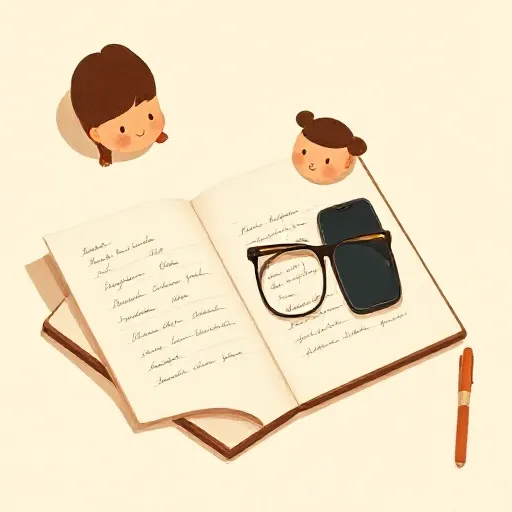
Andy Clark and David Chalmers proposed the “extended mind” thesis: the idea that minds can extend beyond brains and bodies into the environment. Their famous example involves Otto, a man with Alzheimer’s who relies on a notebook to remember things. When Otto wants to go to the museum, he doesn’t recall the address from memory—he looks it up in his notebook. Clark and Chalmers argue that the notebook is actually part of Otto’s memory system. It’s not just a tool he uses; it’s a component of his cognitive process. If we wouldn’t hesitate to call a biological memory process “thinking,” we shouldn’t hesitate to call the notebook-use process “thinking” either.
This might sound extreme, but think about how you actually navigate the world. You use maps, calendars, grocery lists, calculators, smartphones—all of which do cognitive work that your brain would otherwise have to do alone. Are these just tools, or are they parts of an extended cognitive system that includes you and your artifacts?
Other thinkers emphasize how artifacts shape our behavior. Michel Foucault studied how prisons, hospitals, and schools are designed to make people behave in certain ways—not through force, but through the subtle shaping of space and routine. Bruno Latour argued that artifacts have “scripts”—features of their design that encourage some behaviors and discourage others. A speed bump isn’t just a physical object; it’s a way of making drivers slow down, encoded in concrete.
The strange upshot is that artifacts might be just as responsible for shaping human action as human intentions are. We tend to think of artifacts as passive objects that serve our purposes. But the more you look at how we actually interact with them, the more it seems like artifacts actively shape what our purposes are in the first place.
So What Is an Artifact?
After all this, you might be hoping for a clear answer. Sorry—philosophers still disagree. The continuum problem hasn’t been solved. The existence question is still debated. And the role of artifacts in cognition and action is only beginning to be understood.
What seems clear is that “artifact” is not a simple category. It’s a concept we use to navigate a world full of things that exist on a spectrum from “completely natural” to “completely designed.” And the most interesting questions about artifacts might not be about what they are, but about how they function in human life—as tools, as symbols, as extensions of our minds, as shapers of our behavior.
Maybe the real question isn’t “What is an artifact?” but “What do we need the concept of an artifact for?” And that, finally, is a question worth asking.
Key Terms
| Term | What it does in this debate |
|---|---|
| Artifact | An object made intentionally for a purpose; the central concept being questioned |
| Continuum problem | The difficulty of drawing a clear line between artifacts and natural objects, since there are always gray areas |
| Proper function | What an artifact is supposed to do (as opposed to what it happens to be used for) |
| Abstract artifact | A non-physical thing (like a symphony) that is created by humans and can be destroyed |
| Extended mind | The idea that cognitive processes can include artifacts, not just brains |
| Copied kinds | Things (natural or artificial) that are reproduced because they work well |
Key People
- Aristotle — Ancient Greek philosopher who first distinguished things that exist by nature from things that exist by craft, and doubted whether artifacts are fully real.
- Amie Thomasson — Contemporary philosopher who argues that artifacts exist because our concepts successfully pick them out, and that human intentions are part of what makes artifact kinds what they are.
- Lynne Rudder Baker — Philosopher who argued that artifacts bring genuinely new things into existence with new causal powers (like a stop sign controlling traffic).
- Dan Sperber — Anthropologist who thinks the concept of “artifact” is theoretically useless because of the continuum problem.
- Andy Clark and David Chalmers — Philosophers who proposed the extended mind thesis, arguing that artifacts like notebooks can be part of cognitive processes.
- Bruno Latour — Sociologist and philosopher who argued that artifacts have “scripts” that shape human behavior, and that agency is shared between humans and non-humans.
Things to Think About
-
A smartphone can be used as a phone, a camera, a map, a game console, a calculator, and thousands of other things. What is its “proper function”? Does the concept of proper function even make sense for multi-purpose devices?
-
If a robot builds a chair without any human involvement, is the chair an artifact? What if the robot was programmed by a human? What if the robot is self-aware?
-
Think about something you own that has sentimental value—maybe a gift from someone important. Does it still have the same function as an identical object without sentimental value? Or does the meaning change what kind of thing it is?
-
If all humans disappeared tomorrow, would artifacts still exist? Obviously the physical objects would remain, but would they still be artifacts in the full sense? Or does the concept depend on human minds?
Where This Shows Up
- Archaeology: The debate about whether early stone tools are artifacts or just naturally broken rocks affects how we understand human origins.
- Artificial intelligence: Questions about whether AI systems can create artifacts (or be artifacts themselves) are central to debates about machine creativity and consciousness.
- Environmental policy: The argument over whether restored ecosystems are “fake nature” or legitimate environments affects how we spend money on conservation.
- Copyright and intellectual property: The status of abstract artifacts like symphonies and novels determines what can be owned and for how long.