Does Evolution Prove There Is No Human Nature?
Aristotle’s Blueprint: Four Ways to Think About Nature
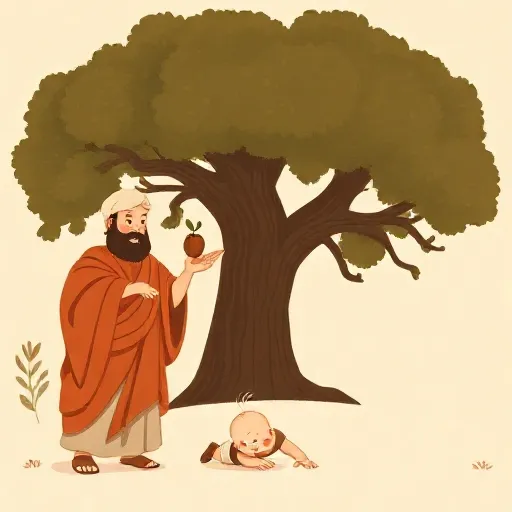
Imagine Athens around 340 BCE. Aristotle (384–322 BCE) is pacing the Lyceum, comparing the lives of plants, dogs, and people. He notices that an acorn always grows into an oak—never a fig tree—and a kitten always becomes a cat. Something inside them, he thinks, steers their development toward a finished form. That something he calls their nature (phusis). The same, he believes, must be true for humans.
But “nature” meant more than one thing for Aristotle and the thinkers who followed him. Over centuries they bundled together four different ideas, like layers in a cake.
- Contrastive nature (what you are without human shaping). Your eye color before you put in tinted contacts is natural in this thin sense.
- Blueprint nature (the inner recipe that makes you grow into a mature human). Like the acorn’s instructions, this is the plan that pushes a baby to become a talking, thinking adult.
- Finished‑form nature (the fully developed state itself). A healthy grown‑up with working reason and social habits.
- Normative nature (the standard of what a human ought to become). A good human is one whose development hits the target—the person who reasons well and lives wisely.
Two famous slogans entered Western thought from this package: “humans are political animals” and “humans are rational animals.” Both were used to name the special human blueprint. Armed with them, philosophers felt they could say what humans really are and how they should live.
Darwin’s Bombshell: There Is No Human Essence
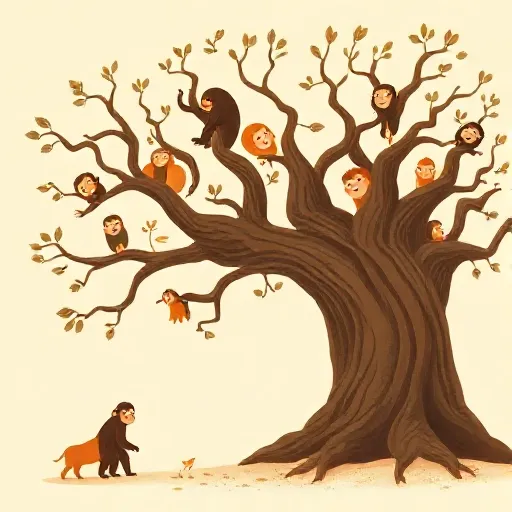
Skip ahead two millennia. Charles Darwin (1809–1882) and later biologists proved that species are not fixed kinds with eternal essences. Instead, a species is a historical entity—a branching population of organisms linked by reproduction over time. Think of a giant family tree, not a set of identical statues.
This insight explodes the old classificatory dream (what the package called TP5). If you try to list the traits that all and only humans share, you stumble immediately. Not every human has language, reason, or even two legs—some are born without them, or lose them, yet they remain biologically human. And many traits we think of as “human,” like caring for our young or using tools, also show up in chimpanzees and dolphins.
The philosopher Ernst Mayr (1904–2005) and the historian of biology David Hull (1935–2010) argued that species don’t have essences in the sense of necessary and sufficient intrinsic properties. What makes you a human is your place in a reproductive chain—your parents were human and theirs were, all the way back to the common ancestor we share with apes. So if “human nature” means a set of permanent, internal features that define the species, evolution says it doesn’t exist.
Most Humans Are Like This (But That’s Not a Blueprint)
One way to rescue human nature is to lower our ambitions. Forget essences. Just describe the traits that most humans have right now. That’s a lot like a field guide for birds: “Robins have red breasts, build nests, and sing at dawn.” A human field guide might say, “Humans walk on two legs, use language, and plan for the future.” This statistical normality approach doesn’t claim that these features are required to be human—only that they are common among living members of the species. The philosopher Edouard Machery (born 1968) has suggested something similar.
But a snapshot is not an explanation. Behaviors that seem universal now, like reading or using smartphones, didn’t exist 200 years ago, let alone 50,000 years ago. And traits that were once widespread throughout the species, like uniformly dark skin, are no longer uniform. A list of what “most humans are like” keeps shifting; it’s just a time‑stamped catalogue, not a deep story about why we are the way we are.
Is There a Hidden Program in Your DNA?
If a mere list feels unsatisfying, maybe human nature is the causal machinery that produces our typical features. Some scientists, especially Evolutionary Psychologists, have argued that our minds contain a set of built‑in modules—like special‑purpose apps—that evolved during the Stone Age. John Tooby and Leda Cosmides (mid‑20th century to present) call this evolved psychological architecture “human nature.” Just as your body plan is written in your genes, the idea goes, your mind’s basic structure is genetically programmed and shared by all humans.
But critics point out that human development is extremely plastic. Your brain keeps growing long after birth, sculpted by language, culture, and personal experience. Unlike a computer that arrives with pre‑installed software, your mind is more like a garden that needs constant tending. The philosopher Kim Sterelny (born 1950) argues that rationality itself depends so heavily on social learning and tools—writing, math, law—that calling it a genetic program misses the point entirely.
Another approach, Developmental Systems Theory, says that human nature isn’t inside you at all. It’s the whole web of genetic, environmental, and cultural resources that guide a human life from birth to adulthood. Paul Griffiths (born 1954) and Karola Stotz (late 20th century) propose that human nature is the organism‑environment system that reliably produces human life cycles. Your nature includes the way your parents raised you, the language you learned, even the schools you attended. It changes as societies change, so there is no timeless plan.
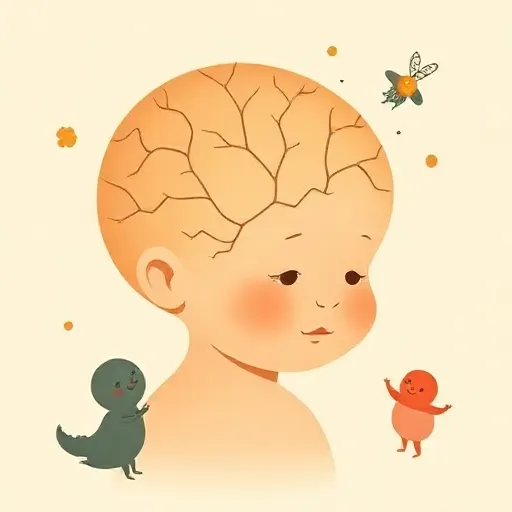
One striking biological fact supports this idea: secondary altriciality. Human babies are born with their brains only about 30% of adult size—far less developed than other primates. This “exterogestation” means that the most rapid brain growth happens after birth, while the baby’s senses are already taking in the world. That setup makes learning and culture extraordinarily powerful shapers of who we become.
Ethics Without Essences: The View from Inside a Human Life
So far we’ve looked at humans from the outside, like biologists studying an animal. But many philosophers care about human nature because they think it tells us how we ought to live—the old normative strand. Can we still make sense of that without a biological essence?
A group of modern thinkers, sometimes called Neo‑Aristotelians, say yes. Alasdair MacIntyre (born 1929), Rosalind Hursthouse (born 1943), Philippa Foot (1920–2010), and Martha Nussbaum (born 1947) all argue that ethics can be grounded in what it means for a human being to flourish—to live a good life as the kind of creature we are. They often revive Aristotle’s function argument (ergon): if the characteristic activity of humans is to use reason, then a good human is one who reasons well and lives accordingly.
But how can anyone talk about a “function” or a “fully developed form” when evolution says there is no fixed end? Some reply that different branches of biology—ethology, physiology—already use talk of normal and defective specimens, even without one cosmic standard. Others, like Michael Thompson, claim that our grasp of a human life form comes not from a microscope but from the inside, as we experience breathing, eating, and feeling pain. That participant perspective, they say, is immune to Darwinian worries.
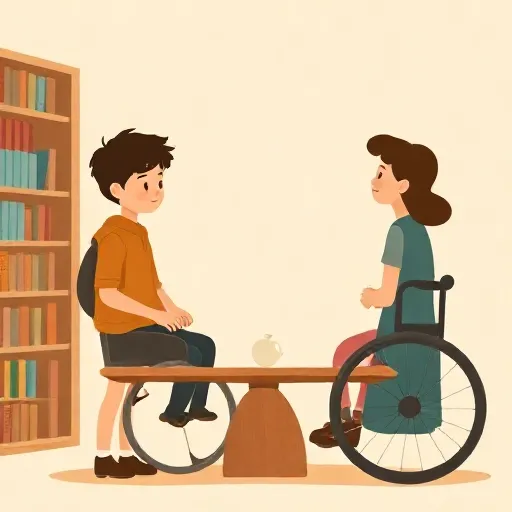
Nussbaum takes a bolder step. She constructs an explicitly ethical concept of human nature. She lists “central human capabilities”—being able to use imagination, form relationships, play, and reason—that any decent society should protect. If someone lacks these to a severe degree, she says they are not living a fully human life, and we have a duty to help them reach a threshold. Here “human nature” isn’t discovered in DNA; it’s chosen as a moral yardstick. Critics worry that such a view might treat people with severe disabilities as less than fully human. Nussbaum insists the goal is to include everyone by enabling their capabilities, not to write anyone off.
A different voice, Christine Korsgaard (born 1952), argues that what is special about humans is not just that we reason, but that we must constantly take a normative stand on our own desires. We don’t merely act on urges; we ask ourselves whether we should act on them. That reflective self‑consciousness, she thinks, transforms our whole form of life. For her, the core of human nature is this unavoidable need to decide what counts as a reason for you.
Why It Still Matters: What Counts as a Good Life?
The argument over human nature isn’t a dusty puzzle for professors. It lies behind real‑world questions you face every day. When you wonder whether someone with a cognitive disability can have a meaningful life, or when you debate what makes a person “truly human,” you’re dipping into this ancient stream. Laws about equal rights, medical decisions, even school policies that separate students by ability—all assume some notion of what a normal human is and what a flourishing human life looks like.
But as biology keeps teaching us, humans are not stamped from a single mold. We are a messy, historical family, full of variation and change. So the next time you hear someone say “It’s just human nature,” remember: that phrase can mean a statistical trend, a cultural habit, or a moral ideal—and it’s never as simple as it sounds.
Think about it
- If an alien who isn’t related to any Earth species could reason, feel, and care about others like a human, would you say it has human nature? Why or why not?
- Some thinkers say a good human life is one where you use reason and make your own choices. How would you argue that someone who can’t do those things can still live a good life?
- Do you think human nature is something that can change over time, like language or technology? Or is there something that always stays the same about humans? Give an example.