Why Scientists Argue About What Evolution Really Is
A Fossil in a Museum Case
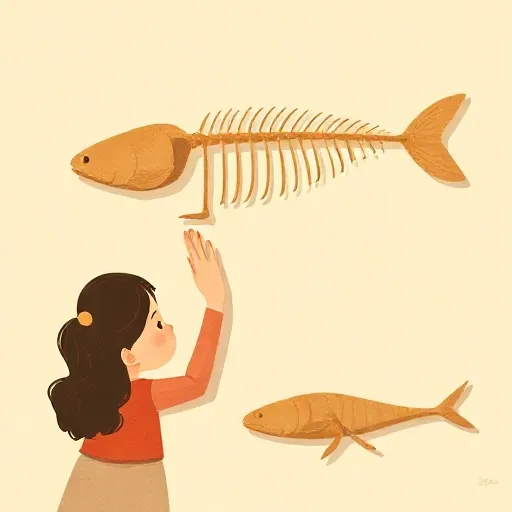
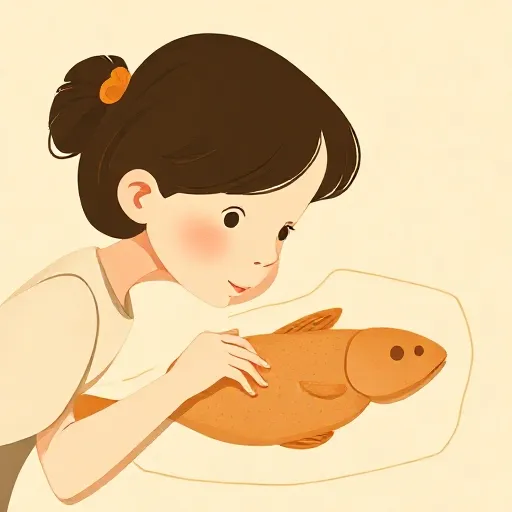
You’re standing in front of a glass case at the natural history museum. Inside is a fossil of a fish with stubby fins that look almost like legs. It’s called Tiktaalik, and it lived 375 million years ago. You wonder: did this fish really crawl onto land? Did its fins slowly become the arms and legs of all four-legged animals? That’s evolution — but what exactly is it?
It’s a simple question with a tangle of answers, even among the scientists who study it. Some say evolution is just a shift in gene types over time. Others say it’s the grand story of how the first single-celled life became dinosaurs, oak trees, and you. Philosophers of science have jumped into the middle of this, arguing not only about what evolution is, but about what’s really driving it.
What Should the Word “Evolution” Even Mean?
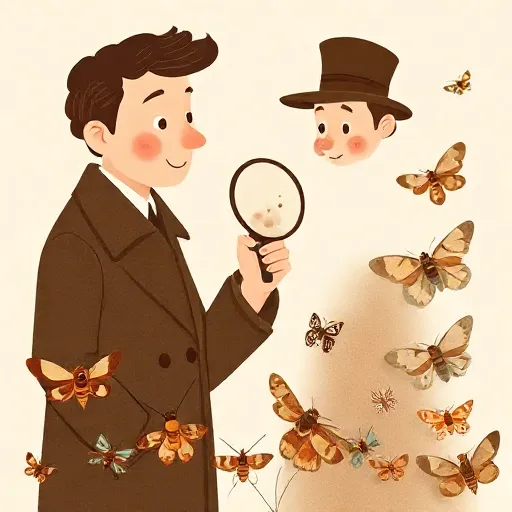
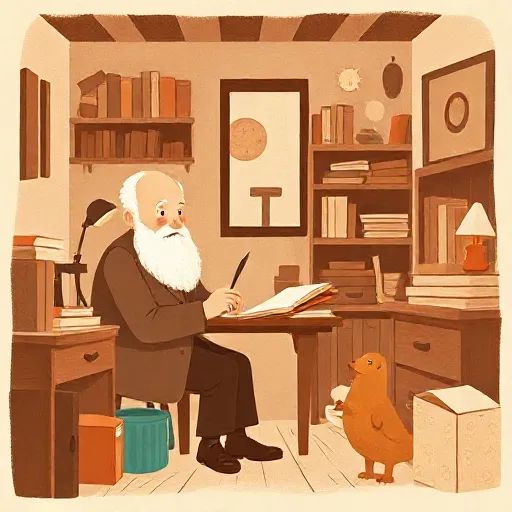
Charles Darwin (1809–1882) didn’t even use the word “evolution” in the first edition of his famous book On the Origin of Species. He wrote about descent with modification — the idea that species change over time and branch off from common ancestors. That’s still the big picture. But when biologists got more precise, their definitions split apart.
Today, one of the most popular definitions comes from population genetics, a field that mixes Darwin’s ideas with the study of genes. It says evolution is any change in the frequency of alleles — different versions of a gene — within a population from one generation to the next. For example, if a population of beetles has an allele for green shells and an allele for brown shells, and over time the brown allele becomes more common, that’s evolution. But note the catch: this definition only covers microevolution, small changes within a species. It doesn’t say anything about how a fish fin turns into a leg, or how a single species splits into two — what biologists call macroevolution.
Other thinkers want a wider net. The biologist Douglas Futuyma wrote that evolution is “change in the properties of groups of organisms over the course of generations… it embraces everything from slight changes in the proportions of different forms of a gene within a population to the alterations that led from the earliest organism to dinosaurs, bees, oaks, and humans.” John Endler took a similar view, saying evolution is “any net directional change or any cumulative change in the characteristics of organisms or populations over many generations.” That includes the origin of new traits, not just the spread of existing ones. Even that isn’t big enough for some: scientists who study molecular evolution track changes inside giant molecules like DNA and RNA that don’t always show up as visible traits.
In an entirely different spirit, Leigh van Valen (1935–2010) once described evolution as “the control of development by ecology.” He meant that the environment shapes how organisms grow and develop over generations. This idea helped launch evo-devo (evolutionary developmental biology), a field that puts the spotlight on how tiny tweaks in an embryo’s development can produce big evolutionary changes. So even the definition of “evolution” has been evolving.
More Than Just Natural Selection: The Many Roads of Change
When you hear “evolution,” you probably think of natural selection: the faster gazelle escapes the lion, so its genes survive. Natural selection is the idea that traits that help an organism survive and reproduce become more common over time. But it’s just one way evolution can happen. There are several others.
Imagine a population of beetles where some are green and some are brown. A bird that can see green beetles more easily might eat them, leaving more brown ones to breed. That’s natural selection. But genetic drift works differently — it’s pure chance. A sudden storm might kill a random group of beetles, and if it happens to kill more green ones, the brown allele becomes more frequent. No survival advantage, just luck. Migration matters, too: if some beetles from a mostly green population move to a mostly brown one, they bring their alleles with them. And mutation — a simple copying error when DNA is being passed on — can create a brand-new allele that had never existed before. Each of these is a mode of evolution.
There’s also sexual selection, which Darwin saw as a separate force. If a trait helps an animal attract a mate — think of a peacock’s enormous tail — it can spread even if it makes survival harder. Some biologists treat sexual selection as a kind of natural selection; others follow Darwin and keep it distinct. Distinguishing these different modes lets biologists track what’s really causing change in a population.
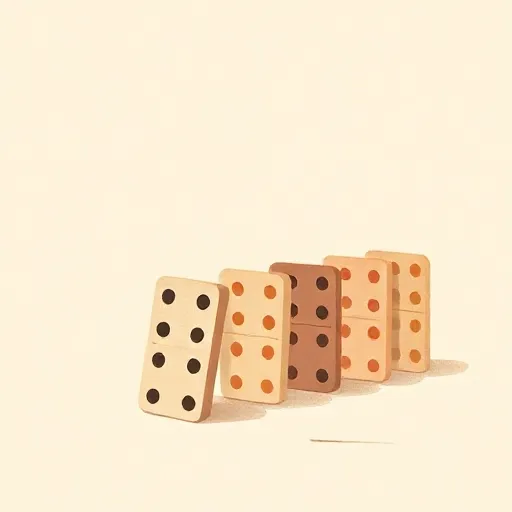
This matters because scientists don’t agree on which mode is most important. The debate over adaptationism is about whether we should assume natural selection is the main engine of evolution or test many possible forces at once. And beneath that lies an even stranger philosophical fight: is natural selection a true cause, like a push that makes things happen, or is it just a statistical summary of countless births and deaths? Some philosophers say it’s a real force; others say it’s like describing a row of dominoes that fell and talking about the “pattern of falling” rather than something that pushed them. The dispute is alive and unsettled.
The Fitness Puzzle: What Does It Mean to Be “Fit”?
Natural selection explanations usually invoke fitness. A fit organism is one that tends to leave more offspring. But what does “fitness” really mean, and what does it apply to? This turns out to be a tangle of its own.
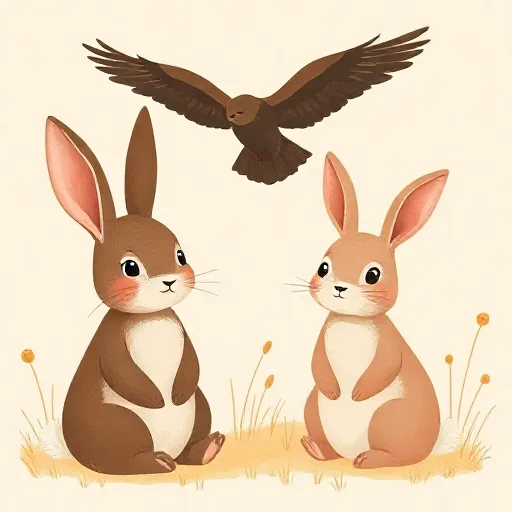
Think of a rabbit with exceptionally sharp hearing. That trait might help it dodge a hawk, so it’s more likely to survive and have lots of babies. But one day, a wildfire sweeps through and the rabbit doesn’t make it — not because its ears failed, but because of terrible luck. So fitness isn’t a guarantee; it’s a probability. It describes what tends to happen, all else being equal.
Philosophers and biologists argue about whether fitness is a property of genes, individual organisms, or whole groups. Some say a single gene can be “fit” if it helps the organism carrying it; others think fitness belongs only to the whole organism. There’s even a question about how to measure fitness: do you just count offspring, or do you also consider how long an organism lives, how well it finds a mate, or how much help it provides to relatives? The answers change which evolutionary stories seem credible.
Who or What Is Evolving? Genes, Organisms, or Whole Species?
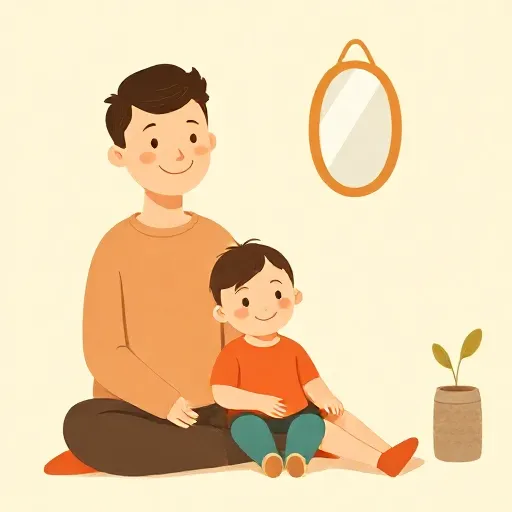
For any evolution to work, something must be passed from parent to offspring. That’s heredity. The most obvious hereditary unit is the gene. But some scientists argue that’s too narrow. An epigenetic mark — a chemical change on DNA that doesn’t alter the code itself — can be inherited, too. Learned behaviors, like a troop of monkeys teaching each other how to wash sweet potatoes, can also spread through populations. If these things are heritable, they might play a role in evolution.
To handle this complexity, many philosophers speak of replicators and vehicles. A replicator is anything that makes copies of itself (genes are the classic example). A vehicle (or interactor) is the entity that interacts with the environment and gets tested by it, like an organism. This vocabulary leads directly to a big unresolved question: what is the unit of selection? Does natural selection act on genes, individuals, groups, or even entire species?
A famous view holds that genes are the true replicators and organisms are just temporary vehicles that carry them. Others insist that selection can work at higher levels — for instance, if a whole group of cooperative animals outlasts a group of selfish ones, that’s group selection. Species, however, are usually seen as units of evolution (they change together) but rarely as units of selection. In fact, many philosophers of biology think a species is not a set of similar things but an individual — a single historical entity like a river, with a beginning, a middle, and an end. That shift in thinking still echoes through every debate about what evolves and how.
Why Would Anyone Help a Stranger? Game Theory and Altruism
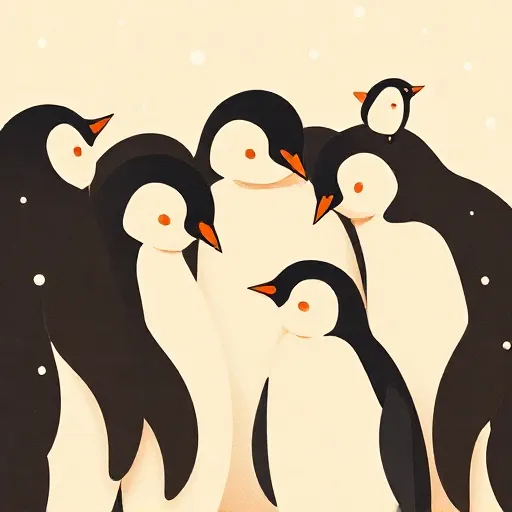
If evolution is often about passing on your own genes, why do animals — including humans — help others at a cost to themselves? This is the puzzle of altruism, and it has sparked a whole branch of research called evolutionary game theory.
The math of games helps explain how a behavior can spread even if it looks unselfish. One answer is kin selection: you help your siblings because they share many of your genes. Another answer is reciprocal altruism: you scratch my back now, I’ll scratch yours later. Some biologists also propose group selection, where groups full of cooperators outperform groups of loners, even if a selfish individual inside a cooperative group could freeload.
These models don’t just apply to other animals. They’re used to study human psychology and society, sometimes under the label evolutionary psychology. That work is controversial — critics worry it can over-explain every human trait as an adaptation and slip into biased assumptions. Still, game theory has shown that evolution doesn’t inevitably produce a world of selfish fighters. Cooperation can be a winning strategy, right alongside competition.
What Does This Have to Do With You?
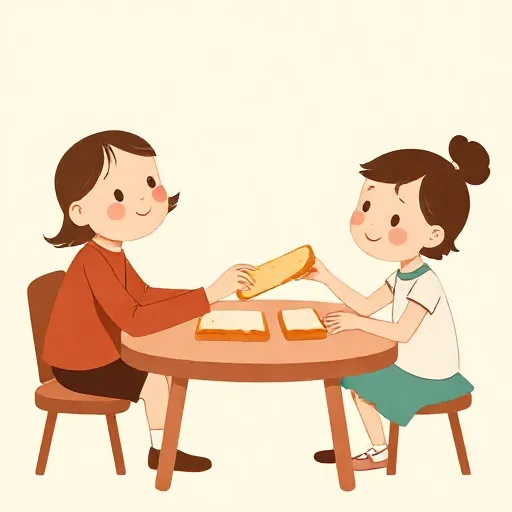
It might seem like all these debates belong to dusty labs and philosophy journals. But they show up in your life all the time. When you share your snack with a friend, you’re living one of the puzzles evolutionary thinkers wrestle with. When you look in the mirror and see your mom’s nose or your dad’s smile, you’re witnessing heredity in action. When you hear about bacteria becoming resistant to antibiotics, that’s natural selection happening at high speed.
The fact that experts still can’t agree on a single definition of evolution, or on which forces are most important, doesn’t make evolution shaky. As the biologist Theodosius Dobzhansky (1900–1975) once put it, “Nothing in biology makes sense except in the light of evolution.” But what kind of light it is — whether it’s a narrow beam focused on genes or a wide glow that includes development, chance, and culture — is a philosophical question as much as a scientific one. That’s why the argument matters. You grow up in a world where the story of life is still being written, and the author isn’t just nature — it’s also the way we choose to understand it.
Think about it
- If a beetle’s color changes entirely by random chance over many generations, is that still “improvement”? Does evolution need a direction?
- A peacock’s huge tail makes it harder to fly and easier for predators to spot. Do you think that tail is a burden or a benefit? How would you decide?
- If helping your friend with homework without expecting anything in return could be partly explained by evolution, would that change how you feel about your kindness?