What Exactly Is a Species? Biologists Can't Agree
A Bear Puzzle at the Zoo
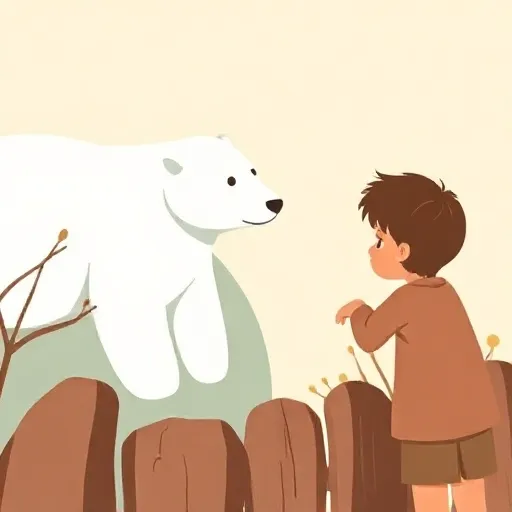
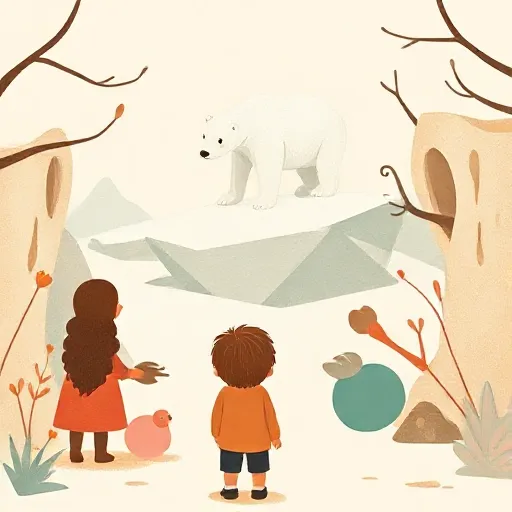
You’re at the zoo, standing between the polar bear exhibit and the grizzly bear exhibit. The signs tell you something strange: these two animals belong to different species, yet when they meet in the wild they can sometimes mate and produce healthy cubs. If a species is a distinct kind of living thing, how can two different species mix? Who decides where one species ends and another begins?
This isn’t just a zoo‑sign puzzle. Biologists have offered more than twenty definitions of ‘species’—and they don’t all pick out the same groups. Philosophers, meanwhile, ask an even deeper question: are species real categories in nature, or are they just names we invent to make the world easier to talk about?
The answer touches everything from conservation laws to what it means to be human. Let’s start with the oldest way of thinking about species.
The Old Idea: Every Species Has an Essence
For more than two thousand years, people thought of species as natural kinds with an essence—a hidden inner property that makes something the kind of thing it is. Aristotle (384–322 BC) set the pattern: every species has a defining nature, and that nature explains why its members look and behave the way they do. In the 1700s, the botanist Carl Linnaeus (1707–1778) used this idea to build his classification system. He assumed God had created each species with a fixed essence, so a wolf would always be a wolf and a bear would always be a bear.
Then Charles Darwin (1809–1882) came along. His theory of evolution by natural selection changed everything. Species, Darwin argued, are not frozen creations—they change over time. One population splits and gives rise to new forms. If species evolve, there can be no eternal essence that stays the same forever.
Biologists soon discovered another problem. To be an essence, a trait must be found in all and only the members of that species. But try to name one single feature that every dog possesses and no other animal does. Four legs? Many animals have four legs. Fur? Not all dogs have visible fur, and plenty of non‑dogs do. A specific DNA sequence? Even if you found one, mutation and random changes would eventually wipe it out in some future puppy. The philosopher David Hull (1935–2010) pointed out that evolution constantly shuffles traits, so there is simply no biological property that stays universal and unique across the entire lifetime of a species.
This doesn’t mean dogs don’t exist. It means the old essence idea doesn’t fit what evolution tells us. If species aren’t essences, then what are they?
Species as Individuals: A Family Tree, Not a Category
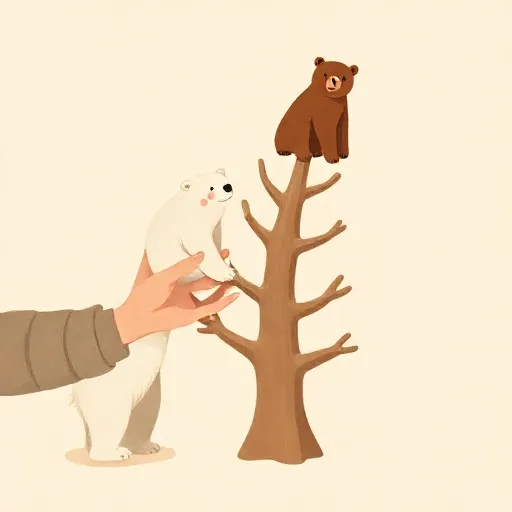
In the 1970s, two philosophers, Michael Ghiselin (1939–2024) and David Hull, proposed a radical answer. They said we should stop thinking of a species as a class (a set defined by shared traits) and start thinking of it as an individual. In everyday talk, an individual is a single organism, like your pet dog. But in philosophy, an individual is any entity whose parts are connected in a specific place and time.
Think of your own family. You belong to your family not because you have the same hair colour as your cousins, but because you are linked by birth and history. If your best friend looks just like you, that doesn’t make them part of your family. Ghiselin and Hull argued that a species works the same way. An organism belongs to Homo sapiens because it is part of a continuous lineage—a chain of parents and offspring stretching back through time. The parts of that lineage must be causally and spatiotemporally connected. You can’t scatter them across the universe; they share a single history.
This view has surprising implications. If species are individuals, then there is no biological essence of being human. You don’t need to have a particular body shape, a certain gene, or a specific kind of intelligence. You are human because you were born into the human lineage. From an evolutionary perspective, that fact alone is both necessary and sufficient.
A Middle Ground: Kinds That Hold Together Without a Single Essence
Not everyone was ready to give up on the idea that species are natural kinds. The philosopher Richard Boyd (1942–2021) offered a compromise: a species is a homeostatic property cluster kind (HPC kind). That’s a mouthful, but the thought is simple.
Take dogs. Most dogs have four legs, two eyes, and a tail, but no single property is essential—some dogs have three legs, and that doesn’t kick them out of the species. Still, the traits tend to cluster together reliably enough that if you know Lizzy is a dog, you can predict with better‑than‑chance accuracy that she’ll have four legs. What keeps those traits clustered? Boyd called them homeostatic mechanisms: things like interbreeding, shared genes, common development, and similar environments. These mechanisms push the members of a species to resemble one another without any one trait being a must‑have.
This idea handles the messiness of evolution much better than old‑style essentialism. But critics point out two problems. First, species aren’t just bundles of similarities—they are also full of built‑in differences, like male and female forms in mammals, or the caterpillar and butterfly stages of a single organism. If we only explain similarity, we miss half the story. Second, what really binds a species together is not similarity itself but shared ancestry. A group of organisms can look very similar and still belong to different species if they sit on separate branches of the tree of life. The HPC view acknowledges genealogy, but doesn’t make it the final judge—and many biologists say that’s exactly backwards.
Why So Many Definitions? The Pluralism War
Walk into any biology conference, and you’ll hear scientists arguing over which species concept is best. Some favour the Biological Species Concept, which defines a species as a group of organisms that can interbreed and produce fertile offspring. Others prefer the Phylogenetic Species Concept, which identifies species by their unique place on the evolutionary tree. Still others use the Ecological Species Concept, which groups organisms by the niche they occupy.
Which one is right? Monists believe there must be one correct definition—we just haven’t found it yet, or we need to choose among the existing ones. Pluralists disagree. They argue that nature is genuinely messy: different evolutionary forces produce different kinds of lineages, and each species concept simply highlights one of those forces. The philosopher John Dupré (born 1953) even allows that non‑scientists, like chefs or gardeners, might have their own legitimate ways of grouping organisms, depending on their interests.
The debate isn’t just academic. The choice of species concept changes how many species we count—a huge issue for conservation. If a phylogenetic concept splits one interbreeding group into several species, we suddenly have more endangered species to protect with the same limited budget. Recently, some biologists have argued that values like preserving biodiversity or fighting malaria should influence which concept we adopt. That’s a striking shift: we used to think only evidence and logic should decide scientific categories. Now moral goals are part of the conversation.
Did Darwin Think “Species” Was Just a Label?
Here’s a twist: the very person whose theory reshaped biology may have thought the word ‘species’ doesn’t name a real category at all. In a letter to his friend, the botanist Joseph Hooker, Darwin wrote:
It is really laughable to see what different ideas are prominent in various naturalists’ minds, when they speak of ‘species’; in some, resemblance is everything and descent of little weight—in some, resemblance seems to go for nothing, and Creation the reigning idea—in some, sterility an unfailing test, with others it is not worth a farthing. It all comes, I believe, from trying to define the indefinable.
Darwin didn’t deny that particular groups of organisms—what biologists call species taxa, like Homo sapiens or Canis familiaris—are real. He just doubted that there’s a single ‘species category’ that groups all those taxa together in a natural way. For him, varieties and species blur into each other; the same evolutionary processes produce both. As he put it in On the Origin of Species, “I look at the term species as one arbitrarily given for the sake of convenience.”
Today, some philosophers push this scepticism further. They agree that there are different types of lineages we call species—interbreeding lineages, ecological lineages, phylogenetic lineages—but they doubt that these share a common feature that makes them all ‘species’ in a deep sense. The term might be more like ‘vegetable’—useful in the kitchen, but not a natural kind in biology.
Why It Still Matters in Your Life
You’re not a biologist, so why should you care? Because the question “What is a species?” sneaks into your world in surprising ways.
When governments write laws to protect endangered animals, they have to name species. If the definition changes, the list of protected animals changes—and with it, decisions about where money goes and which habitats get preserved. When doctors fight a disease like malaria, they need to know which mosquito populations carry the parasite. A species concept that lumps them together might miss the dangerous ones; a concept that splits them might help target the right groups.
And there’s a personal side. If species are individuals—lineages, not lists of traits—then there is no biological essence of being human. You are human because you belong to a particular branching story that goes back millions of years. No single physical feature or ability makes you a member of Homo sapiens. That might change how you think about yourself and others.
So the next time you walk through a zoo or leaf through a field guide, remember: those neat labels on the cages hide a centuries‑long argument that still isn’t settled. The very act of sorting life turns out to be one of the deepest puzzles there is.
Think about it
- If you discovered a group of animals that looked exactly like wolves but couldn’t interbreed with any known wolf population, would you call them a new species? Why or why not?
- Should the goal of saving as many animals as possible influence how a scientist defines ‘species’—or should definitions stay strictly about the facts?
- Every human being belongs to Homo sapiens. Does knowing that there is no biological ‘essence’ of being human change how you see your own identity?