Who Decides What Part of Nature to Save?
A Word Is Born in a Hotel Ballroom
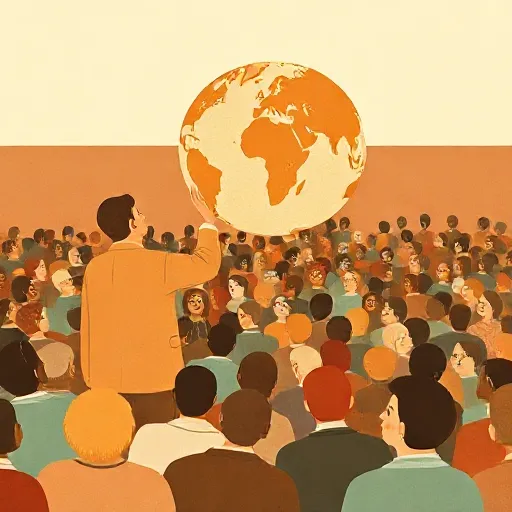
In September 1986, about fourteen thousand people gathered in Washington, D.C., for a meeting called the National Forum on BioDiversity. Biologists like E. O. Wilson (1929–2021) and Paul Ehrlich (born 1932) were there. The air buzzed with worry: species were disappearing faster than ever.
The organizer, Walter G. Rosen, needed a snappy name. He later explained his trick: “It was easy to do: all you do is take the ‘logical’ out of ‘biological.’” Out came biodiversity — a new word for the total variety of all living things. Within a few decades, the word appeared in hundreds of thousands of scientific papers.
But a single word cannot settle a huge question: What exactly should we protect? If biodiversity means all biological variety, from genes up to whole ecosystems, the task is impossibly large. You would have to protect every beetle, every scrap of genetic code, every muddy pond. So biologists and philosophers started asking not just “What is biodiversity?” but “What kind of variety matters most?”
The Puzzle: You Cannot Save Everything
The classic textbook definition calls biodiversity the “immense richness and variation of the living world.” But a philosopher and conservation biologist, Sahotra Sarkar (working in the 2000s), pointed out a hard truth: if biodiversity means every biological feature, then conservation becomes the impossible job of saving everything. You would need to protect all of biology.
Scientists use shortcuts. They pick a true surrogate — a feature that they hope stands in for all biodiversity. Many choose species richness: the number of different species in a place. But you rarely see every organism; you have to estimate richness from clues like soil type or plant cover. Suddenly, biodiversity is measured twice removed from the living world.
Even if you pick a surrogate, you still face a choice. Should you count all species the same? A rare frog and a common house sparrow get the same weight in a simple count. Should you care more about an ancient lineage than a recently evolved one? And what about “junk DNA” — does it deserve protection? These questions can’t be answered by counting alone. They pull in values.
Three Ways to Think About Nature’s Variety
Faced with these puzzles, thinkers have offered three different paths.
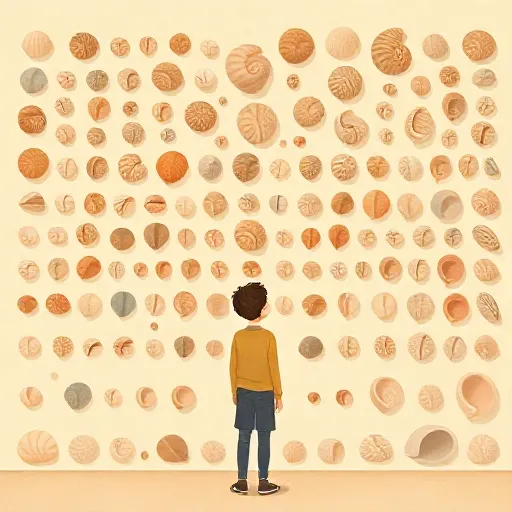
Path 1: Variety is multidimensional. Two philosophers, James Maclaurin and Kim Sterelny (writing in the early 2000s), argued that species richness is the backbone of biodiversity, but it needs to be beefed up. You should also look at species evenness (whether a forest has a few super‑common plants or a more balanced mix), morphological disparity (the spread of body shapes, like the coiled shells of ancient mollusks), and the web of ecological relationships that turns a list of species into a real community. They imagined measuring all this in a many‑sided space — a “morphospace” — that would capture the true depth of variety. The challenge: building such a space takes vast data, and you have to choose which dimensions matter.
Path 2: Define biodiversity by what you save. Sahotra Sarkar suggested an operational approach. Instead of hunting for a neat definition, he said biodiversity is whatever is optimized when conservation planners sit down and pick the smallest set of sites that cover a set of chosen surrogates (like rare species or unique habitats). In this view, the concept is not a thing you discover in nature; it is the output of a careful computer‑aided planning process. The worry: if different planners use different surrogates, they may end up with different definitions, and you can never check whether they “got it right.”
Path 3: Scrap the word. The philosopher Carlos Santana (writing in the 2010s) went further. He argued that the many types of diversity — species counts, evolutionary uniqueness, ecosystem complexity — do not reliably align. A place high in species richness might be low in evolutionary distinctness. Because biodiversity cannot pull these threads into one measurable thing, Santana suggested we should drop the word from conservation and talk directly about biological values: the specific features we care about, like rare habitats or wildness. Critics replied that the word still helps people rally around nature, even if it is scientifically fuzzy.
None of these paths has won the day, but together they show that biodiversity is not a simple yardstick. It is a concept shaped by scientific tools and human priorities.
Owls, Islands, and the Values Hidden in Numbers
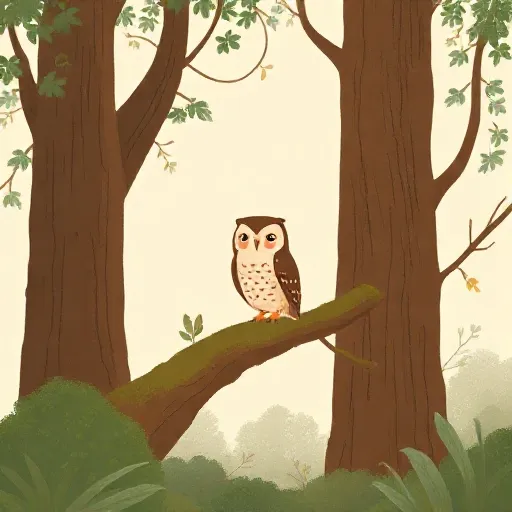
To see how values sneak into conservation, consider the northern spotted owl. In the 1980s, loggers and environmentalists clashed over old‑growth forests in the Pacific Northwest. Biologists built a mathematical model that treated the owl population as a metapopulation — a set of local populations linked by dispersing owls. The model crunched rates of colonizing new patches and going extinct in others. It suggested that the forest plan would leave too little habitat for the owls to survive.
That model helped protect millions of acres. But it also involved choices. The scientists had to decide how much risk of extinction was acceptable — a judgment that mixes ethics with math. If you set the bar to require serious proof before acting, you might sacrifice owls. If you act early, you might disrupt timber towns for a species that might not be saved. This is called the problem of inductive risk. No equation can tell you which mistake is worse.
Another famous debate — the SLOSS debate — asked whether a Single Large Or Several Small reserves would save more species. The theory of island biogeography, created by Robert MacArthur and E. O. Wilson, predicted that larger islands (and, by analogy, larger parks) hold more species. Some argued that one big reserve beats several small ones. Critics showed that, mathematically, several small reserves could sometimes protect more species, especially if they captured different habitats. Both sides used tidy models, but the final choice slid toward what kinds of loss felt most unacceptable.
A Science Built on Value Choices
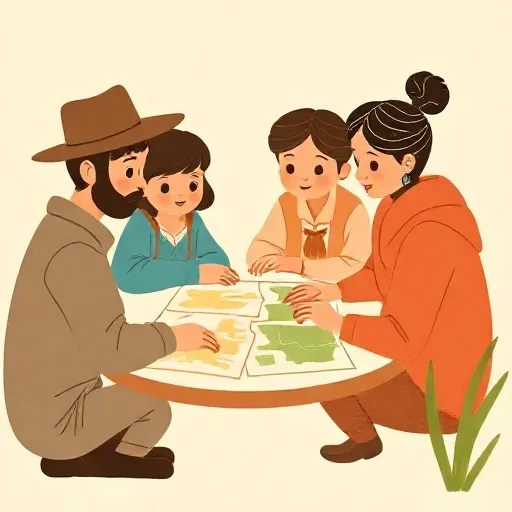
Today, conservation biology is an openly value‑laden science. The founder, Michael Soulé (1936–2020), wrote in 1985 that the field rests on the idea that biodiversity is good and has intrinsic value — worth independent of any use to humans. Many conservationists still believe that saving a salamander matters for its own sake.
Others, like the “new conservationists” Peter Kareiva and Michelle Marvier (working in the 2010s), insist that we must focus on instrumental value: the clean water, crop pollination, and flood control that ecosystems give to people. They argue that telling communities “this forest is valuable in itself” fails to build the political support needed for real protection. Their critics reply that if you only sell nature as useful to humans, you will abandon it the moment a more profitable use comes along.
The same heat surrounds the idea of “Half‑Earth” — a plan to protect half the planet’s surface to preserve 85% of its biodiversity. Supporters say it is a moral duty to give other species enough room. Opponents warn that it could displace millions of Indigenous and local people, and that a fortress with no human stewards often fails. Again, science alone cannot settle the argument, because the argument is about what kind of world we owe each other.
Why This Matters to You
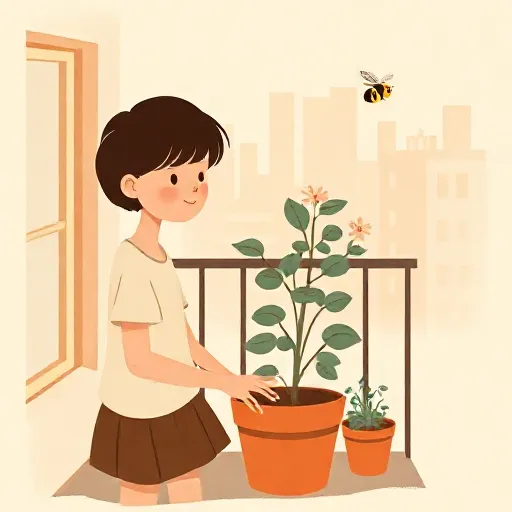
You may never design a national park, but you already make conservation choices. When your neighborhood plants a pollinator garden or debates which patch of woods to keep, someone is deciding which biological variety counts. Understanding that this choice is partly about values — not just pure numbers — makes you a clearer thinker.
The word “biodiversity” was born as a playful erasure in a hotel ballroom, and it ballooned into a global concern. The debates it stirred are not settled, because they cannot be settled by data alone. They belong to all of us.
Think about it
- If you had to choose between saving a tiny rare beetle and protecting a wetland that gives your town clean drinking water, how would you decide — and would your answer change if the beetle lived nowhere else?
- Scientists often advise governments on which habitats to protect. Is it okay for them to also say that nature has value just for existing, not only for what it does for us? Why or why not?
- Imagine you learn that two ways of measuring variety — number of species and number of unique body shapes — point to different places as the “most diverse.” If you can only protect one place, what else would you need to know to choose?