What If the Last Person on Earth Destroyed Everything?
Richard Sylvan (1935–1996) was the sort of philosopher who built his own stone house deep in an Australian rainforest and once constructed a computer so power‑hungry it blacked out a whole science building. But he’s best known for a single, unsettling thought experiment.
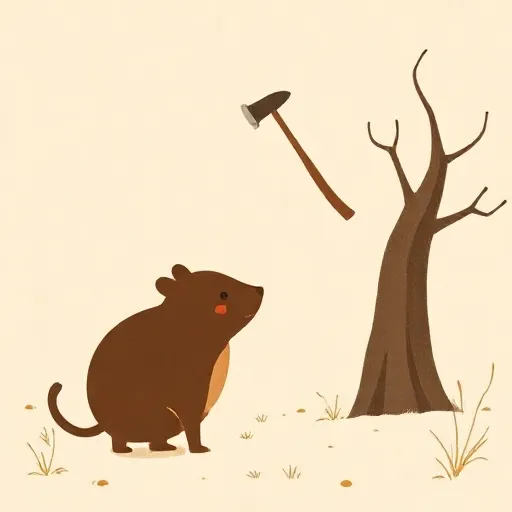
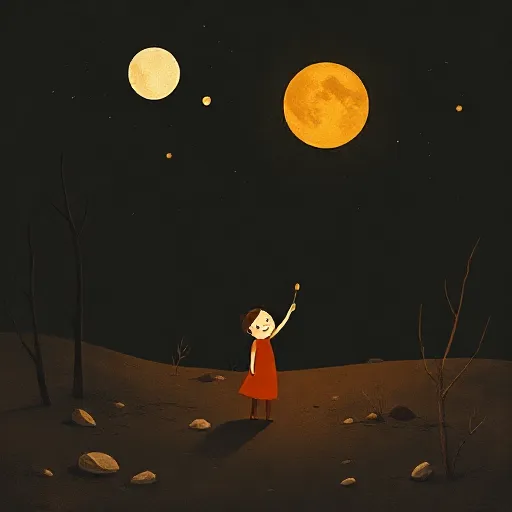
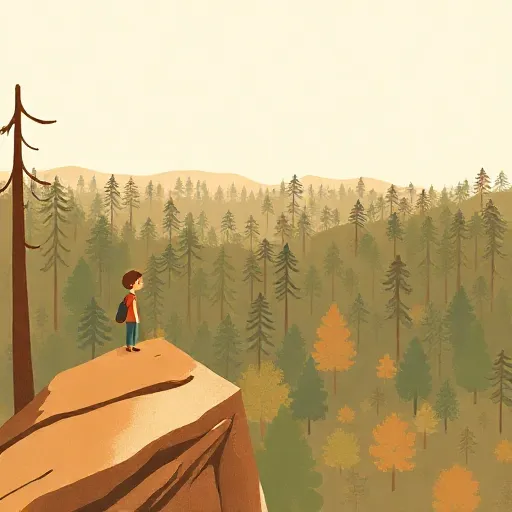
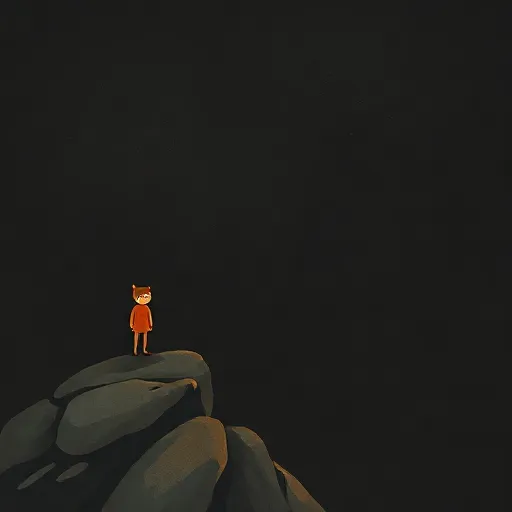
Imagine the world is ending. You are the very last person alive. No other humans remain. No animals survive that can feel pain. You have a button in front of you. Press it, and every plant, every tree, every last living thing will be erased — painlessly, without a single moment of suffering. Nobody will be there to miss any of it. Would pressing that button be wrong?
If you answered “no,” you’re in company with most traditional Western ethics. If you answered “yes,” you’re on Sylvan’s side — and he spent decades unpacking why that simple “yes” changes almost everything.
The Last Person on Earth
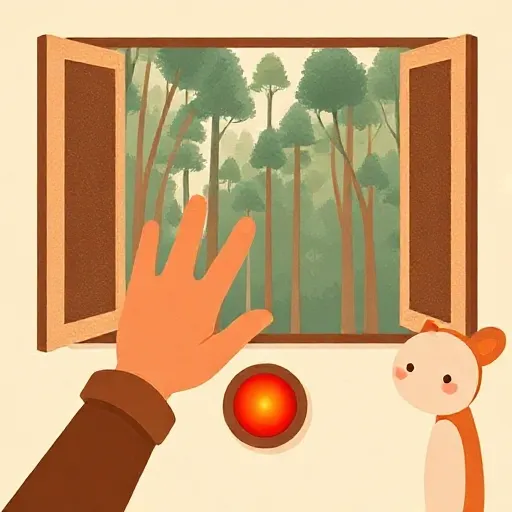
Sylvan noticed that many moral systems rest on what he called the Freedom Principle: you can do whatever you like, provided you don’t harm others and you don’t harm yourself beyond repair. Under this rule, the last person’s destruction is perfectly allowed. No one gets hurt, so there’s no problem.
But Sylvan was convinced that bulldozing every living thing, even painlessly, is still a terrible mistake. If your gut agrees, then the Freedom Principle cannot be the whole story. Sylvan called the principle a form of human chauvinism — the idea that humans are the only things that really matter, and everything else is just a tool for our benefit. To him, that assumption was as flawed as thinking only people from your own country deserve respect.
He didn’t stop at a hunch. Sylvan argued that the wrongness of the last person’s act points to something deeper: non‑human nature can carry intrinsic value — value in and of itself, not because it’s useful to us or makes us happy. If that’s true, then a forest isn’t just timber waiting to be used. It matters for its own sake, even if no human will ever see it.
A Value Greater Than Usefulness
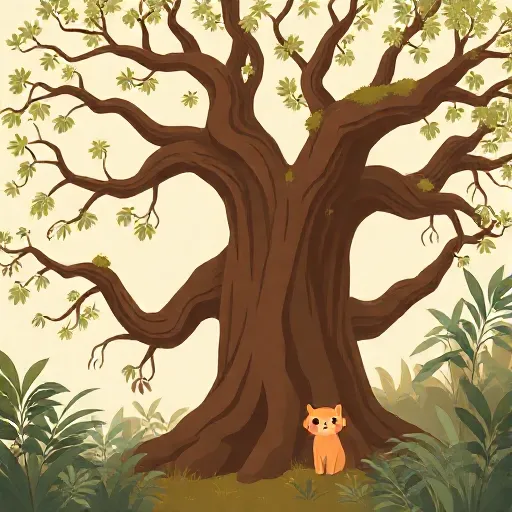
If a forest has intrinsic value, where does that value come from? Sylvan pointed to features we can recognize without needing a human audience: diversity of living things, naturalness (the way an ecosystem grows on its own), integrity (how its pieces fit together), and stability over time. These aren’t just human preferences; they’re real qualities that make a landscape worth protecting.
This led Sylvan to build what he called a deep green ethics. It says we have genuine obligations toward the natural world, not because it has legal rights like a person, but because valuable things can make claims on us. You don’t need a contract with a mountain to realise that blowing it up for no reason is senseless and wrong. Deep green theorists admit that we will sometimes interfere — we have to eat, after all — but we owe nature serious reasons when we do.
Sylvan was careful not to slide into misty reverence. He rejected biocentrism (the idea that all life, and only life, is valuable) and flatly denied that every organism has equal worth. A rare rainforest carries different weight than a backyard weed. What matters is the richness of a whole system, not a blind rule.
None of this was just armchair philosophy. Sylvan bought and protected large tracts of forest, and his blistering critique of Australian forestry practices helped reform how woodlands were managed. He practiced what he argued — and he believed the argument was just getting started.
Sherlock Holmes in the Jungle of Items
Talking about the value of a forest that no one sees seems spooky. It feels a bit like talking about Sherlock Holmes as if he’s a real person. Sylvan leaned into that comparison — and he had a surprising answer.
Most philosophers since Quine have assumed you can only talk truthfully about things that really exist. If you say “Sherlock Holmes is a detective,” the sentence seems false because there is no Sherlock Holmes in the actual world. But Sylvan thought this Ontological Assumption was a mistake. He held that there are many items (his word for objects, characters, places, numbers, even impossible objects like square circles) that don’t exist but still have properties. Holmes is an item, and being a detective is a property he has — even though he lacks the property of existing.
Sylvan called this view noneism. According to noneism, existence is just one property among many, not a magic on‑switch that makes everything else real. When you read a story, you refer to an item with a set of characterizing properties — the features that make it what it is. For Holmes, those include being brilliant, living at 221B Baker Street, and solving crimes. The property “exists” is not a characterizing property at all; it’s a completely different kind of feature that some items have and others don’t.
So when the last person is gone and the forest remains, noneism lets us say honestly: the forest still has value, even though no human mind is around to think about it. The value is a property of that forest‑item, just like being a detective is a property of Holmes. You don’t need a human observer to make it true; you only need a world — and there are many worlds, Sylvan thought, where truths can live without us.
A Logic That Welcomes Contradictions

Holding all these ideas together required a new kind of logic. Classical logic says a statement and its opposite can’t both be true — you can’t be both alive and not alive, or a square and not a square. But Sylvan’s worldview bumped into contradictions constantly. The sentence “Sherlock Holmes doesn’t exist” seems true, and “Sherlock Holmes is a detective” also seems true, yet together they look like a mess: how can a non‑existent thing have a property? In classical logic, the whole conversation collapses into nonsense.
Sylvan helped develop relevant logic and paraconsistent logic to handle such tensions without chaos. Relevant logic insists that for an “if … then” statement to hold, the “if” part must actually have something to do with the “then” part. (Classical logic cheerfully accepts “If the moon is made of cheese, then 2 + 2 = 4,” even though the two halves are unrelated.) Paraconsistent logic goes further: it allows some contradictions to survive without making everything true. Sylvan even defended dialetheism — the startling view that some contradictions are literally true, like a Möbius strip that has only one side yet still has an inside and outside.
These weren’t just mind‑games. Sylvan used such logics to rebuild set theory in a way that lets us keep talking about “the set of all sets” without the whole system crashing. He thought a universal logic had to work in impossible, inconsistent, and paradoxical situations — because reality sometimes is weird, and our reasoning should be able to follow wherever it leads.
Why All Worlds Matter
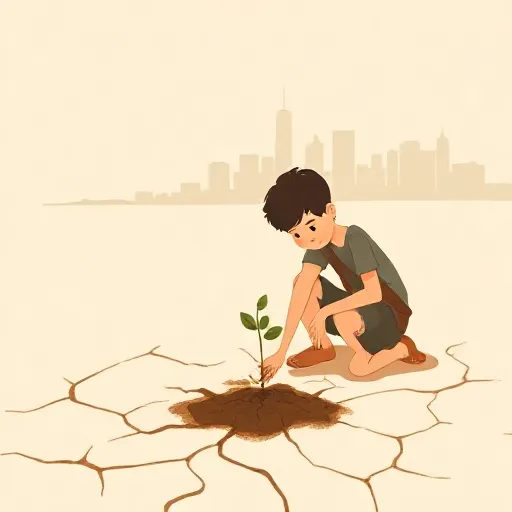
Sylvan’s ideas didn’t end with forests and fictional detectives. Late in life he argued for plurallism — the claim that there isn’t just one actual world, but many. Each correct logic, he thought, describes its own actual world. So instead of one true way to think, many overlapping realities coexist. He believed this could make us more tolerant: if there’s no single “one true world,” then imposing a single truth on everyone becomes a kind of bullying.
His deep green ethics, noneism about items, and plural logic all pull in the same direction. They ask us to take seriously what we usually ignore — the value of a disappearing forest, the reality of the characters we love, the possibility that someone else’s truth isn’t just a mistake. When you care about a place you’ll never visit, or feel sad about a species going extinct, or think it would be wrong to trash the planet even after humanity is gone — you’re living with the questions Sylvan wove together. He pushed philosophy to be big enough for jungles and impossible objects, for a single sapling planted in dry ground, and for the stubborn thought that something matters beyond our noticing.
Think about it
- If you were the last person on Earth, would you feel it’s wrong to destroy a forest, even if no one would ever know? Why?
- Can you truly care about something that never existed, like a place from a story? What does that say about what’s real?
- Suppose scientists discover alien life on a distant planet, but humans will never be able to visit it. Do we have any responsibility to protect it? Why or why not?