
Why Loving Someone Means They’ll Always Be a Stranger
The day before baptism
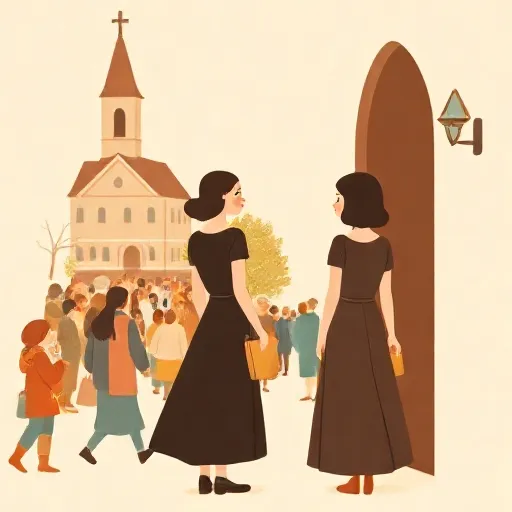
In 1906, a young German Jewish woman named Margarete Susman (1872–1966) stood on the edge of a life‑changing decision. She was about to marry a man she loved, and his family had asked her to become Christian. The baptism was scheduled. The water was waiting. At the last moment, she walked away. Converting felt like abandoning something essential — something she couldn’t name in a single sentence but knew she couldn’t give up. That private, stubborn “no” cracked open one of the big questions that would drive her whole life as a writer and thinker: What does it mean to belong — to a people, to a tradition, to another person — without becoming someone you’re not?
Susman didn’t just answer that question with opinions. She turned it into philosophy. She wrote about love, art, gender, exile, and hope in ways that still feel startling today. Her books and essays argued that the feeling of being a stranger — even in your own house — isn’t a problem to fix. It’s something to think with.
What is love, really?
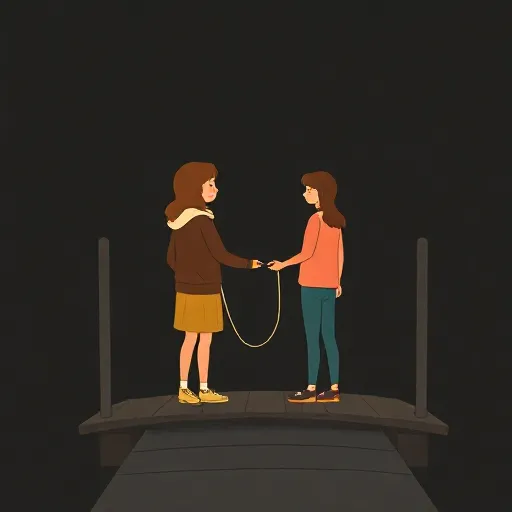
Most people imagine love as getting closer and closer until two people almost become one. Susman disagreed. In her first philosophical book, Of the Meaning of Love (1912), she argued that love actually depends on alterity — on the fact that the other person is truly, deeply different from you.
She described love as a force that rises from “life’s great darkness” like a longing for shape. Before you can even know who you are, love is already at work, pushing you toward becoming a distinct individual. Once you are a separate person, though, love lands you in a painful twist: you suffer the fact that you are Other, and you suffer just as sharply the desire to be One. To love someone is to hold both feelings at once.
Susman thought you can never fully “grasp” the beloved. The moment you try to define someone completely, you bump against something called incommensurability — the quality of being unmeasurable, unique beyond any label. The You always stays a little out of reach. Love doesn’t solve that; love is the relationship that lets you live with it. What you can do is create symbols — pictures, words, gestures — that point toward the other person without pretending to capture them. In Susman’s view, even the deepest love can’t hand you the final meaning of your life. But love is what makes that meaning readable, like letters you’re still learning to sound out.
Poetry creates new ways of seeing — and new selves
If love deals in symbols, then art is the place where symbol‑making gets its sharpest training. In her study of modern German poetry (1910), Susman introduced the idea of the lyrical I. Many people think a poem pours out the poet’s private feelings — as if the writer were just confessing into a diary. Susman said no. A poet doesn’t simply find the “I” already inside herself. She builds it, the way a playwright creates a character.
The lyrical I is a form, not a feeling. It shapes a whole way of seeing the world. When you read a poem and suddenly the world looks different, you’re stepping into that crafted I. Susman called it the “objective form of the I.” It belongs to the poem, not to the poet’s daily life, and it can be completely different from the person who made it.
Why does that matter for philosophy? Because it means art doesn’t just decorate life — it makes experience possible in the first place. When a poem uses a symbol to express someone’s singular, unrepeatable strangeness, it shows us that language can handle difference without flattening it. Love and poetry end up doing parallel work: both give form to something that resists being explained.
Men and women: different, not unequal
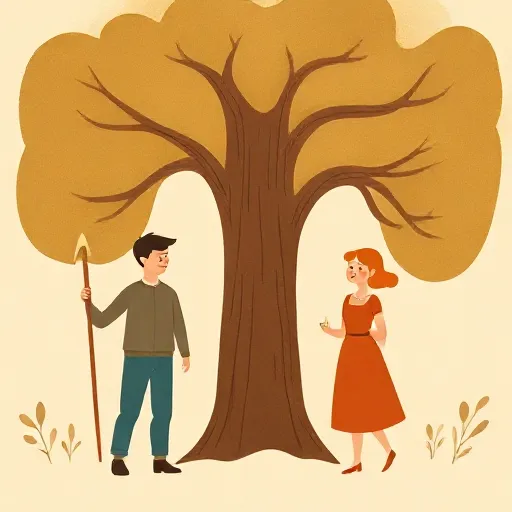
Susman walked into a room where the big philosophical books were written almost entirely by men. She noticed something that many thinkers before her had skipped: the experience of womanhood had simply been left out of the picture, and that gap wasn’t an accident — it was a mistake that warped the whole map. She responded by making gender central to her philosophy.
She argued that the difference between men and women is not a case of one being better or closer to reality. It is another kind of alterity — a complementary strangeness. She wrote that both sexes depend on each other in every aspect of existence. Man tends to relate to the world by standing apart from it and building outward; woman, shaped by the rhythms of pregnancy and motherhood, tends to take the world back inside herself. Neither has an ontological advantage; each has a way of knowing that the other lacks.
Susman also refused to romanticize motherhood. In her account, a pregnant woman does not enjoy a simple, sweet bond with the child. She meets “the Other, the Alien, Life” inside her own body. Giving birth means letting go of a life that is no longer yours. Motherhood, she insisted, is difficult and conflicted — not a holy glow but a immanent, earthly experience.
So what was her answer to women’s struggles? Not just demanding a seat at the table that men built. Susman said that women had to take back and appropriate male existence in order to achieve full female humanity. That didn’t mean becoming like men; it meant fully owning a world that had excluded them for centuries, and then reshaping it into something doubly‑gendered — a culture to which both sexes bring their whole selves.
Everyone is an exile
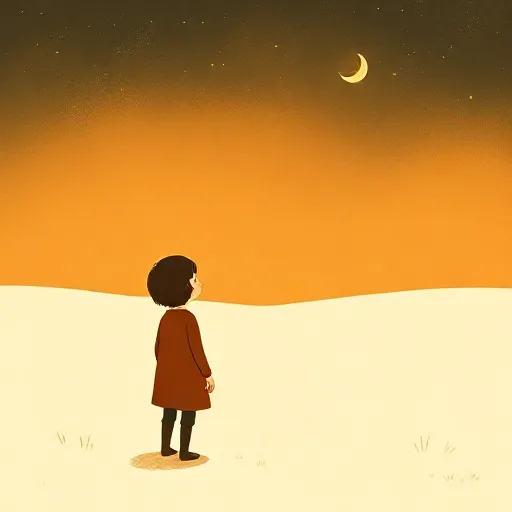
If love makes you feel the strangeness of the other, and gender reveals how differently we can experience the same reality, then where is home? Susman’s answer was startling: nowhere — and that’s a universal truth.
“We are absolutely and entirely in exile,” she wrote in 1929. She was drawing on Jewish experience — a people who had lived scattered among other nations, without a land or political power of their own. But she insisted that this wasn’t just a Jewish story. Every human being faces the world as something foreign. You know you will die, and that knowledge marks you as different from the trees, the stone, the roaring river. That sense of not belonging — homelessness — is what makes us human in the first place. All religion, she thought, grows out of the need to face this condition together.
From this root grew Susman’s notion of messianic hope. The prophets of the Hebrew Bible dreamed of a future peace that had no proof behind it. Susman called that “hope without a foundation.” It’s unreasonable, and that’s the point. When universal thinking begins here — from the impossible — the impossible can become a liberating force. Hope doesn’t need a guarantee. It needs you to see that you were never standing on solid ground to begin with.
After the unthinkable: how can hope survive?
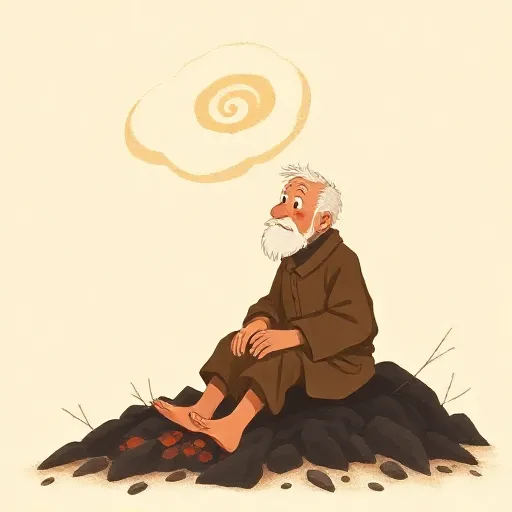
Susman wrote those words years before the catastrophe that would destroy most of European Jewry. After the Shoah, the murder of six million Jews, she had to ask whether hope still made sense at all. Her answer came in a book about the biblical figure of Job, published in 1946.
Job loses everything — family, health, home — and cries out for an explanation. God never gives him one. Instead, God turns the situation around and starts asking Job questions that Job can’t answer. For Susman, this was the crucial turn. Job learns that his task is not to grasp and understand his suffering but to “live out of the unfathomable.” Meaning doesn’t arrive as a tidy answer. It emerges inside a dialogical relationship — an encounter where you recognize the limit of your understanding and still choose to respond.
Susman insisted that nothing of what happened “from German hands” must ever be forgotten. But memory, in her view, is not just pain. It is the soil from which new life can grow — if we refuse to be defined only by the past. The messianic, she said, isn’t a far‑off end of history. It’s a vantage point available right now, whenever we loosen the grip of our need to have everything explained.
Why it still matters
Susman’s ideas land right in the middle of your own life, whether you realize it or not. Every time you try out a slightly different version of yourself in a journal, a song, or even a joke — you’re doing something like building a lyrical I. Every time a friend disappoints you and you can’t fully say why, but you decide to stay anyway — you’re living inside the problem of incommensurability and still reaching for a symbol. And whenever you face a hurt so deep that no explanation makes it better, you are standing where Job stood: not with an answer, but with the question of how you will respond.
Susman didn’t promise that philosophy would make you feel safe. She promised it would give you a language for what it’s like to be a stranger — to another person, to another gender, to the world itself — and to hope anyway.
Think about it
- If you care deeply about someone, is it more important to focus on what you share or on what makes you different? Can you have one without the other?
- Have you ever felt like a stranger in a place you were supposed to call home? Did that feeling ever open up a new way of seeing things?
- Susman thought hope doesn’t need a reason. Would you call that real hope, or just wishing? Can you hold onto hope when nothing around you seems to support it?