Is Love a 'We'? The Fight Over What Love Really Is
Not All Loves Are the Same
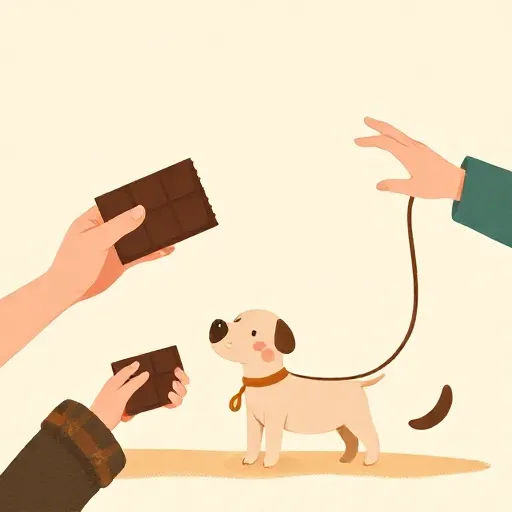
You say “I love chocolate” and “I love my best friend” in the same breath. But do you mean the same thing? Probably not. Loving chocolate means you like it a lot. Loving philosophy or being a big sister might mean those things are part of who you are. But loving a person — really loving them for their own sake, not because they give you something — feels different. Philosophers call this personal love, and it’s the hardest one to pin down.
Even the ancient Greeks had three words for love: eros (passionate desire, often romantic), agape (a kind of selfless, brotherly love, like the love God has for people in the Christian tradition), and philia (affectionate friendship). Today, most philosophers blur those lines. They focus on the love you feel for another person as a person — not because they’re useful, but because they matter as themselves. That’s our topic.
But right away trouble starts: what makes loving a person different from just liking them? Many say love has a special “depth” — it changes how you see yourself and your world. Some think that depth comes from identification: when you love someone, you somehow identify with them, so their good matters like your own. Others say love is a kind of evaluation — you see your beloved as having a special worth. Still others insist love is an emotion (or a whole web of emotions). We’ll look at the main contenders.
Two Become One? The Union View
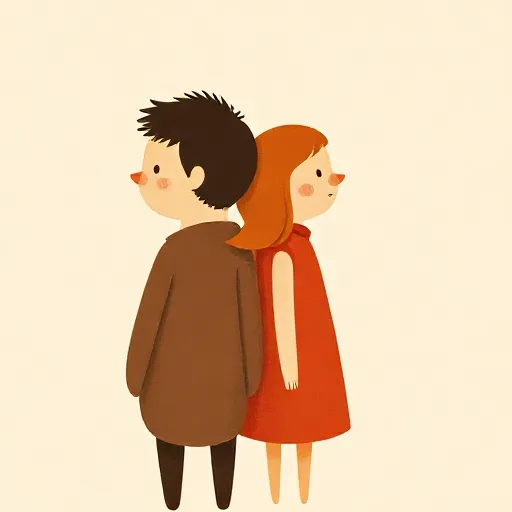
Imagine you and your best friend start a club. You share a name, inside jokes, and a promise to always have each other’s backs. Now imagine that club becomes a new person — a combined “you-and-me.” That’s close to the union view of love. According to this idea, love is the formation (or the desire to form) a “we” — a significant kind of union between two people.
Philosophers like Robert Nozick (1938–2002) and Roger Scruton (1944–2020) argued that in love, the difference between your interests and the other person’s interests can genuinely disappear. You act for “our” sake, not just yours or mine. Neil Delaney (b. 1963) described love as a “profound consolidation of needs and interests.” Robert Solomon (1942–2007) took the fusion even further, saying lovers redefine their very identities through the relationship: you share roles, virtues, and even a sense of who you are.
Nozick added a vivid image: lovers “pool” their well-being, so that what hurts your beloved hurts you too. They even pool some decision-making power, forming a “we” that is “a new entity in the world.” You might find yourself saving an article not because you want to read it, but because your partner would enjoy it more — and that’s enough, because you both belong to the shared “we.”
Opponents push back hard. If there’s no longer a clear line between your interests and mine, what happens to your autonomy — your ability to make free choices as a separate person? Some say the union view makes love bad because it undermines your independence. And if your beloved’s interests really become your own, then caring for them seems selfish, not selfless: you’re just looking out for an extended version of yourself. As philosopher Jennifer Whiting (b. 1958) put it, that sounds like an “unnecessary and potentially objectionable colonization” of the other person.
Union defenders sometimes bite the bullet: maybe a little loss of autonomy is worth it. Others, like Marilyn Friedman (b. 1945), soften the view to a “federation” model: two separate selves who choose to act together without erasing their individual identities. That still lets you care about your beloved for their own sake, not just for the sake of the team.
Love as Robust Concern: For Your Sake, Not Mine

Maybe love isn’t about fusing into a “we.” Maybe it’s something simpler and less dramatic: love is robust concern for another person for their sake. When you love someone, you want them to flourish, you wish to be with them, and you act to promote their well-being — not because it benefits you, but because you value them as they are.
This view is championed by philosophers like Harry Frankfurt (1929–2023). Frankfurt thought love is fundamentally a matter of the will — it’s about the stable structures that shape your desires and guide your actions. It’s not a feeling, though it causes feelings: when your beloved suffers, you suffer because your deep desire for their good has been thwarted.
The robust concern view neatly avoids the union view’s egoism problem: you’re not caring about your beloved as an extension of yourself; you’re caring about them directly. But critics ask: is that enough? If love is just wanting someone’s good, then a dog could love its owner, and a kindly stranger could love you. Where is the special “depth” that makes love different from simply caring?
David Velleman (b. 1952) offers a dramatic counterexample: what about a troublemaking relative you can’t stand, whose well-being you don’t particularly want to promote? You might still love them. And what about loving someone after they’ve died, when you can no longer benefit them? If love were just a desire for their well-being, these would be impossible. The robust concern view has replies: maybe you still have some buried desire to help, or the desire transforms into a wish. But the challenge remains: is concern really all there is to love?
Love as Valuing: Appraisal or Bestowal?

If love is more than wanting someone’s good, maybe it’s a special way of valuing them. But here the road forks. Do you value your beloved because you recognize their worth (like spotting a rare coin), or do you create that worth by loving them (like giving a homemade gift meaning)?
Velleman opts for the first path: love is an appraisal of value. Following the 18th-century thinker Immanuel Kant, Velleman says persons have dignity — a kind of worth that can’t be compared or swapped like cash. Respect is the required minimal response to dignity. Love, he says, is the optional maximal response: it disarms your emotional defenses and makes you “vulnerable to the other.” When you love, you respond to the simple fact that this is a person with a rational nature. But then why love this person and not someone else? Velleman says it’s a matter of “fit”: the way someone’s unique expression of their dignity resonates with your own sensitivities. That explains the selectivity of love, but does it justify it? Many worry: if love is just a response to personhood, it can’t explain why we think some loves are better choices than others, or why it makes sense to keep loving someone as they change.
Irving Singer (1925–2015) takes the opposite road: love is a bestowal of value. You project worth onto another person, making them matter in a way that has no objective standard. There are no correct or incorrect bestowals — love “confers importance no matter what the object is worth.” That sounds romantic, but it also suggests love is blind. Singer tries to avoid that by saying you need to appraise your beloved’s qualities first, so you know what you’re bestowing value on. Still, if the bestowal itself can’t be justified, why is one love wiser than another? The challenge for any bestowal view is to explain how love can be discerning without being a mere response to pre-existing value.
Love as an Emotion Complex: A Whole Weather System
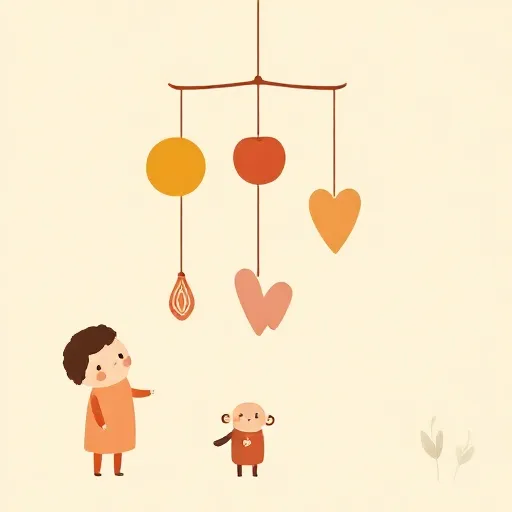
Maybe love isn’t a single thing — not a union, not a desire, not an appraisal — but a whole emotion complex: a rich, shifting pattern of feelings, thoughts, and responses that unfolds over time. Think of your relationship with a close friend. You feel joy when they succeed, frustration when you argue, tenderness when they’re upset, and mischievous delight when they’re embarrassingly clumsy. These emotions aren’t random; they’re woven together by a shared history.
Annette Baier (1929–2012) calls love a “special form of emotional interdependence.” Lovers give each other permission to feel things — like tender amusement at a friend’s awkward moment — that no one else is allowed to feel in quite that way. This intimacy is built through countless small interactions, creating a shared emotional rhythm.
Bennett Helm (b. 1968) pushes this further with intimate identification. He argues that to love someone is to share in what matters to them, caring about the things that define their identity as the person they are. For example, if your friend treasures her role as a big sister, then you value that role for her sake. This isn’t just liking what she likes; it’s making her concerns part of your own sense of what’s important. You do this through patterns of person-focused emotions — pride when she shows courage, shame when she acts badly — focused on her. This sharing of values, built on trust and respect, captures the deep connection love feels without dissolving individual selves into a “we.”
Emotion complex views tackle a big problem: how love transforms the lover’s identity. By emphasizing the history you share, they explain why losing someone you love can feel like losing a part of yourself — and why love is risky. But they still need to explain what holds all those emotions together as one thing called love. Not just any historical tangle counts; a bully can have a history of emotional responses to a victim, but that’s not love. We need a principled way to tell the difference.
The Swap Puzzle: Why Can’t You Trade Up?
Now a puzzle that tests every theory. If you love someone because they’re funny, kind, and brave, what happens if you meet someone even funnier, kinder, and braver? Shouldn’t you “trade up”? That sounds monstrous, but why? This is the problem of fungibility — whether the person you love is replaceable.
Appraisal views face this hard. If love is a response to valuable properties, then another person with more of those properties seems like a better object for your love. Yet we feel our loved ones are irreplaceable. Some philosophers, like Neera Badhwar (b. 1947), accept that theoretically the object of love might be fungible, though in practice we experience them as unique. Others, like Nozick, say the “we” you’ve built with your beloved makes switching impossible: trading up would destroy your own extended self.
Jennifer Whiting and Neil Delaney offer a compelling answer: love is justified not just by someone’s general qualities, but by the historical-relational properties you share. It’s this person, with whom you have a unique history of caring and shared experiences, who grounds your love. That explains why you can’t simply swap: the history isn’t transferable. But is the mere fact that you’ve loved someone in the past enough to justify continuing to love them if they change for the worse? The puzzle nudges us to see that love might involve an ongoing, creative activity — not just finding value, but making it together through your shared story.
Why This Tug-of-War Matters to You
You don’t need a philosophy degree to feel the force of these questions. When you fall out with a friend, you might wonder: am I still the same person without them? That’s the union view whispering. When you do something hard for a sibling not because it helps you but because you want them to be okay, you’re living the robust concern view. When you see someone you love make a mistake and still think they’re amazing, you’re touching on appraisal versus bestowal.
And that swap puzzle? It’s not just a logic game. Every time you worry that a new kid at school might replace you in your best friend’s life, you’re brushing against the problem of fungibility. Philosophy can’t give you a single right answer about what love is. But it hands you a sharper map of the territory — and shows you that the messiness of love isn’t a flaw, it’s exactly what makes it worth thinking about.
Think about it
- If you could take a pill that would make you love someone (or stop loving them), would that be real love? Why or why not?
- Imagine you have a perfect robot duplicate of your best friend that acts exactly the same. Would you love the robot just as much? What would be missing?
- Should you keep loving a friend who has changed a lot from the person you first met? Where’s the line between loyalty and knowing when to let go?