Is It Ever Right to Choose Your Own Death?
Why Is It So Hard to Even Say What “Suicide” Means?
Imagine a soldier who throws himself on a live grenade to save his friends. Did he commit suicide? What about a spy who, to avoid giving up secrets under torture, swallows a poison pill? Or a patient with a painful disease who asks a doctor for a fatal dose of medicine? Almost everyone has a gut feeling about these cases, but when we try to find a single definition of suicide that covers all of them — and leaves out accidents — things get messy fast.
One problem is that the word itself carries heavy moral judgment. Most people quickly say that Hitler died by suicide, but few call the deaths of Socrates or Jesus suicide, even though all ended their own lives in some sense. The label seems to stick more easily to the people we think are bad. That suggests we often pack a hidden “that was wrong” into the very meaning of the word. If you define suicide as wrongful self‑killing from the start, you can never ask whether a suicide might ever be justified. A fair debate needs a neutral starting point.
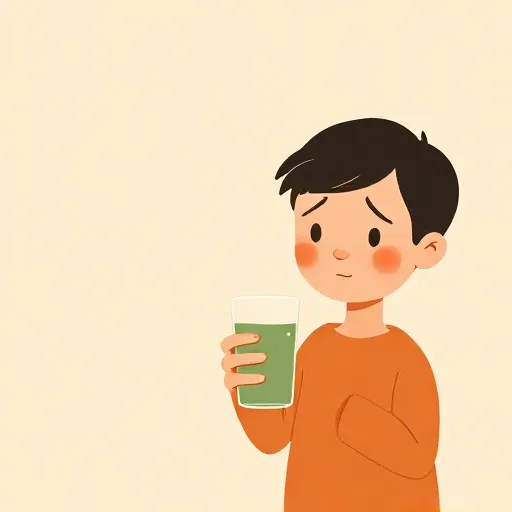
Philosophers have tried to build a purely descriptive definition. The most promising approach says that a person S’s behavior B is suicidal when: (a) S believed that B (or its consequences) would make death come sooner than it otherwise would, and (b) S intended to die by doing B. This intention requirement explains why accidentally drinking poison, thinking it’s lemonade, is not suicide — the person never meant to die. It also explains why the terminally ill patient who arranges for someone else to inject a lethal drug does count as suicide: she set a deadly plan in motion on purpose.
But the intention condition is tricky. The grenade‑jumping soldier believed he would almost certainly die, yet many argue his goal was to save others, not to die. His death was a foreseen side effect, not the aim. Others reply that if you know the result is almost certain, your action counts as intending it — because you chose a path that includes your death. And real‑life suicide is often full of mixed feelings: a person may both want to die and be terrified of death at the same time. That ambivalence makes it even harder to be sure whether someone truly intended to die or acted on a fleeting impulse. So defining suicide in a clean, value‑free way remains an unfinished puzzle.
Ancient Worlds: Obligations to the City and the Soul
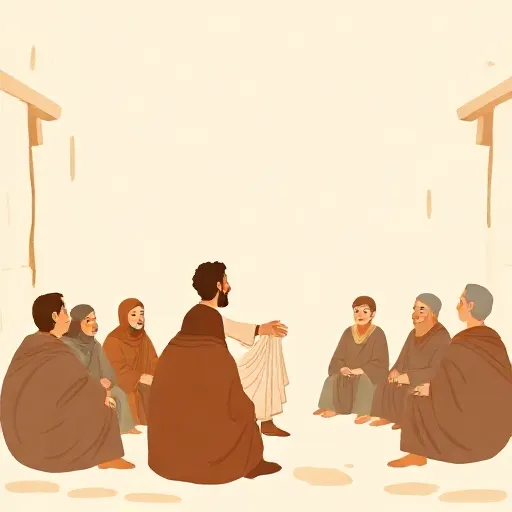
The first Western philosophers to write about suicide were far more concerned with your duties to your city than with your personal suffering. Plato (c. 428–348 BCE) thought suicide was generally disgraceful, done out of cowardice or laziness. He even said those who killed themselves should be buried in unmarked graves. Yet he allowed a few exceptions: when the state orders you to die (as it did with Socrates), when extreme and unavoidable disaster strikes, when your character is morally ruined beyond repair, or when you die out of shame for having done something deeply unjust. Notice that every exception is still attached to civic life or moral standing — not to private pain.
Aristotle (384–322 BCE) focused on the harm to the community. He concluded that suicide cannot be an injustice against oneself, because the harm is voluntary. But he insisted it is somehow a wrong against the state, as if each citizen owes the city their presence and labor. He never spelled out exactly what that debt was, but the idea that your life belongs partly to those around you stuck around for centuries.
The Stoics saw things very differently. For them, a good life meant living in harmony with nature, and nature sometimes hands you a hand of cards that cannot be played well. Cicero (106–43 BCE) wrote that when a person’s life contains mostly things contrary to nature — pain, sickness, loss — it is fitting to leave. Seneca (c. 4 BCE–65 CE), who was forced to take his own life, put it bluntly: “Mere living is not a good, but living well.” A wise person lives as long as they ought, not as long as they can. The Stoics shifted the question from “What do you owe the city?” to “Can your life still go well?” — a move that opened the door to thinking about suicide as a rational, personal choice.
The Christian Prohibition: Life as a Gift from God
When Christianity became the dominant force in the West, its teaching on suicide hardened into a firm “no.” St. Augustine (354–430) argued that the commandment “Thou shalt not kill” applies to yourself just as much as to your neighbor — you are not an exception. He saw suicide as a sin you cannot repent of, because you are no longer alive to do so. St. Thomas Aquinas (1225–1274) later gave three reasons for the ban. First, suicide goes against the natural love of self that pushes every creature to preserve its own life. Second, it injures the community, just as Aristotle had said. Third, and most distinctively, it violates our duty to God. Life is a gift from God, and only God has the right to decide when our earthly existence ends. We have usus (use) of our bodies, but God keeps dominium (ownership).
Two famous analogies grew out of this view. One says we are God’s property, so suicide is like destroying something that belongs to someone else. The other says life is a gift, and taking it is an act of ingratitude. Both face sharp objections. If we are God’s property, why would an all‑powerful God be hurt by the loss of a single life? And if life is a gift we cannot reject, the philosopher Eike‑Henner Kluge pointed out, “a gift we cannot reject is not a gift” — it is more like a command. Besides, if a person’s life is filled with misery, it is not obvious they owe much gratitude for a gift that has brought them so much pain. Still, for over a thousand years these arguments shaped laws that desecrated suicidal bodies and denied Christian burials.
The Enlightenment Collision: Hume’s “Not Guilty” vs. Kant’s “Always Wrong”
In the 1700s, the old religious framework came under direct fire. David Hume (1711–1776) wrote a short, sharp essay “Of Suicide” that dismantled the Thomistic arguments piece by piece. If God created natural laws, Hume argued, we tweak those laws all the time to make life better — we drain swamps, we treat fevers. Why would opening a vein be different? If suicide breaks some divinely ordered plan, then everything we do, including medicine, would also break it. And if God is all‑powerful, He consents to every event anyway, so no act can truly happen against His will. Hume then turned to duties: You owe your society only as much as it gives you. When staying alive offers merely a “frivolous advantage” to others while you suffer greatly, the balance tips. In some cases, your death is not only innocent but praiseworthy. Ultimately, he said, suicide “may be free of imputation of guilt and blame.”
Immanuel Kant (1724–1804) could not have disagreed more. For Kant, moral worth comes from the autonomous rational will — your ability to set rules for yourself. To destroy the very body that carries out that will is a practical contradiction. If you kill yourself, you annihilate the subject of morality in your own person. You treat your humanity as a mere tool to escape pain, and in doing so you “debase” humanity itself. Kant’s argument does not need God; it turns on the idea that a rational being cannot consistently will its own destruction. So where Hume saw suicide as a sometimes‑reasonable release, Kant saw it as an assault on the root of all morality.
Whose Life Is It? Rights, Reason, and Helping Someone in Crisis

Today the debate has broadened. Some libertarians argue that you own your body just as you own a watch, so you have a right to dispose of it as you wish, as long as you do not harm others. But the idea of self‑ownership is puzzling — who is the “you” that owns the body? And property rights are not unlimited; you still might have duties to family or community that make some suicides wrong.
A more careful view says suicide is permissible only when it is rational. Philosopher Richard Brandt (1910–1997) suggested that deciding rationally means comparing two possible futures: the shorter life you would have if you die now, and the longer life you would likely live if you do not. You need clear thinking and enough good information. Yet in the real world, many people who try to end their lives are not thinking clearly. Depression can warp your judgment, making present pain loom so large that future goods become invisible. The impulse is often temporary — many who are stopped do not try again. Because death is permanent and the rest of your life is the condition for all other good things, many philosophers defend a kind of soft paternalism: if we are unsure whether a person’s choice is rational, it can be right to step in, at least for a while, to preserve the chance for clearer thinking later.
This does not mean all suicide is irrational or that we should never respect a person’s decision. But it does mean the line between respecting someone’s freedom and protecting someone from a distorted choice is heartbreakingly thin. That same tension shows up in laws about assisted dying, in how we support a struggling friend, and in the quiet moments when we wonder whose judgment to trust — especially our own.
Think about it
- If you knew a friend was in deep emotional pain and said they wanted to end their life, would you try to stop them? Would your answer change if they seemed completely calm and had thought about it for months?
- A soldier who jumps on a grenade is often called a hero. A person with an incurable, painful illness who arranges their own death is often seen with sympathy. Are those two deaths morally different, or do they rest on the same kind of justification?
- Should a society ever make rules that prevent people from ending their own lives, even when those people seem to fully understand what they are doing?