
Why Does a Melody Feel Like One Whole, Not Just Many Notes?
The Boy Who Wanted to Understand Every Sound
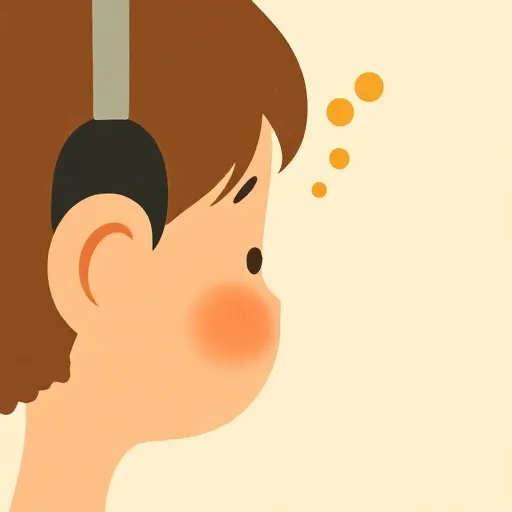
It is a rainy afternoon and you put on your headphones. A familiar melody begins—maybe a pop song or a piano piece. You do not hear a long list of separate notes: do, re, mi. Instead the music flows as a single shape, like a ribbon unrolling. How does your mind do that?
That same question fascinated Carl Stumpf (1848–1936). He grew up in Germany playing music and composing pieces before he ever set foot in a philosophy classroom. At university he met the philosopher Franz Brentano (1838–1917), who taught him to study the mind by looking carefully at what we actually experience. Later he worked with Hermann Lotze, an early psychologist who was obsessed with how we perceive space. Stumpf came away with a mission: before we try to explain why the mind works, we must describe what it presents to us. He called this careful work descriptive psychology.
Right away Stumpf insisted on two things. First, we have to separate phenomena—the raw feels of experience, like a sharp high note, a red patch, a cold breeze—from mental functions, the acts of noticing, judging, or feeling something about them. Second, phenomena are never a chaotic mush; they come already structured. When you see a red stop sign, you do not first receive “redness” and “roundness” as two disconnected dots and then glue them together. The whole sign is what you see.
Space Does Not Come in a Box

In Stumpf’s day many thinkers followed the great philosopher Immanuel Kant (1724–1804). Kant argued that the mind has built‑in filters—a priori forms—that sort the world. Space, Kant thought, is a kind of mental grid that the mind lays over jumbled sensations so we can make sense of them.
Stumpf found that picture upside down. In his 1873 book on the origin of space perception he sided with a moderate nativism: space is part of the sensory content itself, not a coat the mind throws over raw material. Take a red stop sign. Its red color and its octagonal shape are not two separate things that your brain combines; they are given together as one concrete whole. You can talk about them separately only by abstraction—pulling them apart in thought, not in reality.
This upset Kantians because it meant the mind does not need a hidden “space‑box.” It also upset strict empiricists, who thought space must be learned bit by bit from separate experiences. Stumpf believed we can perceive extension directly, as a property that belongs to colors and sounds. His mentor Lotze had already hinted at this with a theory of local signs, tiny pointers in sensation that help us build up space. Stumpf went further: he said that space is not built up at all—it is felt right away, as an inseparable part of a sensory whole.
Why Two Tones Become One: The Secret of Fusion

Stumpf then turned to sound. His two‑volume Psychology of Sound (1883 and 1890) asked how we hear chords, melodies, and harmonies. He introduced a key idea: fusion (Verschmelzung). When two tones sound together, they can blend into a single, smooth experience—a consonant chord—that feels different from just hearing two separate notes at once. The whole chord possesses a quality that the separate parts do not.
Fusion is not magic. It is a real relation between sensations, a way parts form a Gestalt—a structured whole that you perceive in one stroke, not as a pile of pieces. A melody is a perfect example. The notes retain their individual pitch, but the relation of fusion ties them into a single flowing shape. Stumpf said we notice this unitary shape directly; we do not first hear isolated notes and then assemble them.
This insight put him at odds with psychologists who treated consciousness like a heap of tiny atoms of sensation. For Stumpf, the mind never starts with atoms. It starts with wholes, and only later can we pull out parts by abstraction. He sometimes called this a “phenomenology” of sound—a science that sticks to describing exactly what appears in experience, without adding hidden machinery.
Feelings, Judgments, and the Blueprint of All Science
Stumpf did not stop at sounds and colors. He wanted to organize all knowledge. He divided the sciences into two big branches. The natural sciences study physical phenomena. The human sciences (like ethics and aesthetics) study complex mental functions. But in between he placed three neutral sciences that every other field must borrow from.
The first, phenomenology, is the pure study of phenomena—how colors, tones, and textures appear before any judgment kicks in. The second, eidology, studies the products of thinking: concepts, states of affairs (the factual content of a judgment, like “the door is open”), and values that belong to feelings and desires. The third is the general theory of relations, which maps how parts fit into wholes—those fusion relations in a melody, or the way a judgment’s quality (affirming or denying) connects to its matter (what is being affirmed). These three fields, Stumpf said, are the entrance hall and the toolbox for all sciences.
He also believed that the mind and the body really interact, like a musician playing an instrument. He rejected the then‑popular view that the mental and the physical are simply two sides of the same coin. Emotions, for instance, do not just run parallel to bodily sensations; they are directed toward states of affairs. Jealousy is not a random stomach churn; it is a negative stand toward the fact that someone else has something you want but do not possess. That intentional structure—being about something—was central to his entire philosophy.
From a Horse Named Hans to the Birth of Gestalt Psychology
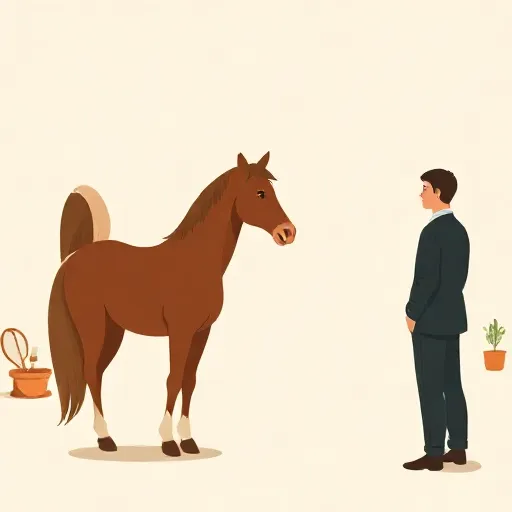
Stumpf’s careful descriptive method made him a detective of the mind. In 1904 he was asked to investigate a horse named Clever Hans that supposedly could do arithmetic. Stumpf and his assistant observed the horse closely and discovered it was not calculating at all; it was reading involuntary tiny movements from the human questioner. The case became a landmark in experimental animal psychology.
Meanwhile Stumpf had founded the Institute of Psychology in Berlin in 1900. Many of his students—Max Wertheimer, Wolfgang Köhler, Kurt Koffka—became the founders of Gestalt psychology. They argued that we perceive whole figures, not isolated dots, and they designed famous experiments with moving lights and puzzle‑solving apes to prove it.
Stumpf cheered their discoveries but later grew worried. The Gestaltists, he thought, sometimes talked as if only the whole existed and the parts were an illusion. That, he said, “the forest hides the trees.” He insisted that even a Gestalt rests on founding contents—the colors, the sounds, the sensory building blocks. The whole is prior to its parts in experience, but the parts are still real. This friendly but fierce debate echoed through the 1920s and still shapes how researchers think about perception.
Why Your Playlist Is Still a Stumpf Argument

Stumpf never set out to be famous. He spent decades describing how vowels feel, how children develop, and why certain chords make us shiver. But his fingerprints are everywhere. The phenomenology movement, especially through his student Edmund Husserl (1859–1938), grew into one of the most influential philosophies of the twentieth century. Gestalt psychology changed how we design everything from classroom posters to airplane cockpits. And whenever a neuroscientist maps how the brain processes a familiar face or a catchy tune, they are chasing the same question Stumpf asked: how do we perceive wholes before we ever think about parts?
The next time you lose yourself in a song, you are not just hearing a list of clean notes. According to Stumpf, you are grasping a single, structured reality—one that presents itself all at once, before you even begin to pull it apart. That is a deep truth about the mind that still feels surprising. And it all started with a philosopher who could not stop listening.
Think about it
- Think of a song you love. Can you describe what makes it feel like a whole rather than just a sequence of notes? Is there a moment where adding one note changes the entire feeling?
- If you see a red round tomato, do you think your mind separately senses “red” and “round” and then combines them, or do you just see the tomato all at once? How might you test that?
- Stumpf believed that careful description matters more than quick explanations. When you learn something new—a video game, a sport, a science idea—do you learn better by jumping straight into explaining it, or by first watching and noticing all the details?