
Is a Melody Just a Bunch of Notes? The Puzzle That Changed Psychology
A Mysterious Extra in Every Melody
In 1882 a young philosophy student named Christian von Ehrenfels (1859–1932) made a pilgrimage to Bayreuth to hear the first performance of Richard Wagner’s opera Parsifal. He had given away his family inheritance to chase music, poetry, and philosophy. The trip shook his romantic view of Wagner the man, but not his love of Wagner’s art. It also planted a question that would grow into a revolution: what exactly makes a melody a melody?
Imagine hearing a tune on a piano. Later you hear the same tune on a guitar, played in a different key. Every single sound is physically different — the pitches, the timbres. Yet you instantly recognize it. Nothing in the individual notes by themselves tells you they belong to the same melody. So where does the melody live? Is it just a bunch of notes added together? Or is there something else, something more?
That’s the puzzle Ehrenfels spelled out in a famous 1890 article. He argued that when you hear a melody, you don’t just have a sum of tone-sensations. You have a Gestalt quality — a new content of awareness that appears when you put separate elements together into a whole. The elements (the single tones) are what he called the foundation of the quality. The Gestalt quality is the extra thing that you grasp when those elements are present in your mind all at once — or in the case of a melody, when you hold them in memory and anticipation as they stream by.
Why Notes Alone Aren’t Enough
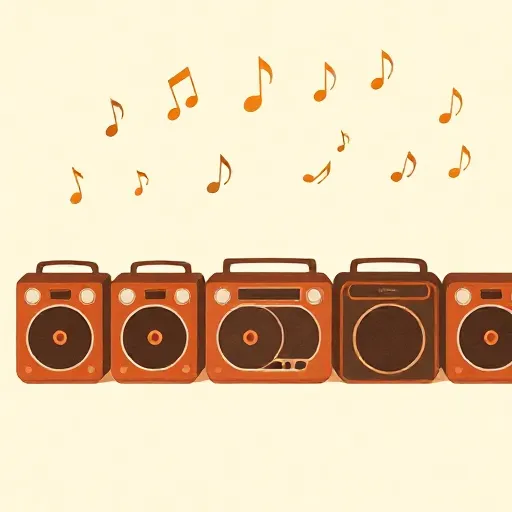
Ehrenfels asked you to imagine two situations. In one, a single person hears a whole series of tones — t1, t2, t3 — and recognizes a melody. In the other, you have three separate people, each hearing only one of those tones at exactly the right moment. If the melody were nothing but the notes themselves, the sum of what those three people experience should equal the melody. But it doesn’t. Their combined minds have three isolated tone-experiences; no one experiences the swoop or arc of the tune. The whole person has something more — a Gestalt quality.
This something-more also explains why you can remember a melody without absolute pitch. You don’t need to know the exact frequencies; you recognise the pattern of relationships between the tones. The relationships — the ups, downs, durations — give the melody its identity. That pattern is a temporal Gestalt quality, because it depends on things that happen across time. A chord, on the other hand, shows a non-temporal Gestalt quality: all the notes sound at once, and you hear them fused into a single rich sensation that is hard to pull apart into separate tones.
When the Whole Is More Than the Parts
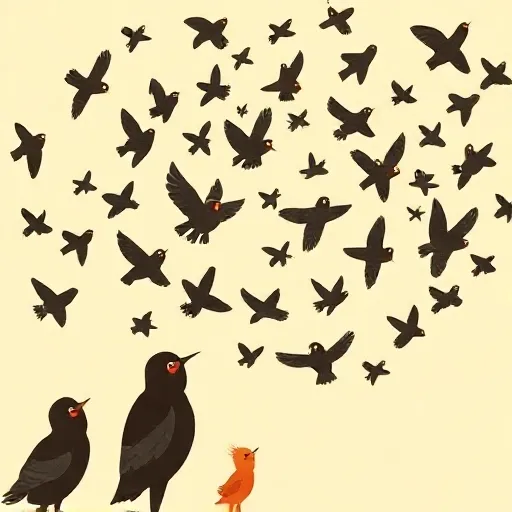
Ehrenfels didn’t stop with music. He found Gestalt qualities almost everywhere. Blushing, thundering, a dance, a melting ice cube — any change that has a unified character forms a temporal Gestalt quality. Even stable things like a geometric shape or a face count as non-temporal Gestalten.
Relations, too, are Gestalt qualities. Think of the similarity between orange and red. You can’t point to “similarity” lying in the color-red or the color-orange alone. It emerges only when you hold both colors together in your mind. Even everyday words like flock, market, or war name Gestalt qualities — wholes that are more than just piles of people and objects. Ehrenfels claimed that most of our nouns, verbs, and adjectives refer to Gestalten, because they pick out patterns that exist only in a higher-order arrangement of elements.
This means that when you call a group of students a “team,” you’re naming a Gestalt quality. The team isn’t just five kids added up. It’s the coordination, the rhythm of passing, the way they respond to each other. The pattern is real, even though you can’t find it in any one player.
What About Wanting? The Desire Behind Value

Gestalt wasn’t the only big idea Ehrenfels pursued. He also shook up the theory of value. Common sense says that a diamond is valuable because it’s intrinsically precious — as if value were a ghostly property baked into the stone itself. Ehrenfels thought that picture was mystical nonsense. He flipped the famous Euthyphro dilemma: do we desire a thing because it’s valuable, or is it valuable because we desire it? He answered: we call something valuable precisely because we desire it.
This put him at odds with his own teacher, Franz Brentano (1838–1917). Brentano had argued that a thing is valuable when our desire for it is correct — when the thing is truly “worthy of being desired,” and we can somehow feel that correctness inside our mental act. Ehrenfels fired back that inner perception wasn’t a reliable guide in such disputes. He pointed out that we often feel desire without any feeling of correctness, and that reason alone can’t set our goals — it can only figure out the means. Our desires themselves determine what counts as valuable.
Feelings (pleasure, pain, indifference) are not the same as desires (wishing, striving, willing), he insisted. You can feel pleasure in a sunny day without actively wanting anything, and you can desperately want a glass of water without currently feeling any pleasure. Value, on his account, is tied to desire, not to a special feeling or a mystical property. A lock of your mother’s hair has economic worth near zero, but you treasure it because of the desire to keep a connection alive. The value flows from your wanting, not from the object.
Why the Gestalt Idea Still Shapes Your World

Ehrenfels didn’t build a school, but his Gestalt idea caught fire. In Berlin, Max Wertheimer, Kurt Koffka, and Wolfgang Köhler later argued that we don’t construct wholes by gluing parts together. We perceive the whole first — the figure, the expression, the shape — and only later, with effort, pick out the individual elements. This “Berlin school” of Gestalt psychology changed how scientists study perception, thinking, and even creativity.
The Berlin view differs from a rival Graz school, which held that our mind actively produces Gestalt qualities on top of raw sensations. But whatever side you take, the vocabulary and the problem began with Ehrenfels. The ripple effects reached philosophy of science, where thinkers like Thomas Kuhn used the idea of a “Gestalt switch” to explain how whole scientific worldviews can flip. Even today, when you instantly recognise a friend’s face in a crowd, or when a song gets stuck in your head as a single whole, you’re living inside the puzzle he named.
Your experience is woven through with patterns that cannot be reduced to atoms. The melody you hum, the team you play in, the sadness you hear in a voice — all are Gestalt qualities. Ehrenfels’ great insight was that these patterns are real and powerful, even though they are invisible and appear only when the parts come together. That insight still hums in the background of every story you tell, every face you love, and every song you can’t forget.
Think about it
- A computer can recognize a tune by comparing patterns of tone-intervals. Does that mean the computer experiences a Gestalt quality, or does that kind of experience require a conscious mind?
- Think of a group you belong to — a family, a band, a team. Is there a “something extra” that exists only when you’re together? Can you describe it without just listing what each person does?
- If value really depends only on desire, does it still make sense to say someone should care about things like honesty, even when nobody around them desires it?