Can Silence Be Music? And Other Big Questions About Sound
Can Toilets Flush Their Way Into Music?
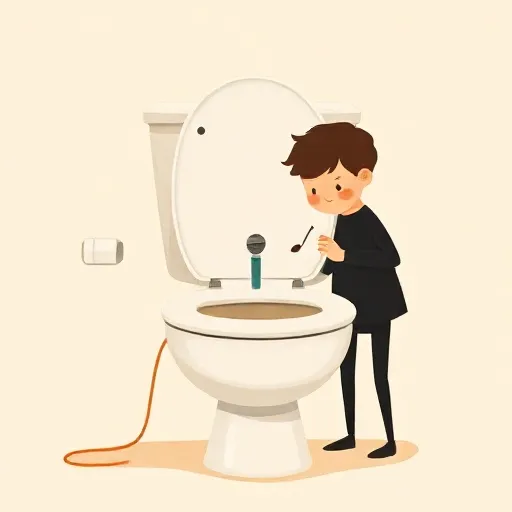
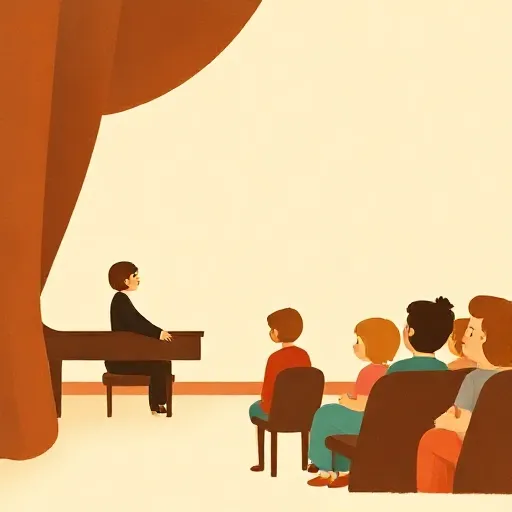
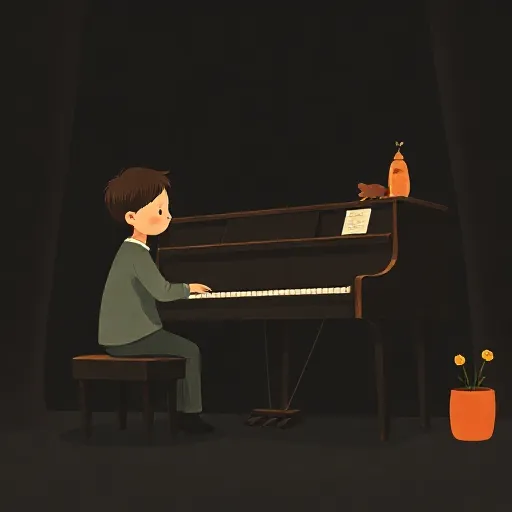
In 1952, the composer John Cage (1912–1992) walked on stage, sat at a piano, closed the lid, and started a stopwatch. For 4 minutes and 33 seconds he played nothing. The piece, called 4′33″ , asked the audience to listen to whatever sounds happened in the room — rustling programs, coughs, the hum of the lights. Was it music?
That question gets to the heart of a puzzle philosophers still argue about: what makes a set of sounds music? The simplest answer is that music is organized sound. But that is too broad. Your friend’s chattering speech is organized sound, and so is the rhythmic beeping of a truck backing up. Most people would not call those music.
To narrow things down, some philosophers add a tonality condition. Music must have features like pitch and rhythm — the things that let you hum a tune. Roger Scruton (1944–2020) and others say that a sound counts as musical only if we hear it as existing in musical space, where notes seem high or low and move from one to another. But then what about a drum solo, or a piece that uses a typewriter and a flushing toilet, like works by Leroy Anderson and Yoko Ono (born 1933)? Defenders of the tonality condition say that even those sounds can be heard as musical if we listen for their rhythm and texture, not just noise.
Others add an aesthetic condition: music is organized sound made to be appreciated for its own sake. Jerrold Levinson (born 1944) takes this route. He has to explicitly rule out poetry and other spoken-word arts, since a poet also organizes sound for appreciation.
A looser view, from Andrew Kania (born 1975), says music does not have to be art at all. Muzak in an elevator is still music, just not very interesting art. Stephen Davies (born 1950) similarly allows that not all music is high art.
And what about silence? If music is organized sound, can a silent piece like Cage’s 4′33″ be music? Most philosophers say it’s not really silent: its content is the accidental sounds that happen while it’s played. Still, some argue it fails to qualify because those sounds are not organized. Others think it is music because it sits inside a tradition of musical performance.
Definitions seem to break every time someone writes a new piece that pushes the boundary. Maybe the wisest move is to admit that “music” is a loose family of practices, not a box with perfectly sharp edges.
Where Does a Song Live When No One Is Playing It?
Think of Beethoven’s Fifth Symphony. You can hear it performed by an orchestra, whistle it in the shower, or play a recording. But where is the work itself? Is it the ink on the page? The sounds that happen in a concert? A pattern in your mind?
This is the fundamentalist debate in musical ontology — the study of what kind of thing a piece of music really is. One popular answer is Platonism: a musical work is an abstract object, like a shape or a number, that doesn’t exist in any particular place or time. On this view, Beethoven’s Fifth was not created so much as discovered, and it will exist even if all copies and performances vanish. Many philosophers find this idea helpful because it explains how one work can have many performances — just as many different triangles can all be instances of the same triangular shape.
Another camp, the nominalists, says a work is nothing more than all the actual performances and recordings of it. If every performance has a few wrong notes, then the work itself somehow contains wrong notes, which sounds odd. To fix this, some nominalists add a score or an original act of composition to the bundle. This moves closer to the recipe analogy: the work is like a recipe that can produce many slightly different cakes.
A very different view, from the philosopher David Davies (born 1953), claims a musical work is a specific action — the composer’s act of writing it. That makes sense if you think of the work as something someone did, but it’s strange to say a concert hall is full of people listening to an action.
The debate spills over into practical questions. If a work is an abstract pattern, do we have to use the instruments the composer specified to perform it “authentically”? When you hear Bach’s Brandenburg Concerto No. 5 (1721) played on a modern grand piano instead of a harpsichord, is it still the same piece? Pure sonicists say only the right notes in the right order matter. Instrumentalists argue that the particular sound color — the timbre of a harpsichord — is part of the work itself. Stephen Davies takes a middle path: some works are thinner, leaving instrumentation flexible; others, like Romantic symphonies, are thicker and demand specific instruments. So next time you hear a cover version, you’re dipping your toes into a very old philosophical puzzle.
Why Does a Tune Make You Want to Cry?

Music has no thoughts or feelings. A violin cannot feel sad. Yet we describe a slow, drooping melody as deeply sad, and it can make listeners cry. How is that possible?
One straightforward idea is the expression theory: the music expresses the emotion the composer actually felt while writing it. But composers often write sad music without feeling sad themselves, and a clumsy composer might fail to express their own emotion. So the sadness seems to be in the music, not just a mirror of someone’s mood.
A second approach is arousalism: the music is sad because it makes you feel sad. But many people hear sad music without feeling sad themselves, and it feels circular — you can’t explain why the tune is sad just by pointing to your response, because your response is often guided by already hearing the sadness.
The most widely accepted family of explanations today is the resemblance theory (also called contour theory). Peter Kivy (1934–2017) and Stephen Davies argue that music sounds sad because it resembles the way a sad person moves and speaks: slow, low, heavy, with falling pitch. We say a weeping willow looks sad for exactly the same reason — not because trees have feelings, but because their drooping shape mimics human sadness. Davies says this is a literal, secondary meaning of “sad,” just like we say a chair has “arms.” Jerrold Levinson adds a twist: we don’t just notice the resemblance; we imagine hearing the music as a person expressing emotion. That imaginative act makes the sadness feel more immediate.
Then there is the puzzle of why we enjoy music that makes us feel sorrow. One idea is emotional contagion: we “catch” the mood from the music, much as we get gloomy around moping friends. Another idea is that safely experiencing sadness through art lets us understand and savor the emotion without real-life danger. And some philosophers, like Kendall Walton (born 1939), argue that sadness itself isn’t always negative — it’s the sad event that’s bad, while feeling sad can be a fitting, almost welcome response. Whatever the explanation, the power of a few notes to move us remains one of the most magical things music does.
Listening Is Like Following an Invisible Dancer
When you listen to a melody, you don’t just hear a string of notes. You hear them rise and fall, leap and wander, and finally come home. Yet nothing physical travels through space. How do we hear motion where there is none?
Roger Scruton described this experience as fundamentally metaphorical. We apply spatial concepts — up, down, high, low — to something that isn’t spatial at all. Malcolm Budd (born 1941) pushed back, saying that calling an experience “metaphorical” doesn’t explain it very well. Stephen Davies replies that these space-and-motion words have a secondary, literal use for all sorts of temporal processes: we say stock prices go up and spirits plunge, and music is just another example. Andrew Kania takes yet another path: we imagine the sounds moving, just as we imagine characters in a novel, without being fooled.
Beyond that basic experience, philosophers ask what it really means to understand a piece. Is it enough to feel the emotions and follow the tune, or do you need to grasp the big architectural structure? Jerrold Levinson champions concatenationism — the idea that basic understanding happens moment by moment, as you connect short passages in a chain. You follow the story, chapter by chapter, without needing a bird’s-eye view of the whole novel. Peter Kivy defended architectonicism, arguing that truly understanding classical works requires knowing how the large-scale form works, much as a puzzle’s picture only makes sense when you see the whole.
Erkki Huovinen (born 1972) offers a sharp example: imagine a melody transposed from C major down a whole octave but written in D-flat major, a half-step higher. One listener hears it as lower; another hears it as higher. Only someone with a bit of music theory can see that it has been transposed down a major seventh. That suggests some explicit concepts may be needed for full understanding. Most philosophers, though, agree that even without technical vocabulary you can still “get” a lot — just as you can enjoy a film without studying camera angles.
Why Do We Bother With All These Sounds?
If music is just sound arranged in pleasing patterns, why does it matter so much to us? This is the puzzle of music’s artistic value. Most philosophers agree that the value of a piece isn’t just as a tool — we don’t listen to Brahms only to study for an exam. We value the experience itself.
Part of that value comes from the emotional ride. As we saw, music lets us taste sadness, joy, and wonder in a safe space, and that can teach us about our own feelings and connect us to others. Roger Scruton even argued that music has a quasi-moral importance: the kind of music a person or culture embraces reveals something about their inner life, their “soul.”
But emotion isn’t the whole story. Some philosophers place more weight on music’s abstract forms. Alan Goldman (born 1945) and Malcolm Budd point out that we take deep pleasure in intricate patterns everywhere — in seashells, geometric designs, and decorative art. Music offers patterns that unfold in time, engaging our minds in a kind of play that has no practical goal and therefore can’t fail. That pure mental engagement is a value in itself.
There’s also the old question of whether music can make you a better person. Kathleen Higgins (born 1949) thinks it draws us into richer emotional and social awareness; Peter Kivy remained skeptical that listening to a symphony improves your character. So far, no one has a single answer that explains why we pour so much of our lives into concerts, playlists, and humming in the shower. Maybe that’s fitting: music is big enough to hold many different treasures, and your own reasons for loving it are part of the ongoing conversation philosophers have been having for centuries.
Think about it
- If a composer writes a piece for a typewriter and a flushing toilet, and you enjoy listening to it, is it music? What would have to change for you to call it “noise” instead?
- Suppose Beethoven’s Fifth existed only as a silent score with zero performances. Would you still say the symphony itself exists? What about a one-time jazz improvisation that was never recorded?
- Can a happy-sounding song ever express real sadness? Or could a piece that sounds deeply sad actually make you feel joyful? Try to think of an example from your own playlist.