Why Does Your Mind Feel Like One Thing When It’s So Many Pieces?
One Moment, a Hundred Feelings
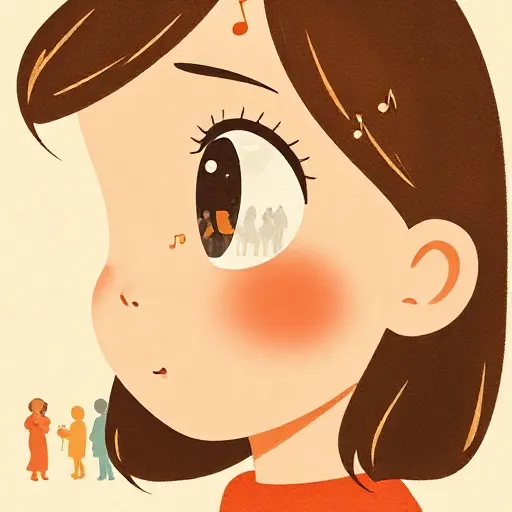
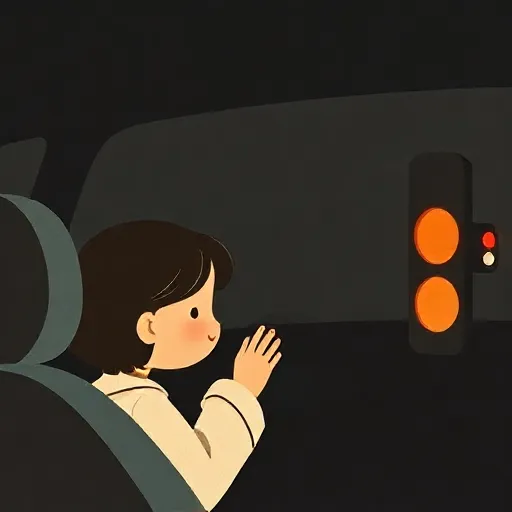
You’re sitting in the back seat of a car, stopped at a red light. A song is playing on the radio. Outside, a line of protesters holds signs and chants. Your fingers find the edge of the seat, and the fabric feels rough. All of this — the music, the crowd, the texture, the thoughts flickering through your head — happens at the very same moment. But it doesn’t feel like a pile of separate events. It feels like one smooth, single experience, a kind of “me-now.”
Philosophers call this phenomenal unity. When your conscious experiences at a single time join up so that there is something it is like to have them all together, they are phenomenally unified. That little word “phenomenal” simply means “about what it’s like for you.” The big question is: how can a collection of very different feelings, sights, and sounds feel like one unified whole? And is that whole really one thing, or just a bundle of little pieces pretending to be one?
Descartes vs. Hume: A Single Thing or a Bundle?

For centuries, two very different stories have tried to explain the unity you feel right now. One comes from René Descartes (1596–1650). He argued that your mind cannot have any parts. When you think about yourself, he said, you simply cannot carve yourself into smaller selves. Because your mind is not made of separable bits, he concluded, it cannot be made of physical matter — anything material can be divided into pieces. For Descartes, the unity of consciousness was proof that the mind is a special, non‑physical substance.
David Hume (1711–1776) saw things the opposite way. He looked inside his own experience and found nothing like a solid, simple self. Instead, he discovered only “a bundle of different perceptions” — sounds, colors, tickles, memories — all loosely tied together. Yet Hume was deeply troubled. In a famous appendix to his own work, he admitted that something in his bundle picture didn’t fit. He never said what it was, but many think he noticed something you notice every day: your experience strongly appears to be more than just a pile of independent scraps.
Later, the psychologist‑philosopher William James (1842–1910) added another powerful argument. Imagine a sentence of twelve words, he said. Now give each word to a different person, and ask each person to think about their single word as hard as they can. Nowhere will you find a consciousness of the whole sentence. If your mind were simply a heap of separate experiences, you would never hear a sentence at all — just a heap of sounds. James argued that when experiences fuse into a single flowing experience, the smaller pieces don’t just get added together; they are replaced by a larger whole.
So right at the start, we face a genuine puzzle. Is your mind a solid, indivisible thing? Or is it a collection of parts that somehow feel like a single stream? And neither answer looked completely satisfying.
The Surgery That Made the Mind Split
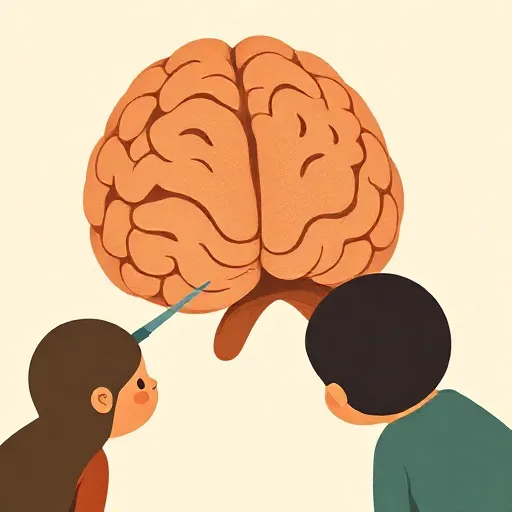
In the 1960s, a medical procedure turned this philosophical puzzle into something you could actually see in a laboratory. Surgeons began performing callosotomies — operations that partly or fully cut the corpus callosum, a dense bundle of about 200 million nerve fibers that connects the left and right halves of the brain. The surgery was a last resort for people with severe epilepsy, because severing that bridge stops seizures from spreading across the brain.
What happened next surprised everyone. In everyday life, these split‑brain patients behaved much as they always had. They walked, talked, laughed, and seemed to have one single, normal consciousness. But inside carefully designed experiments, a stranger picture emerged.
The human brain naturally divides up the job of processing what you see and touch. Visual information from the left side of your field of view goes mainly to the right hemisphere; information from the right side goes to the left hemisphere. In a normal brain, the corpus callosum lets the two halves share everything instantly. In a split‑brain patient, that sharing is blocked.
Researchers showed a split‑brain patient the word TAXABLE on a screen, but arranged so that the letters TAX appeared only on the left side of their field of view, and ABLE only on the right side. When the patient was asked to say the word they saw, their mouth (controlled mostly by the left hemisphere) said “ABLE.” But when they were asked to write down what they saw using their left hand (controlled mainly by the right hemisphere), they wrote “TAX.” The hemispheres were giving completely different answers, and the patient did not notice any conflict.
Philosophers seized on this as a dramatic test case. The two hemispheres seemed unable to share their access unity — their ability to use the same content for speaking, reasoning, and action. But did that mean the patient actually had two separate streams of conscious experience? Were there two phenomenally unified minds inside one head?
One Stream, Two Streams, or Something in Between?

No question in the modern debate over unity of consciousness has been more hotly argued than what is really going on inside a split‑brain patient. Three main stories have emerged, and none has knocked the others out of the ring.
The two‑streams model says exactly what it sounds like: after the surgery, each hemisphere hosts its own independent, fully unified stream of conscious experience. This fits the “ABLE vs. TAX” result perfectly. But it struggles to explain other evidence. For example, split‑brain patients sometimes show partial integration — a powerful emotion triggered in one hemisphere can seem to color experience on the other side, probably because deeper, sub‑cortical pathways remain uncut. If the streams were truly separate, such sharing should be impossible.
The switch model suggests that the patient has only one unified stream of consciousness at any instant, but that it flips back and forth between the hemispheres depending on which one wins a competition for attention. On this view, only one hemisphere is conscious at a time, so the “ABLE” and “TAX” performances happen in a single, switching mind. This preserves a strong belief many philosophers hold, called the Unity Thesis: necessarily, all of your synchronous conscious experiences are unified with one another. But the switch model must explain why patients almost never feel that their experience is jumping between hemispheres or why they so rarely notice the conflict between the different answers their hands give.
The partial‑unity model takes a different leap. On this picture, split‑brain patients do have a single stream of consciousness, but it is not fully unified. Some experiences are directly connected, some are linked only by sharing a third middle experience, like a string of overlapping bubbles. This nicely handles both the partial integration and the smooth everyday behavior. But many philosophers find the very idea of “partially unified” consciousness hard to swallow — what would it even feel like to have an experience that is sort‑of‑together and sort‑of‑separate?
The debate remains wide open, with evidence and intuitions pulling in different directions. It shows that the unity you take for granted in your own mind might be less obvious than it feels.
Why This Matters: The Same “You” Across Time
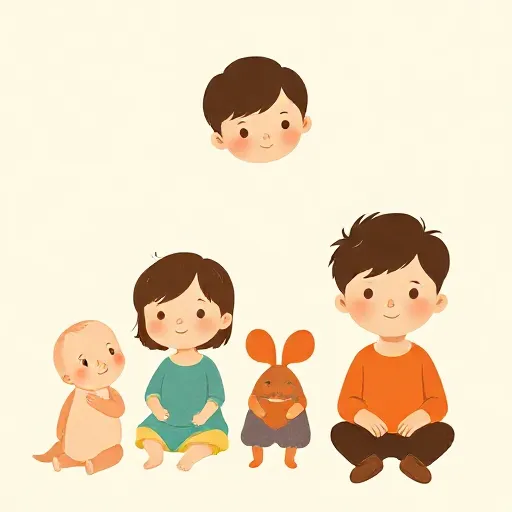
So far we have been talking about unity right now — the way different experiences knit together at a single moment. But there is also a unity that stretches across time. When you listen to a melody, you don’t just hear one note at a time; you hear the notes linked into a whole that flows from the past into the present. Without this diachronic unity (unity across time), you could never follow a sentence, read a story, or even count from one to ten.
That time‑stretching unity has a surprising connection to a very personal question: what makes you the same person you were yesterday, or last year? The English philosopher John Locke (1632–1704) thought that you stay the same person as far back as your consciousness reaches through memory — as long as you can remember an experience from the inside, as something you did or felt, you are the same self. Immanuel Kant (1724–1804) pushed back. He argued that a continuous stream of remembered experiences could, in principle, be passed from one mind to another like a baton, so memory alone cannot guarantee personal identity.
What if your consciousness really could split, as the split‑brain cases hint? The contemporary philosopher Derek Parfit (1942–2017) used such possibilities to suggest that being the same person over time might not be a simple yes/no matter. Like the famous Ship of Theseus — which gets every plank replaced over the years — personal identity might be more like a degree than a switch.
This is not just a puzzle for brain surgeons. Every time you go to sleep and wake up, every time a memory fades or a new habit forms, you rely on the fact that your experiences hold together, both now and across the hours. The unity of consciousness is the glue that makes “you” feel like you. The next time you are in a car with music playing, a crowd outside, and your own thoughts running, ask yourself: what is holding all this together? And what holds the “you” of this moment to the “you” who will go to bed tonight?
Think about it
- If each half of your brain had its own private stream of consciousness, like in a split‑brain experiment, would there be two different “yous” inside one head, or just one confused you? Why?
- Try to imagine what it would feel like if your sight, hearing, and touch suddenly stopped feeling like one single experience. Could you still function? How would that change being “you”?
- Think about a ship that gets every board replaced over the years. Is it still the same ship? Now think about you — after years of changing cells and memories, are you the same person you were as a toddler? What makes you answer the way you do?