
Can You Stay Mad When Everything Is Determined?
A Foot in the Hallway

Imagine you’re walking between classes. Out of nowhere, someone stomps on your right foot. A sharp flash of anger shoots through you. Before you even think, you’re ready to snap, “Watch it!” But then your brain catches up. What if everything that just happened — the person’s leg swinging forward, your foot being in that exact spot — was already determined long before either of you was born? Would your anger still make sense? Could you really blame them?
These questions have bothered philosophers for centuries. In 1962, a mild-mannered Oxford professor named P. F. Strawson (1919–2006) offered a surprising twist. He said that our gut reactions — like resentment — are so deeply woven into what it means to be human that no abstract theory can make them disappear. And that, he argued, might just dissolve the whole fight about free will.
The Big Battle: Free Will vs. Determinism

Before we can understand Strawson’s move, we need to know what the quarrel is about. Determinism is the idea that everything that happens — every leaf that falls, every thought you have — is the result of a chain of causes stretching back into the past. If you replayed the entire universe from the beginning, everything would happen the exact same way. Your decision to eat cereal instead of toast? Already set in motion by the state of your brain, your genes, your experiences. No real choice.
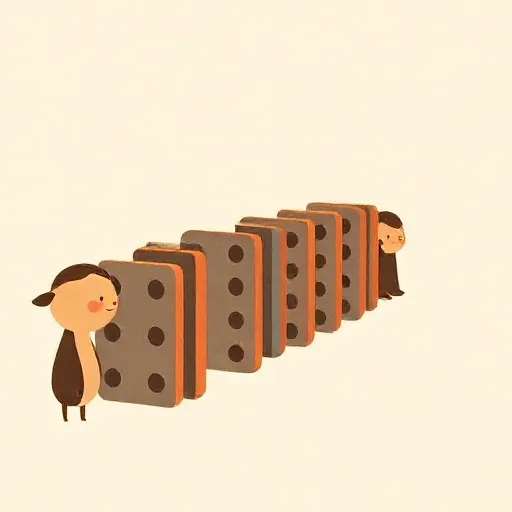
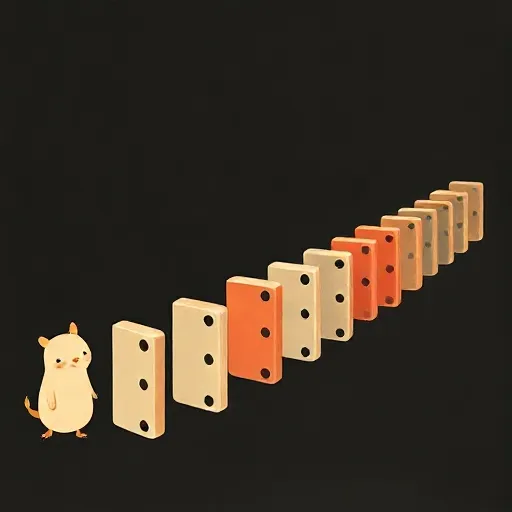
Free will, by contrast, is the belief that at least some of your decisions are up to you in a special way. You could have done otherwise. You’re the author of your actions, not just a link in a cosmic domino chain.
Here’s the headache. If determinism is true, then it seems no one can be truly responsible for what they do. A bank robber couldn’t help it; his actions were caused by his past. Punishing him would be like punishing a rock for rolling downhill. But if we have genuine free will, how does it work? What kind of magic lets us step outside the chain of causes? Many philosophers have tried to reconcile the two, saying that freedom is compatible with determinism if your actions flow from your own desires and reasoning. Strawson thought the whole debate was stuck because people were ignoring something much more basic: our feelings.
Strawson’s Revolutionary Idea: Reactive Attitudes

Strawson asked us to look at the ordinary human responses we have to one another. He called them reactive attitudes. These are feelings like gratitude when someone goes out of their way for you, resentment when someone wrongs you, forgiveness when a wrongdoer shows they’re sorry, and guilt when you realize you’ve hurt someone else. They’re not cold, calculated judgments. They bubble up in you.
When you experience a reactive attitude, Strawson said, you’re treating the other person not as a mere object but as a fellow participant in a shared human world. He called this the participant standpoint. You see them as someone who acts for reasons, who can be held to expectations, who can show good will or ill will. Sometimes, though, we step back and take what Strawson called the objective standpoint. Instead of reacting emotionally, we view a person as something to be managed, studied, or fixed — like a broken machine or a patient. We might say, “She’s not herself; she’s stressed,” or “His behavior is just a symptom of his illness.”
Strawson’s crucial observation was that if determinism were taken seriously, we might think we should adopt the objective standpoint toward everyone all the time. If every action is just the product of a causal chain, maybe no one deserves our resentment or gratitude. But Strawson argued this is impossible.
Two Ways We Let Someone Off the Hook

To see why, Strawson pointed out how we actually withdraw our reactive attitudes in everyday life. He distinguished two very different kinds of cases.
The first is excuses. Say the person who stomped on your foot was pushed from behind. You’d still see them as a normal, free person, but you’d say, “That wasn’t your fault; the circumstances forced you.” Your resentment cools because the action doesn’t reflect ill will — it was an accident, not a sign they don’t care about you. The other person remains inside the circle of people you hold to your expectations; you just grant that in this case they met those expectations after all.
The second is exemptions. These happen when someone is not the kind of creature you hold to those expectations in the first place. A very young child who knocks over your drink doesn’t enrage you the way a peer would. Someone in the grip of a severe mental illness might not be capable of recognizing your rights or responding to your feelings. Here, you switch to the objective standpoint: you see them as something to be gently managed, educated, or treated. You don’t feel resentment, but you also don’t invite them into the full dance of adult human interaction.
Strawson’s point is that these two ways of cooling our reactive emotions show something important. When we excuse someone, we’re not abandoning the idea that they’re a responsible person; we’re just saying the context changed. When we exempt someone, we temporarily or permanently stop seeing them as a full participant. Neither move proves that responsibility is an illusion.
Why We Can’t Escape the Participant Stance

The real kicker comes when we ask: could we ever live entirely in the objective standpoint? Imagine looking at your best friend and seeing only a bundle of neurons firing, a body shaped by genetics and environment, zero true choice. Would you still feel warmth toward them? Could you still trust them, fall out with them, make up? Strawson thought the answer was no — not fully. The reactive attitudes are simply too central to being human. They aren’t something we choose; they’re something we find ourselves doing. Trying to permanently switch off all resentment, gratitude, and forgiveness would be like trying to stop breathing.
Because the participant standpoint is inescapable, Strawson concluded, the truth of determinism can’t ever force us to give up holding each other responsible. Even if you convinced yourself that the universe is a giant clockwork, you’d still feel a flash of anger when someone stomps your foot. You’d still expect an apology. And that, Strawson said, shows there is no deadly conflict between determinism and responsibility. The problem wasn’t solved with a clever logical trick; it was dissolved by paying close attention to how human life actually works.
Why This Still Matters in Your Life

Strawson’s paper didn’t settle all the arguments — philosophers still debate whether his picture really dissolves the problem or just sidesteps it. Some ask: if someone commits a terrible crime and we accept they were fully determined to do it, aren’t we still faced with a tension? Does it feel right to lock them up with righteous fury, or should we treat them as dangerously broken? Strawson’s answer nudges us to see that our moral reactions are part of the human toolkit, not a sign of logical error.
For you, right now, this matters because every day you judge people. You get mad at a sibling who teases you, you feel a glow when a friend shares their lunch. Those feelings come from the participant standpoint, and Strawson helps you see that they’re not silly or weak — they’re the very way we build a world of trust, apology, and belonging. The next time someone steps on your foot, you might still feel that jolt of anger. But now you know that your reaction is part of what keeps our shared human world alive, no matter what any theory says about the secret clockwork of the cosmos.
Think about it
- If a neuroscientist could predict every choice you’ll ever make before you make it, would it still be fair to punish people for breaking rules? Why or why not?
- Think of a time you forgave someone. Did you decide to forgive them, or did the feeling just arrive? What made the change possible?
- Imagine a world where no one ever felt anger or resentment. Would that world be better — or would something important be missing?