
How Do You Really Know What Someone Else Feels?
The Night That Changed Everything

One summer night in 1921, Edith Stein (1891–1942) picked up the autobiography of St. Teresa of Avila. She read until dawn. By morning she felt she had found the truth. Soon the young Jewish philosopher shocked her family by converting to Catholicism.
Long before that famous night, Stein was already a rising thinker. Born in Breslau, Prussia, she lost her father at age two. Her mother ran the family lumberyard and raised seven children alone. At university Stein studied psychology, then switched to philosophy when she discovered Edmund Husserl’s new method, phenomenology—a way of investigating experience exactly as it shows up, without theories or guesses. She earned her doctorate with highest honors in 1916 for a study on empathy, the way we grasp what other people are feeling.
Stein worked as Husserl’s first paid assistant, editing his manuscripts. But as a woman she was blocked from becoming a university professor. After her conversion she became a Carmelite nun, taking the name Teresa Benedicta of the Cross. She never stopped writing philosophy, even in the convent. In 1942, because she was Jewish, the Nazis arrested her and her sister Rosa. They died in Auschwitz a few days later. Stein was canonized a saint in 1998—but her real legacy is a set of ideas about how we understand one another.
Can You See Someone’s Feelings?

Imagine you see a classmate trip and fall on the playground. Tears well up. You don’t stand there thinking, Okay, when I fall I hurt, so she must hurt too. You just see her pain right there in her crumpled face and the way she grabs her knee. That direct seeing is what Stein meant by empathy.
At the time, many psychologists thought we figure out other minds by inference from analogy: I notice my own feelings connect to my own bodily expressions, so I reason that your similar expressions must mean you have similar feelings inside. Another view, held by Theodor Lipps, claimed we instinctively imitate the other’s expression inside ourselves, then project that copied feeling onto them. Stein rejected both. She argued that empathy is a sui generis—a unique kind of intentional experience. It lets you directly perceive another person’s experience as that person’s, not yours. You don’t become them; you remain aware of the difference between you and the other. If you actually fused with someone’s feelings, you would lose the very fact that it’s their sadness, not yours. Empathy keeps the “you” and the “I” separate.
Stein saw the other’s body not as a mindless object but as a lived body—a field of expression. The sadness is co-given in the tear-streaked face; they form a natural unity. So you don’t need to climb over a wall of hiddenness. Empathy is more like perception than like guesswork.
The Three Steps Inside Someone Else’s World
Empathy isn’t always instant and complete. Stein described a three-step process you might go through when you really want to understand someone.
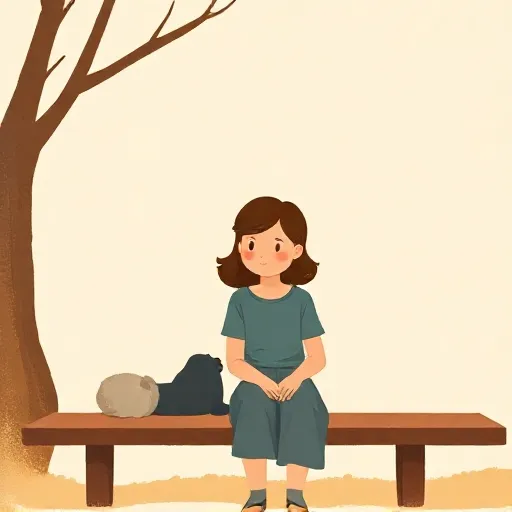
Step 1: The experience appears. You see your friend’s slumped shoulders and smudged mascara. Right away you grasp that she’s sad—directly, through her bodily expression. But the sadness is still vague; you don’t yet know what it’s about.
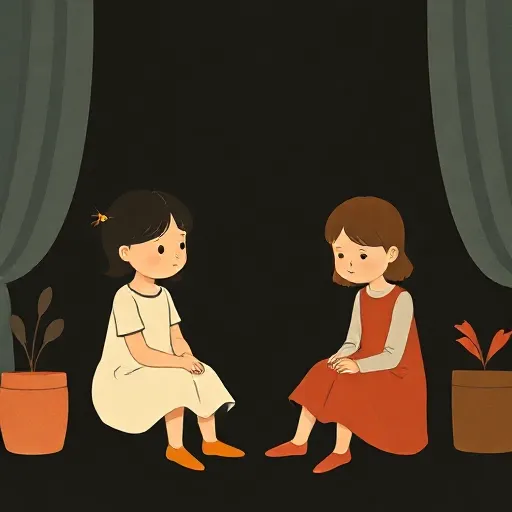
Step 2: Explicative fulfillment. You ask what happened. She tells you her cat died. Now you fill in the details: you feel the weight of that loss, the specific texture of her grief. In this second step you “relive” the experience from her side, but always as hers. You stay alongside her, not fused into one.
Step 3: Synthesizing objectification. You step back and see her sadness as a complete object you can reflect on: “She’s grieving because that cat was her only comfort since her parents’ divorce.” Now you can think about it, talk about it, understand it in a deeper way. This third step turns raw empathy into proper comprehension.
You don’t always go through all three steps. Sometimes you stop after the first; sometimes you circle back. But the whole process explains why feeling with someone is different from merely noticing an expression, and why empathy doesn’t require imagining yourself in the other’s shoes.
When “We” Feel Together

Stein believed empathy is the foundation for all social life. But she also saw that groups can share experiences in ways that go beyond one-on-one understanding. She distinguished three kinds of groups: crowds (you catch emotions without knowing why, like a mob), societies (you team up for a common goal, like a club or a company), and communities. A real community is bound by solidarity—a living sense of “we.”
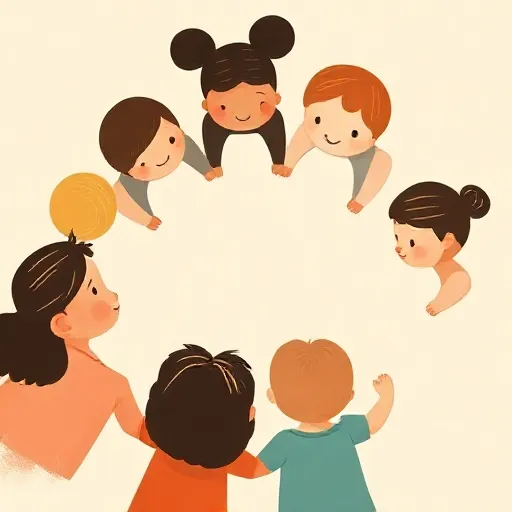
In a community, people have communal experiences. A whole team can feel joy together after a championship win. A family grieving a loss shares a single sorrow. Stein said these groups form a “supra-individual stream of experiences.” That sounds spooky, but she was careful: there is no giant group mind floating above the members. The communal stream is constituted by individuals, not a separate owner. Each person still has her own perspective; the sharedness lives in the fact that everyone is directed at the same object—“our victory,” “our loss”—and knows they are feeling it together.
This doesn’t swallow individuals. A community has its own “life-power” and even something like a personality, but you never lose your personal responsibility or your inner core. For Stein, empathy stays the bridge: you can only genuinely share an experience if you can first grasp the other persons as real centres of feeling.
The Person Who Unfolds

Later, as a nun, Stein asked bigger questions: What is a human being, really? Her answer brought together phenomenology and the Christian philosophy of Thomas Aquinas. She described humans as body-soul-spirit unities. You are not a soul trapped in a body, but a whole where each dimension works with the others.
Every person has a unique, individual core—like a seed that already contains what you can become. Through life you unfold that core. Some experiences touch you deeply; others slide off the surface. Stein talked about depth of the I: the more you live from your core, the more you become genuinely yourself. Emotions are central here; they reveal values—what matters—and shape your personality. A non-emotional person would be an impossibility, she thought.
Stein also wrote about men and women. She fiercely defended women’s right to enter every profession and all branches of education. At the same time, she believed women and men have essential differences. Women, in her view, are more oriented toward the personal, more attuned to emotional life, with a soul more intimately connected to the body. She argued that this distinct nature shouldn’t be erased in the fight for equality—but it also didn’t limit women to old-fashioned roles. Every person, male or female, has a unique calling, and society should let it unfold.
Why It Still Matters
Edith Stein thought hard about seeing others, and she lived her thinking to the end. In the death camp, survivors recalled her moving among the terrified prisoners, quietly helping, her face full of compassion. She didn’t just write about empathy; she practiced it when the world was breaking apart.
Her philosophy challenges you in ordinary life too. It’s easy to slap a label on someone—“shy,” “weird,” “angry”—and stop seeing them. Stein’s wager is that you can do better. You can truly perceive what another person is experiencing. That doesn’t mean you always get it right; you can be wrong. But if you pay attention—to a face, a posture, a tone of voice—you often see the feeling, not just infer it.
When you then share an experience with others, something new is born: a “we” that is real even though it isn’t a separate mind. That insight matters for teams, families, and friendships. It means community is built not by erasing differences, but by being open to one another’s inner lives. Stein’s life—Jewish, Christian, philosopher, nun, martyr—was itself a refusal of easy boxes. She kept looking, kept thinking, kept caring. That’s a habit any twelve-year-old can start practicing today.
Think about it
- Can you remember a time you were sure you knew exactly what someone felt, but later found out you were wrong? What made you change your mind?
- Stein believed that a whole group can genuinely share an emotion—like a class feeling excited together. Do you think it’s possible to have one single group feeling, or are there always different personal feelings mixed in?
- If you could directly perceive every thought and feeling of another person as clearly as you see the color of their shirt, would you want to? Why or why not?