Do Big Fish Have the Right to Eat Little Fish?
A Friend’s Death and a Dangerous Idea
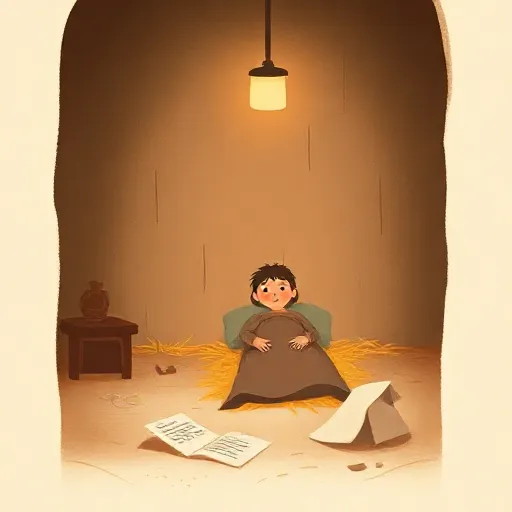
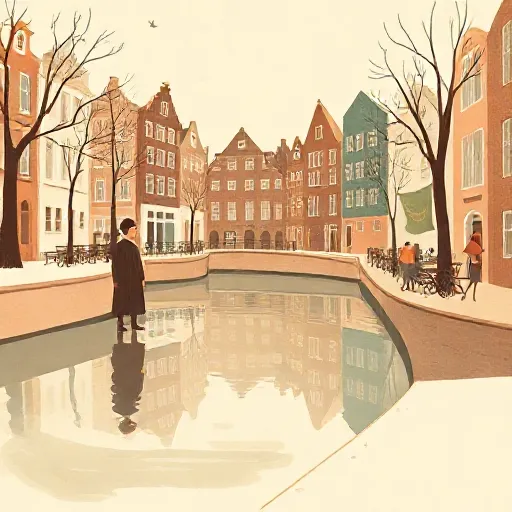
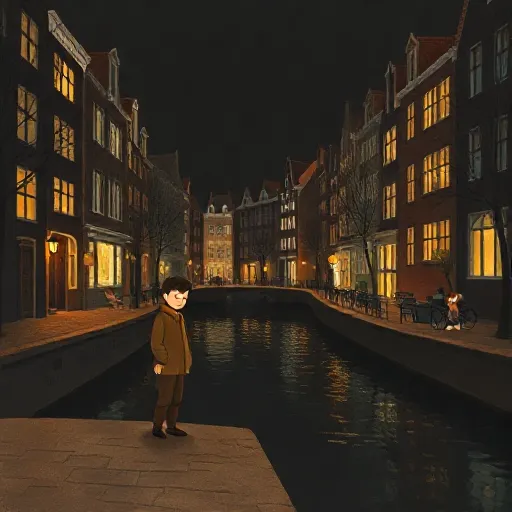
In 1669, a Dutch doctor named Adriaan Koerbagh died in a squalid Amsterdam prison. His crime? Publishing a book in plain Dutch that denied miracles, said Jesus was not divine, and claimed that God and nature were the same thing. Koerbagh’s death horrified his friend, a quiet lens grinder named Baruch Spinoza (1632–1677). Spinoza believed many of the same things, but he had kept his ideas hidden in unpublished manuscripts and Latin, a language only scholars could read. Now, he decided to write a book in Latin that would defend the freedom to think, even about dangerous religious ideas. That book, the Theological-Political Treatise, appeared in 1670 and shook Europe.
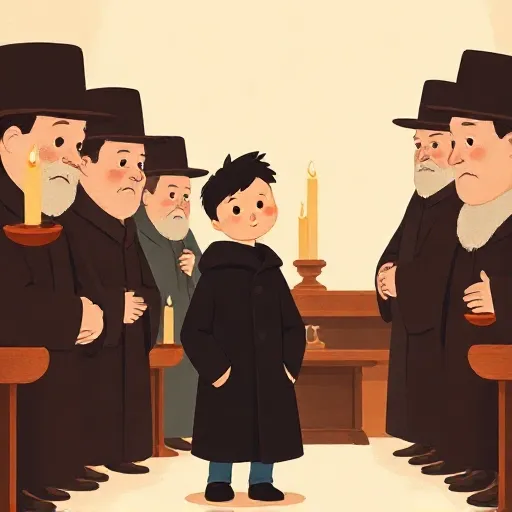
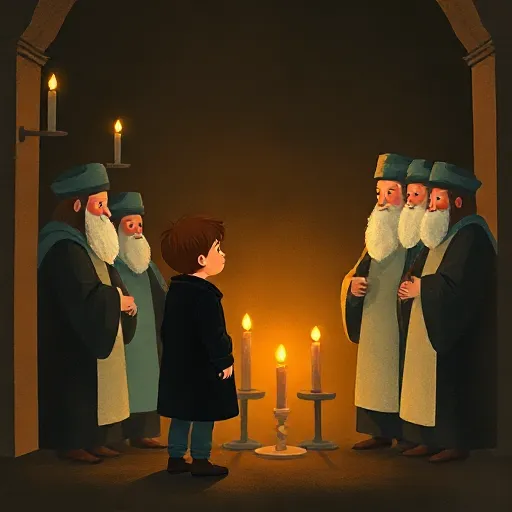
The Dutch Republic was one of the most tolerant places in Europe, where persecuted thinkers and minority religions often found shelter. But it was also torn apart by religious conflict. Calvinist church leaders tried to control what could be taught in universities, and they accused liberal thinkers of atheism. Spinoza himself had been expelled from Amsterdam’s Jewish community when he was twenty-three for his “abominable heresies.” He knew firsthand that thinking freely could cost you everything. Yet he was convinced that a state ruled by fear and religious bullying could never be truly peaceful. To understand why, you have to start with a very strange idea about fish.
Nature Doesn’t Care About Right and Wrong

Spinoza’s whole political theory rests on a single, unsettling claim: in nature, right is nothing but power. Look at a fish, he says. A fish is determined by its nature to swim, and a big fish is determined to eat smaller ones. Therefore, “it is by the supreme right of nature that fish are masters of the water, and that the large ones eat the smaller.” This isn’t a moral argument — Spinoza isn’t saying it’s good to eat the little fish. He’s describing a fact: whatever you actually have the power to do, you have the natural right to do. No permission slip, no moral law, just power. He calls this natural right.
Most thinkers at the time, like Thomas Hobbes (1588–1679), believed that natural right was a kind of title you could give away. When you joined a society, you signed over your right to govern yourself to a sovereign, and then you had a duty to obey. Spinoza turned this inside out. You cannot transfer your actual power — your potentia — because your power is what you are. You can, however, put yourself under someone else’s authority — their potestas — by depending on them. If you habitually obey a king because you fear him or need his protection, you hand him authority over you. But the moment that fear or need disappears, his right vanishes. For Spinoza, a government’s right extends exactly as far as its power does, and no further.
This leads to a startling conclusion. A king who thinks he has an absolute right to rule just because he wears a crown is fooling himself. If his citizens stop obeying, his right evaporates — not because they are rebelling against a moral law, but because his power is gone. Spinoza doesn’t propose a moral right to revolution. Instead, he says that keeping power requires keeping people content. A wise sovereign “must legislate wisely, so as not to rouse the indignation of the people.” Obligation is never a one-way street; it’s a constant negotiation of usefulness and loyalty. If the deal stops being useful, the contract — in Spinoza’s world — simply dissolves.
The Bible as a Guide to Kindness, Not a Science Book
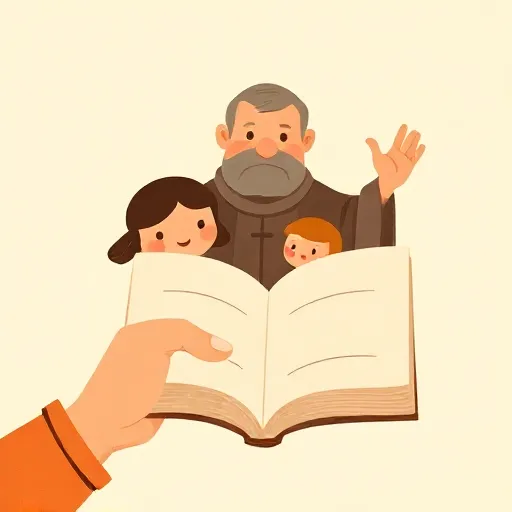
One of the biggest ways religious authorities gained power, Spinoza thought, was by pretending to be the only ones who could unlock the Bible’s hidden secrets. If people believed that Scripture contained deep truths about God’s nature, then they would need a priestly elite to explain it. Spinoza set out to prove that Scripture demands no such thing.
He read the Bible with a single rule: treat it like any other historical text. Don’t assume it’s divine; just ask what it plainly says. When he did that, he found no scientific account of God’s essence, no hidden philosophical system. Miracles, he argued, are impossible because nature’s laws are God’s laws — nothing can break them. The prophets were not philosophers; they had vivid imaginations and a talent for making moral points through stories. The only consistent message across all the books, Spinoza concluded, is a simple moral core: love your neighbor and obey God by being just and kind. This is what he called faith — not a set of doctrines you must believe, but a way of living that produces good works.
Because faith aims at obedience, not metaphysical truth, it is completely separate from philosophy. A person can hold any scientific or philosophical opinion whatever, as long as it doesn’t make them cruel or disobedient. This Separation Thesis was a political bomb. It meant that no cleric could claim special access to the truth that citizens must believe. It also meant that the state, not the church, should decide how religion is practiced in public — because outward worship affects public order, while private belief belongs to each person alone.
Why the State Should Run Religion — and Protect Your Thoughts
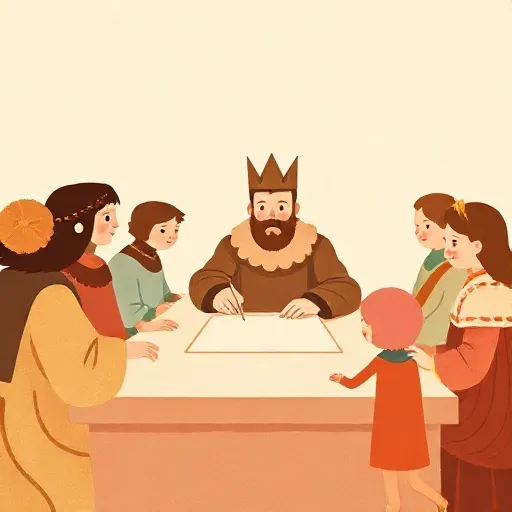
If faith is just about inner devotion and moral living, who gets to say what counts as proper worship in the town square, what holy days should be observed, or which books should be banned for blasphemy? Spinoza’s answer was blunt: the civil sovereign — the government. He adopted a view scholars call Erastianism (after Thomas Erastus), which holds that the state, not religious bodies, has ultimate authority over outward religious practice.
His reasoning was practical, not spiritual. A commonwealth must act with a single mind. If both the church and the state can make binding laws, then when they clash, the country splits. Spinoza pointed to the ancient Hebrew state to prove his point. Under Moses, civil law and religion were one — and the people lived peacefully. But later, when priests were given independent power to interpret divine law, “each one began to seek the glory of his own name… religion declined into a deadly superstition.” For Spinoza, that was a mirror of what was happening in Holland, where Calvinist ministers kept trying to dictate to magistrates.
Yet Spinoza is also famous as a defender of free thought. The final chapter of his treatise argues that the state must allow “the freedom to philosophize.” It is simply impossible to control what people truly believe — you can force someone to repeat words, but you cannot make them think differently. Attempting to suppress speech completely makes people resentful and rebellious, and it destroys the trust that holds a society together. But Spinoza was no free-speech absolutist. Speech that deliberately stirs up hatred, encourages sedition, or aims to deceive in order to break the commonwealth can and should be punished. The goal is not unlimited liberty; it is a civic harmony in which people can honestly express their thoughts without ripping the community apart.
Designing a Country That Stays Free (Even with a King)
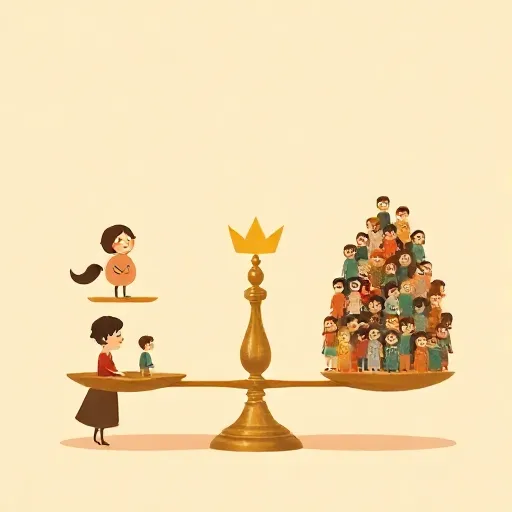
In his final years, Spinoza started a second political book, the Political Treatise, that was left unfinished at his death. Here he asked a different question: not what right does the state have? but how should a state be organized so that it actually achieves peace? For Spinoza, peace is not just the absence of war. It is “a union or harmony of minds” that arises when people are governed by reason rather than by fear and anger. A state of terrified subjects who obey because they are cowed is a wasteland rather than a commonwealth.
To create real peace, he thought, you need institutional checks that force even selfish rulers to act in the common interest. Even a monarchy can be well-designed if the king is bound by “eternal decrees” — foundational laws that he cannot overturn. Spinoza compares this to Ulysses tying himself to his ship’s mast so he wouldn’t give in to the Sirens’ song. A good king must govern through a large council of citizens, and he must always endorse the opinion that has the most votes, because that is the opinion most useful to the majority. Over time, such a monarchy will start to look a lot like a democracy.
Spinoza believed that democracy is the most absolute form of government — by which he meant the one that most fully expresses the power of a united people. When everyone who is a citizen has a say in the laws, the state acts with the combined power of all, and it is far less likely to oppress them. To be sure, Spinoza’s own model democracy excluded women, servants, and those who didn’t live “respectable lives” — exclusions we rightly reject today. But the core insight remains startlingly modern: the more people participate in governing, the more rational and stable the state becomes, because “human wits are too sluggish to penetrate everything right away, but by asking advice, listening, and arguing, they’re sharpened.”
Why Spinoza Still Matters When You Argue About Free Speech
You may never read Spinoza’s whole treatise, but you live inside the debate he started. Every time you hear someone say, “I disagree with what you say, but I’ll defend your right to say it,” you are hearing an echo of his arguments. When a government decides that some hateful speech should be banned because it harms the community, that too is a Spinozist calculation — weighing civic harmony against individual expression.
Spinoza’s most provocative idea, though, is the one staring at you from the fish tank. What if rights are not magical guarantees but simply descriptions of what a person or a government actually can do? That would mean no law is stronger than the willingness of people to uphold it. It would mean that any authority, no matter how ancient or grand, depends on the quiet, daily choice of citizens to go along — and that when enough people withdraw their cooperation, the right of the ruler vanishes like a wave pulling back from the shore. That thought can be frightening, but it can also be thrilling. It puts the responsibility for a free and peaceful society exactly where Spinoza thought it belonged: not in a sacred book or a royal bloodline, but in the minds and hearts of ordinary people.
Think about it
- If a bully has the power to take your lunch and no one stops him, does he have the “right” to take it? Is that the same kind of right Spinoza was talking about, or different?
- Should a country allow people to say things that are deeply offensive to a particular religion, if those words are spoken in public debate? Where would you draw the line, and why?
- Spinoza thought that a government collapses the moment people stop obeying it. Does that mean that every law ultimately depends on us choosing to follow it? What could that mean for changing unfair rules?