What If God Is Nature and Nothing Else? Spinoza’s Scandalous Idea
The Ban That Shook Amsterdam
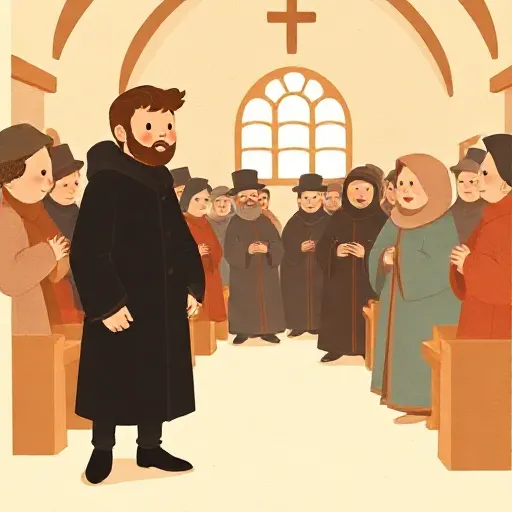
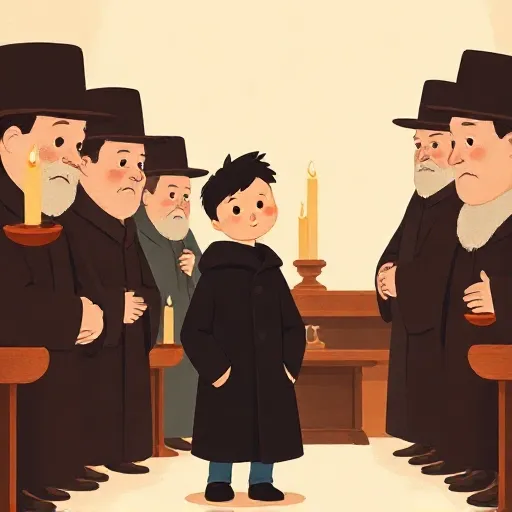
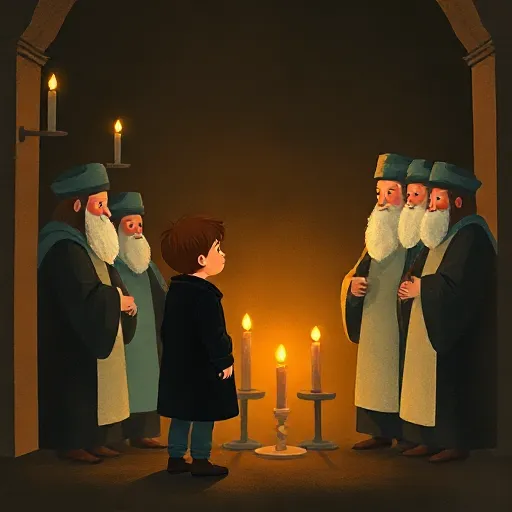
July 27, 1656. Inside the Portuguese Synagogue in Amsterdam, a twenty-three-year-old man stood before the community’s rabbis. The leaders read aloud a terrible proclamation — a herem, or ban — that cut him off forever. The man was Baruch Spinoza (1632–1677). The stated crime? “Monstrous deeds” and “abominable heresies.” We now know what those were. Spinoza denied that the soul is immortal. He rejected the idea of a God who stands outside the universe, makes plans, and judges people. He claimed the laws of the Torah were not literally handed down by God. These ideas came straight from the philosophy he was already piecing together.
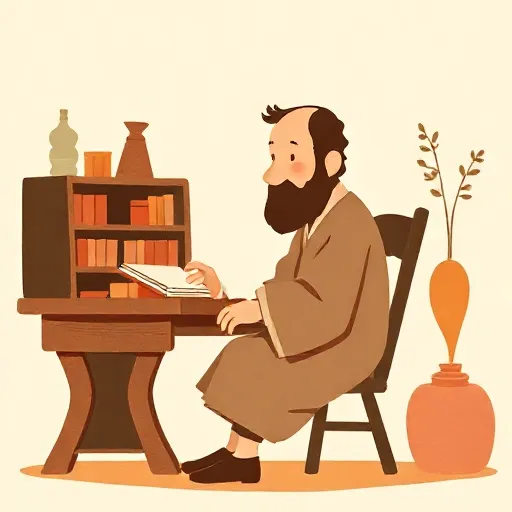
Spinoza had grown up in Amsterdam’s Portuguese-Jewish community and was a brilliant student. He left school early to help with the family business, but his mind never stopped working. After the ban, he left Judaism behind, moved from town to town, and eventually settled near The Hague. He earned his living grinding lenses for microscopes and telescopes, all while writing some of the boldest philosophy Europe had ever seen. His masterpiece, the Ethics, was published by his friends just after his death. In it he built a complete picture of God, the universe, and how to live — a picture that began with a single, shocking claim.
God Is Not a Person — God Is Nature

Spinoza’s starting point is the idea of substance. By that he means something that exists completely on its own, without needing anything else. He then proves, step by step, that there can be only one substance. That substance is God. But Spinoza’s God is not a being with a mind, feelings, or a plan. God simply is the whole of Nature. Everything that exists is in God, just as a wave is in the ocean. Spinoza’s phrase for this — so dangerous that his friends removed it from the Dutch edition of his book — was Deus sive Natura: “God, or Nature.”
If God is Nature, then everything that happens follows necessarily from Nature’s laws. Spinoza compares this to geometry: the three angles of a triangle always add up to two right angles, not because God decided it, but because that is what a triangle is. In the same way, every event in the universe flows from God’s nature with the same logical inevitability. There are no miracles, no exceptions, and no purposes. Spinoza calls this a world without final causes — things do not happen for the sake of some goal. A stone falls on someone’s head because of wind, gravity, and a long chain of physical causes, not because God arranged it to punish that person. To believe otherwise, Spinoza says, is to take refuge in superstition.
Spinoza is often called a pantheist — someone who says God is the world. But he does not think Nature deserves worshipful awe. The proper response to God-or-Nature, he insists, is not prayer or fear, but understanding. The more we know why things must be as they are, the closer we come to real virtue.
Your Mind, Your Body, and the Big Machine
We can grasp only two of God’s infinite attributes: thought and extension. Extension is the essence of all physical stuff — bodies, rocks, light. Thought is the essence of all mental stuff — ideas, feelings, perceptions. Because these two attributes have nothing in common, physical things can never cause mental things, and mental things can never cause physical things. Yet every physical event has a matching mental event, and vice versa, like two sides of the same coin. The human mind, Spinoza says, is simply the idea of the human body.
This view dissolves the classic mind–body problem. Descartes had struggled to explain how an immaterial soul could push a material body around. Spinoza’s answer: they don’t push each other at all. They are one and the same reality, expressed in two different ways. When you stub your toe, the physical damage and the sharp pain are not two separate events linked by a mystery — they are a single event seen under two attributes.
The same strict necessity that rules falling stones rules your mind. Every thought, every decision, is determined by a cause, which was itself determined by an earlier cause, and so on back forever. “In the Mind,” Spinoza writes, “there is no absolute, or free, will.” That sounds like a prison, but Spinoza believed it is the key to genuine freedom.
How to Be Free When You’re Not in Control
Every being, Spinoza argues, has a built-in striving to keep existing and to increase its power to act. He calls this the conatus. Your emotions — what Spinoza calls affects — are changes in this power. Joy is a passage to a greater ability to act; sadness is a move toward less power. Love is joy accompanied by an awareness of its cause. When these changes are triggered by outside things, you are passive, tossed like a boat in a gale. That is bondage to the passions.
But you are not helpless. The mind can form adequate ideas — ideas that show things not as they seem from a limited viewpoint, but as they truly are: necessary parts of the whole. When you understand, for example, that losing a treasured object was inevitable given the chain of causes that led to the loss, the sting fades. The more you replace confused, passive emotions with clear understanding, the more you act from your own nature rather than being shoved around by external causes. That, Spinoza says, is freedom — not the power to do otherwise, but the power to be the true cause of your own actions through reason.
The highest knowledge is what Spinoza calls the “third kind of knowledge”: a direct, intuitive grasp of how everything follows from God’s own essence. This produces an intellectual love of God, which is not a feeling of reverence but a calm, active joy. It is, Spinoza says, our greatest happiness — what he calls blessedness. The person who reaches this state faces fortune evenly, does good to others because rational people flourish together, and is not afraid of death. After the body dies, the eternal ideas that made up the mind remain in God’s attribute of thought, but there is no personal afterlife to hope for or fear.
Why Spinoza’s Fight for Free Thought Still Matters
Spinoza put his Ethics aside for a while to write the Theological-Political Treatise, published anonymously in 1670. Its subtitle promised to show that freedom to philosophize harms neither piety nor public peace — but that suppressing it certainly does. His real target was the power that religious leaders held over people’s minds and governments.
To undercut that power, Spinoza turned Scripture inside out. He argued that the Bible’s message is not a set of philosophical truths; it is a simple moral command: love God and love your neighbor. The prophets were not philosophers — they had vivid imaginations, and what they “saw” depended on their personalities and prejudices. Miracles, understood as God breaking the laws of nature, are impossible, because nature is God and its laws are unbreakable. The ceremonial laws of Judaism, like dietary rules and festivals, were political tools designed to hold together the ancient Hebrew state; they are not eternal divine commands. The Bible itself, he insisted, was written by human hands, compiled by a later scribe (probably Ezra), and passed down imperfectly. It should be studied like any other historical document, not worshipped as a magic book.
What remains is a faith so simple that no specific set of beliefs is required beyond doing justice and showing charity. That means the state should regulate outward religious practices to keep the peace, but inward belief and philosophical thought must be free. Following the English thinker Thomas Hobbes (1588–1679), Spinoza describes life without government as a war of all against all. To escape that, people hand over some of their natural rights to a sovereign. For Spinoza, democracy is the form of government that best preserves individual autonomy, because people obey only laws they have a share in making. Suppressing free speech, he warns, never truly works and only breeds resentment. A state that allows every man to think what he likes and to say what he thinks will be stronger, more creative, and more just.
Spinoza’s questions are still alive today. If everything is caused, can we really blame anyone for their actions — and if not, what happens to justice? He saw that understanding the roots of your feelings weakens their grip on you, an idea that echoes in modern psychology. And his insistence that the universe can be explained without miracles helped open the door to modern science. His ultimate challenge is this: what if real freedom is not about choosing one thing over another, but about understanding the whole so deeply that you feel at home in it?
Think about it
- If everything that happens is determined by earlier causes, can you still be held responsible for your actions? Should we punish people for things they couldn’t help doing?
- Spinoza thought understanding why you feel an emotion helps you become free from it. Have you noticed that naming a feeling — like jealousy or anger — makes it easier to handle? Why might that be?
- Would you rather live in a world where nothing is predetermined and anything could happen, or in a world where everything happens for a reason and is completely understandable? What are the trade-offs?