Is the Universe Really God? A Philosophy That Says Yes
When the Stars Feel Holy

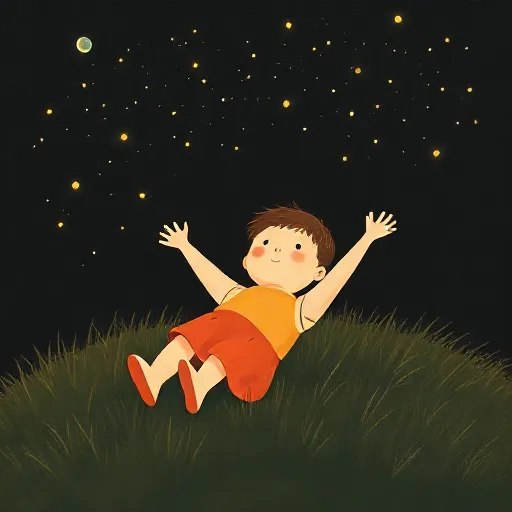
Imagine standing alone on a dark hill, the sky so full of stars it seems to hum. You feel tiny, but also connected to something vast and alive. That feeling — that the universe itself is somehow divine — is at the heart of pantheism.
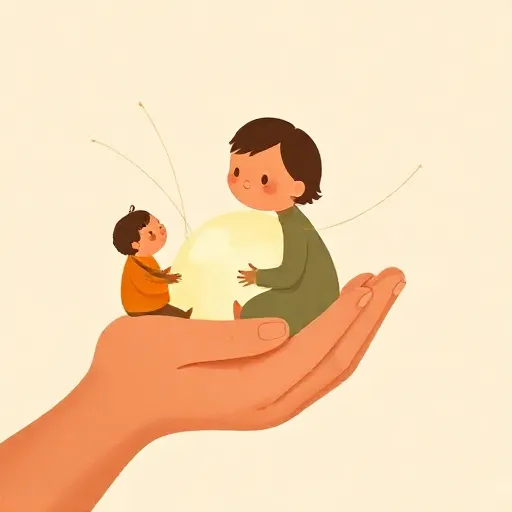
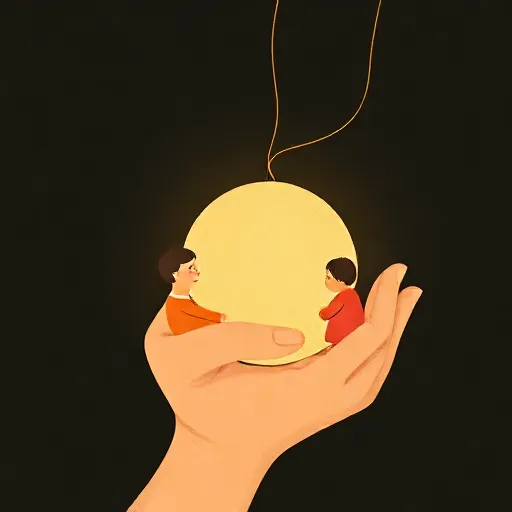
Pantheism is the view that God and the whole universe are not two separate things. Instead, God is the cosmos: every star, every tree, every planet, every law of physics — all of it together is divine. There is no God outside the world, looking in from beyond; the world itself is God.
This is not just a poetic idea. For centuries, philosophers, poets, and scientists have argued seriously about whether the universe deserves to be called “God.” Some, like the Dutch thinker Baruch Spinoza (1632–1677), built entire philosophical systems on it. Others, like Albert Einstein (1879–1955), said they believed in “Spinoza’s God” — a God of order and law, not a personal being who listens to prayers. Pantheism pops up in ancient Stoicism, Hindu Advaita Vedanta, Sufi mysticism, and the nature poetry of Goethe and Wordsworth. But it also raises tough questions. If the universe is God, does that mean hurricanes and cancer are part of God? Can you love a universe that doesn’t love you back?
From Awe to Argument: Why Think the Universe Is God?

Why would anyone think the universe is God? People come to pantheism in two main ways: from experience and from abstract reasoning.
The first way is simple. You stand in a forest, a canyon, or a thunderstorm, and you feel overpowered by a sense of holy presence. You don’t just think “nature is beautiful”; you feel that the trees, the rocks, the sky are somehow alive with a divine spirit. This isn’t a proof, but for many it is the starting point. The ancient Stoics, for example, believed the whole cosmos is a single living being, with a rational soul they called the Logos that runs through everything. They saw God not as a distant creator but as the mind of the world — its breath and reason.
The second way starts not with a feeling but with a chain of thought. The most famous example is Baruch Spinoza. He began with the concept of substance — something that exists completely by itself, without needing anything else to exist. He argued that there can only be one such thing. If you had two independent substances, they would limit each other, so neither would be truly independent. So there’s just one substance, and it must be infinite, all-encompassing. Spinoza called it “God or nature.” For him, everything else — stars, tables, your own mind — are just modes, ways that the one substance shows itself. His God is not a person with a plan; it’s the necessary, self-existent whole of reality.
Other arguments from above focus on God’s traditional attributes. If God is omnipresent — truly everywhere, not just aware of everything — then nothing can exist outside God. The English physicist Isaac Newton (1643–1727) even thought of space itself as God’s “sensorium,” a kind of divine nervous system. Some thinkers push this further: if God’s omniscience (knowing everything) is a perfect mirror of what exists, then there is no real gap between God’s mind and the world. The world just is what God knows, and God is what is known. In each case, the distinction between God and the universe collapses.
Same but Different? The Identity Puzzle

If God and the universe are the same, what does “same” really mean? If you say a pizza is the same as its ingredients (dough, cheese, sauce), you might mean the pizza is those things arranged a certain way. But if God is identical to the cosmos, that doesn’t necessarily mean every single rock is equally divine. The question of identity has tripped up many thinkers.
Some critics argue that true pantheism means strict, straightforward identity: God = the universe, period. But that leads to the problem that if the universe contains both beauty and horror, then God would contain both too — something many religious people find troubling. Many pantheists, therefore, have opted for a more subtle view, a kind of identity-in-difference. They say God and the universe are both the same and different, like a mosaic that is both a single face and a collection of tiny tiles.
The medieval Christian thinker John Scotus Eriugena (9th century) argued that the universe can be divided into four categories of creation, but in the end “God is in all things” as their inner essence. Yet he also insisted that God remains utterly beyond our understanding, so there’s a tie that is also a gulf. The Sufi mystic Ibn ‘Arabi (1165–1240) used a shocking image: the universe is the food of God and God is the food of the universe — each swallows the other. For him, God and the world are inseparable, but God’s hidden essence is still more than what appears. Even Spinoza, who is often seen as the champion of strict identity, held that God has infinitely many “attributes,” only two of which we know (thought and extension), and they are utterly different from each other — yet they describe the same one reality.
So many pantheists don’t just collapse God into the world. They preserve a kind of two-sidedness. This also helps distinguish pantheism from panentheism — the view that the universe is in God, but God is more than the universe (like a sponge in water). The line can be blurry. Most pantheists would agree on the core intuition: whatever you encounter, you encounter God directly, not through some middleman.
Can the Universe Love You Back? What Makes Something Divine
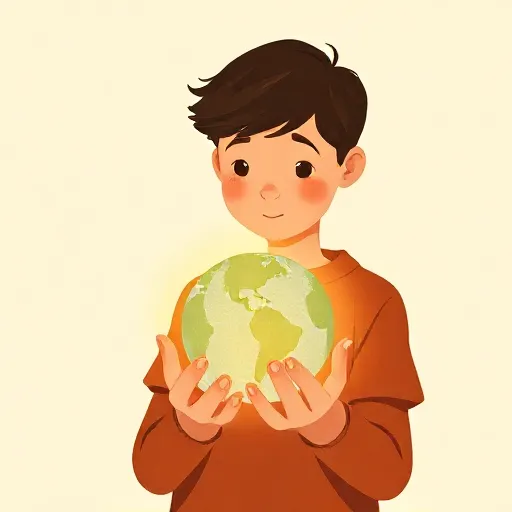
Suppose you accept that the universe is the only reality. Why call it “God” at all? Arthur Schopenhauer (1788–1860) scoffed that “Pantheism is only a euphemism for atheism,” and more recently Richard Dawkins (b. 1941) called it “sexed-up atheism.” If God is simply the universe, why not drop the G-word and call yourself an atheist? Pantheists reply that the universe has features we typically associate with divinity — and that seeing it as God transforms how we live.
One big question is whether the universe is a person. Most major religions think of God as a conscious being who knows, wills, and cares. Many pantheists, like Einstein, firmly reject a personal God. They think the cosmos is an awe-inspiring order, not a mind that loves you back. But not all pantheists go that way. The ancient Stoics believed the cosmos itself has a rational soul — a kind of cosmic mind — that we can relate to. The 19th‑century scientist and philosopher Gustav Fechner (1801–1887) argued that if plants and planets have inner lives, then the whole universe must have a supreme consciousness. He even thought you could pray to it, though God already knows your thoughts because you exist inside it. So pantheism doesn’t force you to choose between an impersonal universe and a friendly bearded deity; there is room for a middle ground.
A tougher problem is evil. If the universe is God and God is good, why do terrible things happen? When a child gets sick or a hurricane destroys a town, can we still say that reality is perfect? Spinoza offered a famous reply: evil and error are not real from God’s viewpoint. They appear only because we see the world in fragments, like someone looking at a few threads and missing the whole beautiful tapestry. The Stoics had a similar idea — if you could see the cosmos as a complete, harmonious system, every event, even painful ones, would fit the perfect pattern. Not everyone is satisfied with that. Other pantheists argue that value isn’t evenly spread; the universe as a whole may be good, but its parts can be broken, just as a healthy body can have a wound. This would mean some things in nature (like a rainforest) are more divine than others (a polluted parking lot). That idea has led many modern pantheists to become passionate environmentalists.
Why It Still Matters: A Sacred Earth

In the end, pantheism isn’t just a puzzle about definitions. It’s a way of seeing your own life in a different light. If the universe itself is God, then you are not a visitor in a dead machine; you are a tiny but real part of a living, sacred whole. That thought can be both comforting and demanding.
Many people who love nature find in pantheism a reason to protect it. If a forest is not just a collection of trees but a piece of the divine, cutting it down is not just wasteful — it’s a kind of desecration. The American ecologist Aldo Leopold (1887–1948) developed a “land ethic” that treats the biotic community as something we belong to, not something we own. Deep ecology, inspired in part by pantheist ideas, urges us to see all life as having value in itself, not just for humans. This isn’t about worshipping trees; it’s about recognising that the line between “me” and “not‑me” is thinner than we think, and that nature deserves moral consideration.
Pantheism also answers a deep human hunger: the longing to belong to something bigger than yourself. Spinoza thought that understanding your place in the whole universe — what he called the “intellectual love of God” — was the highest happiness a person could achieve. You don’t need a personal God who rewards you with an afterlife; just knowing that you are a moment in the eternal cosmos can be enough. The poet Robinson Jeffers (1887–1962) put it bluntly: “there is peace, freedom, I might say a kind of salvation, in turnings one’s affections outwards towards this one God, rather than inwards on one’s self, or on humanity”
So next time you stand under a star‑filled sky and feel that strange mix of awe and connection, you’re not just being romantic. You’re stepping into a long philosophical conversation. Is that shiver of wonder telling you something true? Maybe the universe really is divine — and you’re part of it.
Think about it
- If you could be certain that the universe has no mind or feelings, would you still want to call it “God”? Why or why not?
- Suppose scientists proved that every natural disaster serves a hidden purpose in making the whole universe more harmonious. Would that change how you feel about suffering?
- If a forest is sacred, does that mean we should never cut down a single tree, even to save a human life? Where would you draw the line?