Is God Outside the World, Inside It, or Both?
In 1821, Karl Krause Wanted a Word for a Third Way

It is 1821 in Germany. Karl Krause (1781–1832), a philosopher with a talent for inventing words, stares at two very old ways of thinking about God. One is classical theism: God stands completely outside the universe — perfect, never changing, never affected by anything that happens here. The other is pantheism: God is identical to the universe. The stars, the trees, your own thoughts — all of it just is God. Krause thinks both pictures have deep problems, so he coins a new term: panentheism, from Greek roots meaning “all in God.” He gives the world a third option.
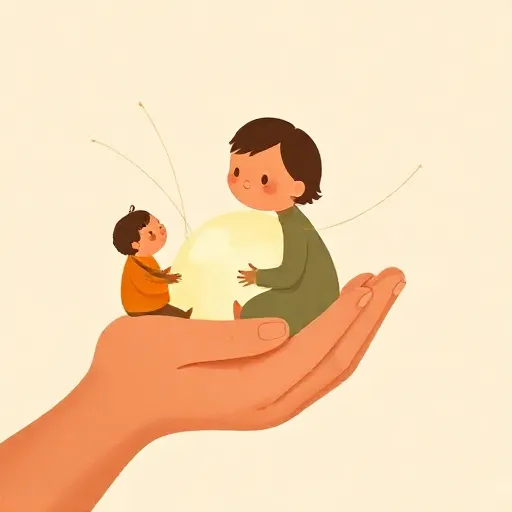
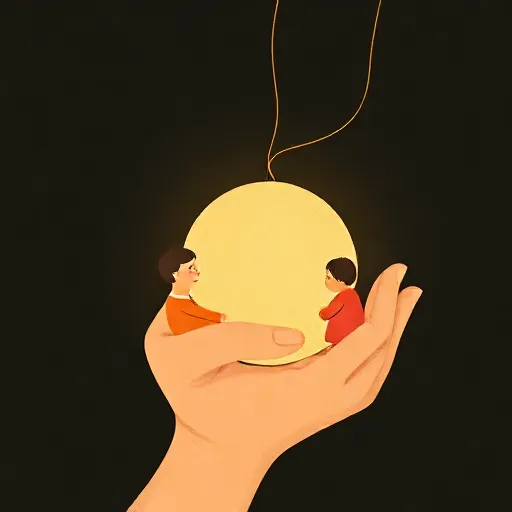
Panentheism claims that the universe is inside God, but God is more than the sum of its parts. The world does not sit apart from God like a watch lying next to a watchmaker. And the world is not simply the same thing as God. Instead, God contains everything that happens — every galaxy, every choice, every feeling — yet remains greater than all of it.
What Does “All in God” Actually Mean?
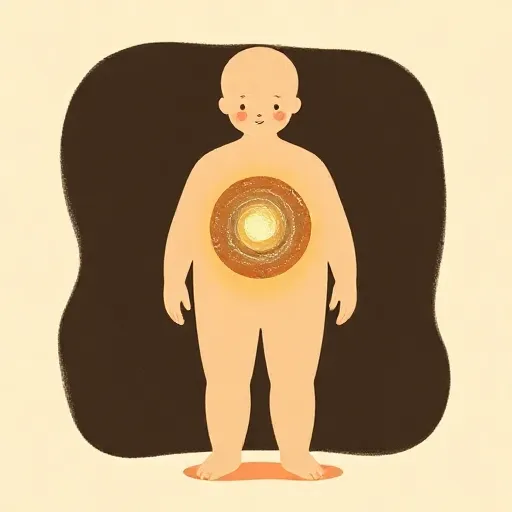
Most people use the word “in” for spatial location — a pen is in a drawer. But panentheism uses “in” in a much deeper, ontological way. It means the world’s very existence happens inside God’s being. Think of your own mind right now. It contains thoughts, memories, and images, but you are not identical to any one of those thoughts. You are more than the collection. Panentheists say God contains the entire universe in a similar way, yet God’s being is far greater than the world’s being.
That balance brings together two big ideas that often fight: transcendence and immanence. Transcendence means God exceeds the world — God is not trapped inside creation the way a fish is trapped in water. Immanence means God is directly present within every part of creation. Classical theism usually builds immanence on top of transcendence: because God is separate and unlimited by the world, God can be present everywhere. Panentheism reverses that priority. It says God is present because God includes the world. The presence is intimate, not distant.
This leads to a key claim that sets panentheism apart: the God‑world relationship is a mutual relation. God influences the world, and the world genuinely influences God. What creatures do actually matters to the divine life. For classical theism, that sounds impossible — God cannot be changed by anything outside God. For panentheism, it is essential.
Can God Change? Meet the Dipolar Deity
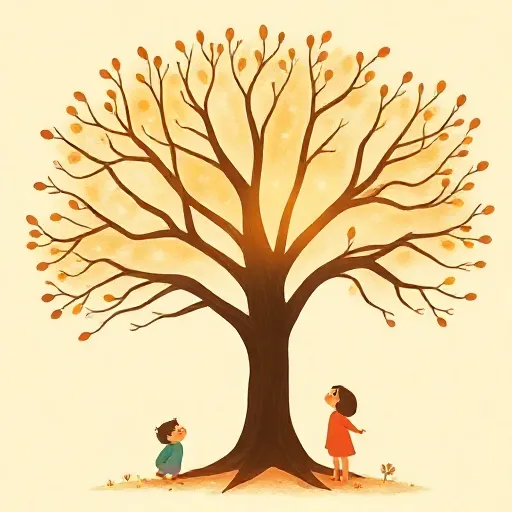
The idea that God changes with the world got its most detailed shape from process philosophy, developed by Alfred North Whitehead (1861–1947) and Charles Hartshorne (1897–2000). They described God as dipolar — having two poles or aspects. One pole, called the primordial nature, is eternal and unchanging. It holds all the possibilities that could ever become real. The other pole, the consequent nature, is God’s living experience of what actually happens. Each time a creature makes a choice, God takes that result into God’s own experience.
Imagine a parent who suggests playing outside or reading. The child freely decides, and the parent’s own feelings — joy, worry, pride — are shaped by that decision. The parent’s love does not change, but their experience does. Process thinkers say God works like this, constantly presenting fresh possibilities to every moment of the world, but never forcing. Each moment “decides” how it will respond, and God weaves the outcome into the divine life.
Many panentheists also speak of kenosis, a Greek word for self‑emptying. Thomas J. Oord (b. 1965) calls it essential kenosis: God’s very nature is self‑giving, other‑empowering love. God never controls; God always makes room for real freedom. That is why God genuinely suffers when creation suffers, and also why evil is not something God directly causes.
Why Panentheists Think This Helps with Evil
The problem of evil asks: if God is all‑powerful and all‑good, why does terrible suffering exist? Classical theism often struggles to answer without blaming God or minimizing suffering. Panentheism takes a different path. Because God does not control every event, creatures can make harmful choices — and they do. Evil arises from that freedom, not from God’s will.
But panentheists go further. Since God’s relationship with the world is mutual, God is affected by every pain. God does not stand outside the suffering and simply watch. Instead, God takes the world’s sorrow into the divine life and, according to process thinkers, works to redeem it — like a composer including a harsh, dissonant note and then weaving it into a wider, more beautiful melody. Still, critics ask: can God guarantee that evil will finally be overcome if the future is open and creatures remain free? Many panentheists say that God’s love is perfectly reliable and endlessly persuasive, so hope is warranted. But they admit that no external force can cancel freedom without cancelling love.
The Critics Speak: Does This God Stay in Charge?
Not everyone applauds. Classical theists like John Cooper and Mariusz Tabaczek argue that panentheism weakens God too much. They insist that God must be completely unchanging, impassible (incapable of being affected by suffering), and ontologically different from the created world. If God depends on the world for a richer experience, they say, God is no longer fully independent — and that means God’s transcendence is only relative, not absolute. A God who is changed by creatures also cannot, in their view, be perfectly perfect.
Panentheists offer several responses. Philip Clayton (b. 1956) and others clarify that God’s essence — what God most fundamentally is, namely love — never changes. Only God’s experience changes. God freely chooses to be affected; it is not a weakness but the deepest form of strength. Moreover, many panentheists, especially in the process tradition, do not say that this particular world is necessary. God might have to be in relationship with some world, but not exactly this one. That preserves God’s freedom. And when it comes to transcendence, panentheists redefine it: God is not “outside” the universe in the sense of being spatially removed. God is more-than, like a whole that generously holds and exceeds its parts while still being genuinely shaped by them.
Finally, the thought that God influences without controlling — that God’s love is active information, not an exchange of brute energy — appears in how some scientist‑theologians talk about emergence and top‑down causation. As complex systems self‑organize, a larger whole can influence its parts without being a separate outside force. Panentheists see a hint of how God’s inward action might work.
Your World, Inside Something Bigger
Why does this old debate matter for someone who is twelve? Because it touches how you might feel about your own life. If panentheism is right, you are not a tiny, isolated speck in a cold machine. Your choices really count — they add to the experience that God is having. Your joys and your sorrows are shared, not ignored. When you pray or simply wonder about meaning, you are relating to a reality that holds you, as a mind holds its dearest thoughts, yet never controls you like a puppet.
Science, too, gives panentheism an interesting opening. The more we learn about the universe’s ability to self‑organize — from particles to cells to brains — the less we need a God who keeps shoving things from the outside. An inward, persuasive presence fits the world we see. The debate is far from settled, and thoughtful people still line up on different sides. But the core question remains: is the deepest reality something you are outside of, or something you live inside? Krause’s awkward‑looking word still asks it, loud and clear.
Think about it
- If your choices really affect God’s experience, does that make you more careful about what you do — or more pressured?
- Is it comforting or frightening to imagine that God feels everything you feel, including your most private thoughts?
- Can science ever settle the question of whether the world is inside God, or is that a question beyond experiments?