
Are Your Thoughts Inside Your Head, or Out in the World?
Your Double on Another Planet
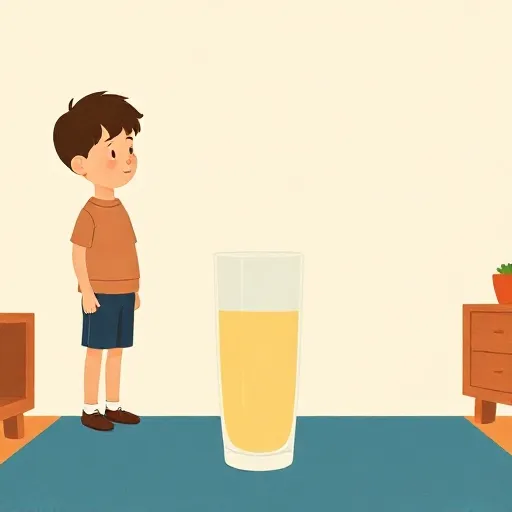
Imagine a planet exactly like Earth, molecule for molecule, except for one thing. On this planet — call it Twin Earth — the liquid that falls as rain and fills the lakes is not H₂O. It is a different chemical, XYZ, which looks, tastes, and behaves exactly like water. Now imagine a boy named Oscar on Earth, and his exact duplicate, Twin Oscar, on Twin Earth. Both are looking at a glass of clear liquid. Both think, “This is water.”
Here is the puzzle: Are Oscar and Twin Oscar thinking about the same thing?
This is not just a science-fiction game. It is at the heart of a real debate about mental content — what our thoughts, beliefs, and desires are about. A thought’s content is what it says the world is like, what it represents. When Oscar thinks “water is wet,” the content of his thought involves a certain substance, water. But does it involve that substance because of what is inside Oscar’s head, or because of what is outside in his environment?
Philosophers call a content narrow if it is completely determined by what is inside the thinker — your intrinsic properties: your brain, your body, your experiences, nothing outside your skin. A content is broad if it also depends on your environment, on what is actually out there. The Twin Earth story, cooked up by Hilary Putnam (1926–2016), was meant to show that the ordinary contents of our thoughts are broad.
Can Your Exact Double Think Different Thoughts?

Putnam asked us to imagine Earth in 1750, before anyone knew water was H₂O. Oscar, a typical English speaker, uses the word “water.” On Twin Earth, Twin Oscar uses a word that sounds the same in Twin English. Both are equally ignorant of chemistry. When they think about the clear, drinkable liquid around them, are they thinking about the same substance? Putnam said no.
Why? Because when people use a word like “water,” they intend to refer to a natural kind — a kind of stuff that has a hidden, scientific nature that makes it what it is, even if they don’t know that nature. Even in 1750, water was H₂O; it just wasn’t discovered yet. On Twin Earth, the liquid is XYZ, not H₂O. So when Twin Oscar says “water,” he cannot be referring to water, because there is no water where he lives. His word refers to XYZ.
Now, because their thoughts have the same content as their words, Oscar believes water is wet, while Twin Oscar believes XYZ is wet. Their brains are identical — they are intrinsic duplicates — yet the content of their beliefs is different. Therefore, the content of their thoughts cannot be determined only by what is inside their heads. As Putnam put it, meaning is not just in the head alone.
This idea is called externalism about mental content (or anti-individualism). It says the environment helps shape what you think. And it doesn’t just apply to natural stuff like water.
When You Defer to the Experts Without Knowing It

Tyler Burge (born 1946) showed that broad content also comes from your social environment. He imagined a man who believes he has arthritis in his thigh. In reality, arthritis is an inflammation of the joints, so that belief is false. But imagine a world just like ours except the word “arthritis” is used by the whole community to mean any rheumatoid ailment, not just in the joints. In that world, a man exactly like our man intrinsically — same brain, same life — would have a belief with different content: he would believe he has a general rheumatoid ailment in his thigh, which could be true.
The content of his belief depends on how experts in his community use the word, even though he himself has no idea. Burge called this semantic deference. Like Putnam’s natural kinds, this shows that your thoughts are partly shaped by other people’s knowledge, not just what’s in your head. For Burge, this is not just about language — it’s about the thoughts themselves.
If Putnam and Burge are right, then ordinary mental content is broad. That sounds radical. Many philosophers were convinced, but many others fought back.
Why Some Philosophers Insist on Narrow Content
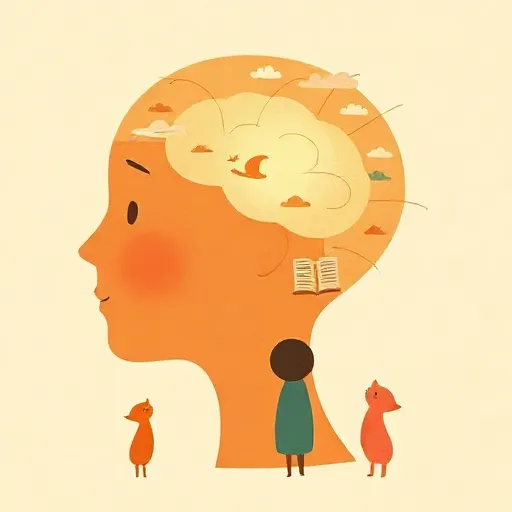
Why would anyone still believe in narrow content? Because there seem to be jobs that broad content cannot do alone. Consider these arguments.
First, causal powers. Your beliefs and desires cause you to act. If you want water, you turn on the faucet. But your twin on Twin Earth, who wants XYZ, does the same thing for the same reason. If your causal power to produce that action comes from what is strictly inside you, then what you and your twin share must be a narrow content. The broad content — being about H₂O vs XYZ — seems not to make a difference to what your bodies do. Causal explanation, then, seems to need a narrow kind of content.
Second, introspective access. You seem to know what you are thinking just by looking inward, without checking the outside world. But if Putnam is right, you cannot tell from the inside whether you are thinking about H₂O or XYZ. Oscar and Twin Oscar feel exactly the same inside, yet their thoughts are about different substances. If there is a kind of content you truly know directly, it must be narrow.
Third, rationality. A famous puzzle from Saul Kripke: Pierre grows up in France believing “Londres est jolie” (London is pretty). Later he moves to London, learns English without realizing that “London” names the same city, and comes to believe “London is not pretty.” His two beliefs contradict each other, but Pierre is not being irrational — he just lacks a piece of information he cannot find from inside. To make sense of his rationality, we might need narrow contents that keep the two thoughts distinct even though their broad content is the same city.
Moderate internalists accept that ordinary content is often broad, but they argue we must also have narrow contents to explain these aspects of the mind. Extreme internalists go further: they think the original arguments fail and all content is already narrow. Which brings us to the tricky question: What could narrow content be exactly?
What Could Narrow Content Be?
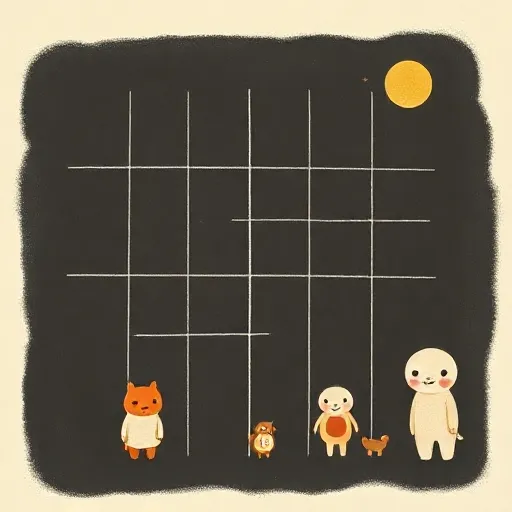
If narrow content is shared by twins despite their different environments, it cannot be an ordinary statement like “water is wet.” That statement has different truth-conditions for Oscar and Twin Oscar. So philosophers have tried to describe narrow content in more technical ways.
One idea: narrow content is a function from contexts to broad contents. Think of it as a rule that, given a particular environment, outputs a specific meaning. For Oscar on Earth, the rule plus his environment yields the thought “water is wet.” For Twin Oscar, the same rule plus his environment yields “XYZ is wet.” This is called the mapping conception. It is elegant but has a cost: the narrow content itself does not have truth conditions — it is not true or false until you add an environment.
A more satisfying twist is the idea of diagonal propositions. Here narrow content does give truth conditions, but in a special way. Imagine a table where rows are possible environments (Oscar’s water history is H₂O or XYZ) and columns are possible worlds (the liquid in the glass is H₂O, XYZ, or something else). The narrow content is the diagonal that checks whether the thought is true in the world of the environment it came from. That captures exactly what Oscar can know from the inside: that if his history is one of H₂O and the glass holds H₂O, his thought is true; if it’s XYZ and the glass holds XYZ, it’s also true.
This approach still faces hard problems. Critics ask how we find the narrow content of a specific thought, and whether we have to “hold constant” something about the thought itself when imagining other worlds. And then there is an even deeper challenge.
Is Narrow Content Even Possible?

In recent years, philosophers Juhani Yli-Vakkuri and John Hawthorne leveled a powerful critique. They argued that even if we define narrow content carefully, it cannot assign the correct truth values to thoughts in all cases without collapsing into extreme strangeness.
Take Mirror Man. His brain is perfectly symmetrical; his left hemisphere is a mirror image of his right. He has two thoughts at the same time, one in each hemisphere, both expressed by “Kit is human.” Because of a tiny environmental difference, one thought refers to a real cat on his left, the other to a wax replica on his right. The thoughts are internally identical, so any narrow content assignment must give them the same content. Yet one thought is true and the other false. If content is supposed to determine truth, narrow content seems to fail.
The critics argue that to fix this, you would have to add more and more “parameters” to content (like thought-tokens themselves), leading to a bizarre form of relativism. Some defenders reply that Mirror Man’s two hemispheres might count as two agents, or that we don’t need to assign content to individual token thoughts. The debate is very much alive.
Why It Still Matters to You
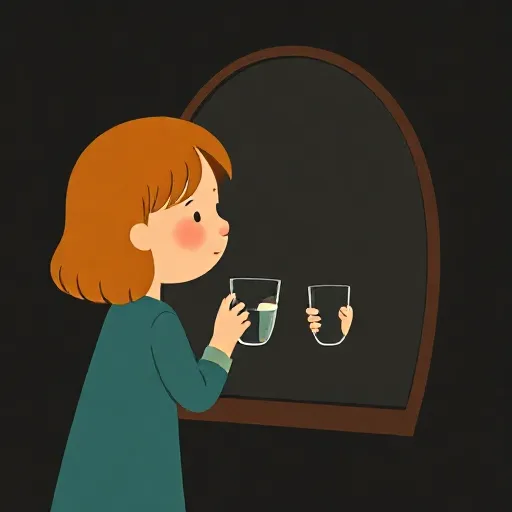
You have probably never worried about H₂O vs XYZ. But the puzzle is about something deeply familiar: knowing your own mind. When you change your mind about a friendship, when you discover a word didn’t mean what you thought, when you feel absolutely certain of something — is the content of your thought entirely yours, or partly borrowed from the world and other people?
If broad content is real, then what you think depends on things you may not even know. That makes self-knowledge surprisingly tricky. But if narrow content exists, there is a core of your thinking that belongs only to you, no matter how strange the outside world becomes.
The argument between broad and narrow content shapes how psychologists, neuroscientists, and even artificial intelligence researchers think about the mind. It forces us to ask: Where does the mind stop and the world begin? That is a question with no final answer yet — and one that starts every time you seriously ask, “What do I really think?”
Think about it
- If a scientist made an exact copy of your brain in a lab, would it be you? Would it have the same thoughts as you, even if it lived in a completely different world?
- Can you imagine a world where your friend uses the same words you do but means something totally different? How would you ever find out?
- When you say “I know what I meant,” could you ever be wrong about that? What could prove you wrong?