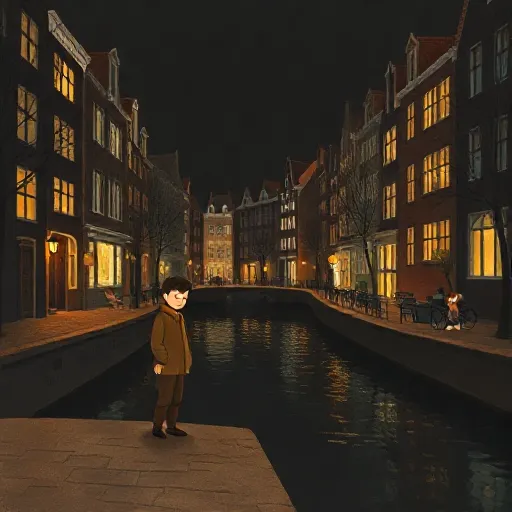

Are You Just a Temporary Pattern? Spinoza’s Radical Physics
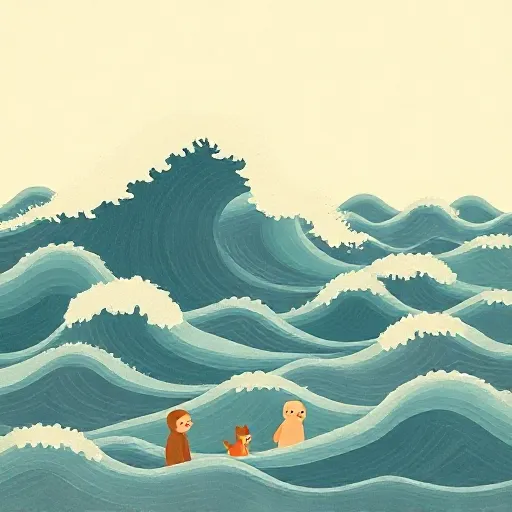
What If Everything Is Just One Big Ocean?

You spend all afternoon building a sandcastle. You pack the sand, carve the towers, and step back to admire your work. Then a wave sweeps in and flattens it. Where did the castle go? Was it ever a separate thing, or just a heap of sand that happened to hold a shape for a while?
A quiet, lens-grinding philosopher from the 1600s would give you a surprising answer. Baruch Spinoza (1632–1677) thought the sandcastle was never an independent thing. For him, the entire universe is really just one single thing, and everything else — trees, dogs, you, sandcastles — is just a temporary way that one thing is arranged. He called the one universal thing God or Nature, but he didn’t mean a person-like God making decisions. He meant the whole of existence itself.
Spinoza called this one thing a substance — something that exists entirely on its own and doesn’t depend on anything else. There is only one substance. Ordinary objects like chairs, rocks, and your body are not substances. He called them modes, which means “ways” that the one substance is. Think of the ocean. A wave is real, but it’s not a separate thing from the water. It’s just water doing something temporarily. Spinoza thought that everything physical is just a temporary shape of one endless, indivisible Extension — the stretching-out that takes up space. His view is radical: the stuff of the world is one giant canvas, and you are a fleeting brushstroke. How could that work, and why has this idea puzzled thinkers for centuries?
How Motion and Rest Replace “Things”

Spinoza lived in a time when science was reinventing the world. Thinkers like René Descartes (1596–1650) described physical reality as tiny bits of matter in motion. But Descartes said each bit was its own separate substance. Spinoza rejected that. If only one substance exists, then bodies cannot be distinct chunks of stuff. So what makes one body different from another? In a section of his book the Ethics called the “Physical Interlude,” Spinoza wrote, “Bodies are distinguished from one another by reason of motion and rest, speed and slowness.” A body is a collection of smaller bodies that communicate their motions to one another in a fixed manner — a certain ratio of motion and rest held steady among its parts. Your body, in his picture, isn’t a permanent lump of matter. It’s a dynamic process, like a whirlpool that keeps its shape even though the water flowing through it is always changing.
But this leads to a sticky problem. If motion is what distinguishes bodies, then motion seems to depend on already having bodies to move. Descartes had tripped into that circle: variety in matter depends on motion, but motion is defined as a change of position of one body relative to other bodies. Spinoza saw the circularity. He wrestled with how the simplest imaginable bodies could be different from one another only by motion and rest, without already assuming there are separate bodies. Some scholars think that, for Spinoza, there aren’t really bodies at all at the deepest level — just a field of varying motion, and what we call a body is a stable pattern in that field, like a persistent weather system. Others say he was trying to show that our ordinary idea of a separate object is a useful illusion created by the imagination.
The Body’s Inner Striving: Conatus
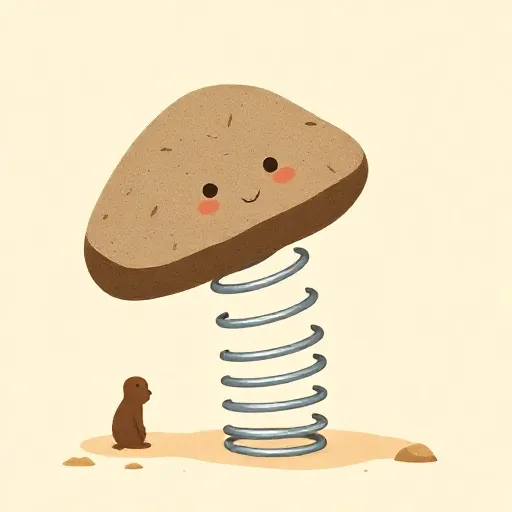
Even though bodies are just patterns of motion, Spinoza insisted that every individual has an active inner push to keep itself in existence. He used the Latin word conatus, meaning “effort” or “striving.” In the Ethics he wrote, “Each thing, as far as it can by its own power, strives to persevere in its own being.” This striving isn’t a passive habit — it’s the very essence of the thing, what makes it the individual it is. A rock’s conatus is what keeps it solid and resists being crushed; a sprout’s conatus drives it to grow. Spinoza even connected this striving to feelings: when something increases its power to act, it experiences joy; when its power drops, it feels sadness. So for him, even basic physical things have something like an inner drive.
But here is the tension: earlier he argued that everything in the physical world is completely determined by prior physical causes. Every motion results from other bodies bumping into it, with no room for an “inner” source of movement. Yet conatus seems to be an internal source of action. Can a body be both entirely controlled by outside forces and have its own active striving? Spinoza believed yes, but explaining how is one of the hardest puzzles in his philosophy. Some interpreters say that an inner striving is just another way of describing the same determined unfolding — like noting that a domino has a tendency to fall when pushed, even though the push decides everything. Others worry that he was trying to wedge a real inner activity into a fully mechanical world, and his system might not entirely work.
Why Spinoza Didn’t Trust Experiments or Measurements
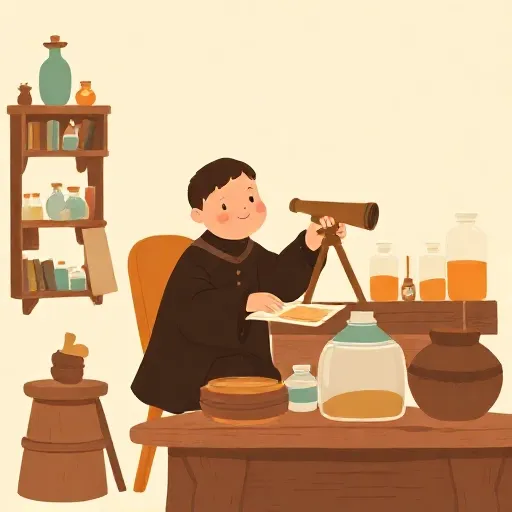
Modern science relies on experiments and precise measurements. You might expect a rationalist like Spinoza to be a fan. In fact, he had deep doubts about both. He thought knowledge from the senses is always confused and incomplete. When you see a tree, your body is affected by light bouncing off it, but that experience doesn’t reveal the tree’s true nature — it gives you, he said, only a “mutilated, confused and without order” idea. Real understanding comes from reason alone, not from piling up observations. In a letter, Spinoza argued that time, measure, and number are just aids to the imagination. They help us picture things, but they don’t capture genuine reality. The true nature of Extension, for him, is infinite and indivisible — not something you can really chop up with a ruler or a stopwatch.
This put him at odds with the experimental science of his day. When the researcher Robert Boyle (1627–1691) reported careful lab experiments, Spinoza picked them apart, insisting that experiments can almost always be interpreted to fit a theory you already believe. He thought that if you have a sound logical argument, no experiment can truly refute it — at most, experiments provide handy examples. Most scientists today would find that strange. Yet Spinoza’s insistence that the physical world may not be fully captured by the numbers we impose on it still echoes in some debates about whether mathematics describes reality or is just a clever human tool.
What Makes You You? The Puzzle Lives On

Spinoza never produced a perfect solution to the riddles his physics created. His ideas about motion-and-rest ratios, conatus, and the limits of experiment are still hotly debated. But his deepest question remains urgent: What is an individual thing, really? Look at your best friend. You see one person. Yet under a microscope, your friend is a vast community of cells, molecules, and whirling particles, constantly changing. Is there some definite fact about what makes her her? Spinoza would say that your ordinary idea of a separate person is a product of imagination — and yet he also believed that each of us has a unique essence, a striving that is genuinely our own.
This isn’t just an old book’s puzzle. Today, when physicists say solid objects are mostly empty space held together by force fields, or when philosophers ask whether a person with a brain implant is still the same consciousness, they are walking on the same ground Spinoza opened. The sandcastle at the beach, the patched-up teddy bear, your own body across time — they all force you to wonder: Are you a thing, or just a pattern that happens to hold together for a while? Spinoza’s answer is as challenging now as it was in 1660s Amsterdam: maybe the universe is one single, infinite canvas, and you are one of its fleeting but striving brushstrokes.
Think about it
- If you slowly replace every part of your bicycle over the years — handlebars, wheels, frame — is it still the same bicycle? Why or why not?
- Can you think of something that acts like a “thing” but isn’t made of definite parts? What about a thought, a shadow, or a nation?
- If a supercomputer could predict everything you’ll ever do, would that make your inner striving any less real? Why might Spinoza say you’d still be active in an important sense?