A Wasp's Puzzle: Why Mostly Daughters One Day, Sons the Next?
The Wasp Who Decided
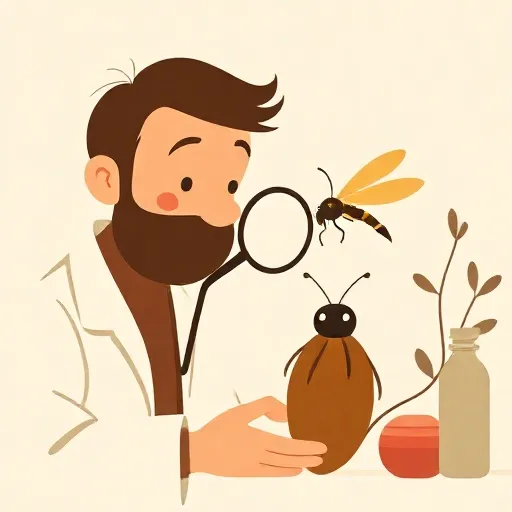
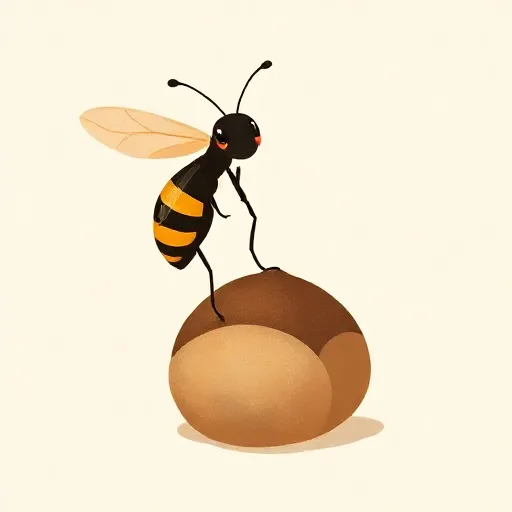
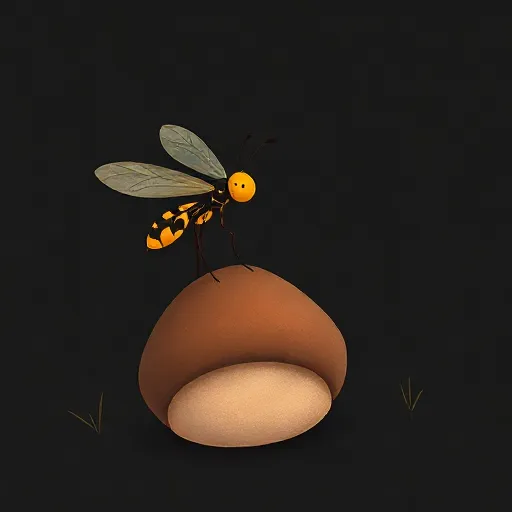
A female parasitic jewel wasp flies into a dark burrow and lands on a blowfly pupa—a little capsule where a fly is developing. She will lay her eggs inside it. If she got there first, something weird happens: about 91 of every 100 eggs she lays will become female wasps, and only about 9 will become males. But if another female had already laid eggs in that same pupa, she reverses the pattern. Now she lays mostly sons, not daughters.
How does she “know” to change the numbers? And why would such a strange habit exist at all? Those two questions—one about immediate causes, the other about deep evolutionary reasons—lie at the heart of a science called behavioral ecology. Behavioral ecologists want to explain animal behavior by asking what it’s for, in the sense of how it helped ancestors leave more offspring.
The early ethologists, such as Niko Tinbergen (1907–1988) and Konrad Lorenz (1903–1989), taught that we can ask four different “why” questions about any behavior: What triggers it right now? How did it develop as the animal grew? What is its evolutionary function—the way it boosts survival and reproduction? And how did it first appear in the species’ family tree? Behavioral ecologists focused especially on that third question, function. They wanted to crack the code of how natural selection sculpted behaviors.
Building a Better Wasp (with Math)
To answer the jewel wasp puzzle, scientists often build an optimality model. This is a mathematical tool that compares possible behavioral strategies and calculates which one would produce the highest reproductive success under certain conditions. John Werren (20th c.) built such a model for the wasp.
Here’s the logic. A jewel wasp can control the sex of each egg because, like many insects, she decides whether to fertilize it (females come from fertilized eggs, males from unfertilized ones). If she is the only wasp on a pupa, her offspring will grow up and mate with each other. Every daughter can pair with a brother, so the first mother’s best plan is to produce just enough sons to fertilize all her daughters—and then make as many daughters as possible. Daughters are the grandchild factories.
Now imagine a second wasp arrives. Her sons can mate with the first wasp’s many daughters, so she wants lots of sons to spread her own genes through those matings. But she must also avoid too much competition among her sons. Werren’s model predicted that the superparasitic wasp should lay mostly sons when she has only a few eggs to lay, and then gradually shift toward more daughters as her brood size grows. When scientists checked real wasp broods, the sex ratios matched the model’s predictions remarkably well.
Does this mean natural selection was the only force shaping the wasp? Some philosophers, like Samir Okasha and Elliott Sober, thought optimality models test the claim that natural selection was the strongest cause. Others, like Angela Potochnik (20th–21st c.), argued that the models only reveal the role selection played, not that it drowned out everything else. And many behavioral ecologists use the model simply as a heuristic—they pretend the trait is perfectly designed so they can spot interesting gaps, like a constraint that stopped evolution from reaching the ideal. Alan Grafen (born mid‑20th c.) called this pretending the phenotypic gambit: assume for now that development and psychology are simple, so you can get on with the evolutionary detective work.
When the Critics Got Loud

In the 1970s, biologist Edward O. Wilson (1929–2021) put these same evolutionary lenses onto people. In books like Sociobiology (1975) and On Human Nature (1978), he sketched how human behaviors—territoriality, cooperation, even a tendency to believe certain ideas—might have been shaped by natural selection. This was called “pop sociobiology,” and it triggered a furious debate.
The strongest charge was genetic determinism—the idea that our genes rigidly command our actions. Critics like Stephen Jay Gould (1941–2002) and the Sociobiology Study Group worried Wilson was saying there are genes “for” warfare or jealousy, making cruel aspects of society seem fixed. Yet Wilson himself argued that genes are only difference-makers; they explain why, in a given environment, one person might act differently from another. He often pointed to cross‑cultural patterns and twin studies as evidence that some behaviors are heritable, but he also stressed that environment and culture have huge power. He even described his own view as closer to the environmentalist side.
Other critics said pop sociobiology was overly adaptationist—too quick to assume every trait was perfectly crafted by natural selection. Gould and Richard Lewontin (1929–2021) warned about spandrels (side‑effects of other evolved traits) and about development putting limits on what evolution can build. They accused adaptationists of telling untestable “just‑so stories.” While Wilson’s human sketches were admittedly preliminary, the fight left a lasting question: can the same methods that explained the jewel wasp also explain us?
Foragers, Fish, and the Phenotypic Gambit
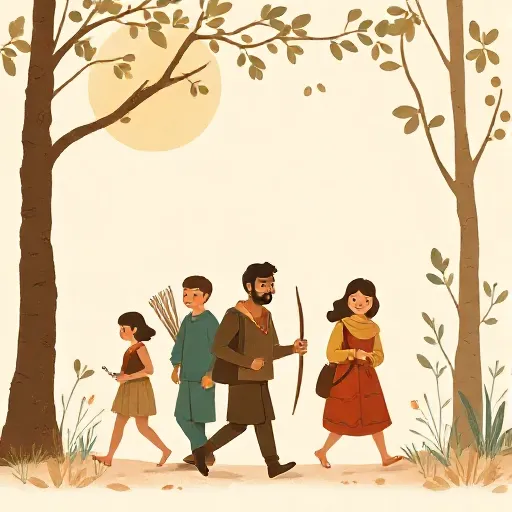
The modern science most like Wilson’s project is human behavioral ecology (HBE). Practitioners borrow the phenotypic gambit and optimality‑style models to study people in small‑scale societies. A classic study involved the Ache foragers of Paraguay. Kim Hill and Hillard Kaplan (both mid‑20th c.) recorded which animals the Ache chose to hunt or gather, and built a prey‑choice model that calculated the optimal diet based on how many calories a food gives compared to the time it takes to find and process it. The Ache’s real choices matched the model surprisingly well.
But there were mismatches. Men often passed up calorie‑rich plants and focused on big game, while women rarely hunted large animals. Human behavioral ecologist Kristen Hawkes (20th–21st c.) later showed that men’s big‑game hunting isn’t just about feeding the family—it can also be about showing off. Hunting a large, risky animal advertises skill and can bring social rewards, like better alliances or more mating opportunities. So the original model wasn’t wrong; it was incomplete. This typical pattern—use the model to find deviations, then seek the missing condition—is exactly the heuristic that adaptationists defend.
Yet critics still worry. If a trait is passed down mostly through learning, is it really an adaptation shaped by natural selection? Some animals might behave adaptively not because their genes were selected for that behavior, but because adaptive learning or copying successful peers makes them look optimized. In that case, an optimality model could fool us into thinking a trait has an evolutionary origin when it doesn’t. This challenge, raised by philosophers like Catherine Driscoll and Stephen Stich, keeps the debate alive.
The Secret Fight: Behavior vs. Psychology
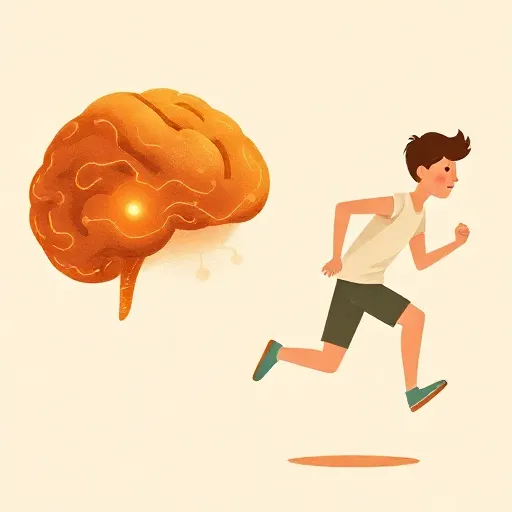
There is another divide that runs through all of this. Behavioral ecologists, both human and non‑human, study overt behavior—what the organism actually does—and treat complex behavioral strategies as their target. Evolutionary psychologists disagree. Inspired by the cognitive revolution, they argue that real adaptations are mental mechanisms: programs in the brain that process information. Behavior is just the glowing screen, not the machine.
Practical and philosophical arguments fly in both directions. Behavior is easier to observe than hidden brain modules; but, as critics reply, the real target of HBE isn’t a single bite or sprint—it’s a strategy, which is a hidden disposition you can’t see any more easily than a mental program. Others say that only mental mechanisms can be heritable enough for natural selection. Yet behavioral dispositions that reliably reappear across generations might also be inherited, especially if culture itself can be transmitted. The fight is far from settled, and philosophers like Kim Sterelny (born 20th c.) argue that the answer depends on the specific case.
Why a Wasp Matters to You
Wilson’s big, scary idea—one that drew so much fire—was that human beings have a nature: a set of evolved, heritable behavioral traits that we can discover with the same tools used on wasps. If that were true, critics feared we might conclude that oppression, aggression, or rigid gender roles are “natural” and therefore inescapable.
Today, most philosophers think of human nature differently. Even if evolution shaped some of our tendencies, human development is extraordinarily flexible. We build our own environments—schools, laws, stories—that carve new paths for our minds. Far from being locked in like the jewel wasp, we can turn the puzzle on itself and ask: which of our hidden rules do we want to keep, and which ones can we rewrite? The wasp’s precise, unconscious calculation gives us a mirror, not a cage.
Think about it
- If you discovered that your love of a particular food was shaped by evolution the same way the wasp’s egg‑laying was, would you enjoy it any less? Why or why not?
- People sometimes worry that calling a behavior “natural” means it can’t be changed. Can you think of something that is clearly part of nature—like catching a cold—that humans have figured out how to alter?
- Imagine you’re a human behavioral ecologist watching your own family at the dinner table. What hidden “strategy” might each person be following without even realizing it?