Evolution's Biggest Puzzle: Who's Really Winning, Genes or Groups?
A Wolf Chases a Herd, but What Really Changes?
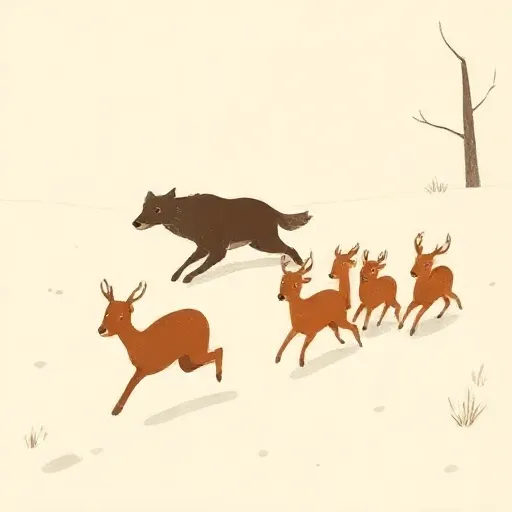
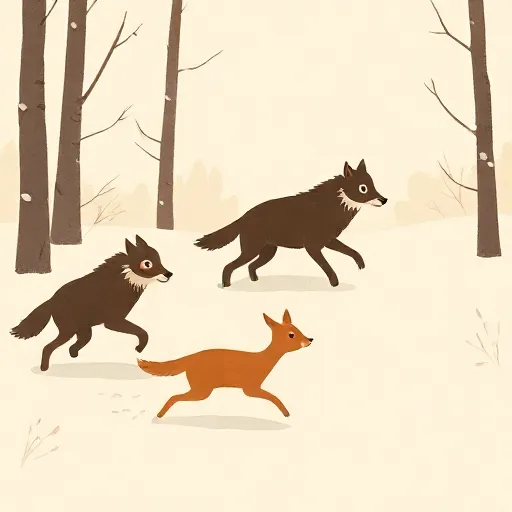
A wolf sprints after a herd of deer. The fastest deer escape; the slow ones get caught. Over many generations, the whole herd becomes swifter. This is natural selection, the process Charles Darwin (1809–1882) described. It shapes life on Earth.
But here’s a puzzle that has haunted biology for sixty years. You can point to a fast deer and say, “That deer survived because of its speed.” But what if we zoom in? Maybe the deer’s speed came from a particular gene. Maybe that gene is the thing that really got selected. Or zoom out: maybe the whole herd survived because it had a better mix of fast and slow deer, so the herd itself was the unit that selection favored.
This fight is about the unit of selection — the level of life that natural selection directly acts on. Since the 1960s, philosophers and biologists have realized that people are actually asking four different questions and mixing them up. Untangling them helps us see evolution in a new way.
The Copying Code: Who Passes Something On?
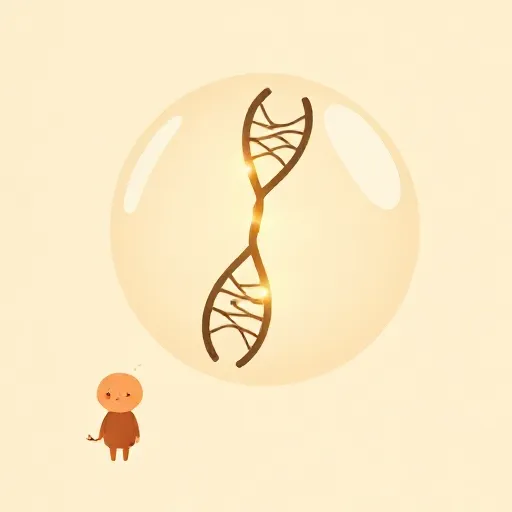
One of those questions is: What gets copied across generations? The British biologist Richard Dawkins (born 1941) called this the replicator. A replicator is any unit that makes copies of itself. For Dawkins, the real replicator is the gene — a stretch of DNA that can code for a trait like speed.
Dawkins argued that organisms are just vehicles that genes build to help themselves survive. A deer’s body is a survival machine for its genes. The gene for swiftness produces a swift body, but when that body dies, the gene lives on in offspring. So genes are the replicators; deer bodies are temporary carriers.
Philosopher David Hull (1935–2010) later renamed “vehicle” to interactor. An interactor is the entity that directly bumps into the environment — the whole thing that runs, hides, or gets eaten. Hull said that natural selection happens when interactors differ in their success, and that causes some replicators to spread. But a key insight emerged: replicator and interactor are two different jobs. A gene can be a replicator; a bee, a bee colony, or even a species can be an interactor. So we need a second question.
Who Faces the Challenge? Interactors at Every Level
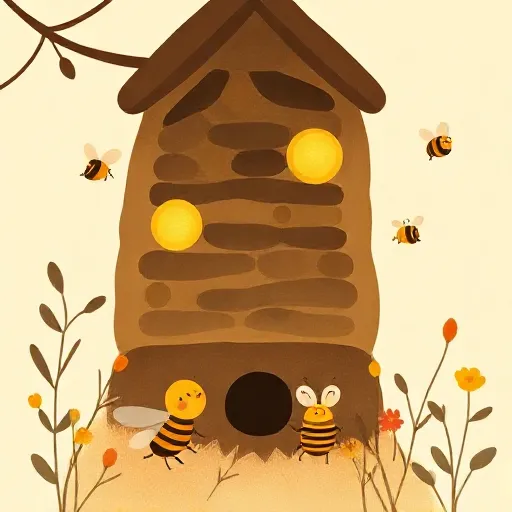
The interactor question asks: what level of organization actually interacts with the environment and has its reproductive success affected? It could be an individual organism, like that deer. But it could also be a group.
Imagine a honeybee colony. A single bee can’t survive alone for long. The colony as a whole finds food, defends itself, and produces new queens. The traits of the colony — like how many foragers it sends out — affect whether it thrives. If one colony’s foragers are better at finding flowers, that colony produces more swarms next year. So the colony itself can be an interactor, even though individual bees inside it are also interactors.
Selection can therefore happen at multiple levels: the gene, the cell, the organism, the group, even the species. The philosopher David Hull and others stressed that we don’t need to pick only one level. The crucial thing is to check whether an entity acts as a cohesive whole when facing its environment. If a herd of deer moves as a unit that affects its survival as a group, then the herd level matters.
But here’s where confusion creeps in. Many biologists thought that for a group to be a true unit of selection, it had to show a special kind of “group adaptation” — a well-engineered design. That mixes the interactor question with a third question.
The Upgrade Riddle: Adaptations True and False
When people say “adaptation,” they often imagine something cleverly designed, like a finch’s beak shaped exactly for cracking seeds. But the word adaptation has two meanings, and mixing them up has caused huge debates.
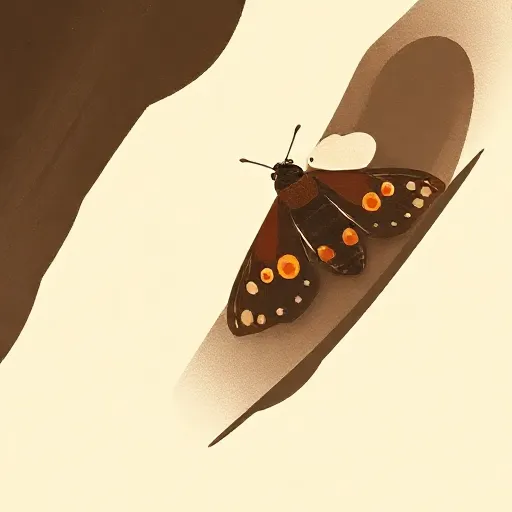
First, an adaptation can be any trait that spreads because natural selection favored it. If dark peppered moths become more common because they are better hidden on sooty trees, the dark color is an adaptation in this selection-product sense. Nothing new was invented — the dark version already existed; it just became more frequent. No “engineering” happened.
Second, an adaptation can mean a complex, accumulated improvement in design — what biologists call an engineering adaptation. Darwin’s finches evolved beaks of different shapes through many small changes over time, producing a new mechanism that fits a specific seed diet. That is engineering adaptation.
The biologist George C. Williams (1926–2010) insisted that a unit of selection should be the thing that displays true engineering adaptations. This led many to argue that groups must have group-level engineering adaptations to count as units. That demand nearly killed the study of group selection, because obvious group-level “designs” seemed rare. But what if groups can be interactors and evolve without needing a fancy group-level tool? That brings us to a famous experiment.
The Chicken Coop Surprise: Group Selection Strikes Back
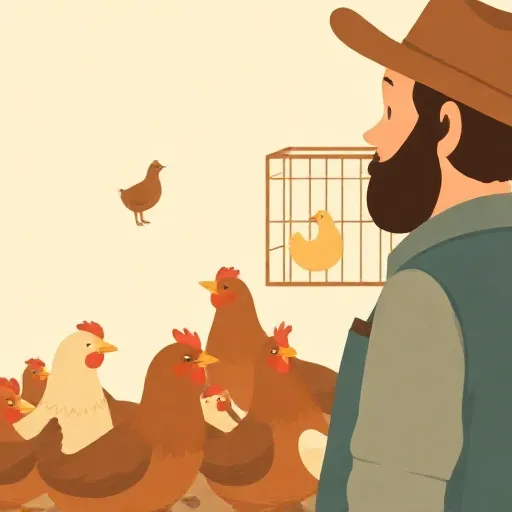
For decades, many biologists believed group selection was weak or impossible. They worried that selfish individuals would always beat cooperative ones. A “cheater” hen that ate extra food but never helped would spread her selfish genes, ruining the group. But the story changed when scientists started doing experiments.
Evolutionary biologist Michael Wade and others bred flour beetles in groups, selecting whole populations for certain traits. They found that group selection could be powerful. Then, in the 1990s, poultry breeders faced a messy problem: hens in crowded cages pecked each other, raising stress and lowering egg production. Individual selection for egg numbers hadn’t worked. So researcher William Muir tried selecting entire groups of hens that got along. In just six generations, mortality dropped and egg production jumped by up to 60 percent. The gentler groups thrived — group selection worked beautifully, without requiring a new “group organ.”
Wade also showed that the cheater problem was a fallacy. If altruism already existed thanks to a past group selection, then a mutant trying to cheat would not spread easily; it would often die with its group before taking over. Group selection can sustain cooperation.
These discoveries echoed the earlier models of Sewall Wright (1889–1988), who argued that populations subdivided into small groups allow evolution to try out different mixes. So group selection is real, but it doesn’t require engineering adaptations at the group level. The interactor and adaptation questions must be kept apart. That clearing-up had big consequences — even for understanding yourself.
Why Your Tummy Is a Team: The Puzzle Lives On
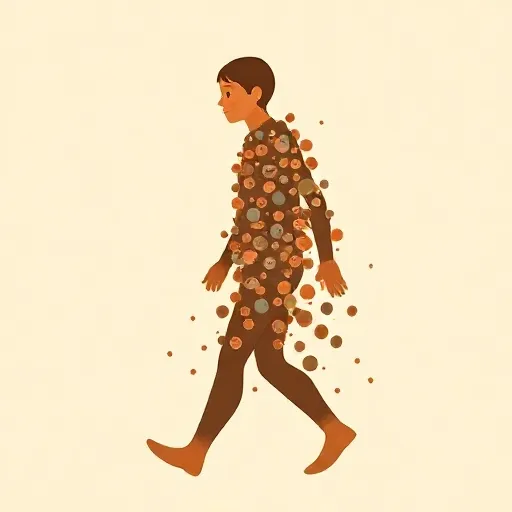
Every human body is a walking ecosystem. Trillions of bacteria, viruses, and fungi live in your gut, on your skin, in your mouth. They help you digest food, fight diseases, and even influence your mood. This whole community is called a holobiont — a host organism plus its microbial partners.
Now the unit-of-selection puzzle returns with a personal twist. Are you and your gut microbes a single interactor? Some scientists say yes — the holobiont sometimes acts as a cohesive whole, facing the environment together and affecting which genes get passed on. The same four questions we’ve been using — replicator, interactor, adaptation, beneficiary — help us figure out whether holobionts are genuine units of selection. The answer may change how we think about health, individuality, and even what it means to be “you.”
That’s why a debate that started with wolves and deer is still kicking. By carefully separating the different meanings of “unit of selection,” philosophers and biologists have rescued group selection, explained complex cooperation, and opened a new window on our own bodies. The wolf still chases the herd, but now we know to look at genes, deer, herds, and beyond — all at once.
Think about it
- If you could save a single gene or an entire species from extinction, which one would be the “right” unit in evolution? Why might your answer change depending on which question you’re asking?
- Think of a sports team. Is the team itself an interactor that gets “selected” by winning championships, or is it really just the individual players? Can a team ever have a kind of adaptation that is more than the sum of its members’ skills?
- You have trillions of gut microbes that keep you healthy. Are you a single individual, or a walking community? How would you decide?