Can What You Do While You’re Alive Evolve Your Whole Species?
The Weightlifter’s Question: Can You Hand Down More Than Genes?
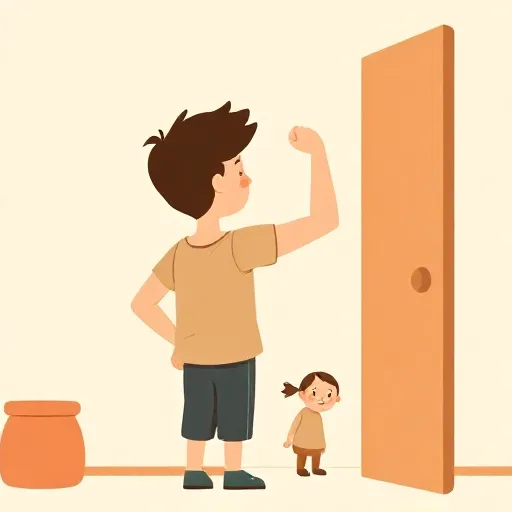
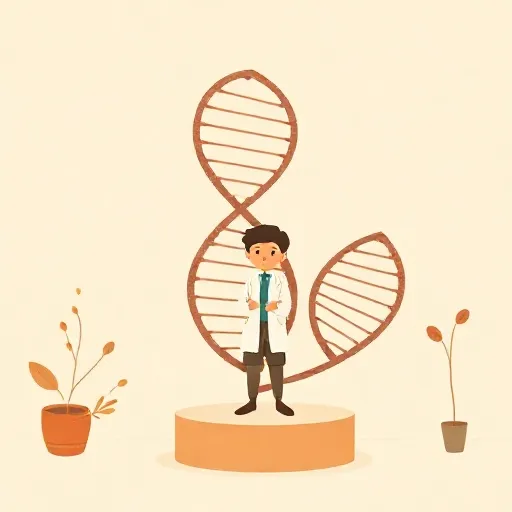
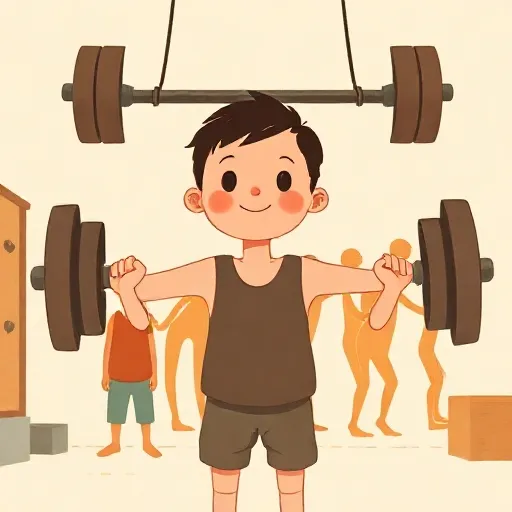
Imagine you spend a whole summer lifting weights. By August, your arms are stronger. But if you have children one day, they won’t be born with bigger muscles just because you trained. Your workout changes your body, not your genes — the DNA instructions you pass on. For most of the last century, biologists were sure that what happens to your body during your life cannot sneak into your descendants’ inheritance. That was the solid wall between development (how a single organism grows from an egg into an adult) and evolution (how whole species change slowly over generations).
Yet in the last few decades, scientists have discovered some surprising cracks in that wall. They’ve found that what an organism does, eats, or experiences while it grows can sometimes ripple forward and nudge the evolutionary path of its whole species. This is a fight about something huge: Is evolution just a blind genetic lottery, or do living bodies actively shape their own evolutionary future?
The Great Split: A Scientist Draws a Line Through the Body
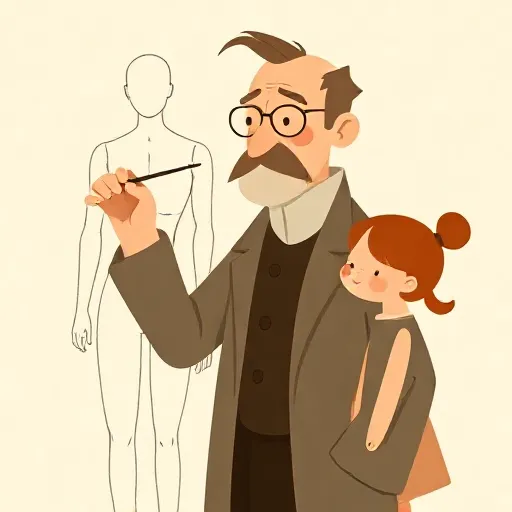
The story of that solid wall starts in the late 1800s. Jean-Baptiste Lamarck (1744–1829) had suggested that traits an organism developed during its lifetime — like a blacksmith’s strong arm — could be inherited. Even Charles Darwin (1809–1882) partly agreed, proposing tiny particles he called “gemmules” that would carry bodily changes to the reproductive organs. But around 1890, a German biologist named August Weismann (1834–1914) argued for a different picture.
Weismann said the body is split into two separate realms. The soma includes your muscles, skin, and brain — everything that makes up your living, breathing self. The germ line is an isolated line of cells that will become sperm or eggs. Weismann’s idea, later called the Weismann barrier, held that changes to your soma can never travel into the germ line. Run marathons, lose a finger, learn to play the violin — none of it gets inscribed into the DNA that you hand to the next generation.
In the 20th century, this separation hardened into a powerful theory. The Modern Synthesis of the 1930s and 1940s tied Darwin’s natural selection together with genetics. Evolution was defined simply: a change in how often different versions of genes appear in a population. New gene versions come from random copying mistakes — mutations — in the germ line. Development became seen as nothing more than the unfolding of a genetic program. The Central Dogma of molecular biology declared that information flows only one way: from DNA out to the proteins that build your body and never backward. Development, in this view, is a one-way street; it can’t feed back into evolution.
Cracks in the Barrier: When Development Answers Back
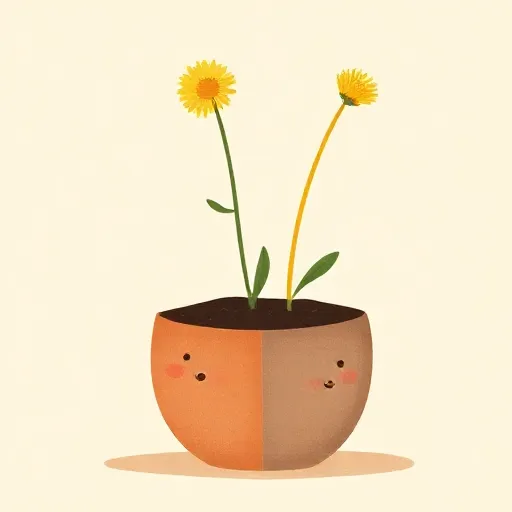
Lately, however, scientists have found that bodies are far more flexible than a rigid genetic program suggests. The same genes can build quite different bodies depending on the environment. This is called developmental plasticity. A caterpillar can turn into a different color depending on the twigs it rests on. A plant can grow spiky leaves if it senses being chewed. Even a human child’s growth depends on nutrition. The genome doesn’t hardwire a single outcome; it provides a whole range of possibilities.
This flexibility opens a backdoor into evolution. Imagine a population of animals that can develop thicker fur when the climate turns colder — no mutation required, just plasticity. If the cold sticks around for generations, natural selection might eventually lock that thicker fur into the genes so it becomes the default. The plastic trait showed up first; the genes followed. Some biologists call this the development‑first or plasticity‑first view. Biologist Mary Jane West-Eberhard has argued that genes are often followers, not leaders, in evolution.
Other findings point in the same direction. Epigenetics studies the chemical tags that sit on top of DNA and change how genes are read — tags that can sometimes be passed to offspring without changing the genetic code itself. If a stressful experience alters these tags in a way that gets inherited, then the organism’s life really can nudge the next generation. Meanwhile, the field of evolutionary developmental biology (or evo‑devo) shows that the machinery of development itself — how embryos take shape — can bias which new forms are even possible for evolution to choose from. Some body plans are easy to build; others are nearly impossible. Evolution has to work with the body’s existing toolkit, and that steers where species can go.
You’re a Walking Ecosystem — and That Matters for Evolution
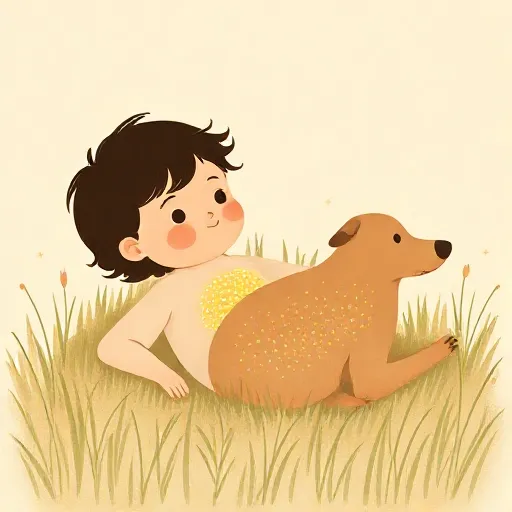
Here’s an even stranger twist. You are never just “you.” You are a holobiont — a living collection of your own cells plus trillions of bacteria, fungi, and viruses that live in your gut, on your skin, and throughout your body. These microbes are not freeloaders. They help digest your food, train your immune system, and even influence brain development. In other words, your development is a co‑construction project between several species.
Once you see organisms as holobionts, the line between development and evolution blurs even more. If the bacteria that live in a cow’s stomach allow it to digest grass, those microbes are both constructing the cow’s adult body and opening up a whole new way of life. That new niche can then become an evolutionary path that the animal — together with its microbes — follows. A change in the microbial partners can create selectable variation just like a genetic mutation could. In this picture, evolution isn’t only about conflict between individuals; it’s also about cooperation between co‑developing collectives.
These ideas don’t kill natural selection. Natural selection is still the curator that decides which variations spread. But development is the artist: it generates the variation that selection has to work with. And the artists — your plastic body, your experiences, your microbial partners — have more creative control than the old one‑way model allowed.
Why It Still Matters: Your Life and the Lives You’ll Never Meet
These are not just abstract debates for scientists in lab coats. They reach right into your own kitchen. If what a parent eats, the stress they endure, or the pollutants they breathe can leave marks that travel several generations forward, then health is a transgenerational story. Some researchers think we need a new picture of the human body — not a hard‑wired machine closed at the skin, but an open, responsive, embedded body that is always in conversation with its surroundings and its ancestors.
This raises ethical questions we haven’t settled. If plastic development can bias evolution, who is responsible for the environments that shape developing bodies? Is it just the individual, now “free from their genes,” who must make healthy choices? Or do governments and communities bear responsibility for the toxins in the soil, the quality of food, and the social stresses that can etch themselves into future generations? A model that puts all the blame on mothers — holding them accountable for the health of their great‑grandchildren — worries many philosophers and public‑health thinkers. The science is fresh, but it’s already forcing us to ask how deep our responsibility for each other’s development runs across time.
Think about it
- If a person’s diet during childhood could affect the health of their grandchildren, should schools or governments have a say in what kids eat today?
- Your gut bacteria help shape your brain and body. Does that make “you” a team rather than a single organism? Would it change how you think about your own identity?
- If the experiences of one generation can nudge the evolutionary path of the next, does that make you more powerful — or more burdened — than you thought?