Do Ideas Really Spread Like Genes?
The Birth of a Selfish Idea
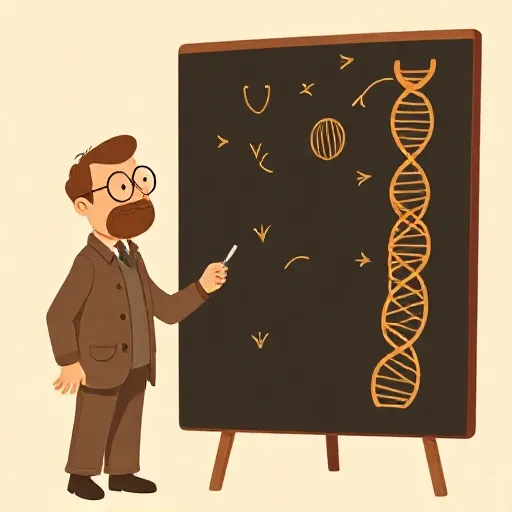
You yawn. A moment later your friend yawns too. Did you cause that? Did a yawn “copy” itself from your brain to hers? Biologists in the 1970s were asking a bigger version of the same question: what really gets copied when life reproduces? And who, or what, is in charge?
In 1976 the British ethologist Richard Dawkins (born 1941) gave a sharp answer. In his book The Selfish Gene he argued that the real players in evolution are replicators—anything that makes copies of itself. Organisms, he said, are just vehicles that replicators build to help them survive. And the star replicator, for Dawkins, was the gene: a stretch of DNA that gets passed down almost unchanged. But if genes can be replicators, could other things be replicators too—like a catchy tune, a fashion trend, or even a yawn?
Genes: The Tiny Copiers Inside You
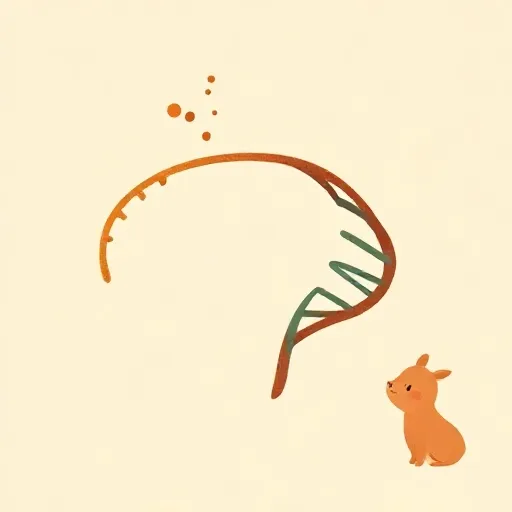
Dawkins listed three superpowers every replicator needs. Longevity means the copying line lasts through generations—not that a single molecule lives forever, but that its pattern endures. Fecundity is how many copies get made; the more, the better. And copy-fidelity is accuracy: if the message changes too much, the copies lose the original “recipe.” Genes have all three. A DNA strand unzips, each half picks up matching molecules, and two identical spirals result. Mistakes—mutations—are rare, and special repair machines fix many of them.
But Dawkins noticed something awkward. Genes don’t copy themselves all alone; they need a whole molecular kitchen—enzymes, energy, a cell. That didn’t stop him. He said you don’t care about the photocopier when you get a copy of a drawing; you care about what’s on the paper. The gene’s information, not its physical stuff, is what passes on. Williams even called genes “cybernetic abstractions”—programs that run organisms.
Not everyone liked this picture. The American philosopher of biology David Hull (1935–2010) argued that Dawkins’ vehicles were too passive. Hull replaced “vehicle” with interactor: an entity that directly wrestles with the environment so that some replicators get copied more than others. A beehive, a flock, or even a gene itself—when it interacts with enzymes—could be an interactor. This made the story less about genes “controlling” everything and more about a tangle of causes.
Memes: When Ideas Jump from Brain to Brain
Dawkins didn’t stop with biology. In the last chapter of The Selfish Gene he asked: if genes are replicators, what replicates in culture? He invented the meme—a unit of cultural copying. A meme could be a melody, a recipe, a dance step, or a way of tying shoes. Memes spread by imitation, and they live in brains, books, and computers.
Dawkins admitted right away that memes are messier than genes. They don’t copy perfectly; each time someone retells a joke it adjusts a little. They don’t have neat boundaries like chunks of DNA. And there’s no “chromosome” for memes—no fixed slot where two rival memes fight. Critics pounced: if memes don’t have high fidelity, can they really be replicators? Defenders fired back: biologists often over-idealize genes, too. Real genetic copying is also lumpy and fuzzy, especially in early life before fancy repair systems evolved.
Today, most researchers have set aside the strict meme idea. But its spirit lives on in dual-inheritance theory, which studies how genes and culture evolve together. Your taste for certain foods, for example, might be shaped by both your parents’ DNA and the cooking traditions you grew up with.
But Wait—Is a Nest a Replicator?
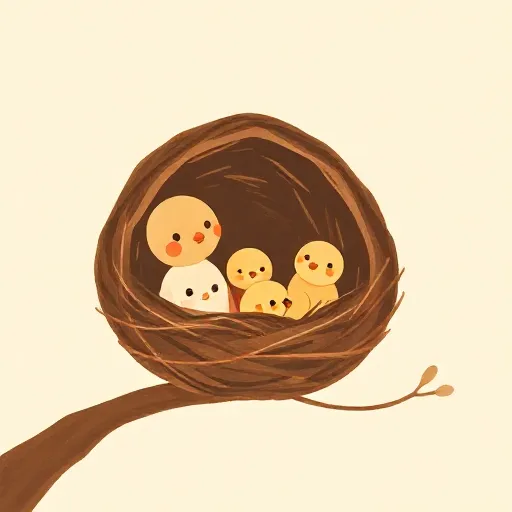
Dawkins thought replicators had to be genetic. However, the philosopher Kim Sterelny (born 1950) and colleagues proposed the extended replicator: any resource that reliably transmits similarity from one generation to the next. A bird’s nest style, a beaver’s dam, the song a baby bird learns from its father—all these can be replicators, because they get “copied” through behavior and passed on outside DNA.
This idea connects to a broader school called Developmental Systems Theory. Its supporters argue that genes don’t have a special, magical role in building an organism. Everything in the developing system—genes, the cell’s machinery, temperature, diet, social interactions—plays a part. No single thing carries the whole “program.” From this angle, saying a gene “codes for” a trait is no more accurate than saying a nest “codes for” a bird’s survival.
At the extreme, some developmental systems theorists say the whole life cycle—the entire repeating loop from egg to adult—is the unit of selection. If they are right, the sharp line between replicator and interactor blurs.
Does Evolution Even Need Copying?
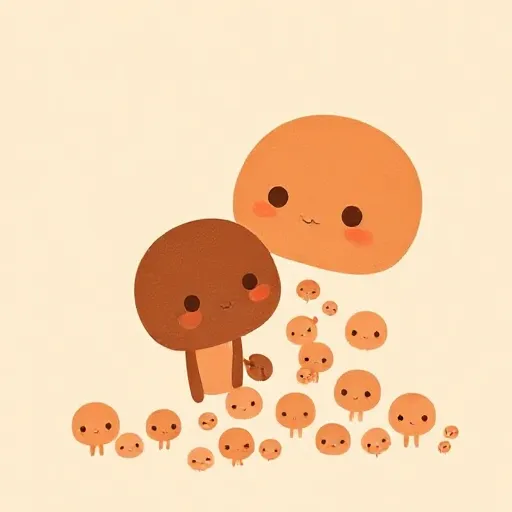
The most surprising challenge came from philosophers who asked: must there be copying at all? Peter Godfrey-Smith (born 1965) points to a classic “recipe” for evolution by natural selection. You need a population with (1) variation, (2) differences in fitness, and (3) heritability—the fact that offspring tend to resemble their parents more than they resemble random strangers. Notice: that recipe says nothing about exact copying.
Here’s a thought experiment. Imagine a group of simple blobs of different sizes. Big blobs survive longer and leave more offspring. But when a blob “reproduces,” its baby’s size is only loosely connected to the parent’s size. Still, if bigger parents have, on average, slightly bigger babies, then over generations the whole population gets larger—even though no two blobs are identical copies. Replication with 100 percent fidelity is just one extreme, like a slope of exactly 1 on a graph. Evolution can roll along with much fuzzier inheritance.
This insight flips the whole story. Replicators, in this view, aren’t the starting point of evolution; they are a later invention. Early chemical systems probably “evolved” simply because some molecules lasted longer—no reproduction needed, just persistence. Later, multiplication appeared, and later still, accurate copying. The replicator, as Dawkins described it, might itself be a product of natural selection, not a prerequisite for it.
What This Means for You—and Your Viral Dance
So why does a dusty argument about replicators matter when you’re scrolling through short videos? Every time a new dance challenge sweeps across social media, you’re watching a kind of replicator in action. People copy, adapt, and spread the pattern. The dance doesn’t stay perfect; it drifts. That’s exactly what Dawkins saw—and what his critics emphasized. High-fidelity copying is one way to get evolution, but fuzzy copying with variation can be even more creative. New moves appear; old ones fade.
This also touches how you think about yourself. If genes are the only replicators, then a lot of who you are was “written” before you were born. But if culture, habits, and the way your family talks are replicators too, then you’re woven from many threads—some genetic, some learned, some invented this morning. The fight over replicators isn’t just about science; it’s about understanding what makes you you.
Think about it
- If a perfect copy of your favorite joke spread to everyone in the world, would it still be your joke? What changes when a joke mutates a little each time it’s told?
- Can you think of something non-living—like a chain letter or a computer program—that makes copies of itself? Would you call it “alive” if it just kept going?
- Imagine a world where nothing ever copied itself; all new things were completely random. Could anything like evolution happen there? Why or why not?