Whose Pain Is It, Anyway? A Monk’s Radical Answer
The Lazy Monk Who Surprised Everyone
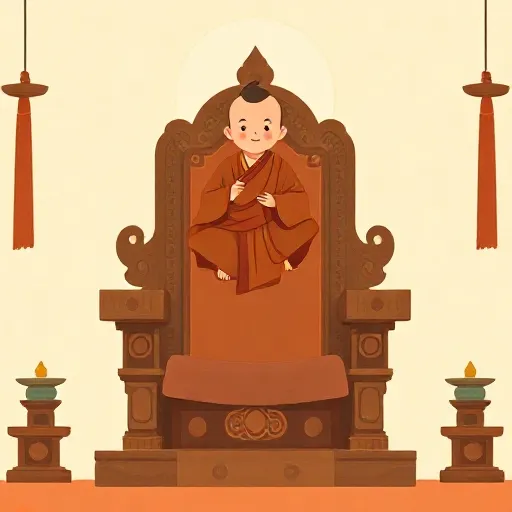
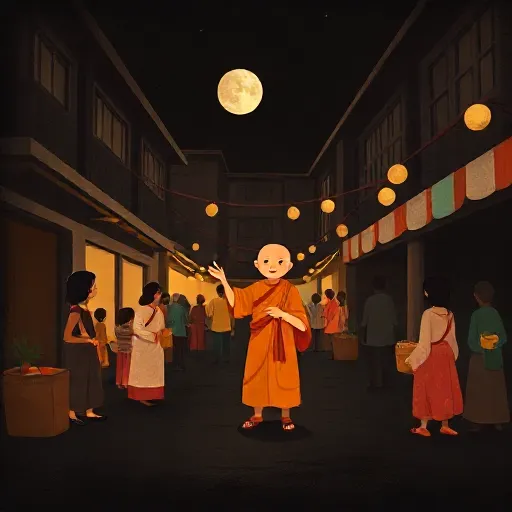
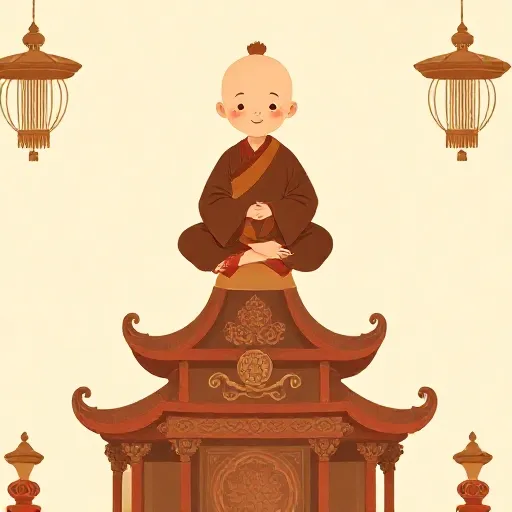
Around 1,300 years ago, at the great monastery of Nālandā in India, there lived a monk who seemed to do nothing at all. While other monks studied scriptures and debated philosophy, this monk just ate, slept, and used the bathroom. They nicknamed him Bhusuku — an acronym that basically meant “eat, sleep, and poop.” The monks in charge were annoyed. To teach him a lesson, they ordered him to recite a text at an upcoming festival. Just to embarrass him further, they built him an imposing throne.
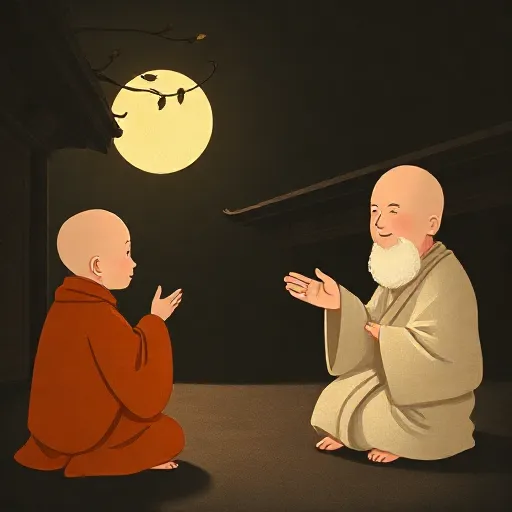
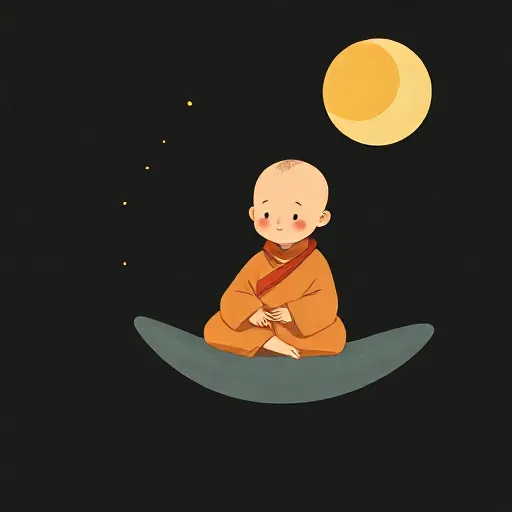
When the day came, the lazy monk climbed onto the throne and asked the crowd whether they would like to hear something old or something new. Amused, they asked for something new. He began to speak, making up verses on the spot. The poem he created was the Bodhicaryāvatāra (The Way of the Bodhisattva), one of the greatest works of poetry ever written in Sanskrit. As he reached a verse about a state beyond “entity” and “nonentity,” he rose into the air. Then he vanished, and a disembodied voice finished the poem. The verse he had just recited said:
“When neither entity nor nonentity remains before the mind, since there is no other mode of operation, grasping no objects, it becomes tranquil.”
That monk was Śāntideva (late 7th to mid-8th century CE). The story might be legend, but his ideas were very real. He had claimed that nothing — including you — has a fixed self. And he believed that this single insight could completely change how we treat each other. What did he mean?
What Is the ‘No Self’ Teaching?

Śāntideva was building on a discovery made centuries earlier. Early Buddhist thinkers argued that you don’t need a self — a permanent, you‑shaped thing that owns your thoughts and feelings — to explain your life. Instead, everything you experience can be explained by impersonal causes and conditions.
These philosophers drew a sharp line between two kinds of truth. Conventional truth covers everyday objects like chairs, bodies, and people — things that are useful but don’t hold up to close inspection. Ultimate truth refers to what is really real, if anything. In the early Buddhist view, an ultimate thing would have to be simple and unchanging: a single, part‑less moment of matter or mind. A person is just a huge, changing pile of these tiny moments. There is no “owner” inside.
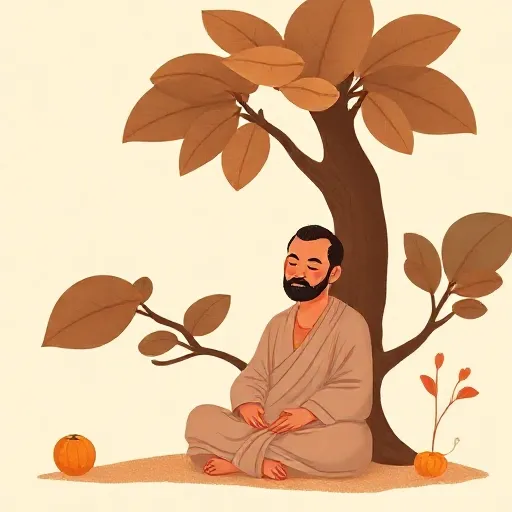
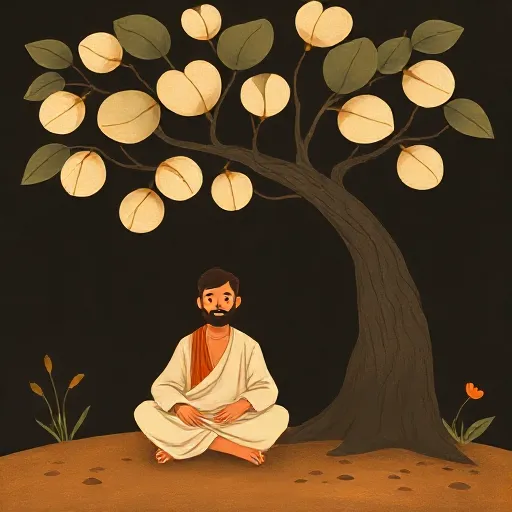
Śāntideva compared this to a machine. The body, he said, is “like a mechanical construct of interconnected bones and muscles.” It responds to causes, but no one is pulling the levers. He also quoted a striking image: “If the root of a tree is cut, all the branches, leaves, and flowers dry up. In just the same way, if you pacify the false view of a real self, all reactive emotions are pacified.” If you stop believing there’s a permanent you, the anger, jealousy, and fear that feed on that belief begin to dry up.
Emptiness: Nothing Has Its Own Nature

Śāntideva didn’t think the early “no self” teaching was the whole story. He belonged to a later school called Madhyamaka (the Middle Way), founded by the philosopher Nāgārjuna (2nd century CE). The Madhyamaka claim is even more radical: nothing in the universe has svabhāva, or intrinsic nature. If something had intrinsic nature, it would exist entirely on its own, independent of everything else — permanent, unchanging, and self‑contained. But nothing is like that. Everything is impermanent, depends on causes, and is understood only in relation to other things.
So Madhyamaka says that everything is empty (śūnyatā). This doesn’t mean nothing exists at all. Śāntideva used the analogy of a mirage. A mirage is real — it appears on hot roads — but it’s deceptive. It looks like a pool of water when there is none. In the same way, ordinary things exist and function, but they don’t exist in the solid, independent way they appear to.
He also points to how things come and go. Wind and trees rubbing together produce fire, but the fire doesn’t “come from” anywhere and doesn’t “go” anywhere when it goes out. A modern example makes the same point: when hydrogen and oxygen react to form water, the liquid state doesn’t arrive from some previous hiding place. If the water freezes, its liquidity doesn’t travel somewhere else. Liquidity has no intrinsic nature; it’s entirely dependent on conditions. Śāntideva held that everything is like that liquidity.
Why Should I Care About Your Suffering?

If there is no self, what happens to morality? Śāntideva gave one of the most daring answers in the history of philosophy. He began with a simple idea: your suffering hurts you in the same way my suffering hurts me. Pain is just pain. So why think my pain matters more? He wrote:
“I should dispel the suffering of others because it is suffering like my own suffering. I should help others too because of their nature as beings, which is like my own being. When happiness is dear to me and others equally, what is so special about me that I strive after happiness only for myself?”
A natural comeback is: “But my future self is special — it’s still me tomorrow, so I have a special reason to care about it.” Śāntideva rejected that. Since there is no permanent self, there is no special relation of identity that ties “me now” to “me later” in a way that doesn’t also tie me to you. Both are just sequences of causally connected moments. He compared a person to a queue, or to an army — collections, not real single things. So suffering doesn’t belong to anyone. As he reasoned, “Without exception, no sufferings belong to anyone. They must be warded off simply because they are suffering. Why is any limitation put on this?”
If you take this seriously, egoism collapses. It becomes irrational to put your own future comfort ahead of someone else’s present agony. The only rational response is to care equally about all suffering, wherever it occurs. This is the Ownerless Suffering Argument.
Wait, Can I Help Getting Angry?

Śāntideva applied these ideas directly to anger. He argued that everything we do arises from causes and conditions. There is no independent, uncaused action. In his words: “Whatever transgressions and vile actions there are, all arise through the power of conditioning factors, while there is nothing that arises independently.” When someone hurts you, their action is just another event in a long chain of causes — like a tree branch falling in a storm. Getting angry at them makes as little sense as screaming at the wind.
Some philosophers interpret this as a form of full determinism: if every action is fully caused, then nobody deserves blame in a deep, cosmic sense. Others read Śāntideva as a “paleo‑compatibilist” who thought that, on the conventional level, we still have enough freedom to hold each other accountable. The text itself leaves room for debate. What is clear is that Śāntideva did not think the lack of an ultimate self meant we should give up trying to improve. He wrote, “Since there is dependent origination there can be cessation of suffering.” You can still train your mind to resist anger and develop patience, even if the anger itself is just the product of causes. The practice is real, even if the self is not.
So Next Time Someone Upstages You…

Śāntideva didn’t stop at diagnosing anger. He crafted a whole moral vision built around the Awakening Mind (bodhicitta) — the commitment to become a Buddha and stay in the world helping others until every last being is free from suffering. In one passage, he said that a bodhisattva’s vow is broken if she neglects, even for a moment, to stop “all the present and future pain and suffering of all sentient beings” and to bring about their happiness. When trade‑offs arise, you should sacrifice a small good to achieve a greater one. That sounds a lot like consequentialism, the view that right actions are those that produce the best overall results. In fact, some scholars see Śāntideva as the very first utilitarian, a thousand years before Jeremy Bentham.
Others caution that his verses are also meditation instructions, not always philosophical arguments. And he himself noted a “fortunate coincidence”: those who genuinely seek happiness for others tend to be happy themselves. So even if his radical altruism seems demanding, it might also be the most reliable path to your own peace.
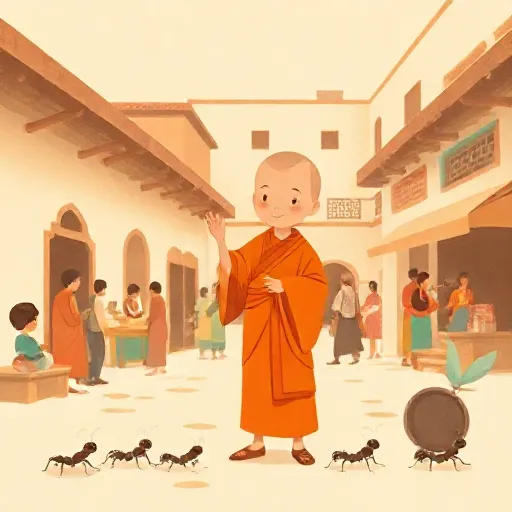
The legacy of Śāntideva’s thought is a living challenge. The next time someone says something cruel or cuts in front of you, you don’t have to see it as a personal attack. You can see it as the result of an endless chain of causes, no one of which was fully in charge. That recognition might just make it easier to respond with patience, and to ask: whose pain matters?
Think about it
- If scientists proved that every decision you make is caused by a chain of events going back to the Big Bang, would it still be fair to hold people responsible for their actions? Why or why not?
- Imagine you stub your toe and feel pain. A friend also feels pain from a headache. If neither of you is a permanent self, is one pain more important than the other? How would you decide?
- Some people say that understanding anger as a conditioned reaction can make you calmer. Have you ever tried to talk yourself out of being angry? What would it take to let the feeling go?